
Every holiday season, millions of homes light up with festive cheer—strings of glowing bulbs adorning trees, rooftops, and porches. But nothing kills the mood faster than a sudden blackout caused by a blown fuse in your Christmas lights. You plug them in, they flicker, and then—darkness. While it may seem like bad luck or cheap wiring, repeated fuse failures are usually symptoms of specific, avoidable issues. Understanding the root causes and knowing how to address them can save you time, frustration, and even reduce fire risk.
Fuses in Christmas lights aren’t just random parts—they’re safety devices designed to protect the circuit from overheating. When they blow repeatedly, they're doing their job under stress. The key is figuring out what’s overloading them and correcting it before damage occurs. This guide breaks down the most common reasons behind recurring fuse problems and gives you actionable steps to resolve them permanently.
How Christmas Light Fuses Work
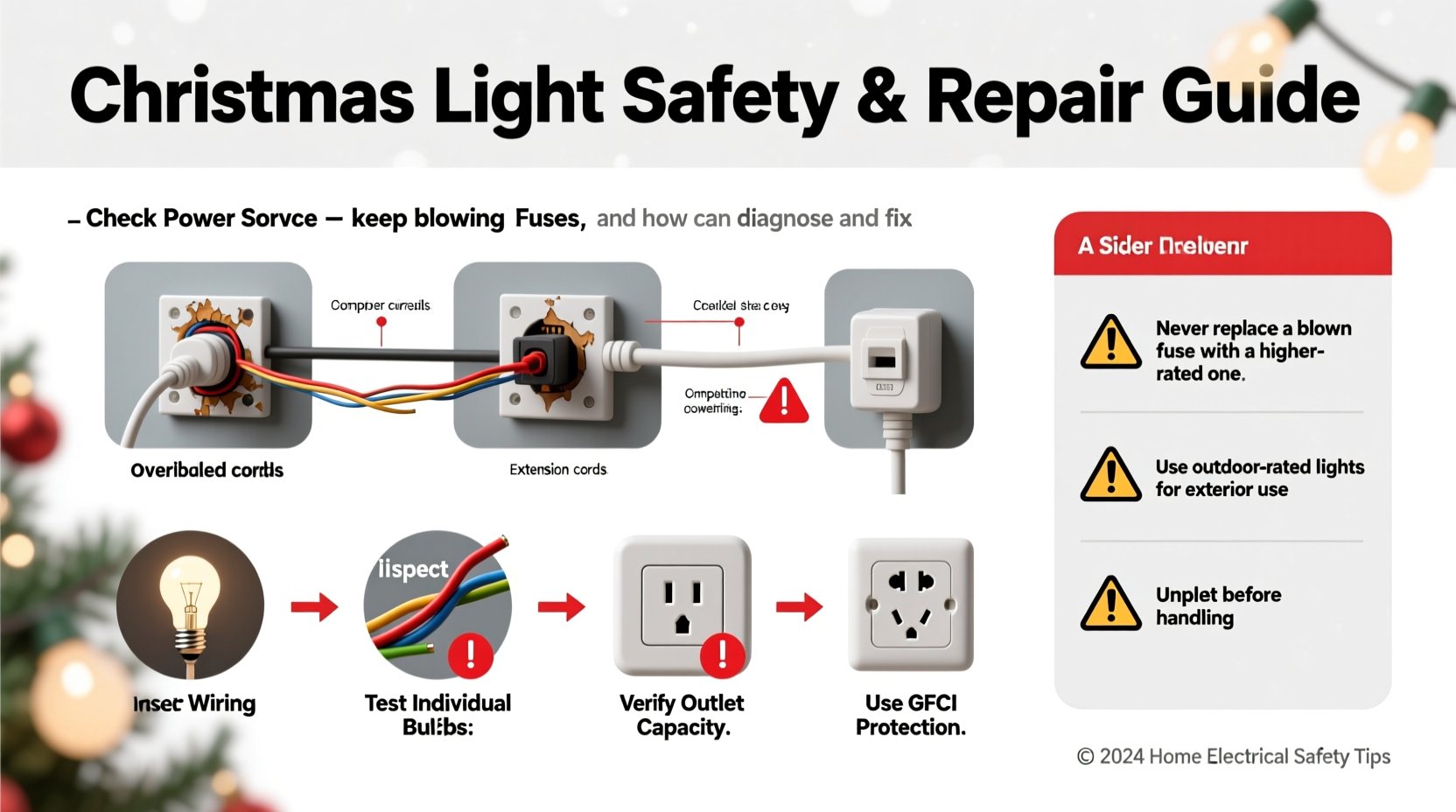
Most traditional incandescent mini-string Christmas lights come with built-in fuses located inside the male plug. These small glass tubes (usually 3–5 amps) act as weak links in the electrical chain. If too much current flows through the circuit—due to overload, short circuit, or damaged wiring—the fuse heats up and breaks the connection, cutting off power and preventing overheating or fire.
These fuses are typically replaceable. Many light sets include a spare fuse tucked into the plug housing. However, replacing the fuse without fixing the underlying issue only leads to the same problem recurring, sometimes within minutes of plugging the lights back in.
LED lights often don’t use traditional fuses because they draw far less power and generate less heat. Still, some LED strings have internal protection circuits that mimic fuse behavior—if tripped, they shut down until reset or unplugged for a period.
“Repeatedly blowing fuses on Christmas lights isn't normal—it's a warning sign. Either the load exceeds the circuit’s capacity, or there’s a fault in the wiring.” — Mark Reynolds, Electrical Safety Consultant at HomeShield Labs
Common Causes of Blown Fuses in Christmas Lights
Before jumping to conclusions, it’s essential to diagnose the real cause. Here are the top five reasons why your Christmas light fuses keep failing:
1. Overloading the Circuit
This is the most frequent culprit. Incandescent mini-lights are often rated to connect up to three or four strands end-to-end. Exceeding this limit increases the total wattage beyond what the fuse or outlet can safely handle.
For example: A typical string of 100 incandescent mini-lights draws about 40 watts. Plugging in five such strings daisy-chained together creates a 200-watt load. That might exceed the fuse rating (often 168–216 watts max per circuit), especially if other decorations are on the same circuit.
2. Faulty or Damaged Wiring
Even one broken bulb, cracked socket, or frayed wire can create a short circuit. When current takes an unintended path, it bypasses resistance and spikes dramatically, instantly blowing the fuse.
Damaged sections often result from improper storage (crushed boxes, tangled wires), exposure to weather, or animals chewing through cords. Inspect each strand carefully before use—look for blackened areas, melted insulation, or loose connections.
3. Using Indoor Lights Outdoors (or Vice Versa)
Lights rated for indoor use lack the moisture and temperature resistance needed outdoors. Exposure to rain, snow, or condensation can lead to internal shorts, especially at connection points between strands.
Conversely, using heavy-duty outdoor-rated lights indoors is safe—but not the reverse. Always verify the UL rating: “Suitable for Indoor Use Only” vs. “Suitable for Indoor and Outdoor Use.”
4. Poor-Quality or Counterfeit Lights
Bargain-bin Christmas lights may cut corners on materials, fuse ratings, or insulation quality. Some counterfeit products use substandard fuses that blow prematurely even under normal loads.
Look for UL certification marks and purchase from reputable retailers. Cheap lights might save money upfront but cost more in replacements—and pose greater fire hazards.
5. Voltage Fluctuations or Outlet Problems
If multiple appliances or high-draw devices share the same circuit (e.g., space heaters, refrigerators), voltage drops or surges can stress light circuits. Additionally, old or corroded outlets may deliver inconsistent power, leading to erratic current flow and blown fuses.
A simple test: Plug the lights into a different outlet, preferably on a dedicated circuit. If the problem stops, the original outlet or circuit is likely the issue.
Step-by-Step Guide to Fix and Prevent Blown Fuses
Solving persistent fuse issues requires a methodical approach. Follow these steps to identify, repair, and prevent future failures.
- Unplug all light strings immediately. Never attempt repairs while powered.
- Inspect each strand visually. Look for cracked bulbs, exposed wires, water damage, or discoloration near sockets.
- Check the fuse compartment. Open the male plug and examine both fuses (many have two). Use a multimeter to test continuity. Replace any blown fuses with identical amperage (usually 3A or 5A).
- Test individual strands separately. Plug in one string at a time to see which one blows the fuse. Isolate faulty sets.
- Verify daisy-chain limits. Count how many strands are connected. Refer to packaging: most incandescent sets allow 3–4 connected; LEDs can often go up to 40+.
- Use a surge-protected extension cord. Avoid overloading household outlets. Plug light circuits into a single, grounded outdoor-rated extension cord with built-in surge protection.
- Upgrade to LED lights where possible. LEDs consume up to 90% less power, generate minimal heat, and rarely blow fuses due to overload.
- Store lights properly after use. Wrap gently around a cardboard reel or use specialized light savers to prevent tangles and wire stress.
Do’s and Don’ts: Managing Christmas Light Circuits
| Do | Don’t |
|---|---|
| Check labels for maximum connection limits | Daisy-chain more than the recommended number of strings |
| Use UL-listed extension cords rated for outdoor use | Run cords under rugs or through doorways where they can be pinched |
| Replace blown fuses with the exact same rating | Use higher-amp fuses to “prevent” blowing—they defeat the safety purpose |
| Inspect wires and plugs before each use | Use lights with frayed wires or cracked insulation |
| Group lights by circuit to avoid overloading outlets | Plug multiple high-wattage decorations into the same wall outlet |
Real Example: The Overloaded Porch Display
Consider Sarah from Portland, who decorates her front porch annually with hundreds of lights. One year, she added new icicle lights but started experiencing constant fuse blowouts. She replaced fuses multiple times, only for them to pop again within minutes.
After consulting an electrician, she discovered she had connected eight strands of incandescent mini-lights—double the manufacturer’s recommended limit of four. The cumulative load was drawing nearly 300 watts, far above the 216-watt threshold. The solution? She replaced half the strands with energy-efficient LED versions. The total draw dropped below 70 watts, fuses stopped blowing, and her display ran smoothly all season—while cutting her electricity bill by 75%.
Sarah’s case illustrates how easily well-meaning decorators exceed safe limits—and how simple upgrades can resolve chronic issues.
Checklist: Troubleshooting Blown Fuses in 7 Steps
- ✅ Unplug all affected light strings immediately
- ✅ Open the plug and inspect both fuses for breakage or darkening
- ✅ Replace blown fuses with correct amperage (use spares or buy matching ones)
- ✅ Test each light strand individually to isolate faulty units
- ✅ Verify you haven’t exceeded the maximum number of connected strings
- ✅ Examine wires, sockets, and connectors for visible damage or moisture
- ✅ Plug into a different, known-good outlet to rule out circuit issues
FAQ: Common Questions About Christmas Light Fuses
Can I replace a 3A fuse with a 5A fuse to stop it from blowing?
No. Fuses are calibrated to protect the wiring. A higher-amp fuse may not blow when it should, increasing the risk of overheating, melted wires, or fire. Always use the exact replacement specified by the manufacturer.
Why do my LED lights keep shutting off even though they don’t have fuses?
Many LED strings have built-in thermal or current protection circuits. If they detect overheating (e.g., from being buried under snow or enclosed in tight spaces), they shut down automatically. Unplug them for 15–30 minutes to reset. Ensure proper ventilation and avoid covering active LED strips.
How many Christmas light strings can I safely connect together?
It depends on the type:
- Incandescent mini-lights: Usually 3–4 sets (check packaging)
- LED mini-lights: Often 20–40+ sets, depending on model
- Rope lights or C9s: Typically 1–2 sets max
When to Replace vs. Repair
Not every blown fuse means the entire string is doomed. Minor issues like a single blown fuse or one damaged bulb can be fixed. But consider full replacement if you notice:
- Multiple broken sockets or missing bulbs
- Melted insulation or charred areas on the wire
- Intermittent lighting or flickering across several sections
- Older than 5–7 years (especially incandescent sets)
Modern LED alternatives offer longer lifespans (25,000+ hours), lower energy costs, and enhanced durability. Investing in quality replacements reduces long-term maintenance and improves safety.
Conclusion: Keep Your Lights Safe and Shining Bright
Blown fuses in Christmas lights aren’t just inconvenient—they’re signals that something in your setup needs attention. Whether it’s an overloaded circuit, damaged wiring, or outdated equipment, addressing the root cause ensures your holiday display stays bright and safe throughout the season.
By following proper electrical practices, upgrading to efficient LED options, and conducting regular inspections, you can eliminate repeat fuse failures for good. Take the time now to audit your current setup, label your strands, and plan next year’s display with safety in mind.




 浙公网安备
33010002000092号
浙公网安备
33010002000092号 浙B2-20120091-4
Comments
No comments yet. Why don't you start the discussion?