
There’s nothing more frustrating than stringing up your Christmas lights, plugging them in, and watching them flicker—or worse, blow out completely. This seasonal annoyance isn’t just inconvenient; it can also pose safety risks if left unaddressed. The good news is that most recurring light failures stem from predictable causes, many of which are easy to fix once you know what to look for. From faulty wiring to circuit overloads, understanding the root causes behind blown-out lights empowers you to enjoy a safer, brighter holiday display.
Understanding How Christmas Lights Work
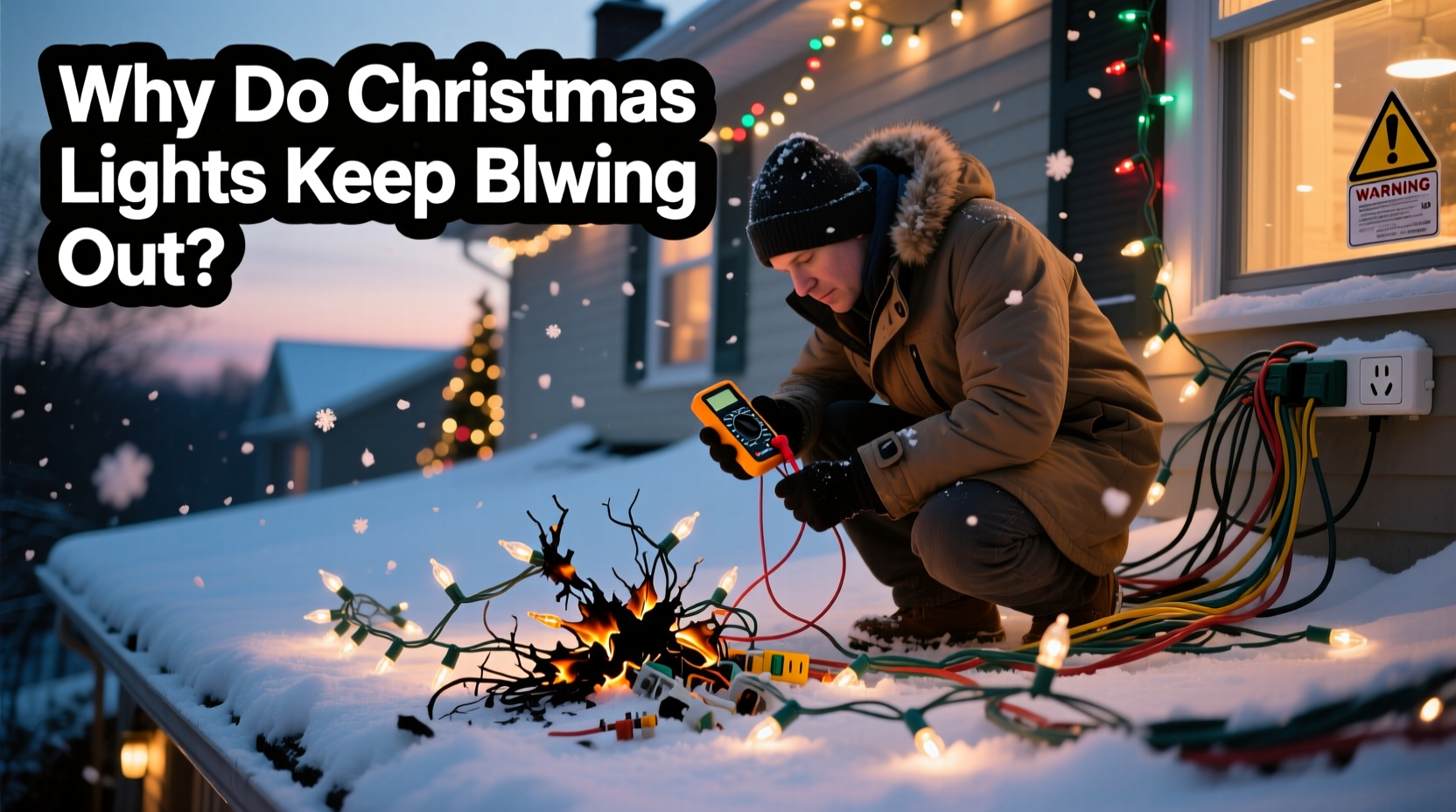
Before diving into troubleshooting, it helps to understand the basic design of most traditional Christmas light strings. Many older and budget-friendly sets use a series circuit configuration—meaning each bulb is connected in a single electrical path. If one bulb fails or becomes loose, the entire string can go dark because the circuit is broken. Newer models often feature parallel circuits or shunted bulbs that allow the rest of the strand to stay lit even when one bulb burns out.
Mini incandescent lights, commonly used on trees and outdoor displays, typically operate at low voltage but draw current in sequence. LED versions are more energy-efficient and durable, but they still depend on consistent power delivery and proper connections. Both types can fail due to environmental exposure, manufacturing defects, or improper usage.
“Over 60% of holiday lighting failures I see during winter service calls trace back to simple connection issues or overloaded circuits.” — Mark Reynolds, Licensed Electrician & Holiday Lighting Specialist
Common Causes of Repeated Light Failures
When your Christmas lights keep blowing out, the problem likely falls into one of several categories. Identifying the cause is the first step toward a lasting solution.
1. Overloaded Circuits
Plugging too many light strands into a single outlet or power strip can exceed the circuit’s amperage limit. Most household circuits are rated for 15 amps. A typical incandescent mini-light string draws about 0.3–0.5 amps. Connecting more than five or six strands end-to-end may trip a breaker or damage the wiring.
2. Poor Connections and Damaged Wiring
Loose plugs, frayed wires, or corroded sockets can interrupt current flow and cause intermittent failures. Outdoor lights exposed to moisture, snow, or animal chewing are especially vulnerable. Even minor wire nicks can create resistance points that generate heat and lead to burnout.
3. Bulb Failure and Shunt Malfunctions
In older series-wired sets, a single dead bulb breaks the circuit. Some bulbs have internal shunts designed to bypass the filament when it burns out, but these can fail. If the shunt doesn’t activate, the whole string goes dark. Inspecting each bulb visually or with a light tester can isolate the culprit.
4. Voltage Spikes and Power Surges
Sudden surges—common during winter storms or when large appliances cycle on—can fry delicate light filaments or LED drivers. Without surge protection, even a brief spike can shorten the lifespan of your lights.
5. Incompatible Controllers or Timers
Using non-rated dimmers, timers, or smart plugs with certain light types (especially LEDs) can cause flickering, overheating, or premature failure. Always verify compatibility before connecting lights to automated systems.
Troubleshooting Step-by-Step: A Practical Guide
Follow this systematic approach to diagnose and resolve why your Christmas lights keep failing.
- Unplug the light string immediately. Safety first—never inspect or repair live circuits.
- Inspect for visible damage. Run your fingers along the wire looking for cuts, kinks, or melted insulation. Check each socket for corrosion, debris, or loose bulbs.
- Test individual bulbs. Use a bulb tester or multimeter to check continuity. Replace any bulbs showing no conductivity.
- Check fuses in the plug. Many light strings have small replaceable fuses inside the male plug. Open the fuse compartment and examine both fuses with a continuity tester. Replace only with identical-rated fuses (usually 3A).
- Verify circuit load. Add up the total amperage of all devices on the same circuit. If near or above 15 amps, redistribute the load across multiple outlets.
- Try a different outlet. Plug the lights into a known-working outlet on a separate circuit to rule out power supply issues.
- Use a surge protector. Plug your lights into a quality surge-protected power strip rated for outdoor use if applicable.
- Replace outdated or damaged sets. If a string repeatedly fails after repairs, retire it. Modern LED strings last longer and consume less power.
Do’s and Don’ts of Christmas Light Maintenance
| Do’s | Don’ts |
|---|---|
| Use LED lights for longer life and lower heat output | Never mix LED and incandescent strings on the same circuit |
| Store lights on reels or cardboard spools to prevent tangling | Don’t yank tangled lights apart—this damages wires |
| Label indoor vs. outdoor-rated strings | Don’t use indoor-only lights outside |
| Inspect all strings annually before use | Don’t leave lights unattended for long periods |
| Use weatherproof connectors for outdoor setups | Don’t overload extension cords or power strips |
Real-World Example: A Garage Gable That Wouldn’t Stay Lit
Homeowner Linda M. in Portland, Oregon, had a persistent issue with her rooftop light display. Every year, within days of setup, the top half of her gable display would go dark. She replaced bulbs, checked connections, and even bought new strings—but the problem returned.
A local electrician discovered the real issue: she was using an indoor-rated power strip tucked under the eaves. Winter condensation seeped into the strip, causing short circuits and repeated fuse blowouts. Additionally, she had linked eight incandescent strings together—well beyond the manufacturer’s recommendation—overloading the circuit.
The fix? Switch to outdoor-rated LED strings, use a GFCI-protected outlet, limit daisy-chaining to three strings, and house all connections in a sealed junction box. After these changes, her display stayed bright throughout the season—with no further issues.
Prevention Checklist: Keep Your Lights Running All Season
- ✅ Inspect all light strings for damage before installation
- ✅ Replace any cracked, discolored, or corroded bulbs
- ✅ Confirm fuses in plugs are intact and properly rated
- ✅ Use only outdoor-rated lights and extension cords for exterior displays
- ✅ Limit daisy-chained strings to three per circuit (or as specified by manufacturer)
- ✅ Plug into a surge-protected, GFCI-equipped outlet
- ✅ Avoid running cords under rugs, through doors, or where they can be pinched
- ✅ Turn off lights when not in view or during storms
- ✅ Store lights carefully in labeled containers after the season
- ✅ Upgrade old incandescent sets to modern LED alternatives
Frequently Asked Questions
Can I use LED and incandescent lights together?
No, it’s not recommended. Mixing LED and incandescent strings—even on the same circuit—can cause uneven voltage distribution, overheating, and premature failure. LEDs require less current, and when paired with higher-draw incandescents, the mismatch stresses both systems. Always keep them on separate circuits or use compatible multi-string kits designed for mixed use.
Why do my lights work for a few hours and then go out?
This usually indicates an overheating component. Possible causes include overloaded circuits, poor ventilation around transformers (for LEDs), or a failing bulb creating resistance. It can also signal a thermal safety cutoff activating due to excess heat buildup. Unplug the set, let it cool, and inspect for damaged sections. Consider switching to cooler-running LEDs if using incandescents.
How long should Christmas lights last?
Incandescent mini-lights typically last 1,000–3,000 hours. If used four hours per night during December, that’s roughly 2–3 seasons. LED strings can last 25,000 to 50,000 hours—potentially decades under normal use. However, environmental factors like UV exposure, moisture, and physical stress often shorten actual lifespan. Proper storage and handling significantly extend longevity.
Expert Tips for Long-Term Success
Seasonal lighting doesn’t have to be a recurring headache. Investing time upfront in planning and preparation pays off in reliability and safety. Start by auditing your current setup: how many strings are you using? What type of outlets and circuits are involved? Are your cords and connectors rated for their environment?
Consider upgrading to smart LED systems with built-in surge protection and remote control. These not only reduce energy use but also offer diagnostics—some apps will alert you if a section goes offline. For large displays, consult a licensed electrician to ensure your home’s electrical system can handle the added load safely.
“Treat holiday lighting like any other permanent fixture—regular maintenance prevents emergencies.” — National Fire Protection Association (NFPA) Home Safety Guidelines
Conclusion: Shine Bright Without the Burnout
Christmas lights shouldn’t be a source of frustration or fire hazards. By understanding the common reasons behind repeated failures—overloaded circuits, damaged wiring, incompatible components, and environmental wear—you can take practical steps to ensure a reliable, radiant display every year. Whether you’re illuminating a small tree or wrapping an entire house, attention to detail makes all the difference.
Start today: pull out last year’s lights, inspect each string, test fuses, and plan your setup with circuit limits in mind. Replace aging incandescents with efficient LEDs, use surge protectors, and never underestimate the value of a GFCI outlet outdoors. With a little care and knowledge, your holiday glow can last the entire season—and many more to come.




 浙公网安备
33010002000092号
浙公网安备
33010002000092号 浙B2-20120091-4
Comments
No comments yet. Why don't you start the discussion?