
Every holiday season, millions of homes light up with festive displays—but for some, that magic comes with a frustrating caveat: the lights only work when plugged in just right. Rotate the plug 180 degrees, and suddenly, nothing happens. While it might seem like a minor quirk, this behavior points to real electrical principles at play—some harmless, others potentially risky. Understanding why this happens can save you time, protect your decorations, and even prevent safety hazards.
This phenomenon is more common than you might think, especially with older or budget-friendly string lights. The root causes range from simple design limitations to deeper issues involving household wiring and electrical safety standards. Below, we’ll explore the science behind this behavior, identify when it’s normal and when it’s a warning sign, and provide practical solutions to ensure your holiday lighting works reliably and safely every time.
Understanding Plug Polarity and How It Affects Christmas Lights
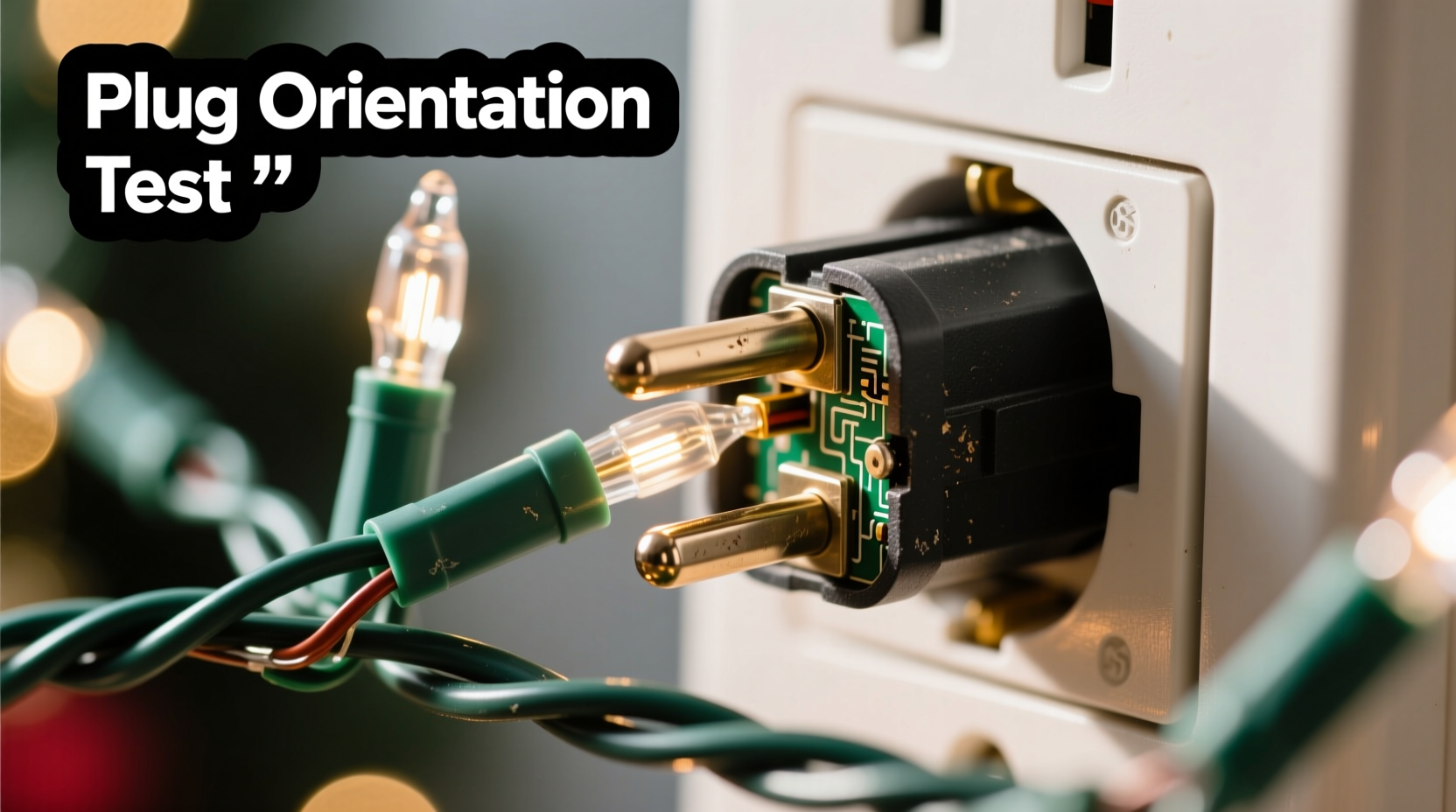
Most modern electrical outlets in North America are polarized, meaning they have two slots of different sizes—a smaller hot slot and a larger neutral slot. This design ensures that plugs can only be inserted one way, maintaining consistent current flow through devices. Inside your Christmas light strand, the wiring is often arranged so that the “hot” wire connects to specific components, such as fuses, switches, or individual bulbs.
When a string of lights is designed with internal polarity in mind, reversing the plug (if using an unpolarized adapter or worn outlet) can disrupt the intended path of electricity. In many cases, the lights simply won’t turn on because the circuit isn’t completed correctly. Some strands include a fuse on the hot side; if the plug is reversed, the fuse may not engage properly, cutting off power before it reaches the bulbs.
It's important to note that while AC (alternating current) reverses direction many times per second, the initial point of entry into a device still matters for safety and function—especially in low-voltage or semi-protected circuits like those in decorative lighting.
Common Causes Behind Direction-Sensitive Light Strings
Several factors can cause Christmas lights to function only when plugged in a certain orientation. While some are benign, others signal potential risks.
1. Non-Polarized Plugs Used in Polarized Outlets
If your light set has a non-polarized plug (both blades the same width), it can be inserted either way into a standard outlet. However, if the internal wiring assumes a specific polarity, flipping the plug may break the circuit. This is especially true for strings with built-in rectifiers, controllers, or LED drivers that expect correct hot/neutral alignment.
2. Faulty or Worn-Out Wiring
Over time, insulation can degrade, wires can loosen, or connections inside the plug can corrode. These issues may allow contact only when the plug is jostled into a certain position. What appears to be a “working angle” might actually be the result of intermittent contact due to damage—not intentional design.
3. Outlet Problems
The issue may not lie with the lights at all. Older or loose outlets may fail to make proper contact unless the plug is inserted with slight pressure or rotation. This mimics the appearance of directional dependency but stems from faulty infrastructure rather than the light strand itself.
4. Design Flaws in Budget Lighting
Inexpensive Christmas lights often cut corners on safety features and quality control. Some manufacturers skip proper polarization safeguards or use substandard materials that lead to inconsistent conductivity. These products may appear functional under ideal conditions but behave erratically in real-world use.
5. Ground Fault or GFCI Interference
If your outdoor lights are connected to a GFCI (Ground Fault Circuit Interrupter) outlet, incorrect polarity can trigger a shutdown. GFCIs monitor the balance between hot and neutral currents; reversed polarity creates an imbalance, causing the outlet to trip—even if no actual fault exists.
“Polarity isn't just about function—it's a critical safety feature. Reversing hot and neutral increases shock risk, especially in damp environments.” — James Ralston, Licensed Electrician and Home Safety Inspector
Step-by-Step Guide: Diagnosing and Fixing the Issue
Before replacing or discarding your lights, follow this systematic approach to determine the cause and apply the appropriate fix.
- Inspect the Plug: Check if the plug is polarized (one blade wider). If both blades are identical, the strand is non-polarized and more prone to erratic behavior.
- Test in Another Outlet: Plug the lights into a different, known-working outlet—preferably indoors and on a different circuit. This rules out outlet-related issues.
- Check for Physical Damage: Examine the entire length of the cord for cuts, fraying, or crushed sections. Pay close attention to areas near the plug and where the cord bends frequently during storage.
- Wiggle Test: With the lights plugged in (but handle carefully), gently wiggle the plug and cord near the connection point. If the lights flicker or turn on/off, you likely have a loose connection.
- Use a Circuit Tester: Plug a simple outlet tester into the socket where you’re using the lights. It will indicate if the outlet is wired correctly (proper hot/neutral/ground configuration).
- Try a Different String: Plug a different, known-good light strand into the same outlet. If it behaves normally regardless of plug orientation, the problem is likely with the original lights.
- Inspect Internal Fuse(s): Many light sets have small fuses located in the plug. Open the fuse compartment (usually requires a small screwdriver) and check if any fuses are blown. Replace only with the specified rating (typically 3–5A).
If the lights work only after wiggling or rotating the plug, treat this as a red flag. Intermittent connectivity increases resistance, generates heat, and raises fire risk over time.
Safety Checklist: When to Keep or Toss Your Lights
Not all Christmas lights should be saved. Use this checklist to decide whether repair is feasible or replacement is safer.
- ✅ Plug is fully intact and polarized correctly
- ✅ No exposed wires or melted insulation
- ✅ Works consistently across multiple outlets
- ✅ Fuses are present and properly rated
- ✅ No flickering or buzzing sounds
- ✅ Outlet tester shows correct wiring
- ❌ Avoid if: Only works when bent, twisted, or held in place
- ❌ Avoid if: You’ve modified the plug or added extensions
If three or more boxes are unchecked, retire the strand. According to the National Fire Protection Association (NFPA), faulty holiday lighting contributes to an estimated 7,500 home fires annually. Prioritizing safety over sentimentality protects both your home and your holidays.
Do’s and Don’ts of Holiday Lighting Maintenance
| Do | Don’t |
|---|---|
| Use polarized plugs as intended – Never force them upside down. | Modify plugs – Sawing off a blade to fit an old outlet is dangerous. |
| Store lights on reels or cardboard – Prevents tangling and wire stress. | Yank cords from outlets – Pull by the plug, not the cord. |
| Test lights before decorating – Catch issues early. | Daisy-chain more than three strands – Overloads circuits. |
| Use outdoor-rated lights outside – They’re sealed against moisture. | Use indoor lights outdoors – Risk of short-circuiting. |
Real Example: A Garage Glimmer Gone Wrong
Mark, a homeowner in Ohio, spent hours draping vintage incandescent lights across his garage eaves each December. For years, they worked fine—until one night when half the strand refused to light. After some trial and error, he discovered they only worked when the plug was rotated and slightly lifted upward in the outlet.
He assumed it was just a quirky outlet until a neighbor, an electrician, stopped by and tested the socket. The outlet had reversed polarity—someone in the past had wired the hot and neutral backwards. Though the lights lit when forced into position, the entire setup posed a shock hazard, especially during winter rains. The neighbor corrected the wiring, replaced the outlet, and recommended Mark upgrade to newer, safer LED strings with built-in surge protection.
This case illustrates how a seemingly small inconvenience can mask serious electrical faults. What looked like a plug orientation issue was actually a miswired circuit—one that could have led to injury or fire.
Frequently Asked Questions
Can reversed polarity damage my Christmas lights?
Yes, especially for LED strings with internal transformers or rectifiers. Reversed polarity can cause components to overheat, degrade prematurely, or fail entirely. While incandescent bulbs may still glow, the increased risk of shock remains.
Why do some lights work both ways while others don’t?
Lights with symmetrical internal circuits (like basic incandescent strands without fuses on one side) are less sensitive to polarity. Modern LED sets, however, often include directional electronics that require correct hot/neutral alignment to operate. Higher-end models may include bridge rectifiers to accept either orientation safely.
Is it safe to use a cheater plug or adapter to reverse the polarity?
No. Adapters that bypass polarization defeat a key safety mechanism. They allow hot and neutral to be swapped, increasing shock risk—particularly if you touch a bulb socket while changing a light. Always use grounded, polarized outlets and avoid third-party adapters unless absolutely necessary and UL-listed.
Conclusion: Shine Bright—But Stay Safe
Your Christmas lights shouldn’t come with a game of electrical roulette. If they only work when plugged in a certain way, take it as a signal to investigate further. Sometimes, it’s a simple fix—replacing a worn plug or correcting an outlet’s wiring. Other times, it’s nature’s way of telling you it’s time to retire an aging strand.
By understanding the role of polarity, inspecting your equipment regularly, and respecting electrical best practices, you can enjoy a bright, safe, and hassle-free holiday display. Upgrade to modern, energy-efficient LED lights with built-in safeguards, store them properly, and test them yearly. The few extra minutes you spend now could prevent hours of frustration—or worse—later.




 浙公网安备
33010002000092号
浙公网安备
33010002000092号 浙B2-20120091-4
Comments
No comments yet. Why don't you start the discussion?