
If you’ve ever plugged in your Christmas lights only to find they flicker or remain dark—until you twist the plug or wiggle a specific section—you’re not alone. This frustrating behavior is more common than you might think, especially with older or budget-friendly light strings. While it may seem like a minor quirk, this issue reveals deeper electrical problems that can affect performance, safety, and longevity. Understanding the root causes helps you troubleshoot effectively and decide whether repair or replacement is the smarter choice.
The core reason behind this phenomenon usually lies in poor electrical continuity—a break or weak connection somewhere in the circuit. When you twist the wire or adjust the angle of the plug, you're temporarily restoring contact. But relying on this fix is risky. Over time, intermittent connections generate heat, increase fire hazards, and wear down components faster. Addressing the problem properly ensures your holiday display stays bright and safe year after year.
How Christmas Light Circuits Work
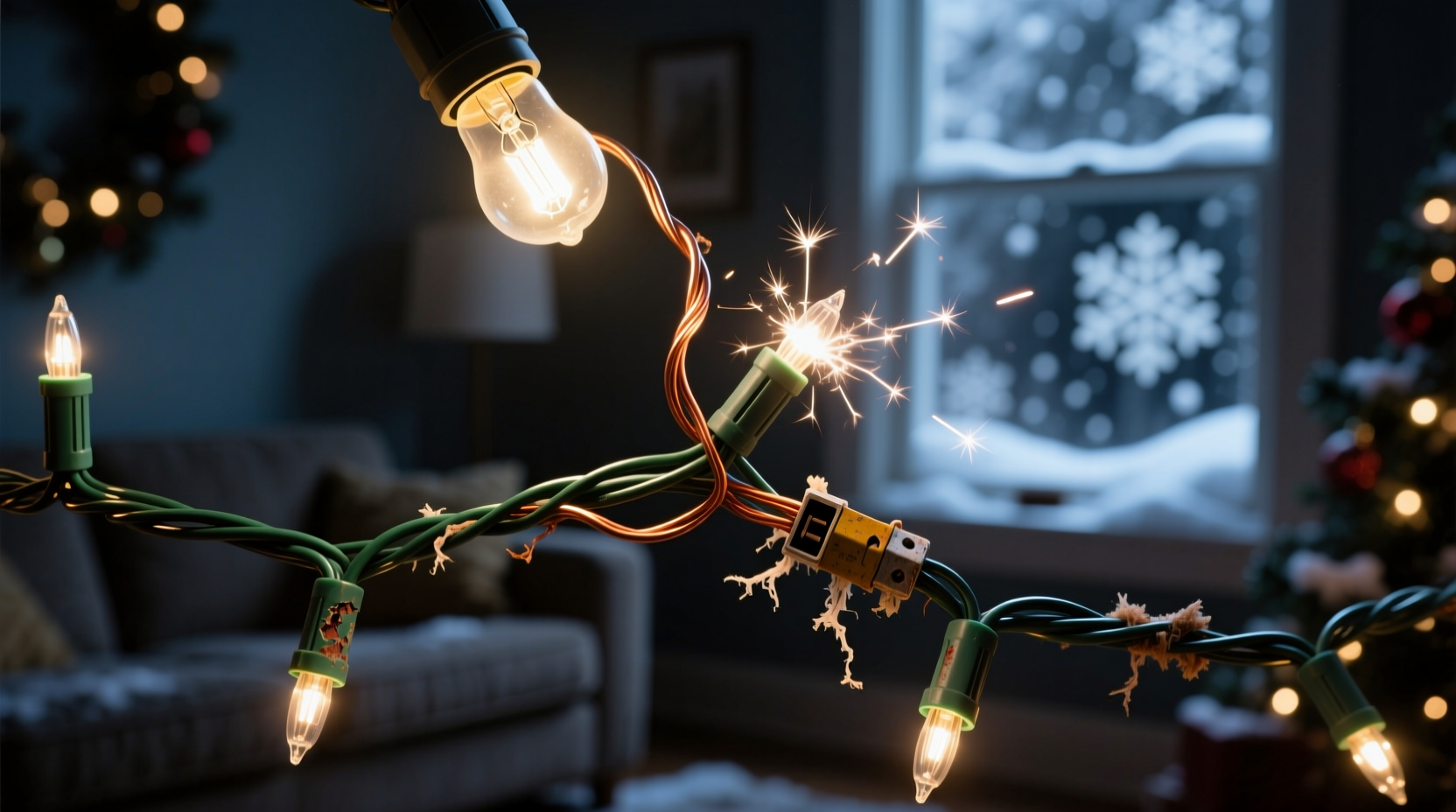
Most traditional incandescent Christmas lights are wired in series, meaning electricity flows through each bulb in sequence before returning to the power source. If one bulb burns out or a connection fails, the entire string—or a section of it—can go dark. Newer LED strings often use parallel-wired or shunted designs that allow individual bulbs to fail without cutting power to others, but many still rely on series circuits for cost efficiency.
In a series circuit, every component must maintain solid contact. The current travels from the plug, through the first bulb, then the next, and so on. Any gap—no matter how small—interrupts the flow. That’s why a loose bulb, corroded socket, or frayed wire can cause total failure. Twisting the cord may realign broken filaments, press contacts together, or bridge micro-gaps just enough to restore conductivity. But this is a temporary mechanical workaround, not a solution.
“Intermittent lighting due to physical manipulation indicates degraded connections. It’s an early warning sign of potential failure or hazard.” — James L. Reed, Electrical Safety Consultant, NFPA Contributor
Common Causes of Intermittent Operation
Several factors can lead to lights working only when twisted. Identifying the source requires inspection and sometimes testing, but knowing what to look for makes diagnosis faster.
Faulty Plug or Outlet Connection
The plug is the first point of contact with power. Over time, repeated plugging and unplugging can loosen internal solder joints or bend prongs. A damaged plug may make partial contact until twisted into the right position. Similarly, worn outlets with weak grip can fail to hold the plug securely, leading to flickering.
Loose or Corroded Bulb Sockets
Bulb bases sit in metal clips inside plastic sockets. These clips can lose tension from age or overheating, failing to grip the bulb tightly. Dirt, moisture, or oxidation (especially in outdoor sets) creates resistance, blocking current. Wiggling the string may momentarily scrape away corrosion or reseat the bulb, restoring light.
Broken Filaments or Internal Wire Fractures
Inside each bulb, a thin tungsten filament conducts electricity. If it breaks but remains close, movement can reconnect it briefly. More commonly, the copper wire leading into the bulb base develops hairline fractures from bending or thermal stress. These “cold joints” conduct only when aligned perfectly—often through twisting.
Damaged Insulation or Pinched Wires
Wires running between sockets can become pinched, chewed by pests, or cracked from cold weather. Even if the outer coating looks intact, internal strands may be severed. Flexing the cord brings broken ends into momentary contact, completing the circuit.
Poor Manufacturing or Low-Quality Materials
Budget light strings often use thinner wires, weaker solder, and substandard plastics. These materials degrade faster under temperature swings and UV exposure. What starts as a reliable string can develop intermittent faults within just a few seasons.
Step-by-Step Guide to Diagnose and Fix the Problem
Follow this methodical process to locate and resolve the cause of your finicky lights. Some fixes are simple; others may require tools or replacement parts.
- Unplug the lights and inspect the entire length for visible damage—cracked sockets, exposed wires, melted sections, or bent plugs.
- Check each bulb. Remove them one by one and examine the filament. Replace any with broken or sagging filaments. Use a multimeter to test continuity if unsure.
- Clean the sockets. Use a cotton swab dipped in isopropyl alcohol to wipe metal contacts. Let dry completely before reinserting bulbs.
- Test the plug. Look for discoloration, cracks, or wobbling prongs. Gently wiggle the cord near the plug while it’s energized (carefully!) to see if lights respond. If yes, the internal connection is likely broken.
- Use a light tester or voltage detector. Insert a known-good bulb into each socket along the string to identify dead segments. This helps isolate open circuits.
- Inspect wire continuity. With a multimeter set to continuity mode, test along the wire path. Probe both conductors at intervals. A lack of beep indicates a break.
- Repair or replace. For broken wires, splice with wire nuts and electrical tape (for indoor use only). For damaged plugs, cut and replace with a new molded plug. Consider rewiring or retiring older sets.
Troubleshooting Table: Common Symptoms and Solutions
| Symptom | Likely Cause | Solution |
|---|---|---|
| Lights work only when plug is twisted | Loose solder joint in plug | Replace plug or resolder internally |
| One section flickers when moved | Fractured wire or loose bulb | Inspect wire path; secure or replace bulb |
| Entire string dims when bent | Internal wire strain or partial break | Cut out damaged section or retire string |
| Bulbs work only in certain orientation | Non-shunted socket or polarity issue (LEDs) | Ensure correct bulb seating; check manufacturer specs |
Real Example: A Case Study in Persistent Flickering
Martha from Portland had a favorite string of C7 red incandescent lights she used on her porch for over a decade. Last year, they only lit up when she twisted the male end of the plug clockwise into the outlet. She initially dismissed it as a bad outlet, but after testing elsewhere, the same issue persisted. She replaced several bulbs, cleaned all sockets, and even stored the string differently—but the problem returned.
Eventually, she cut open the plug casing and discovered the black wire had pulled loose from its terminal. The copper strands were barely touching. After stripping and reattaching the wire securely, the lights worked consistently. Martha now inspects all her seasonal lights before storage and replaces plugs preemptively every three years. Her experience highlights how small failures can escalate—and how a five-minute repair can save hours of frustration.
When to Repair vs. When to Replace
Not all light strings are worth fixing. Consider these factors when deciding:
- Age: Strings older than 5–7 years often have cumulative wear. Replacement reduces future troubleshooting.
- Safety: Melted insulation, scorch marks, or cracked plugs are red flags. Discard immediately.
- Cost: Labor and materials for repair may exceed the price of a new energy-efficient LED string.
- Frequency of use: Lights used annually may justify repair; daily-use displays demand reliability.
Modern LED strings consume up to 90% less energy, last 25,000+ hours, and often feature built-in fuses and shunted sockets that prevent total failure from single-bulb burnouts. Upgrading improves safety, brightness, and convenience.
Preventative Checklist for Long-Lasting Lights
Extend the life of your Christmas lights with proactive care:
- ✅ Unplug lights before adjusting or storing
- ✅ Store coiled loosely around a cardboard reel or in a dedicated container
- ✅ Keep away from moisture, pets, and extreme temperatures
- ✅ Clean bulbs and sockets before storage
- ✅ Test all strings before and after each season
- ✅ Replace frayed cords or cracked plugs immediately
- ✅ Use surge-protected extension cords outdoors
Frequently Asked Questions
Can I splice two broken wires together safely?
Yes, but only if done correctly. Strip both ends, twist tightly, secure with a waterproof wire nut (for outdoor use), and wrap thoroughly with electrical tape. For permanent repairs, consider using heat-shrink tubing. Avoid splices in high-tension areas.
Why do LED lights also have this issue?
While LEDs are more durable, they still depend on consistent electrical contact. Poor solder joints, low-quality drivers, or incompatible controllers can cause flickering. Some LED strings are sensitive to polarity—if inserted backward, they may not light unless jostled into alignment.
Is it dangerous to use lights that only work when twisted?
Yes. Intermittent connections create arcing and localized heating, which increases fire risk. The U.S. Consumer Product Safety Commission reports hundreds of fires annually linked to decorative lighting. If your lights require physical manipulation to function, discontinue use until repaired or replaced.
Conclusion: Take Control of Your Holiday Lighting
Christmas lights that only work when twisted are more than a nuisance—they’re a symptom of underlying electrical flaws. Whether it’s a loose plug, corroded socket, or fractured wire, ignoring the issue compromises safety and reliability. With basic tools and a systematic approach, many problems can be resolved quickly. However, when safety is in question or repair costs outweigh benefits, upgrading to modern, well-built LED strings is the smarter long-term investment.
Don’t let flickering lights dim your holiday spirit. Inspect, maintain, and upgrade your display with confidence. Your home deserves a bright, safe, and hassle-free glow—one that doesn’t depend on a lucky twist.




 浙公网安备
33010002000092号
浙公网安备
33010002000092号 浙B2-20120091-4
Comments
No comments yet. Why don't you start the discussion?