
Nothing deflates holiday cheer faster than a string of lights that flickers, dims, or dies mid-decorating. You’ve checked the outlet, swapped bulbs, and even tried a different socket—yet the strand still goes dark after 20 minutes, or only half the string glows. This isn’t random bad luck. Christmas light failures follow predictable patterns rooted in electrical design, material fatigue, and seasonal misuse. Understanding *why* lights fail—not just how to temporarily revive them—gives you control over reliability, safety, and longevity. This guide breaks down the most frequent causes with actionable diagnostics, real-world examples, and expert-backed solutions. No guesswork. No wasted time. Just clear, repeatable fixes grounded in how incandescent and LED strands actually work.
1. The Fuse Is Blown (and It’s Not Always Obvious)
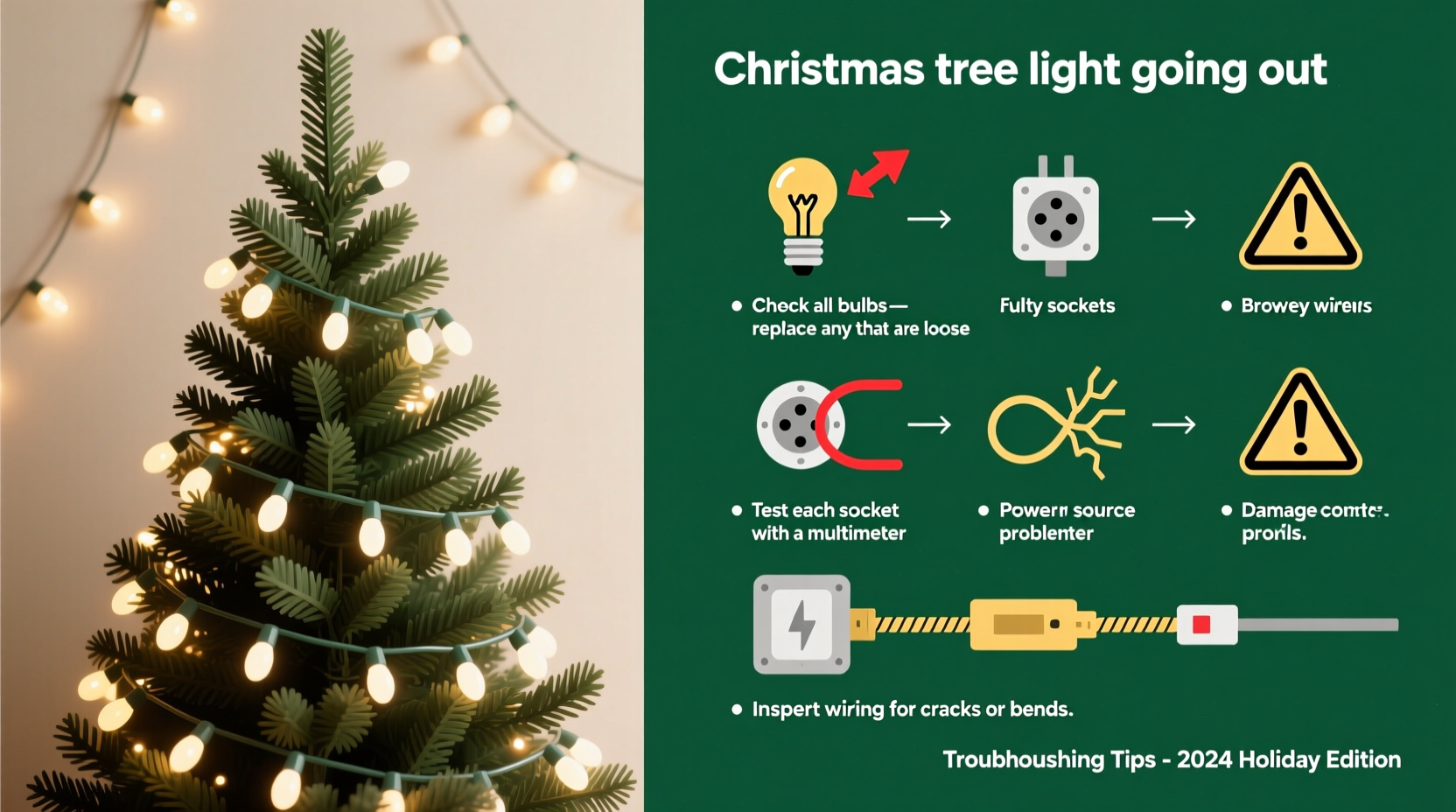
Every standard plug-in light string contains two small, replaceable fuses housed inside the male plug—typically one active and one spare. These fuses protect the circuit from current surges, but they’re also the most common single-point failure. A surge during initial power-up, a loose connection at the outlet, or even a brief short from a bent wire can blow the fuse without visible charring. Unlike household breakers, these fuses rarely “trip” visibly—they simply open the circuit.
Fuses are rated for specific amperage (usually 3A or 5A for standard mini-lights) and must be matched exactly. Using a higher-rated fuse invites overheating and fire risk; a lower-rated one will blow prematurely. Many people overlook the fuse because it’s tucked behind a sliding or hinged cover on the plug—and assume the problem lies deeper in the string.
To locate and replace the fuse: Unplug the string. Slide or pry open the fuse compartment on the plug. Remove the small glass or ceramic fuse with needle-nose pliers or tweezers. Hold it up to light—if the thin metal filament is broken or discolored, it’s blown. Insert the spare or a new fuse firmly into the holder. Reassemble and test.
2. Bulb Failure Cascades Differently in Incandescent vs. LED Strings
This is where most DIY troubleshooting fails—not because people don’t check bulbs, but because they misinterpret *how* each technology responds to a dead bulb.
In traditional incandescent mini-light strings, bulbs are wired in series. That means electricity flows through each bulb in sequence. If one bulb burns out, its filament breaks, opening the entire circuit. The whole string goes dark. But here’s the catch: many modern incandescent sets include shunt wires inside each bulb base. When the filament fails, the shunt is designed to activate—creating a bypass so current continues flowing. However, shunts degrade over time, especially with heat cycling and moisture exposure. A bulb may appear intact but have a failed shunt, silently breaking the circuit.
LED strings behave differently. Most use parallel-wired segments or built-in constant-current drivers. A single LED failure usually doesn’t kill the whole string—but it *can* cause section-wide dimming, flickering, or intermittent outages if the driver board detects an abnormal load or voltage drop. Worse, some budget LED strings skip proper surge protection. A minor voltage spike—like turning on a space heater on the same circuit—can damage the driver IC, leading to erratic behavior that mimics a “loose bulb” issue.
| Issue | Incandescent Strings | LED Strings |
|---|---|---|
| One dead bulb effect | Entire string often goes dark (if shunt fails) | Rarely affects full string; may dim or blink a segment |
| Most common failure point | Bulb shunts, socket corrosion, wire fatigue at base | Driver board, capacitor aging, poor solder joints near plug |
| Testing method | Use a bulb tester or continuity checker; look for blackened bases | Check for warm/hot spots near plug or controller box; test with multimeter on DC output |
| Lifespan under normal use | 2–4 seasons (heat degrades shunts & insulation) | 5–10+ seasons (if properly cooled and surge-protected) |
3. Wiring Fatigue and Physical Damage—The Hidden Culprits
Christmas lights endure extreme stress: coiling tightly year after year, being yanked from storage bins, draped over sharp tree branches, exposed to attic heat or garage cold, and stepped on during setup. Over time, this takes a toll on internal wiring. The copper strands inside the insulated wire become brittle. Micro-fractures develop—especially near the plug, at bulb sockets, or where wires bend repeatedly. These fractures don’t always cause immediate failure. Instead, they create high-resistance points that heat up under load, then intermittently open as thermal expansion separates the broken ends.
You’ll notice symptoms like: lights working when first plugged in, then fading or cutting out after 15–30 minutes; sections flickering only when the string is jostled; or one segment behaving normally until touched or bent. These aren’t “ghost problems”—they’re physical breaks revealing themselves under operational conditions.
“Over 68% of ‘intermittent’ light failures we see in our repair lab trace back to wire fatigue—not bulbs or fuses. The break is often invisible to the naked eye, located within 3 inches of the plug or inside a socket housing.” — Rafael Mendoza, Electrical Technician, Holiday Light Solutions Inc.
Diagnosing wire fatigue requires patience. Start by gently flexing the cord every 2–3 inches while the string is powered (use a GFCI-protected outlet and never touch exposed conductors). Watch for flickering or re-ignition. Pay special attention to the first 12 inches from the plug and the last 6 inches before the end plug. If you find a “sweet spot” where movement restores light, that section needs replacement—or professional repair if the strand is high-value.
4. Overloading Circuits and Daisy-Chaining Mistakes
Manufacturers specify maximum numbers of strings that can be safely connected end-to-end (e.g., “Connect up to 3 sets”). Exceeding this limit doesn’t just risk tripping a breaker—it creates cumulative voltage drop and heat buildup. Each additional string adds resistance. By the fifth or sixth set in a chain, voltage at the far end may fall below the minimum required for LEDs to illuminate or for incandescent filaments to glow steadily. The result? Dimming, slow startup, or complete failure of downstream strings—especially noticeable on longer runs or when using older extension cords.
Worse, many users daisy-chain *different brands or models*, ignoring compatibility. A 120V LED set rated for 40W may connect to a 120V incandescent set rated for 210W—overloading the first set’s internal wiring and driver. Even mixing LED strings with differing voltages (e.g., 12V battery-operated with 120V plug-in) via adapters introduces instability and ground-loop noise that disrupts microcontrollers.
Step-by-Step: Safe Daisy-Chaining Protocol
- Check labels: Verify the “Max Connect” rating printed on the UL tag near the plug of *each* string.
- Calculate total wattage: Add the wattage of all strings in a single chain. Do not exceed 80% of your circuit’s capacity (e.g., 1440W max on a standard 15A/120V circuit).
- Use heavy-gauge extension cords: Minimum 14 AWG for runs over 25 feet; avoid coiled cords while in use.
- Split large displays across circuits: Plug upper-tree lights into one outlet, lower-tree and base lights into another—even if outlets share a breaker, separate receptacles reduce localized load.
- Test incrementally: Connect one string, verify operation, then add the next—stopping at the manufacturer’s stated limit.
5. Storage Habits That Sabotage Reliability Year After Year
How you store lights between seasons directly impacts their performance the next December. Heat, humidity, compression, and UV exposure accelerate degradation far more than usage hours. Consider this: a string stored loosely in a ventilated cardboard box in a climate-controlled closet typically lasts 3–4 times longer than one stuffed into a plastic bin in a hot attic—even if both are used identically each year.
Common storage errors include: wrapping lights tightly around a spool or cardboard tube (kinking wires), stacking heavy boxes atop coiled strings (crushing sockets), storing near furnace vents or water heaters (thermal cycling), and leaving them in damp basements (promoting copper oxidation and socket corrosion). Oxidized contacts increase resistance, causing heat buildup and eventual failure at the weakest point—often the first or last bulb socket.
Mini Case Study: The “Three-Year Flicker”
Sarah in Portland purchased a premium 200-light LED string in 2021. Each year, it worked perfectly for the first week—then began flickering erratically on the lower third. She replaced bulbs, checked fuses, and even bought a new controller box. In 2023, she brought it to a local lighting technician. Diagnosis: the string had been stored in a plastic tub in her garage, where summer temperatures regularly exceeded 95°F. Thermal expansion/contraction cracked microscopic solder joints on the driver board’s voltage regulator. The regulator would function when cool but fail under load as it heated. The fix? A $12 component replacement and proper storage advice. Sarah now uses a ventilated cedar chest in her bedroom closet—and the string has run flawlessly for two full seasons.
FAQ
Why do only half my lights work—even after replacing bulbs and fuses?
This almost always indicates a break in the circuit between the working and non-working sections. In incandescent strings, it’s likely a failed shunt in the last working bulb or a broken wire near that socket. In LED strings, it points to a faulty segment connection or damaged driver output. Use a multimeter in continuity mode to test from the last working bulb’s socket to the first dead one’s socket. If no continuity, the break is in the wire between them.
Can I mix old and new light strings on the same circuit?
Technically yes—but strongly discouraged. Age differences mean varying internal resistances and aging components. An older string may draw more current or introduce noise that destabilizes newer LED drivers. If you must mix, keep them on separate daisy-chains and avoid connecting older incandescent sets directly to LED controllers.
My lights work fine indoors but go out outdoors. What’s wrong?
Outdoor-rated strings require tighter sealing and UV-resistant materials. If indoor lights are used outside—even under eaves—they’re exposed to moisture condensation and temperature swings that degrade insulation and corrode contacts. Also, outdoor GFCI outlets trip more readily with aging strings due to minute leakage current. Always use lights rated for outdoor use (look for “UL Listed for Outdoor Use” label) and test GFCIs before plugging in.
Conclusion
Your Christmas lights shouldn’t be a source of annual frustration. They’re engineered products with predictable failure modes—and every outage tells a story about voltage, heat, material limits, or human habit. Now you know how to read that story: check the fuse first, not last; understand whether your bulbs are failing *or* their shunts are sleeping; feel for wire fatigue before blaming electronics; respect daisy-chain limits like building codes; and store with the same care you give heirloom ornaments. These aren’t quick fixes—they’re habits that transform lights from disposable novelties into reliable, multi-season companions. This year, don’t just get your tree lit. Get it *understood*. Then enjoy the glow—not the guesswork.




 浙公网安备
33010002000092号
浙公网安备
33010002000092号 浙B2-20120091-4
Comments
No comments yet. Why don't you start the discussion?