
Dryness is one of the most common complaints among contact lens wearers. Even when you’re using rewetting drops as directed, your eyes may still feel gritty, irritated, or fatigued by midday. This persistent discomfort isn’t just inconvenient—it can affect your concentration, screen time tolerance, and overall quality of life. The truth is, rewetting drops alone don’t always address the root causes of dry lenses. Understanding why dryness persists despite their use is key to finding lasting relief.
Understanding the Eye’s Natural Moisture System
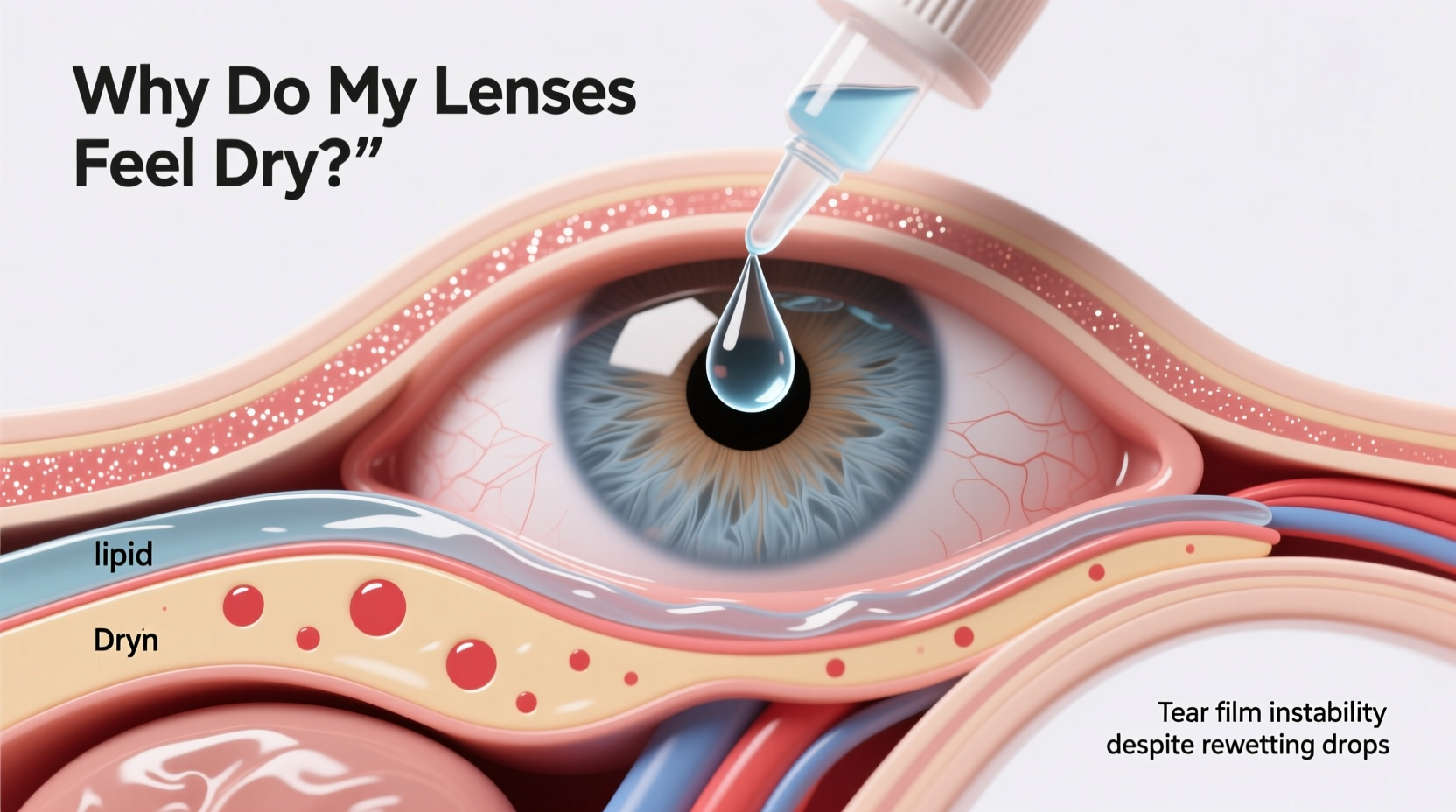
Your eyes rely on a delicate balance of tear production, oil secretion, and blinking mechanics to stay lubricated. The tear film consists of three layers: mucin (closest to the cornea), aqueous (middle water layer), and lipid (outer oily layer). Each plays a vital role in preventing evaporation and ensuring smooth optical clarity.
Contact lenses sit directly on this tear film, disrupting its natural dynamics. Even high-water-content lenses absorb moisture from the surface of your eye, especially in dry environments. While rewetting drops temporarily replenish the aqueous layer, they often fail to stabilize the entire tear structure—particularly if the lipid layer is compromised or tear production is already low.
“Many patients assume that using more drops will solve dryness, but without addressing underlying ocular surface issues, temporary relief won’t lead to long-term comfort.” — Dr. Lena Patel, Optometrist and Dry Eye Specialist
Common Reasons Contact Lenses Feel Dry Despite Using Drops
Rewetting drops are designed to provide short-term hydration, but several factors can undermine their effectiveness:
- Evaporative dry eye: If your meibomian glands (which produce the lipid layer) are blocked or underperforming, tears evaporate too quickly—even after applying drops.
- Poor blink quality: Staring at screens reduces blink rate and often results in incomplete blinks, failing to spread tears evenly across the lens surface.
- Lens material limitations: Some materials attract proteins and lipids from tears, forming deposits that reduce oxygen flow and wick away moisture.
- Environmental stressors: Air conditioning, heating, low humidity, and pollution increase tear evaporation beyond what drops can compensate for.
- Overuse of preservative-containing drops: Frequent use of preserved solutions can irritate the ocular surface over time, worsening dryness symptoms.
Choosing the Right Rewetting Drops—and Knowing Their Limits
Not all rewetting drops are created equal. Many contain ingredients like polyethylene glycol or propylene glycol that mimic natural tears, but some also include vasoconstrictors (to reduce redness) or preservatives that can cause dependency or inflammation with prolonged use.
The real issue lies in timing and frequency. Most people apply drops only when discomfort sets in—by then, the tear film is already destabilized. Proactive use, such as applying drops every few hours during extended wear, can help maintain stability before symptoms appear.
However, drops cannot replace missing oils or correct poor blinking habits. They are best viewed as a supportive tool rather than a cure-all.
| Type of Rewetting Drop | Best For | Limitations |
|---|---|---|
| Preserved Artificial Tears | Occasional use (1–3x/day) | Preservatives may cause irritation with frequent use |
| Preservative-Free Singles | Frequent use, sensitive eyes | More expensive; single-use packaging |
| Lipid-Based Sprays | Evaporative dry eye | Applied to closed eyelids, not directly on lenses |
| Hypotonic Solutions | Reducing corneal swelling from overwear | Niche use; not for daily hydration |
Step-by-Step Guide to Reducing Lens Dryness
If rewetting drops aren’t delivering the comfort you expect, follow this structured approach to identify and resolve the underlying issues:
- Assess your environment: Monitor indoor humidity levels. Use a humidifier if below 40%. Position yourself away from direct airflow from vents or fans.
- Evaluate your lens type: Consider switching to daily disposables, which have fewer deposits and fresher surfaces each day. Silicone hydrogel lenses offer higher oxygen permeability and better moisture retention.
- Optimize drop usage: Switch to preservative-free drops and apply them proactively—every 2–3 hours during wear—not just when dryness hits.
- Improve blink hygiene: Practice full blinks every 20 minutes during screen work. Close your eyes completely and squeeze gently for two seconds to express meibum.
- Treat underlying dry eye: Warm compresses and lid scrubs can improve meibomian gland function. Consult an eye care professional for diagnosis and treatment options like prescription drops (e.g., cyclosporine).
- Reduce wear time: Limit continuous lens wear to 10–12 hours max. Give your eyes a break with glasses, especially on weekends or during low-visibility tasks.
- Stay hydrated: Dehydration affects systemic fluid balance, including tear production. Drink adequate water throughout the day.
Real-Life Example: Sarah’s Struggle with Persistent Dryness
Sarah, a 32-year-old graphic designer, wore monthly silicone hydrogel lenses and used rewetting drops four to five times a day. Despite this, she experienced increasing dryness, especially during afternoon screen sessions. She assumed her drops weren’t strong enough and switched brands multiple times—with no improvement.
After visiting her optometrist, she learned she had mild meibomian gland dysfunction. Her lipid layer was insufficient, causing rapid tear evaporation. The rewetting drops were helping momentarily, but the underlying issue remained unaddressed.
Her doctor recommended daily warm compresses, lid hygiene with hypochlorous acid wipes, and switching to daily disposable lenses. Within three weeks, her comfort improved significantly. She now uses preservative-free drops only twice a day and reports much better end-of-day comfort.
“Treating dry eye isn’t just about adding moisture—it’s about preserving it.” — Dr. Alan Wu, Cornea and Refractive Surgery Specialist
Do’s and Don’ts for Managing Contact Lens Dryness
| Do | Don’t |
|---|---|
| Use preservative-free drops for frequent application | Use redness-reducing drops regularly—they can worsen rebound redness |
| Blink fully and frequently during screen use | Rub your eyes while wearing lenses—this disrupts the tear film |
| Replace lenses on schedule—even if they feel fine | Sleep in your contacts unless specifically approved by your doctor |
| Use a humidifier in dry office or bedroom environments | Expose lenses to water (showering, swimming)—increases infection risk |
| Attend annual eye exams to monitor ocular surface health | Ignore persistent dryness—it could signal early keratitis or chronic dry eye |
When to See an Eye Care Professional
Occasional dryness is normal, but chronic discomfort—even with proper drop use—warrants evaluation. Signs that you should schedule an appointment include:
- Burning or stinging that worsens through the day
- Blurred vision that clears briefly with blinking
- Excessive mucus around the eyes
- Sensitivity to light
- Feeling like something is stuck in your eye
An eye care provider can perform tests like tear breakup time (TBUT), meibography, or osmolarity testing to pinpoint whether your dryness stems from insufficient tear production, rapid evaporation, or inflammation.
FAQ
Can I overuse rewetting drops?
Yes, especially if they contain preservatives like benzalkonium chloride (BAK). These can accumulate on lenses and damage the corneal epithelium with frequent use. Preservative-free drops in single-dose vials are safer for multiple daily applications.
Why do my eyes feel drier with new lenses?
Even advanced lens materials can alter tear dynamics. New lenses may initially absorb more moisture until they reach equilibrium with your tear film. Also, protein buildup starts immediately upon wear. If dryness persists beyond a few days, consult your eye doctor—your fit or material choice may need adjustment.
Are there contact lenses designed for dry eyes?
Yes. Daily disposables minimize deposit accumulation. Brands like DAILIES Total1 (Alcon) and Biotrue ONEday (Bausch + Lomb) are formulated with moisture-sealing technology. Some lenses use a water gradient design, where the surface is more hydrophilic to retain lubrication. Discuss these options with your optometrist.
Conclusion: Beyond the Bottle
Rewetting drops are a helpful tool, but they’re not a standalone solution for chronic contact lens dryness. True comfort comes from understanding your eye’s unique physiology, choosing appropriate lens materials, managing environmental influences, and addressing underlying conditions like meibomian gland dysfunction. Relying solely on drops is like watering a plant with cracked soil—the water runs off before it can nourish the roots.
Take control of your lens comfort by combining smart habits with professional guidance. Small changes—like switching to dailies, improving blink technique, or using warm compresses—can make a dramatic difference. Your eyes deserve more than temporary fixes. Invest in sustainable solutions, and you’ll enjoy clearer vision and greater comfort every day.




 浙公网安备
33010002000092号
浙公网安备
33010002000092号 浙B2-20120091-4
Comments
No comments yet. Why don't you start the discussion?