
Baking cookies should be a joyful ritual—measuring flour, creaming butter and sugar, dropping dough by the spoonful onto a tray, and pulling out golden-brown treats that smell like comfort. But when you open the oven only to find charred bottoms and underdone tops, frustration takes over. This common yet fixable issue affects home bakers of all skill levels. The good news? Burnt cookie bottoms are rarely due to poor technique alone. More often, they stem from overlooked details in equipment, oven behavior, or recipe execution. Understanding the root causes empowers you to adjust your process and achieve consistent, evenly baked cookies.
Understanding Heat Distribution in Your Oven
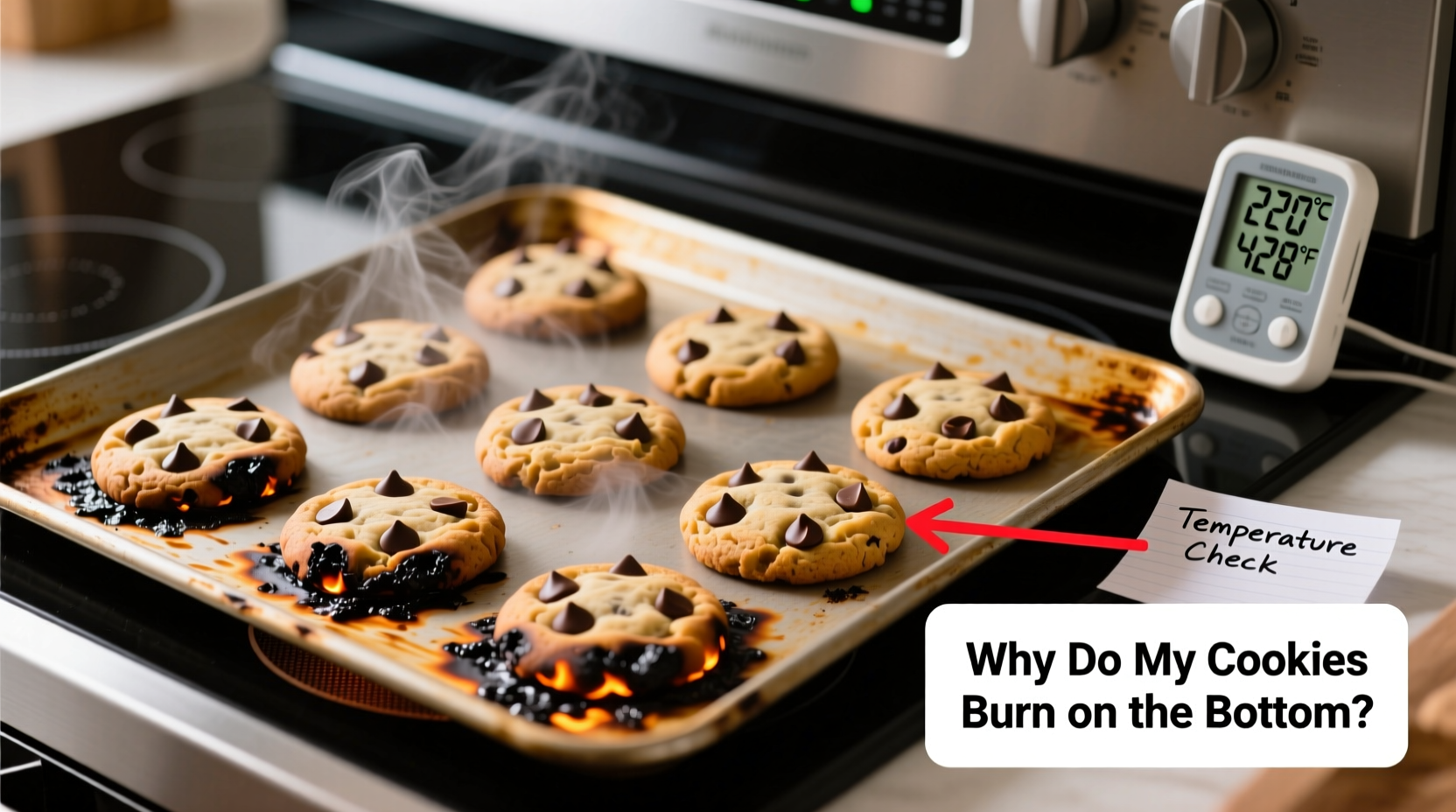
Ovens are not uniform environments. Most rely on heating elements located at the top (for broiling) and bottom (for baking), but heat distribution varies significantly between models and even within the same oven over time. In many conventional ovens, the lower element cycles on and off more aggressively during preheating and baking, creating intense radiant heat near the floor of the oven. If your baking sheet sits too close to this source, the underside of your cookies absorbs excessive direct heat before the interior has time to set.
This problem is compounded in older or poorly calibrated ovens where temperature accuracy can fluctuate by as much as 25–50°F above or below the set point. A thermostat reading 350°F might actually be delivering 390°F at the rack level, accelerating browning on the bottom while the center remains soft.
Common Culprits Behind Burnt Cookie Bottoms
The issue isn’t usually one single mistake but a combination of factors that amplify each other. Identifying these contributors helps isolate what needs adjustment in your kitchen setup.
- Dark or non-stick baking sheets: These absorb and radiate heat more efficiently than light aluminum pans, increasing the risk of over-browning on the underside.
- Thin baking sheets: Lightweight metal heats up quickly and lacks thermal mass, leading to hot spots and uneven cooking.
- No insulating layer: Baking directly on a pan without parchment paper or a silicone mat allows maximum contact with heated metal.
- Oven calibration errors: An oven running hotter than displayed will accelerate browning, especially on surfaces in direct contact with heat.
- Dough spread and thickness: Cookies that spread too thin cook faster on the bottom and may burn before puffing properly.
How Pan Color and Material Affect Baking
Metal conducts heat rapidly, but its finish dramatically influences how that heat interacts with food. Light-colored, shiny aluminum reflects some heat, slowing browning. In contrast, dark or nonstick-coated pans absorb infrared radiation, becoming secondary heat sources themselves.
| Pan Type | Heat Reaction | Effect on Cookie Bottoms |
|---|---|---|
| Light Aluminum | Reflects moderate heat | Even browning, less likely to burn |
| Dark Non-Stick | Strongly absorbs heat | Higher risk of burnt bottoms |
| Insulated Double-Layer | Slows heat transfer | Prevents scorching; ideal for delicate cookies |
| Cast Iron or Carbon Steel | Retains intense heat | Not recommended for standard drop cookies |
“Many home bakers don’t realize their bakeware choice can raise effective temperature by 15–25 degrees. Switching from dark to light pans often solves burning issues immediately.” — Chef Lydia Tran, Pastry Instructor at Midwest Culinary Institute
Step-by-Step Guide to Prevent Burnt Cookie Bottoms
Follow this practical sequence to diagnose and correct the problem systematically. Implement one change at a time to identify what works best for your oven and recipe.
- Verify your oven temperature. Use an independent oven thermometer placed on the middle rack. Run a full preheat cycle and compare readings. Adjust future baking temperatures accordingly if discrepancies exist.
- Switch to light-colored, heavy-gauge baking sheets. Avoid warped or flimsy trays. Commercial-grade half-sheet pans (18x13 inches) made of aluminized steel offer durability and even heating.
- Use parchment paper or silicone baking mats. Both create a thin insulating barrier between dough and pan, reducing direct heat transfer. Parchment also prevents sticking without added fat.
- Elevate the baking rack to center position. Ensure at least 2 inches of clearance above and below the pan for proper air circulation.
- Reduce oven temperature by 25°F. If using a dark pan or experiencing recurring issues, lower the temp and extend baking time slightly to allow internal structure to catch up with surface browning.
- Add a second pan underneath. Place an empty sheet pan on the rack below your cookies to block radiant heat from the oven floor—a trick used in professional kitchens.
- Rotate the pan halfway through baking. Ovens have hot spots. Turning the pan 180 degrees ensures even exposure and compensates for irregular heating patterns.
Tips for Recipe and Dough Adjustments
While equipment plays a major role, dough composition and handling influence how cookies respond to heat. Certain ingredients increase susceptibility to bottom browning.
Butter-heavy recipes, especially those without sufficient flour or egg structure, tend to spread excessively during baking. Thin cookies have more surface area in contact with the hot pan, accelerating heat absorption and increasing burn risk. Similarly, sugars like brown sugar and honey caramelize at lower temperatures, contributing to premature darkening.
To improve structural integrity:
- Increase flour by 1–2 tablespoons per cup if cookies consistently spread too thin.
- Add an extra egg yolk for richness and binding, or use melted butter instead of softened to reduce aeration and spreading.
- Avoid substituting liquid sweeteners unless the recipe accounts for moisture differences.
Mini Case Study: Fixing Family Recipe Failures
Sarah M., a home baker from Portland, had been making her grandmother’s chocolate chip cookie recipe for years. While the flavor was perfect, she struggled with blackened bottoms despite following instructions precisely. She tried reducing baking time, but the centers remained doughy. After tracking variables, she discovered three key issues: her nonstick cookie sheet, an oven running 40°F hot, and room-temperature dough causing rapid spread.
She replaced the pan with a light aluminum half-sheet, verified her oven temp with a thermometer, began chilling the dough for 45 minutes, and lined the pan with parchment. She also lowered the baking temperature from 375°F to 350°F. The result? Golden, evenly baked cookies with crisp edges and soft centers—exactly as described in the original recipe card.
Essential Baking Troubleshooting Checklist
Use this checklist before your next batch to prevent burnt bottoms:
- ☑ Verify oven temperature with a standalone thermometer
- ☑ Use light-colored, heavy-duty baking sheets
- ☑ Line pans with parchment paper or silicone mat
- ☑ Position oven rack in the center third of the oven
- ☑ Chill dough for 30–60 minutes before baking
- ☑ Avoid overfilling the baking sheet (leave 2-inch gaps)
- ☑ Rotate pan 180° halfway through baking
- ☑ Consider lowering oven temp by 25°F if problems persist
- ☑ Check cookies early—start testing 2–3 minutes before recipe suggests
- ☑ Let cookies cool on the pan for 2–3 minutes before transferring
Frequently Asked Questions
Can I still use my dark baking sheet for cookies?
Yes, but adjust accordingly. Reduce oven temperature by 25°F and monitor closely. Using parchment paper is essential when baking on dark pans to minimize over-browning.
Why do my cookies burn even when I follow the recipe exactly?
Recipes assume standardized conditions, but home ovens vary widely. Your oven may run hot, your pan may conduct too much heat, or your dough may be warmer than expected—all affecting outcome. Trust visual cues over timers and adapt based on your kitchen’s unique environment.
Is convection baking better for preventing burnt bottoms?
Convection can help by circulating air more evenly, reducing reliance on radiant heat from the bottom. However, it also accelerates surface drying. If using convection, reduce temperature by 25°F and watch carefully, as cookies may bake faster overall.
Final Thoughts and Call to Action
Burnt cookie bottoms don’t mean you’re a bad baker—they mean you’ve encountered one of baking’s most common technical challenges. With attention to oven calibration, pan selection, dough preparation, and baking technique, you can transform inconsistent results into a reliable process. The goal isn’t perfection on the first try, but progress through mindful adjustments.
Next time you bake, apply one or two of the strategies outlined here. Take notes on what changes you made and how the cookies responded. Over time, you’ll develop an intuitive sense of how your oven behaves and how to work with it, not against it.




 浙公网安备
33010002000092号
浙公网安备
33010002000092号 浙B2-20120091-4
Comments
No comments yet. Why don't you start the discussion?