
If you've ever pulled a tray of cookies from the oven only to find flat, greasy puddles instead of soft, pillowy treats, you're not alone. Cookie spreading is one of the most common baking frustrations—even among experienced bakers. The good news? It’s rarely random. Behind every runaway cookie lies a predictable combination of ingredients, technique, and temperature governed by real baking science. Understanding these factors gives you control over the outcome. With a few targeted adjustments, you can consistently bake cookies that hold their shape, stay thick, and deliver the texture you want.
The Science of Spread: What Actually Happens in the Oven
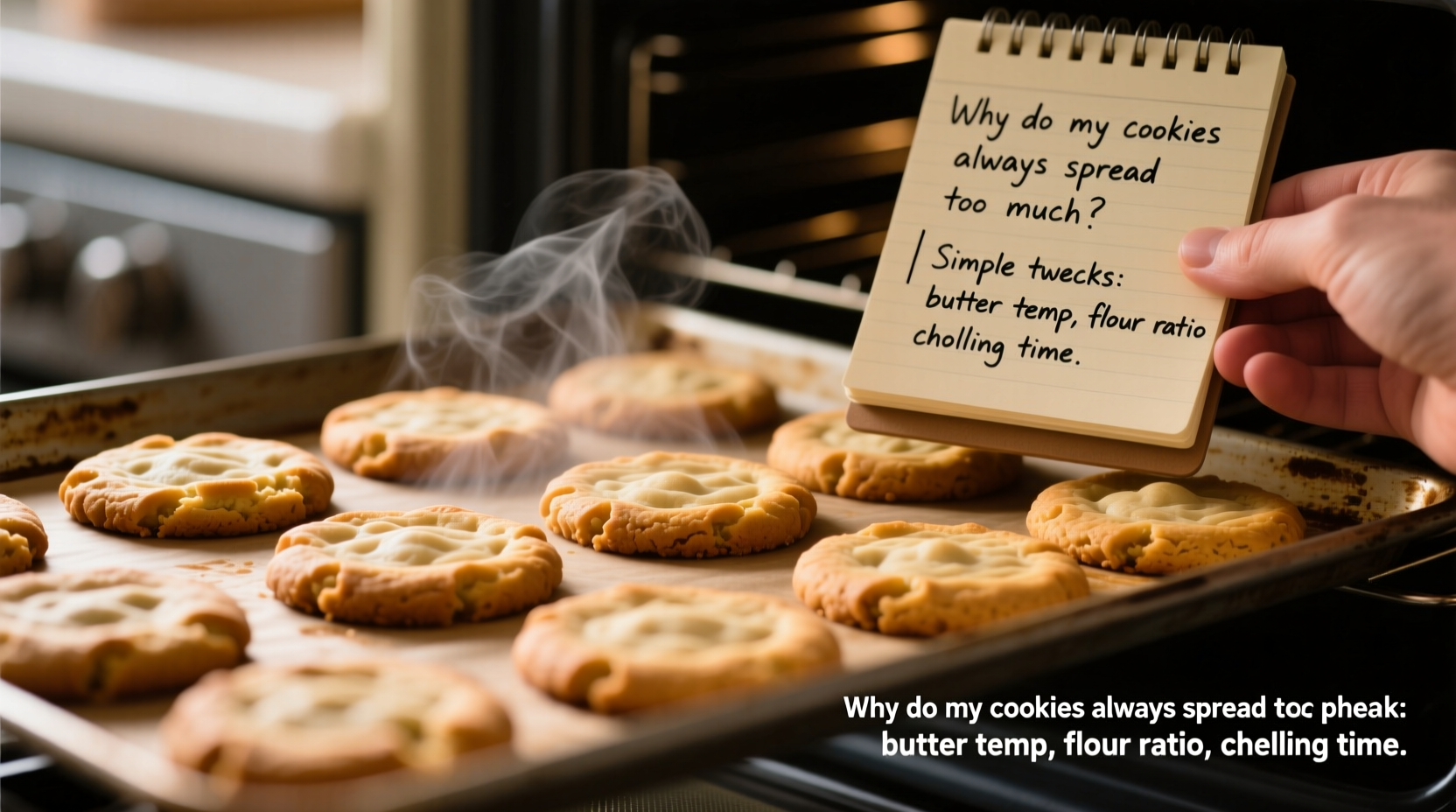
When cookie dough hits the heat, a series of physical and chemical reactions begins. Spreading occurs when the dough melts faster than the structure can set. This balance between melting and setting depends on three key processes:
- Fat Melting: Butter or shortening liquefies early in baking (butter melts around 90–95°F). If this happens too quickly, the dough collapses before proteins and starches have time to firm up.
- Leavening Activation: Baking soda and baking powder release gas (carbon dioxide), which creates lift. But if the dough spreads too fast, those bubbles escape laterally instead of upward.
- Protein and Starch Setting: Eggs provide protein that coagulates with heat, while flour contributes starch that gelatinizes. Together, they form the structural framework. If heat exposure outpaces this process, structure fails.
The ideal cookie holds its shape long enough for internal structure to stabilize—typically within the first 4–6 minutes of baking. After that, minimal further spread should occur. When spreading continues past that point, something has tipped the balance toward liquidity and away from structure.
Common Causes of Excessive Spread (and How to Fix Them)
Several variables influence how much your cookies spread. Most issues stem from one or more of the following:
1. Butter Temperature Is Too High
Using melted or overly soft butter introduces liquid fat into the dough from the start. This accelerates spreading because there's no solid fat left to slow down collapse. Room-temperature butter should be cool to the touch, not greasy or shiny.
2. Incorrect Flour Measurement
Too little flour means less structure. Scooping flour directly from the bag compacts it, leading to inconsistent amounts. Under-measuring is even more common when using volume (cups) instead of weight (grams).
3. Leavening Agent Issues
Expired baking soda or powder won’t produce enough lift. Worse, excess leavener can create large air pockets that weaken structure and encourage spreading as gases escape unevenly.
4. Overcrowding the Pan
Cookies need space to breathe. Placing them too close traps steam and raises local humidity, slowing surface drying and encouraging lateral spread.
5. Oven Temperature Inaccuracy
An oven that runs too cool prolongs the time it takes for eggs and starches to set, allowing more time for spreading. Conversely, an oven that’s too hot may brown the outside too quickly while leaving the center under-set.
6. Sugar Composition
Granulated sugar promotes spread more than brown sugar. Why? Brown sugar contains moisture and acid, which help activate baking soda earlier and strengthen structure. A high ratio of white sugar increases liquidity in the dough.
“Cookie spread isn’t just about ingredients—it’s about timing. The race between melting and setting determines everything.” — Dr. Corrie Sutherlin, Food Scientist & Baking Chemistry Educator
Do’s and Don’ts: A Practical Table for Better Cookies
| Do’s | Don’ts |
|---|---|
| Use a kitchen scale to weigh ingredients (especially flour) | Measure flour by scooping directly from the bag |
| Chill dough for at least 30 minutes (or up to 72 hours) | Bake immediately after mixing warm dough |
| Use butter that’s cool to the touch (~65°F) | Use melted or greasy-soft butter unless recipe specifies |
| Line pans with parchment or silicone mats | Grease baking sheets unnecessarily (adds extra fat) |
| Leave 2–3 inches between cookies | Crowd the pan to save space |
| Test oven temperature with a reliable thermometer | Assume your oven dial is accurate |
Step-by-Step Guide to Preventing Cookie Spread
Follow this sequence to maximize structure and minimize unwanted flattening:
- Weigh Your Ingredients: Use grams for accuracy. Standard all-purpose flour should be ~120g per cup. Even a 10g deficit can cause noticeable spread.
- Cream Butter and Sugar Properly: Beat cool, softened butter with sugar until light and fluffy (about 2–3 minutes). This incorporates air, which supports rise and slows collapse.
- Add Eggs One at a Time: Let each fully incorporate before adding the next. Eggs add emulsifiers and protein—both critical for stability.
- Sift Dry Ingredients: Combine flour, leavener, and salt. Sifting ensures even distribution and prevents clumps that could weaken structure.
- Chill the Dough: Refrigerate for a minimum of 30 minutes. For best results, chill overnight. Cold dough resists melting longer in the oven.
- Preheat Thoroughly: Allow your oven to reach full temperature—wait 10–15 minutes after the indicator says “ready.” Use an oven thermometer to verify.
- Portion Evenly and Space Out: Use a scoop for uniform size. Place cookies at least 2 inches apart on ungreased or lined sheets.
- Bake One Sheet at a Time: Rotate position halfway through for even heat exposure. Convection ovens reduce spread but require lowering temperature by 25°F.
Real Example: From Flat Flops to Perfect Batch
Sarah, a home baker in Portland, struggled for months with her chocolate chip cookies turning into thin, crispy discs. She followed a popular online recipe to the letter but kept getting spread. After tracking her process, she discovered three issues: she was using melted butter for easier mixing, measuring flour by scooping from the bag (which packed it down), and baking on hot pans straight from the dishwasher.
She made three changes: switched to properly softened butter, started spooning flour into her measuring cup and leveling it off, and began chilling her dough for 45 minutes. The result? Cookies that held their shape, had a soft center, and stayed thick. “I couldn’t believe such small changes made such a big difference,” she said. “Now I get compliments every time I bring them to work.”
Advanced Tweaks for Precision Control
Once you’ve mastered the basics, consider these advanced modifications for fine-tuning texture and spread:
- Increase Flour Slightly: Add 1–2 tablespoons more flour per cup if cookies consistently spread, especially in humid environments where flour absorbs moisture.
- Swap Some Butter for Shortening: Shortening has a higher melting point than butter, so it stays solid longer in the oven. Try replacing 25% of the butter with vegetable shortening for sturdier cookies.
- Use Bread Flour: Higher protein content (12–14%) strengthens gluten development, helping dough resist spreading. Best for chewy styles like chocolate chunk or oatmeal raisin.
- Add an Extra Egg Yolk: Increases fat and emulsifiers, improving richness and structure without drying out the cookie.
- Lower Sugar Ratio: Reduce granulated sugar by 1–2 tablespoons and increase brown sugar slightly. This reduces liquidity while enhancing chewiness.
Keep in mind: every change affects flavor and texture. Adjust one variable at a time to isolate its effect.
Frequently Asked Questions
Can I fix already-spread cookies?
Unfortunately, once cookies have over-spread during baking, they can’t be reshaped. However, you can repurpose them—crush them for pie crusts, ice cream toppings, or trifle layers. For future batches, apply the fixes above to prevent recurrence.
Why do my cookies spread more in summer?
High ambient temperatures soften butter faster, both during mixing and before baking. Humidity can also affect flour moisture absorption. To compensate, chill dough longer (up to 2 hours), use air conditioning while prepping, and avoid leaving dough on countertops.
Does pan color affect spread?
Yes. Dark-colored baking sheets absorb more heat than light or shiny ones, causing bottoms to heat faster. This can lead to quicker fat melt and increased spread. If using dark pans, reduce oven temperature by 25°F to offset the effect.
Essential Checklist for Non-Spreading Cookies
- ✅ Weigh flour or measure correctly (spoon & level)
- ✅ Use cool, properly softened butter—not melted
- ✅ Cream butter and sugar until pale and fluffy
- ✅ Chill dough for at least 30 minutes
- ✅ Preheat oven and verify temperature
- ✅ Line baking sheet (parchment or silicone mat)
- ✅ Leave adequate space between cookies (2+ inches)
- ✅ Bake one sheet at a time in center rack
- ✅ Remove when edges are set but centers are soft
- ✅ Cool on sheet for 5 minutes before transferring
Conclusion: Take Control of Your Cookies
Cookie spreading isn’t magic—it’s mechanics. By understanding the interplay between fat, flour, temperature, and time, you transform guesswork into precision. Small, science-backed adjustments make all the difference between disappointment and delight. Whether you prefer thin and crisp or thick and chewy, the power is in your hands. Start with one tweak at a time, take notes, and soon you’ll bake with confidence, consistency, and creativity.




 浙公网安备
33010002000092号
浙公网安备
33010002000092号 浙B2-20120091-4
Comments
No comments yet. Why don't you start the discussion?