
Baking perfect cookies—golden at the edges, soft in the center, and gloriously thick—is one of those kitchen triumphs that feels both simple and magical. Yet many home bakers face the same frustrating issue: their cookies turn into flat, greasy puddles on the baking sheet. You followed the recipe, measured carefully, and still ended up with thin, over-spread discs instead of plush, bakery-style treats. The good news? Cookie spread is not random. It’s predictable, controllable, and fixable. Understanding the science behind cookie structure allows you to adjust ingredients, temperature, and technique to consistently produce thick, chewy cookies that hold their shape.
The Science Behind Cookie Spread
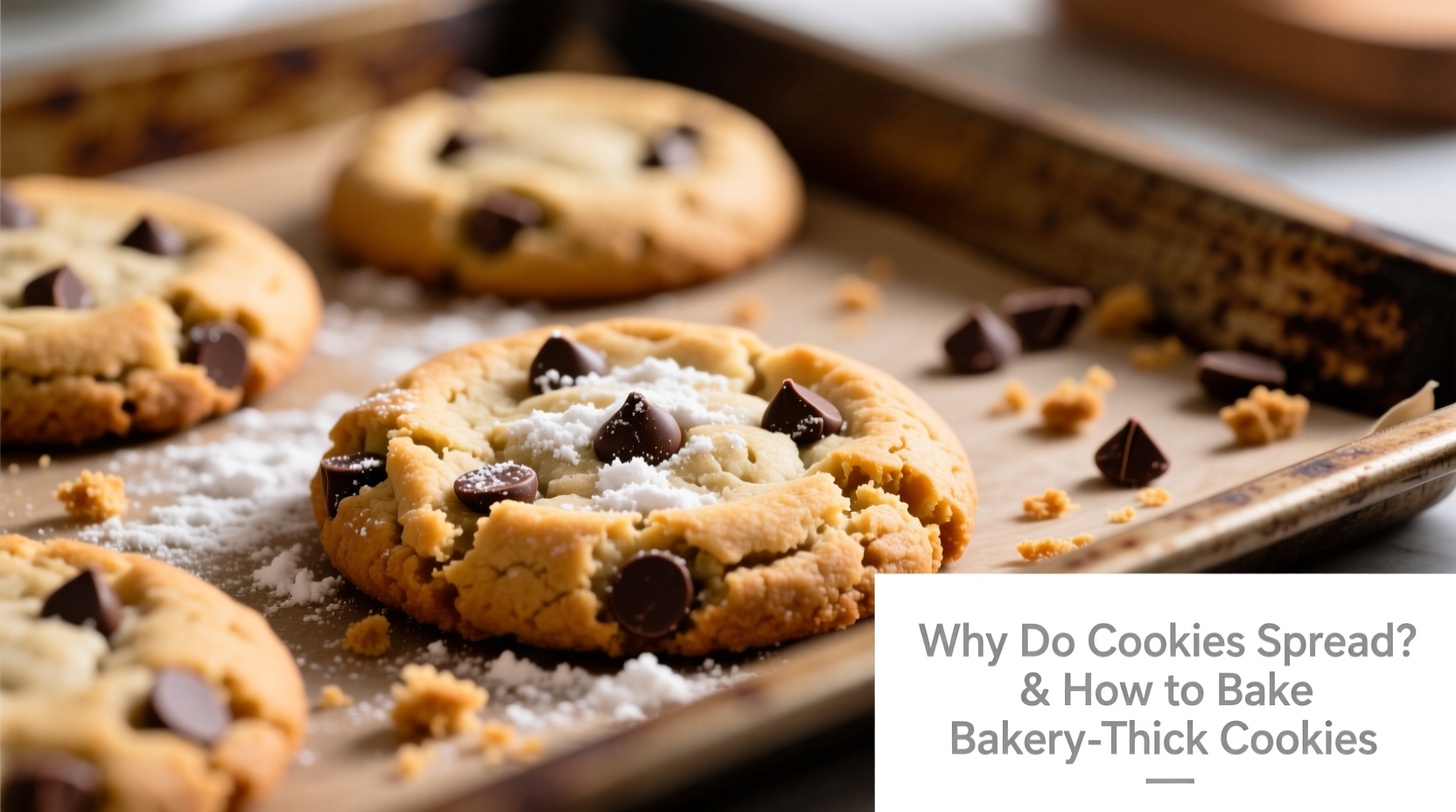
Cookies spread during baking due to a balance—or imbalance—between structure and fluidity. When dough hits the heat of the oven, fats melt, sugars dissolve, and leavening agents release gas. If the dough doesn’t set quickly enough, it flows outward before it can firm up. The key factors influencing this are fat content, sugar type, flour strength, egg moisture, and oven behavior.
Fat plays a central role. Butter, being about 80% fat and 15–18% water, melts at body temperature, which means it begins to liquefy as soon as the dough warms. This early melting encourages spread. In contrast, shortening has a higher melting point and holds its shape longer, helping maintain thickness. Many professional bakeries use a blend of butter and shortening to get flavor and structure.
Sugar also affects spread. Granulated sugar promotes crispness and flow because it dissolves easily and creates liquid in the dough. Brown sugar adds moisture from molasses, which increases tenderness but can contribute to spreading if not balanced with enough flour or chilled properly.
Common Causes of Excessive Spread
Flat cookies rarely result from a single mistake. More often, they stem from a combination of small oversights. Identifying these culprits is the first step toward fixing them.
- Butter too soft or melted: Starting with melted or overly soft butter introduces liquidity before baking even begins.
- Incorrect flour measurement: Scooping flour directly from the bag compacts it, leading to too little flour overall and weak structure.
- Oven temperature too low: A cool oven delays setting, giving dough more time to spread before it firms up.
- Dough not chilled: Warm dough melts faster in the oven. Chilling solidifies the fat, delaying spread.
- Overcreaming butter and sugar: Beating too long incorporates excess air and warms the butter, increasing spread risk.
- Using dark or non-insulated baking sheets: These absorb heat quickly, causing the bottom to melt before the cookie sets.
“Temperature control is everything in cookie baking. Cold dough, cold pans, and a properly preheated oven give you the window you need for structure to form before fat liquefies.” — Chef Maria Tran, Pastry Instructor at New York Culinary Academy
How to Bake Thick, Bakery-Style Cookies
Bakery cookies stay thick not by luck, but through deliberate methods. They use precise ratios, controlled temperatures, and structural reinforcements. You can replicate these results at home with a few strategic adjustments.
Use the Right Flour Ratio
Flour provides gluten, which gives dough elasticity and structure. Too little, and the cookie collapses. All-purpose flour works well, but measuring correctly is essential. Always spoon flour into the measuring cup and level it off—don’t scoop. Better yet, use a kitchen scale: 120 grams per cup is standard.
For extra thickness, consider adding 1–2 tablespoons more flour per batch. Alternatively, replace 1–2 tablespoons of all-purpose flour with cornstarch. Cornstarch softens the texture while improving stability, mimicking the tender-yet-thick quality of bakery cookies.
Chill Your Dough—Seriously
This is the single most effective step. Chilling dough for at least 30 minutes (preferably 1–2 hours) hardens the fat, so it melts slower in the oven. Extended chilling (up to 72 hours) also enhances flavor through slow fermentation and improves texture.
For best results, portion the dough into balls and chill them on the baking sheet before transferring to the oven. This prevents handling-induced warmth and ensures even cooling.
Control Your Fat
Butter delivers unmatched flavor, but its low melting point is a liability. To keep cookies thick without sacrificing taste, try one of these approaches:
- Mix half butter, half shortening (e.g., ½ cup each).
- Use clarified butter (ghee), which has most of the water removed.
- Opt for European-style cultured butter with higher fat content (like Plugson or Kerrygold).
Avoid recipes calling for melted butter unless they’re designed for thin, lacy cookies. Melted butter = immediate liquidity = guaranteed spread.
Proven Techniques in Action: A Mini Case Study
Sarah, a home baker in Portland, struggled for years with her chocolate chip cookies turning flat. Her favorite recipe used all butter, room-temperature eggs, and was baked immediately after mixing. Despite using premium ingredients, her cookies resembled pancakes by the end of baking.
She decided to test changes one at a time. First, she switched to a butter-shortening blend (¾ cup butter + ¼ cup shortening). No improvement. Then, she began weighing her flour—discovering she had been under-measuring by nearly 15%. After correcting that, cookies held shape slightly better. The real breakthrough came when she started chilling the dough for 48 hours. Not only did spread reduce dramatically, but the cookies developed a richer, caramelized depth of flavor.
Her final version: weighed ingredients, 50/50 butter-shortening blend, 2 tablespoons extra flour, dough chilled for 48 hours, and baked on light-colored aluminum sheets. Result? Thick, bakery-quality cookies with crackled tops and soft centers—exactly what she wanted.
Step-by-Step Guide to Thick Cookies
Follow this sequence for reliable, thick results every time:
- Weigh or properly measure flour – Use 120g per cup, spooned and leveled.
- Use cool, cut-up butter – Cube chilled butter and cream briefly just until combined with sugar.
- Add dry ingredients gradually – Mix until just incorporated to avoid overdeveloping gluten.
- Portion dough while cold – Roll into balls and place on a tray.
- Chill dough for 1–2 hours (or freeze for 15 min) – Ensures fat stays solid longer.
- Preheat oven to correct temperature – Use an oven thermometer to verify accuracy; aim for 350°F (177°C).
- Bake on light-colored, insulated baking sheets – Dark pans increase bottom heat and promote spread.
- Rotate pans halfway – Ensures even baking and consistent rise.
- Cool on sheet for 5 minutes – Lets structure set before transfer.
| Factor | Problem | Solution |
|---|---|---|
| Butter Temperature | Melted or too soft → rapid spread | Use cold, cubed butter; avoid melting |
| Flour Amount | Too little → weak structure | Weigh flour; add 1–2 tbsp extra if needed |
| Dough Temperature | Warm dough → early melt | Chill 1–2 hours or freeze 15 min |
| Oven Temp | Too low → delayed setting | Preheat fully; verify with thermometer |
| Baking Sheet | Dark/non-insulated → hot base | Use light aluminum or insulated sheets |
Checklist: How to Prevent Cookie Spread
Before you bake, run through this checklist to ensure success:
- ✅ Weigh or properly measure flour
- ✅ Use cold or slightly softened (not melted) butter
- ✅ Cream butter and sugar only until combined
- ✅ Incorporate 1–2 tbsp cornstarch for softer thickness
- ✅ Chill dough for at least 1 hour (or freeze dough balls)
- ✅ Preheat oven with baking sheet inside (optional for extra lift)
- ✅ Use light-colored, heavy-duty baking sheets
- ✅ Avoid overcrowding the pan
- ✅ Let cookies rest on sheet 5 minutes after baking
Frequently Asked Questions
Can I rescue dough that’s already too soft?
Yes. If your dough is warm or sticky, cover and refrigerate for 30–60 minutes before portioning. If already shaped, freeze the balls for 10–15 minutes before baking. Do not bake warm dough.
Why do some recipes call for boiling the butter?
Boiling butter removes water content, concentrating the fat. This reduces steam during baking and limits spread. It also adds a nutty, toasted flavor. However, it changes texture—best used in advanced recipes designed for it.
Do eggs affect cookie thickness?
Yes. Larger eggs add more moisture, which can increase spread. Use large eggs unless specified otherwise, and let them come to room temperature slowly—cold eggs can cause butter to seize, affecting texture. For thicker cookies, some bakers reduce the egg by 1 teaspoon or add an extra yolk for richness without excess water.
Final Tips for Consistent Results
Consistency comes from control. Once you understand the variables, you can adjust them intentionally. Keep a baking journal noting flour weight, butter type, chill time, and oven temp. Over time, you’ll identify your ideal formula.
Also, consider your altitude. At higher elevations, lower atmospheric pressure causes liquids to evaporate faster and leavening gases to expand more. Bakers above 3,000 feet may need to increase flour by 1–2 tablespoons, reduce sugar slightly, and lower oven temperature by 25°F to prevent rapid spread and over-browning.
Conclusion: Take Control of Your Cookies
Flat cookies aren’t a lost cause—they’re a signal. They tell you something in your process needs adjusting. Whether it’s the butter, the flour, the temperature, or the timing, each factor plays a role in the final shape. By applying the principles of fat control, proper chilling, accurate measuring, and smart equipment choices, you can transform your cookies from sad, spread-out disks into thick, bakery-style delights.
Don’t accept mediocrity in your cookie jar. Experiment with one change at a time, document your results, and refine your method. Soon, you’ll have a signature recipe that delivers perfection every time—golden edges, soft center, and that satisfyingly thick profile everyone loves.




 浙公网安备
33010002000092号
浙公网安备
33010002000092号 浙B2-20120091-4
Comments
No comments yet. Why don't you start the discussion?