
Almost every air traveler has experienced it: that uncomfortable pressure in the ears during takeoff or landing, sometimes followed by a sudden \"pop.\" While usually harmless, this sensation can range from mildly annoying to intensely painful—especially for children or people with colds. Understanding why this happens is the first step toward minimizing discomfort. More importantly, knowing what you can do before and during the flight gives you control over your experience in the cabin.
The human ear is remarkably sensitive to changes in atmospheric pressure. As an airplane climbs or descends, the air pressure outside the body shifts rapidly. The middle ear, a small cavity behind the eardrum, struggles to keep up unless actively equalized. When the pressure difference becomes too great, the eustachian tube—the narrow passage connecting the middle ear to the back of the throat—must be opened deliberately to restore balance. This is the root cause of the \"popping\" sensation.
The Science Behind Ear Popping at Altitude
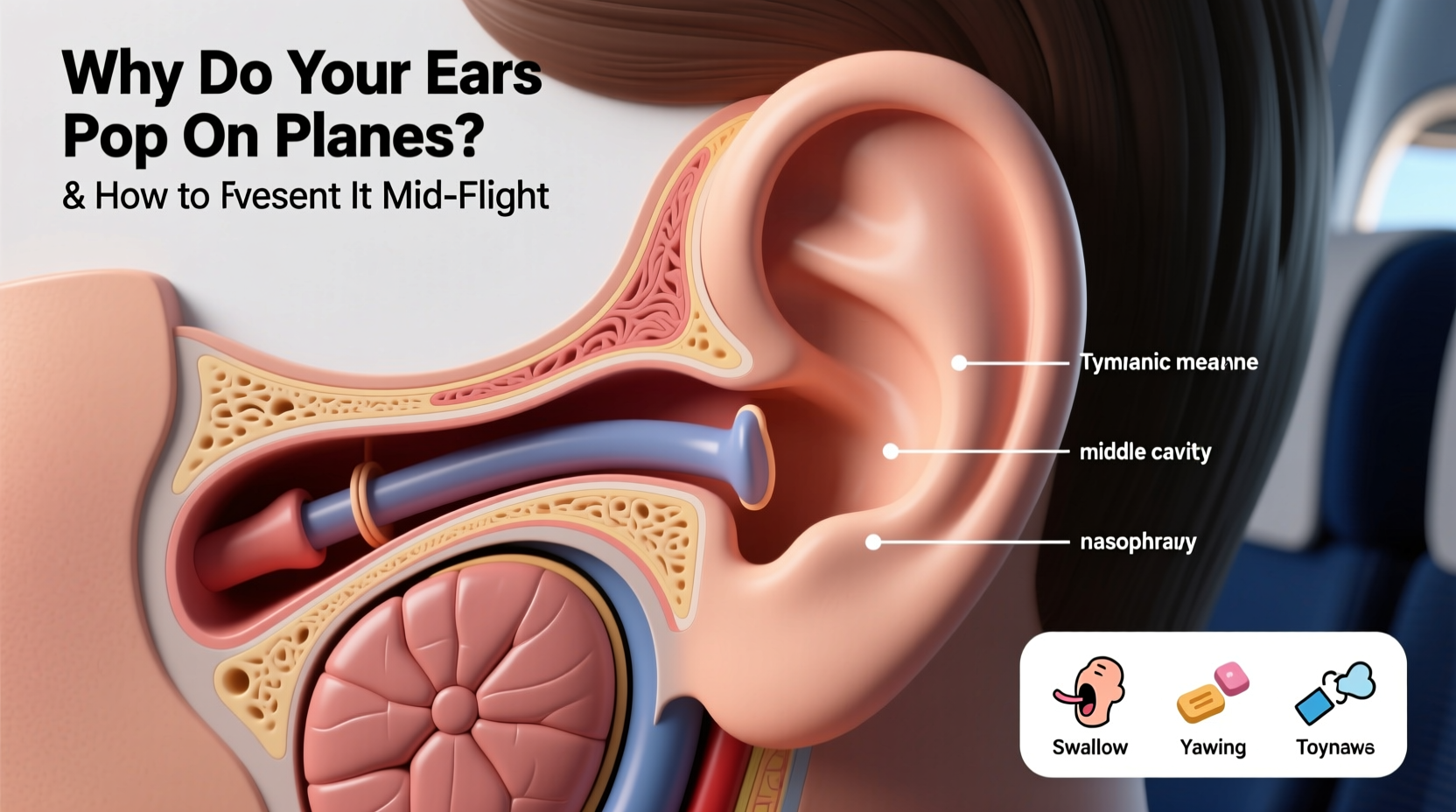
At sea level, the air pressure inside the middle ear matches the atmospheric pressure outside. But as a plane ascends, the cabin pressure decreases—even though modern aircraft are pressurized to simulate altitudes around 6,000 to 8,000 feet. This drop in external pressure causes the air trapped in the middle ear to expand relative to the environment. The eardrum bulges outward slightly, triggering a feeling of fullness.
During descent, the opposite occurs. External pressure increases while the air in the middle ear remains at a lower pressure, causing the eardrum to be pulled inward. This creates a vacuum effect, leading to discomfort or pain if not corrected. The \"pop\" occurs when the eustachian tube opens briefly, allowing air to flow in or out and equalize the pressure.
The eustachian tube doesn’t stay open naturally; it’s normally closed and only opens when we swallow, yawn, or perform certain maneuvers. For most people, swallowing enough during ascent and descent prevents major issues. However, congestion from allergies, colds, or sinus infections can block the tube, making equalization difficult or impossible without intervention.
“Even healthy individuals can struggle with ear pressure changes during flight, but those with upper respiratory conditions face significantly higher risks of barotrauma.” — Dr. Lena Torres, Otolaryngologist and Aviation Medicine Specialist
Effective Techniques to Equalize Ear Pressure
Preventing ear discomfort isn’t about avoiding the pop—it’s about managing it safely and early. The key is to equalize pressure before pain begins. Here are several proven techniques:
1. Swallowing and Yawning
Natural actions like swallowing or yawning activate muscles that open the eustachian tube. Chewing gum, sucking on hard candy, or drinking fluids during takeoff and landing encourages frequent swallowing. This is especially helpful for children, who may not recognize the need to swallow until discomfort sets in.
2. The Valsalva Maneuver
This widely used method involves gently forcing air through the eustachian tubes:
- Pinch your nostrils shut.
- Close your mouth.
- Gently blow as if trying to exhale through your nose.
- You should feel a slight pressure build-up and, ideally, a pop in one or both ears.
Use caution: blowing too hard can damage the eardrum or push mucus into the middle ear, increasing infection risk. Perform this maneuver slowly and stop if you feel pain.
3. The Toynbee Maneuver
An alternative to Valsalva, particularly useful during descent:
- Pinch your nose shut.
- Take a sip of water.
- Swallow while keeping your nose pinched.
This combination helps open the eustachian tube under negative pressure.
4. Frenzel Maneuver (Advanced)
Favored by divers and frequent flyers, this technique uses the tongue to push air into the nasal cavity:
- Pinch your nose.
- Make a “k” sound with the back of your tongue.
- This forces air upward into the eustachian tubes.
It requires practice but is safer than Valsalva because it limits excessive pressure.
Pre-Flight Strategies to Reduce Risk
Prevention starts well before boarding. If you’re prone to ear issues or flying with a cold, planning ahead makes a significant difference.
Avoid Flying with Active Congestion
If possible, delay travel if you have a severe cold, sinus infection, or active allergies. Inflamed tissues obstruct the eustachian tube, making equalization nearly impossible. Pushing through can lead to barotrauma—a condition where the eardrum ruptures or fluid accumulates in the middle ear.
Use Decongestants Wisely
Over-the-counter decongestants can reduce swelling in nasal passages and eustachian tubes. Oral options like pseudoephedrine (Sudafed) or nasal sprays like oxymetazoline (Afrin) are effective, but timing matters:
| Medication Type | When to Take It | Duration of Effect | Cautions |
|---|---|---|---|
| Oral Decongestant | 30–60 minutes before descent | 4–6 hours | Avoid if you have high blood pressure |
| Nasal Spray | 30 minutes before takeoff and descent | 8–12 hours | Do not use more than 3 days to avoid rebound congestion |
| Antihistamine + Decongestant Combo | 1 hour before flight if allergies are present | 6–12 hours | May cause drowsiness |
Note: These medications are contraindicated for some individuals, including those with heart conditions or glaucoma. Consult your doctor if unsure.
Stay Hydrated
Dry cabin air thickens mucus, worsening congestion. Drink plenty of water before and during the flight. Avoid alcohol and caffeine, which contribute to dehydration and may exacerbate swelling in mucous membranes.
Real-Life Scenario: Managing Ear Pain During a Family Trip
Sarah, a mother of two, was flying with her 3-year-old daughter from Chicago to Denver. Her daughter had a mild cold but seemed fine at departure. During descent, the child began crying uncontrollably. Sarah realized too late that the changing pressure was affecting her daughter’s ears. Despite offering juice and encouraging swallowing, the pain persisted until landing.
After consulting a pediatric ENT, Sarah learned that young children are especially vulnerable due to shorter, more horizontal eustachian tubes. For future flights, she now prepares by:
- Using saline nasal spray before boarding to clear mucus.
- Bringing lollipops for children over age 4.
- Administering a pediatric decongestant (with doctor approval) when flying with minor illness.
- Timing takeoff and landing activities to keep the kids engaged in chewing or drinking.
On her next trip, the difference was dramatic—both children remained comfortable throughout the flight.
Step-by-Step Guide: Minimize Ear Discomfort on Your Next Flight
Follow this timeline to proactively manage ear pressure:
- 24 Hours Before Flight: Assess your health. If congested, consider delaying travel or preparing appropriate medication with medical guidance.
- 2 Hours Before Boarding: Begin hydrating with water. Avoid alcohol and salty snacks.
- 30 Minutes Before Takeoff: Use saline nasal spray. For adults, consider a decongestant if approved by your physician.
- During Takeoff: Chew gum, suck on candy, or drink from a bottle (for infants). Perform gentle swallowing frequently.
- During Cruise: Stay hydrated. Move around periodically to maintain circulation and sinus drainage.
- 30 Minutes Before Landing: Repeat nasal spray if needed. Prepare gum, drinks, or pacifiers for children.
- During Descent: Begin equalization techniques early—don’t wait for pain. Use the Valsalva or Toynbee maneuver every few minutes as the plane drops.
- After Landing: If ears remain blocked, try yawning or chewing. Persistent symptoms lasting more than 24 hours warrant medical evaluation.
Common Mistakes That Worsen Ear Pressure
Even with good intentions, travelers often unknowingly make things worse. Avoid these pitfalls:
- Sleeping during descent: You won’t swallow as often, preventing natural pressure equalization.
- Using cotton balls or earplugs indiscriminately: Standard earplugs trap pressure. Use specialized ones like EarPlanes, designed to slow pressure change.
- Blowing the nose too hard: This can force mucus into the eustachian tube, increasing blockage risk.
- Ignoring early signs of discomfort: Mild fullness is a warning sign. Act immediately before pain develops.
Frequently Asked Questions
Can ear popping cause permanent damage?
Rarely. Most cases resolve quickly with no lasting effects. However, forceful attempts to equalize or flying with severe congestion can lead to barotrauma, including eardrum rupture or persistent fluid buildup (serous otitis media). These require medical attention but typically heal over time.
Are there special earplugs for flying?
Yes. Products like EarPlanes contain ceramic filters that gradually regulate air pressure entering the ear canal, reducing the rate of pressure change. They’re especially helpful for children and sensitive individuals. Note: They don’t eliminate the need to equalize but can make the process smoother.
Why do my ears still feel blocked after landing?
Residual blockage often means the eustachian tube hasn’t fully reopened. Try swallowing, yawning, or using the Valsalva maneuver. If symptoms persist beyond 24–48 hours, see a doctor. Fluid accumulation or inflammation may need treatment with decongestants, antihistamines, or in rare cases, antibiotics.
Final Tips for Comfortable Air Travel
Checklist: Preparing for Ear Comfort on a Flight
- ✅ Assess nasal and ear health 24 hours before departure
- ✅ Pack gum, hard candy, or bottles for children
- ✅ Bring saline nasal spray and approved decongestants
- ✅ Use filtered earplugs like EarPlanes if sensitive
- ✅ Set a reminder to start equalizing before descent
- ✅ Stay hydrated and avoid alcohol/caffeine
- ✅ Avoid sleeping during ascent and descent
Conclusion: Take Control of Your In-Flight Comfort
Ear popping on planes is a normal physiological response—but enduring pain is not necessary. With a basic understanding of ear anatomy and a few practical strategies, you can fly comfortably regardless of altitude changes. Whether you're a first-time flyer or a seasoned traveler, small adjustments in preparation and behavior make a big difference.




 浙公网安备
33010002000092号
浙公网安备
33010002000092号 浙B2-20120091-4
Comments
No comments yet. Why don't you start the discussion?