
Uneven eyebrow growth is a common concern that affects people of all ages and genders. While it may seem like a minor cosmetic issue, it can significantly impact self-confidence and facial symmetry. Many assume tweezing or over-plucking is the sole cause, but the reality involves a complex interplay of biology, genetics, and lifestyle. Understanding the eyebrow hair growth cycle and the factors influencing its irregularity is key to achieving fuller, more balanced brows naturally.
The human body does not grow hair uniformly across both sides—a phenomenon known as natural asymmetry. This applies to eyebrows just as much as it does to limbs or facial features. However, when one brow appears noticeably thinner, patchier, or slower-growing than the other, deeper physiological mechanisms are at play. This article breaks down the science behind uneven eyebrow growth, explores the phases of the hair growth cycle, identifies contributing factors, and offers actionable strategies for improvement.
The Eyebrow Hair Growth Cycle: An Overview
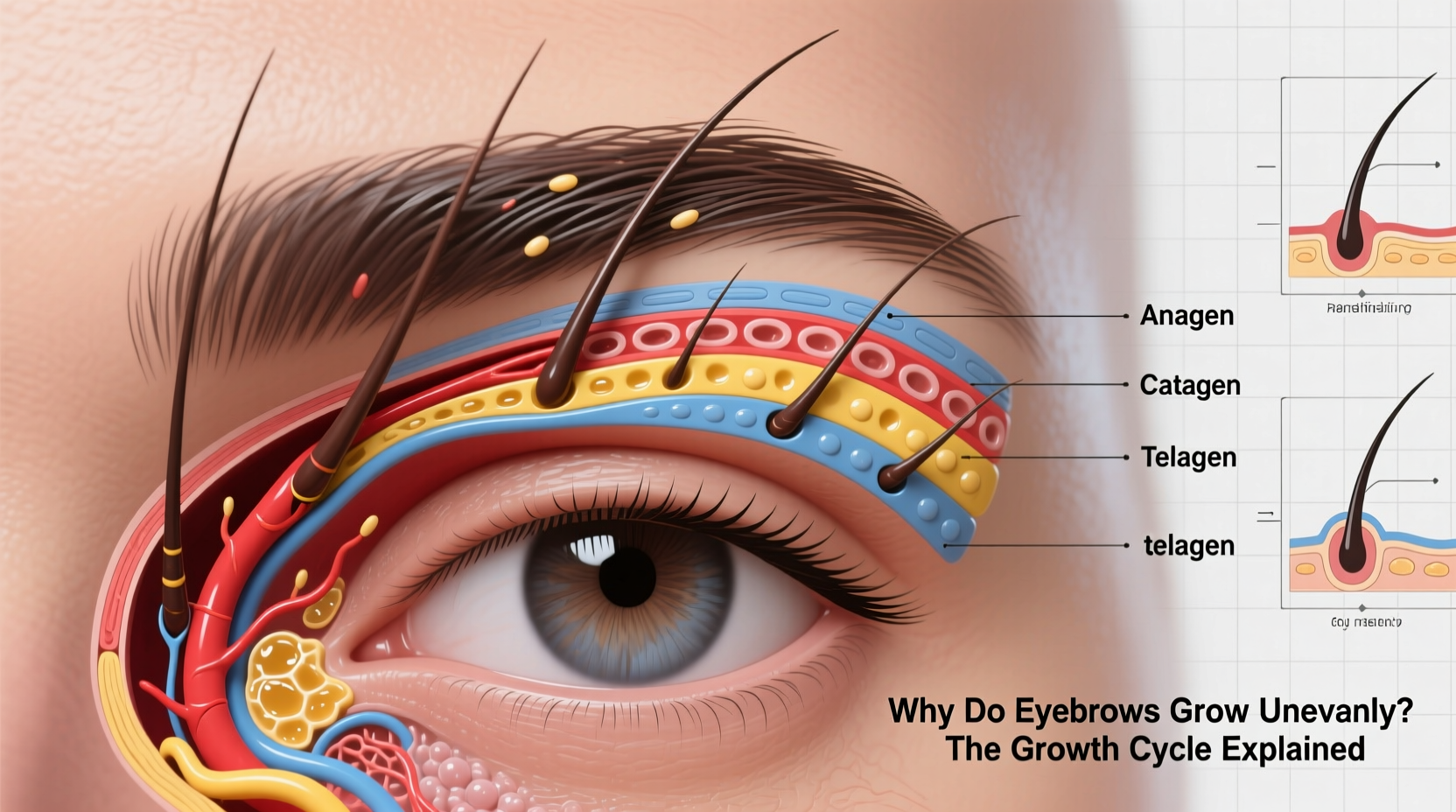
Like all hair on the body, eyebrow hairs follow a predictable biological cycle consisting of three distinct phases: anagen (growth), catagen (transition), and telogen (resting). Unlike scalp hair, which can remain in the growth phase for years, eyebrow hairs have a much shorter life span and spend most of their time in dormancy.
- Anagen Phase: The active growth period, lasting approximately 30 to 45 days. During this phase, new hair emerges from the follicle and elongates.
- Catagen Phase: A brief transitional stage lasting about 2–3 weeks, where growth stops and the follicle shrinks.
- Telogen Phase: The resting phase, which can last up to 90 days. At the end of this phase, the old hair sheds, making room for a new one to begin the cycle again.
This short anagen phase explains why eyebrows don’t grow long like scalp hair—they simply don’t stay in the growth phase long enough. It also means the entire eyebrow renewal process takes roughly 3 to 4 months from start to finish.
“Eyebrows have one of the shortest anagen phases of any human hair type, which limits their maximum length and makes them more prone to visible thinning.” — Dr. Lena Patel, Dermatologist & Hair Specialist
Why Asymmetry Happens: Biological and Environmental Factors
Natural facial asymmetry is normal. No two sides of the face are perfectly identical—not even in symmetry-focused beauty standards. But several internal and external factors can exaggerate unevenness in eyebrow growth:
Genetics and Hormonal Influence
Genetics play a dominant role in how and where hair grows. Some individuals inherit sparse or patchy eyebrow patterns due to familial traits. Hormonal fluctuations—such as those during puberty, pregnancy, menopause, or thyroid disorders—can disrupt the hair cycle, leading to temporary thinning or altered growth rates on one side.
Follicle Damage from Over-Grooming
Repeated plucking, waxing, or threading can traumatize hair follicles over time. If one brow has been groomed more aggressively—perhaps due to personal preference or perceived shape issues—the follicles may become damaged, entering prolonged dormancy or ceasing growth altogether. This condition is known as traction alopecia.
Bilateral Differences in Blood Flow
Subtle differences in blood circulation between the left and right sides of the face can affect nutrient delivery to hair follicles. Reduced microcirculation may slow down the anagen phase on one side, resulting in delayed or weaker regrowth.
Sleep Position and Facial Pressure
Chronic pressure from sleeping on one side of the face might impair local circulation or irritate follicles over time. Though not widely studied, anecdotal evidence suggests that consistent friction from pillows could contribute to localized thinning.
Autoimmune and Medical Conditions
Conditions such as alopecia areata, hypothyroidism, eczema, or psoriasis can target eyebrow areas asymmetrically. Alopecia areata, for example, often causes sudden, patchy hair loss that may affect only one eyebrow initially.
Do’s and Don’ts of Eyebrow Care for Balanced Growth
| Do’s | Don’ts |
|---|---|
| Use nourishing serums with peptides or biotin | Overpluck or wax frequently |
| Maintain a balanced diet rich in protein, iron, and vitamins | Scratch or rub irritated eyebrow areas |
| Massage brows gently to stimulate circulation | Use expired or shared cosmetics (risk of infection) |
| Protect brows from harsh chemicals and UV exposure | Expect overnight results—regrowth takes months |
| Consult a dermatologist if sudden loss occurs | Blame yourself—many causes are beyond control |
Step-by-Step Guide to Promoting Even Eyebrow Regrowth
Correcting uneven growth requires patience and consistency. Follow this timeline-based approach to support healthier, more symmetrical brows:
- Month 1: Cease Aggressive Grooming
Stop plucking, waxing, or threading entirely. Let all hairs grow out to assess your natural shape and identify true gaps versus styling illusions. - Month 2: Begin Nourishment Routine
Apply a clinically formulated eyebrow serum containing ingredients like bimatoprost (prescription) or over-the-counter options with panthenol, hyaluronic acid, or castor oil. Apply nightly after cleansing. - Month 3: Incorporate Gentle Massage
Use clean fingertips to massage each brow for 1–2 minutes daily using circular motions. This boosts blood flow and may awaken dormant follicles. - Month 4: Optimize Nutrition
Add foods rich in biotin (eggs, nuts), iron (spinach, lentils), zinc (pumpkin seeds), and omega-3s (salmon, flaxseeds). Consider a multivitamin if dietary intake is low. - Month 5–6: Assess Progress and Adjust
Take monthly photos under consistent lighting. Note density changes. If no improvement, consult a dermatologist to rule out medical causes.
Real-Life Example: Sarah’s Journey to Balanced Brows
Sarah, a 32-year-old graphic designer, noticed her left eyebrow had become increasingly sparse over five years. She attributed it to habitual plucking but grew concerned when the gap widened despite stopping grooming. After researching, she realized she always slept on her left side and frequently rested her cheek on her hand while working.
She began a six-month regimen: switching to a silk pillowcase, applying a peptide-based serum nightly, and massaging her brows daily. She also improved her diet by adding more leafy greens and lean proteins. By month four, fine hairs started reappearing in the thinnest area. By month six, the difference was visibly reduced. A dermatologist later confirmed mild follicular stress due to pressure and advised continued care.
Sarah’s case illustrates how lifestyle habits—often overlooked—can compound biological tendencies toward asymmetry. Her success came not from a miracle product, but from addressing root causes systematically.
When to Seek Professional Help
While mild unevenness is normal, certain signs warrant medical evaluation:
- Sudden or rapid hair loss in one or both brows
- Redness, scaling, or itching around the eyebrow area
- Noticeable bald patches or smooth, waxy skin where hair once grew
- History of autoimmune disease or thyroid dysfunction
A dermatologist may perform a dermoscopy exam, blood tests (for thyroid, iron, vitamin D), or refer to an endocrinologist if hormonal imbalance is suspected. Treatments may include topical minoxidil (off-label use), corticosteroid injections for alopecia areata, or hormone therapy if underlying conditions are detected.
FAQ: Common Questions About Uneven Eyebrow Growth
Can stress cause one eyebrow to stop growing?
Yes. Chronic stress can trigger telogen effluvium, a condition where large numbers of hair follicles enter the resting phase prematurely. This can lead to noticeable thinning, sometimes appearing more pronounced on one side due to pre-existing asymmetry.
Is it possible for eyebrows to grow back after years of plucking?
It depends on the extent of follicle damage. If the follicle is scarred or permanently destroyed, regrowth won’t occur. However, many follicles remain viable and can reactivate with proper stimulation and time—especially when supported by serums and improved circulation.
Do home remedies like castor oil really work?
Castor oil is rich in ricinoleic acid and may improve skin hydration and reduce inflammation, creating a better environment for growth. While scientific evidence is limited, many users report thicker-looking brows with consistent use. It won’t revive dead follicles but may support existing ones.
Conclusion: Embrace Patience and Consistency
Uneven eyebrow growth is rarely a flaw—it’s often a reflection of your body’s unique biology, habits, and history. The growth cycle is inherently short and sensitive, making brows vulnerable to disruption. But with informed care, most cases of asymmetry can improve over time.
The journey to balanced brows isn’t about perfection; it’s about nurturing what you have and supporting your body’s natural processes. Whether through gentle grooming, targeted serums, or medical intervention, the path forward lies in consistency, not quick fixes.




 浙公网安备
33010002000092号
浙公网安备
33010002000092号 浙B2-20120091-4
Comments
No comments yet. Why don't you start the discussion?