
Microblading has become one of the most sought-after semi-permanent makeup procedures for achieving full, natural-looking eyebrows. However, even with skilled technicians, many clients report their brows appearing uneven post-procedure. This can be distressing—especially when you've invested time, money, and trust in a cosmetic enhancement meant to simplify your routine and boost confidence. The truth is, asymmetry after microblading is more common than most realize, and it doesn't always mean something went wrong. Understanding the root causes and knowing how to address them can make all the difference between frustration and satisfaction.
This guide dives deep into the physiological, technical, and aftercare-related reasons behind uneven results. More importantly, it provides actionable solutions, correction strategies, and prevention tips backed by industry professionals and real-world experience.
Why Asymmetry Occurs: Natural vs. Procedural Factors
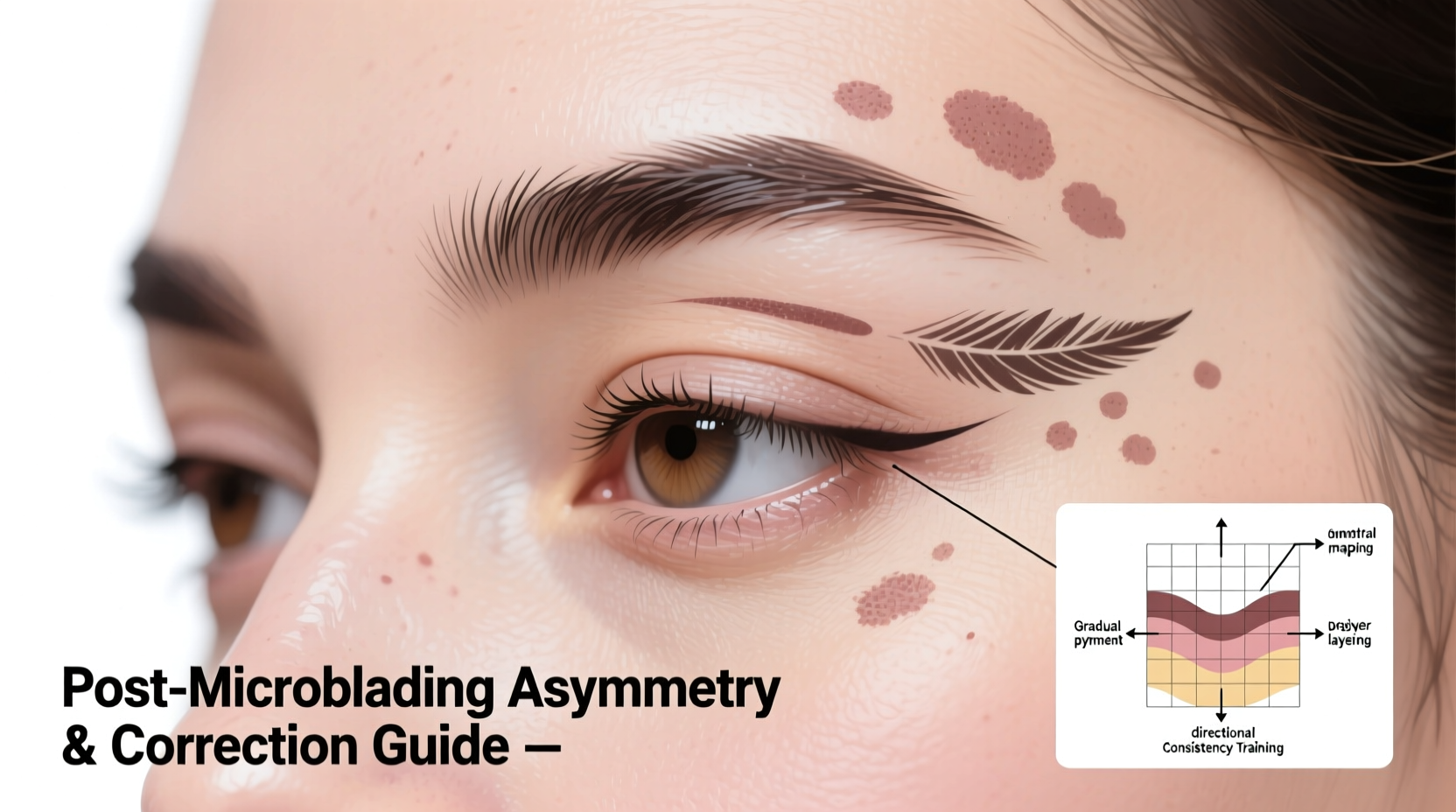
The human face is inherently asymmetrical. No two eyes, lips, or brows are perfectly mirrored. What appears \"uneven\" may simply reflect your natural anatomy exaggerated under close scrutiny. However, when microblading amplifies existing imbalances or introduces new ones, it's important to distinguish between expected variation and avoidable error.
Several key factors contribute to post-microblading unevenness:
- Natural facial asymmetry: One eyebrow arch may sit higher, or one brow tail may extend further due to bone structure or muscle use.
- Swelling and healing variance: Post-procedure swelling isn’t always symmetrical. One side may retain fluid longer, distorting pigment appearance temporarily.
- Technician technique: Inconsistent hand pressure, blade angle, or stroke placement can lead to uneven pigment distribution.
- Aftercare missteps: Picking scabs, over-moisturizing, or sun exposure on one side can cause patchy fading or color shifts.
- Skin type differences: Oily skin may reject pigment faster on one side; dry skin may heal with flakiness that disrupts line continuity.
“About 70% of the ‘uneven’ complaints we see in follow-ups are due to healing patterns, not poor application. Patience and proper aftercare are half the treatment.” — Dana Reyes, Certified Permanent Makeup Artist & Trainer
Common Causes of Uneven Microbladed Brows
1. Healing Phase Distortions
During the first 7–14 days after microblading, the skin undergoes dramatic changes. Scabbing, flaking, and color lifting are normal—but they rarely happen symmetrically. One side might form thicker scabs, leading to greater pigment loss. Clients who touch or scratch one side more frequently often exacerbate this imbalance.
2. Inaccurate Brow Mapping
Proper brow mapping is the foundation of symmetry. It involves aligning the brows to facial landmarks: the inner corner of the eye (start point), the pupil (arch peak), and the outer edge of the eye (tail end). If mapping is rushed or done without precise tools, even small deviations can result in visibly mismatched brows.
3. Blade Depth and Angle Inconsistency
Microblading requires extreme precision. A blade that penetrates too shallowly deposits pigment that fades quickly; too deeply, and it spreads under the skin, blurring strokes. If the technician applies different pressure or angles on each side, the final result will lack uniformity.
4. Skin Retention Issues
Some skin types naturally retain pigment poorly. For example:
- Oily skin: Sebum production can push pigment out during healing, especially near the forehead side of the brow.
- Mature skin: Thinner epidermis may not hold crisp strokes, causing softening or blurring.
- Previously tattooed skin: Scar tissue or old pigment can interfere with new ink retention.
5. Sun Exposure and Aftercare Neglect
UV rays break down pigment molecules. If one side of the face gets more sun—say, from driving or sleeping position—pigment on that side may fade faster. Similarly, using harsh skincare products (like glycolic acid or retinoids) near one brow can accelerate exfoliation and pigment loss.
How to Correct Uneven Microbladed Brows
Before panicking, remember: initial unevenness often resolves after full healing (typically 4–6 weeks). But if asymmetry persists, several corrective approaches exist.
Step-by-Step Correction Timeline
- Wait 6 weeks: Allow complete healing before assessing final results.
- Schedule a touch-up: Most artists include one free or discounted session within 6–8 weeks.
- Review photos: Bring pre-op and healing-phase images to help the artist evaluate changes.
- Targeted pigment adjustment: The artist refines sparse areas, adjusts arch height, or rebalances color tone.
- Follow strict aftercare: Prevent future imbalance with consistent care.
- Consider laser or removal: Only if severe mistakes occurred and cannot be corrected with shading.
Professional Correction Techniques
Experienced artists use several methods to correct asymmetry:
- Feathering strokes: Adding fine, directional hairs to fill gaps and create illusion of fullness.
- Shading (ombre effect): Using a nano-machine to deposit soft powder where strokes are missing, blending transitions.
- Color balancing: Adjusting undertones (e.g., neutralizing redness or ashiness) for visual harmony.
- Brow lamination integration: Some combine microblading with brow lamination to train hairs into symmetrical alignment.
Do’s and Don’ts: Avoiding Future Imbalance
| Do | Don't |
|---|---|
| Follow your artist’s aftercare instructions precisely | Pick at scabs or peel flaking skin |
| Clean brows gently with sterile solution twice daily | Use oily moisturizers or acne treatments near brows |
| Protect brows from direct sunlight with hats or SPF (after healing) | Go swimming, sauna, or sweat heavily in the first 10 days |
| Attend your touch-up appointment even if brows look good | Wait more than 8 weeks for a touch-up—pigment may bond too deeply |
| Sleep on your back or use a silk pillowcase to reduce friction | Apply makeup to brows until fully healed (usually 10–14 days) |
Real-World Example: Sarah’s Recovery Journey
Sarah, a 34-year-old marketing executive, noticed her left brow appeared significantly lighter and shorter than the right two weeks after her microblading session. She panicked, thinking the artist had made a mistake. She avoided social events and took daily mirror selfies tracking the changes.
At her 6-week touch-up, the artist explained that Sarah’s left side had developed thicker scabs due to nighttime rubbing against her pillow. The pigment lifted more aggressively on that side. Instead of re-blading the entire brow, the technician used a combination of micro-shading and individual stroke replication to rebuild density. Over the next month, Sarah followed a strict aftercare routine, including nightly application of aftercare ointment and daytime SPF protection.
By week 10, her brows were balanced and natural-looking. “I learned that healing isn’t linear,” she said. “Patience and communication with my artist saved the outcome.”
When to Seek a Second Opinion
Not all microblading issues can be fixed by the original artist. If you experience any of the following, consider consulting a specialist:
- Severe pigment migration (brows turning into smudged lines)
- Dramatic color distortion (e.g., one brow turning blue or orange)
- Noticeable scarring or keloid formation
- Repeated failed touch-ups with no improvement
In such cases, a certified PMU revision artist or dermatologist may recommend options like laser lightening, saline removal, or camouflage tattooing. These should only be performed by licensed professionals with specific training in corrective procedures.
Frequently Asked Questions
Can uneven microblading fix itself over time?
No, while minor healing variations even out, structural asymmetry—such as mismatched arch height or stroke density—will not correct itself. Professional intervention is required to adjust pigment placement.
How many touch-ups are normal for symmetry correction?
Most clients need one touch-up to achieve balance. In complex cases—especially with poor skin retention or prior tattoo damage—two or even three sessions may be necessary. Each session should build incrementally toward the desired result.
Is it safe to get microblading redone by a different artist?
Yes, but disclose all previous work and bring photos. An experienced artist will assess pigment depth, skin condition, and healing history before proceeding. Switching artists is common and often beneficial when seeking specialized correction skills.
Expert Checklist for Achieving Symmetrical Brows
“Symmetry in microblading is about illusion, not perfection. Our goal is harmonious balance with the client’s unique features.” — Marcus Lin, International PMU Educator
Use this checklist before, during, and after your procedure:
- ✅ Research and verify your artist’s credentials and portfolio.
- ✅ Ensure they perform detailed brow mapping using rulers and anatomical guides.
- ✅ Confirm they use fresh, sterile blades and pigments for each client.
- ✅ Follow all aftercare steps religiously for at least 14 days.
- ✅ Attend your scheduled touch-up, even if satisfied initially.
- ✅ Protect healed brows from UV rays with SPF or physical barriers.
- ✅ Monitor long-term fading and schedule color boosts every 12–18 months.
Final Thoughts: Embracing Realistic Expectations
Perfect symmetry is neither achievable nor desirable in natural-looking eyebrows. The goal of microblading is not robotic uniformity, but balanced enhancement that complements your facial structure. Temporary unevenness during healing is normal. True correction begins with understanding the process, trusting qualified professionals, and practicing diligent aftercare.
If you’re currently struggling with uneven brows, take a breath. You’re not alone, and in most cases, the issue is fixable. Reach out to your technician, document your healing journey, and commit to the full timeline. With informed decisions and expert support, you can achieve brows that frame your face with confidence and grace.




 浙公网安备
33010002000092号
浙公网安备
33010002000092号 浙B2-20120091-4
Comments
No comments yet. Why don't you start the discussion?