
Microblading is a semi-permanent cosmetic tattooing technique designed to enhance the appearance of sparse or uneven eyebrows by creating fine, hair-like strokes that mimic natural brow hairs. While results can be stunning, many clients are surprised to find their brows appear lopsided or unbalanced once the healing process is complete. This isn’t uncommon — in fact, eyebrow asymmetry post-healing affects a significant number of clients. Understanding the root causes, healing dynamics, and corrective options can help you navigate this frustrating outcome with confidence.
The Healing Process: Why Symmetry Can Shift
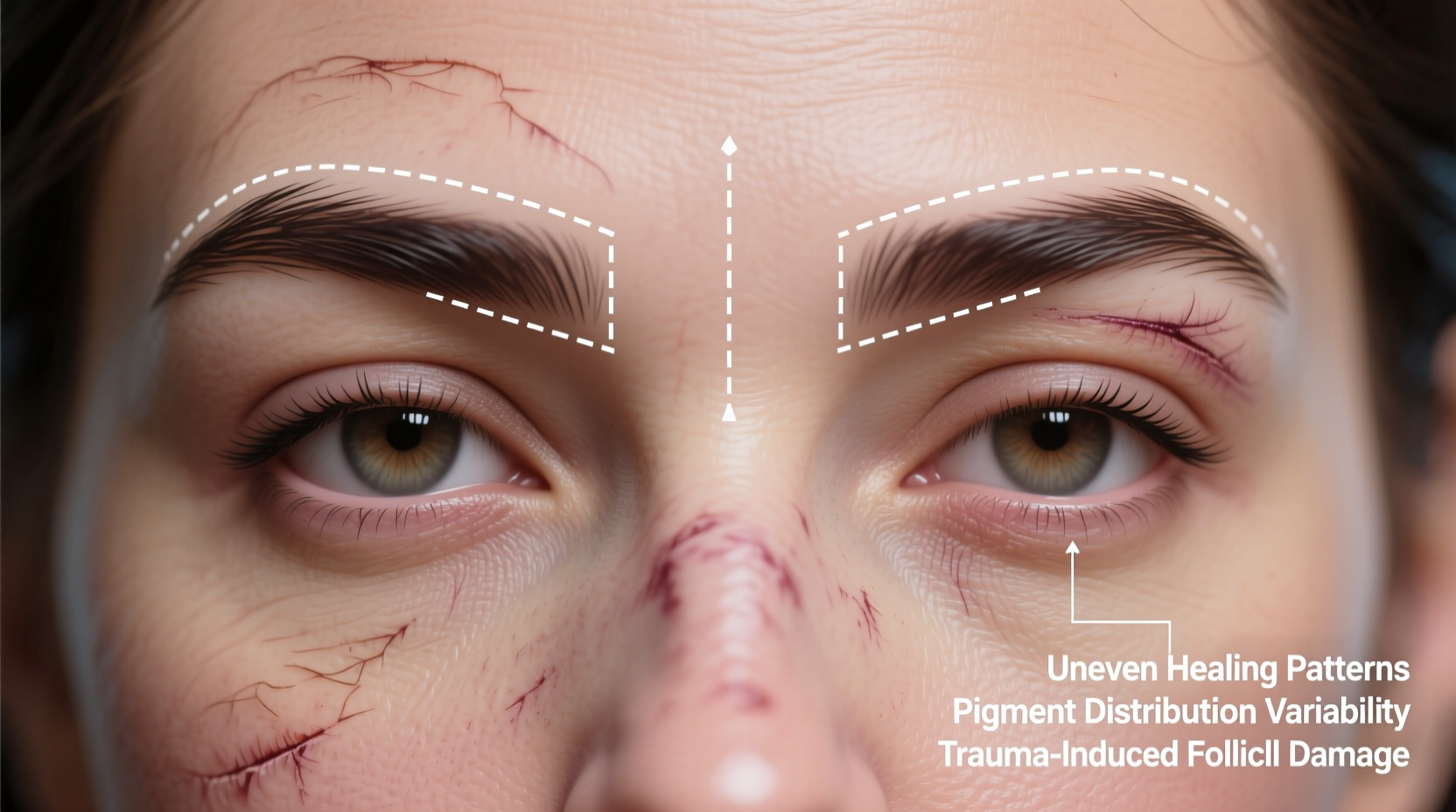
One of the most misunderstood aspects of microblading is the healing timeline. The final result isn’t visible immediately after the procedure; it evolves over 4–6 weeks. During this time, several biological processes influence pigment retention and skin recovery — all of which can contribute to perceived or actual unevenness.
Immediately after the procedure, the brows appear darker, bolder, and more defined due to surface scabbing and inflammation. As the skin heals, it goes through phases:
- Days 1–5: Swelling and redness may cause one brow to look fuller or higher than the other.
- Days 5–10: Flaking and scabbing begin. Pigment may appear patchy as scabs form and shed.
- Weeks 3–6: True pigment retention becomes visible. Some areas may fade more than others, leading to uneven color or stroke definition.
This fluctuation often creates the illusion of asymmetry — even if the initial work was symmetrical. The body doesn’t always heal both sides identically, especially if there’s pre-existing facial asymmetry, differing skin types between brows, or minor variations in technician application.
Common Causes of Uneven Brows After Healing
Unevenness isn’t always the technician’s fault. Multiple factors — some controllable, others not — contribute to post-microblading asymmetry. Here are the most frequent culprits:
- Differential skin healing: One side of the face may retain pigment better due to oil production, sun exposure history, or circulation differences.
- Natural facial asymmetry: Nearly everyone has slightly uneven brows, eyes, or bone structure. Microblading highlights these subtle imbalances.
- Inconsistent aftercare: Rubbing one eye more frequently (e.g., due to allergies) or applying ointment unevenly can affect healing.
- Pigment migration: In oily skin types, pigment can blur or spread under the skin, softening strokes on one side more than the other.
- Technician error: Poor mapping, inconsistent hand pressure, or mismatched blade angles can lead to visibly uneven strokes.
- Over-exfoliation: Using active skincare ingredients (like retinoids or AHAs) near the brows during healing can accelerate pigment loss on one side.
Real Example: A Client’s Experience
Sarah, a 34-year-old client, noticed her right brow appeared significantly lighter and less defined than the left four weeks post-procedure. Upon consultation, her technician discovered Sarah had been sleeping on her right side and using an anti-aging serum containing glycolic acid near that eye. The combination of friction and chemical exfoliation caused accelerated pigment loss. After adjusting her skincare routine and scheduling a touch-up, symmetry was restored.
“Even minor lifestyle habits — like sleep position or skincare products — can dramatically impact microblading results.” — Dana Reyes, Certified Permanent Makeup Artist & Trainer
Do’s and Don’ts During Healing
| Do | Don't |
|---|---|
| Follow your technician’s aftercare instructions precisely | Use harsh cleansers or exfoliants near the brows |
| Keep brows dry for the first 10 days | Pick at scabs or flakes |
| Apply recommended ointment sparingly and evenly | Expose brows to direct sunlight or tanning beds |
| Sleep on your back or use a silk pillowcase | Wear makeup or sweat heavily during initial healing |
| Attend your follow-up appointment | Assess final results before 6 weeks have passed |
Corrective Steps: What to Do If Your Brows Are Uneven
If, after full healing (6+ weeks), your brows still appear uneven, don’t panic. Most cases can be corrected. Here’s a step-by-step guide to restoring balance:
- Wait until fully healed: Never judge results before 6 weeks. Premature touch-ups can damage healing skin and worsen asymmetry.
- Document the issue: Take clear, front-facing photos in natural light. Compare them to pre-healing images to identify changes.
- Consult your technician: Schedule a touch-up or correction session. A skilled artist can re-map the brows, adjust stroke density, and rebalance color.
- Discuss pigment adjustments: If one side faded more, the technician may use a slightly different pigment concentration or depth to match the other brow.
- Consider a redesign: In cases of extreme asymmetry or poor initial shaping, a complete rework may be necessary.
When to Seek a Second Opinion
If your original technician dismisses concerns or fails to correct the issue, it may be time to consult another certified specialist. Look for artists with advanced training in corrective microblading and a portfolio showing successful symmetry corrections.
Prevention Checklist for Future Procedures
To minimize the risk of uneven results in future sessions, follow this actionable checklist:
- ✅ Choose a licensed, experienced microblading artist with verified before-and-after photos.
- ✅ Ensure they perform a detailed mapping session using symmetry guides and facial landmarks.
- ✅ Disclose your skincare routine, especially if you use acne treatments or anti-aging products.
- ✅ Commit to strict aftercare: no swimming, sweating, or product contact for at least 10 days.
- ✅ Sleep on your back or use a silk pillowcase to reduce friction.
- ✅ Attend your follow-up appointment, even if you’re satisfied — it ensures long-term consistency.
- ✅ Avoid sun exposure and wear SPF around the brows (but not directly on healing skin).
Frequently Asked Questions
Can uneven microbladed brows fix themselves over time?
No. Once healed, the pigment distribution is permanent until naturally faded or corrected. Any asymmetry will not resolve on its own. However, slight differences may become less noticeable as the brows fully settle and color mutes over 6–8 weeks.
How many touch-ups are normal for achieving symmetry?
Most clients require one touch-up 6–8 weeks after the initial session to refine shape, boost pigment, and correct minor imbalances. Two touch-ups may be needed for oily skin, poor retention, or complex corrections. More than three sessions may indicate underlying issues with technique or skin compatibility.
Is it safe to get microblading redone by a different artist?
Yes, but only after the brows are fully healed and ideally after consulting with the new artist. Provide details about your previous procedure, including pigment type and number of sessions. A qualified technician will assess scar tissue, pigment saturation, and skin condition before proceeding.
Long-Term Maintenance and Realistic Expectations
Maintaining even, beautiful brows requires ongoing care. Microblading typically lasts 12–18 months, depending on skin type, sun exposure, and lifestyle. To preserve symmetry and color:
- Use mineral sunscreen around (not directly on) the brows when outdoors.
- Avoid prolonged sunbathing, saunas, and chlorinated pools.
- Limit use of exfoliating acids near the brow area.
- Schedule color boosts every 12–15 months to maintain uniformity.
It’s also important to accept that perfect symmetry is neither achievable nor desirable. Natural-looking brows have subtle variations that complement facial movement and expression. The goal is harmonious balance, not robotic uniformity.
“The best microblading mimics nature — and nature is beautifully imperfect.” — Dr. Lena Park, Dermatologist & Cosmetic Advisor
Conclusion: Taking Action with Confidence
Uneven eyebrows after microblading healing can be disheartening, but they’re rarely permanent. With proper understanding of the healing process, adherence to aftercare, and access to skilled correction, most imbalances can be resolved. Whether you're dealing with minor fading or significant asymmetry, the key is patience and proactive communication with a qualified professional.
Your brows are a frame for your face — they deserve thoughtful care and precision. If you’re unhappy with your results, don’t stay silent. Reach out to your artist, seek a second opinion if needed, and take control of your next steps. With the right approach, you can achieve balanced, natural-looking brows that enhance your beauty for months to come.




 浙公网安备
33010002000092号
浙公网安备
33010002000092号 浙B2-20120091-4
Comments
No comments yet. Why don't you start the discussion?