
Microblading has become one of the most sought-after semi-permanent cosmetic procedures for achieving fuller, well-defined eyebrows with a natural hair-like appearance. However, even when performed by a skilled technician, many clients notice that their brows appear uneven once the healing process is complete. This can be distressing, especially after investing time and money into the treatment. The good news is that eyebrow asymmetry post-microblading is often temporary, expected, or correctable. Understanding the science behind the healing stages, skin behavior, and pigment retention can help you determine whether what you're seeing is normal—or if corrective action is needed.
The Healing Timeline: What Happens After Microblading?
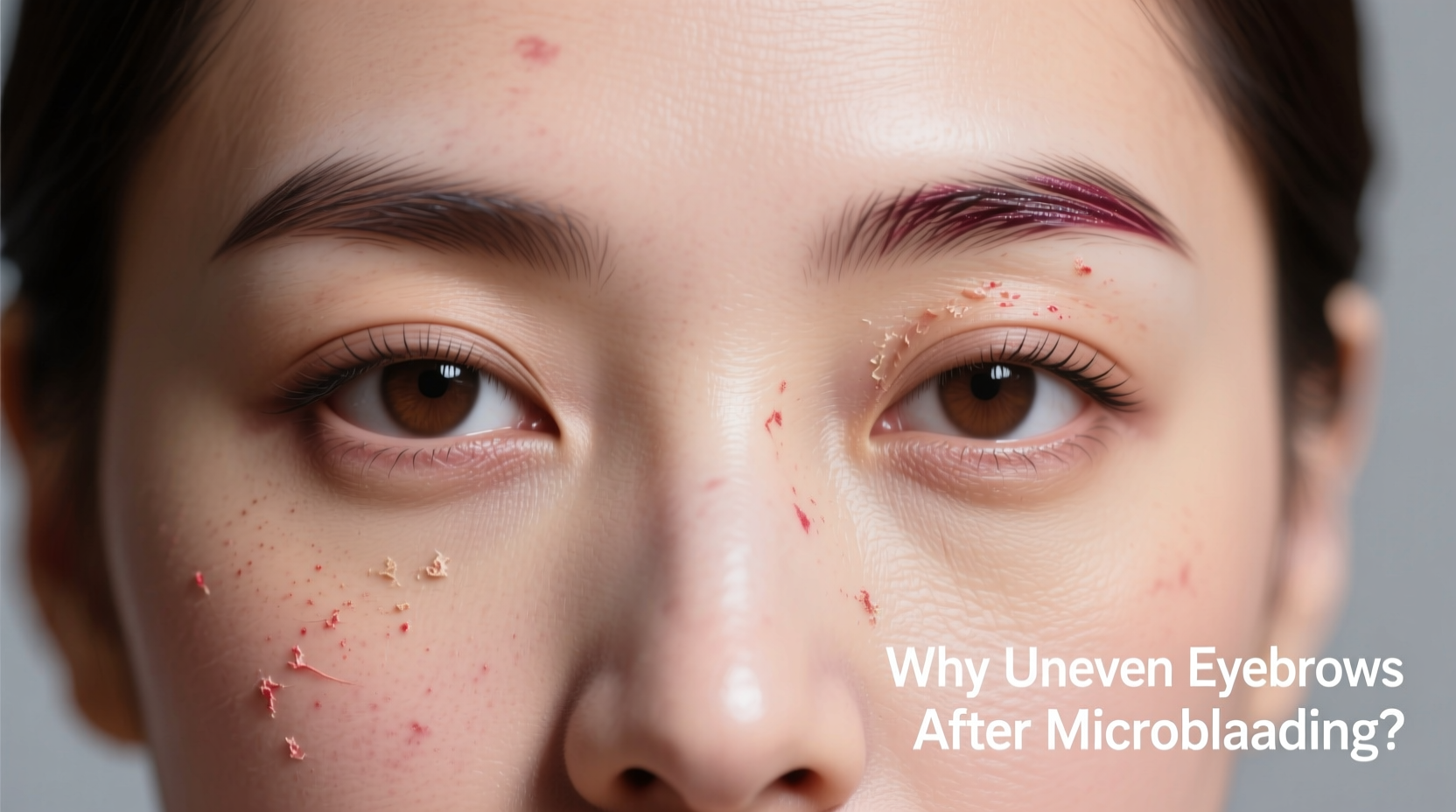
Healing from microblading isn't instantaneous. It's a multi-phase biological process influenced by your skin type, aftercare routine, immune response, and environmental factors. Most people expect immediate perfection, but the final result only emerges after 4–6 weeks. Here’s a breakdown of the typical healing timeline:
- Days 1–3 (Initial Healing): Brows appear bold, sharply defined, and slightly darker than intended. There may be mild redness and swelling, which subsides quickly.
- Days 4–7 (Flaking Begins): The skin starts to flake and form scabs. Pigment may appear patchy as flakes lift—this is normal. Do not pick at the skin.
- Days 8–14 (Shedding Phase): Scabs fall off naturally, revealing lighter, softer strokes. Some areas may seem to have lost pigment entirely; this is part of the \"ghost phase.\"
- Weeks 3–6 (Settling & Maturation): The pigment settles into the dermis. Color softens, and true results emerge. This is when asymmetries or gaps become more noticeable.
It's during the final phase that clients often panic, thinking their brows healed poorly. In reality, unevenness at this stage doesn’t always mean something went wrong—it may simply reflect natural variations in healing.
Common Causes of Uneven Brows After Healing
Several interrelated factors contribute to post-microblading asymmetry. Some are technical, others biological. Understanding them helps separate normal outcomes from legitimate concerns.
Skin Type Differences Between Sides
Even within the same face, the two sides can behave differently. One side may retain pigment better due to denser skin texture, higher oil production, or increased blood flow. For example, oily skin tends to push out pigment faster, leading to lighter strokes on the oilier brow.
Natural Facial Asymmetry
Very few faces are perfectly symmetrical. Subtle differences in bone structure, muscle movement, or previous hair growth patterns affect how pigment is absorbed and retained. A brow that appears uneven might actually be perfectly balanced relative to your facial features.
Inconsistent Aftercare Application
If moisturizer or healing ointment was applied more heavily on one side—or if one side was exposed to water, sweat, or sun more frequently—pigment loss can occur unevenly. This is especially common among clients who sleep on one side consistently during recovery.
Technician Technique Variability
While rare with experienced artists, slight inconsistencies in hand pressure, blade angle, or stroke depth can lead to differential pigment deposition. Even a fraction of a millimeter difference in depth affects long-term retention.
Scabbing and Flaking Patterns
One side may develop thicker scabs that pull out more pigment when they detach. Picking or scratching—even accidentally—can cause localized pigment loss. If one brow itched more than the other, the client may have disturbed the healing process asymmetrically.
“About 70% of perceived asymmetry post-microblading resolves after touch-ups. The skin heals uniquely on each side, and initial unevenness is often part of the normal maturation process.” — Dr. Lena Tran, Cosmetic Dermatology Specialist
Do’s and Don’ts During Healing to Prevent Uneven Results
Proper aftercare plays a critical role in achieving balanced, long-lasting results. Follow these guidelines to minimize the risk of uneven healing.
| Do’s | Don’ts |
|---|---|
| Wash brows gently twice daily with sterile saline or recommended cleanser | Use harsh soaps, exfoliants, or alcohol-based products near the area |
| Apply healing balm thinly and evenly using clean fingertips | Over-apply ointment, which can suffocate skin and cause clogged pores |
| Keep brows dry for the first 10 days (no swimming, saunas, intense workouts) | Allow prolonged exposure to steam, sweat, or chlorine |
| Sleep on your back or use a silk pillowcase to reduce friction | Sleep face-down or rub your brows against fabric |
| Attend your scheduled touch-up appointment (usually 6–8 weeks post-procedure) | Delay or skip the touch-up, assuming the work is “done” after initial healing |
When Is Unevenness a Sign of Poor Workmanship?
Not all asymmetry is acceptable. While minor differences are normal, certain red flags suggest substandard technique or inadequate training:
- Gross misalignment—one brow significantly higher or lower than the other
- Shape mismatch—different arch heights, tail lengths, or front placements
- Blurred or feathered edges where crisp strokes were promised
- Excessive scarring or pigment migration (e.g., \"smudging\" beyond the brow line)
- No visible strokes on one side while the other shows clear hair simulation
If these issues persist after a touch-up, it may indicate that the technician lacked proper training or used incorrect tools. Always verify credentials, review portfolios, and ask about pigment types and blade specifications before booking.
Realistic Case Example: Sarah’s Healing Journey
Sarah, a 34-year-old teacher, underwent microblading with a licensed artist in her city. Immediately after the procedure, her brows looked flawless—dark, defined, and symmetrical. By day five, flaking began. She noticed that her right brow flaked more aggressively and formed larger scabs. By day ten, when the scabs fell off, the right side appeared significantly lighter and patchier than the left.
Concerned, she contacted her technician, who reassured her that this was common due to her combination skin—oilier on the right side, likely from habitual sleeping position. The artist advised patience and strict adherence to aftercare. At her six-week follow-up, the pigment had settled, and while not identical, the brows were harmonious with her face shape. A light touch-up restored fullness to the right brow, achieving the desired balance.
Sarah’s case illustrates how biological factors—not technician error—can cause temporary asymmetry. Her outcome improved dramatically because she avoided self-intervention and attended her touch-up.
Step-by-Step Guide to Addressing Uneven Brows Post-Healing
If you’re unhappy with asymmetry after the healing process, follow this structured approach:
- Wait Until Week 6: Never assess final results before full healing. Premature judgments lead to unnecessary stress.
- Document With Photos: Use front-facing, neutral-expression photos under natural light to evaluate both brows objectively.
- Compare to Pre-Op Shape: Determine whether the asymmetry reflects your natural brow imbalance or a deviation from the planned design.
- Contact Your Technician: Share your concerns and photos. A reputable artist will offer solutions, not dismiss your experience.
- Schedule a Touch-Up: Most technicians include one touch-up in the initial fee. This session allows refinement, color adjustment, and correction of gaps or unevenness.
- Consider a Second Opinion: If the technician refuses to address concerns or blames only your skin type without offering solutions, consult another certified microblading specialist.
- Explore Correction Options: Depending on severity, options include additional touch-ups, corrective pigments, or laser removal for over-pigmented areas.
Frequently Asked Questions
Can uneven brows fix themselves over time?
No, once healing is complete (around 6 weeks), the pigment won’t reappear in missing areas. However, some subtle blending occurs as the skin fully absorbs the pigment. True corrections require a touch-up session.
How many touch-ups are normal?
One touch-up is standard. Some clients need a second, especially if they have oily skin or experienced complications during healing. More than two may indicate poor technique or unsuitable pigment choice.
Will my brows ever be perfectly symmetrical?
Perfect symmetry is neither achievable nor desirable. The goal is facial harmony, not mirror-image brows. Skilled artists design brows to complement your unique features, not create artificial uniformity.
Final Thoughts and Next Steps
Uneven eyebrows after microblading are more common than most realize—and often less serious than they appear. The healing process is dynamic, and your body responds differently across both sides of your face. Temporary flaking, color shifts, and slight shape changes are part of the journey to a natural, long-lasting result.
The key is patience and communication. Trust the timeline, follow aftercare diligently, and maintain contact with your technician. Most asymmetries are easily corrected during the touch-up phase, which is an essential part of the microblading process—not an optional add-on.
If you're currently in the healing phase, take a breath and give your skin time. If you've already healed and still see imbalance, don’t assume it's permanent. Schedule a consultation, bring your photos, and explore your options. With the right care and expertise, beautifully balanced brows are absolutely within reach.




 浙公网安备
33010002000092号
浙公网安备
33010002000092号 浙B2-20120091-4
Comments
No comments yet. Why don't you start the discussion?