
Uneven eyebrows are more common than most people realize. Whether one arch sits higher than the other, the tails differ in length, or the thickness varies from side to side, asymmetry can be frustrating—especially when you're trying to achieve a polished, balanced look. While some degree of facial asymmetry is completely natural, noticeable eyebrow imbalance can affect your overall expression and confidence.
The good news is that many causes of uneven brows are manageable with consistent care and smart techniques. You don’t need expensive treatments or professional appointments to make meaningful improvements. With patience, the right tools, and a clear understanding of what’s causing the imbalance, you can correct uneven eyebrows effectively at home.
Understanding Natural Facial Asymmetry
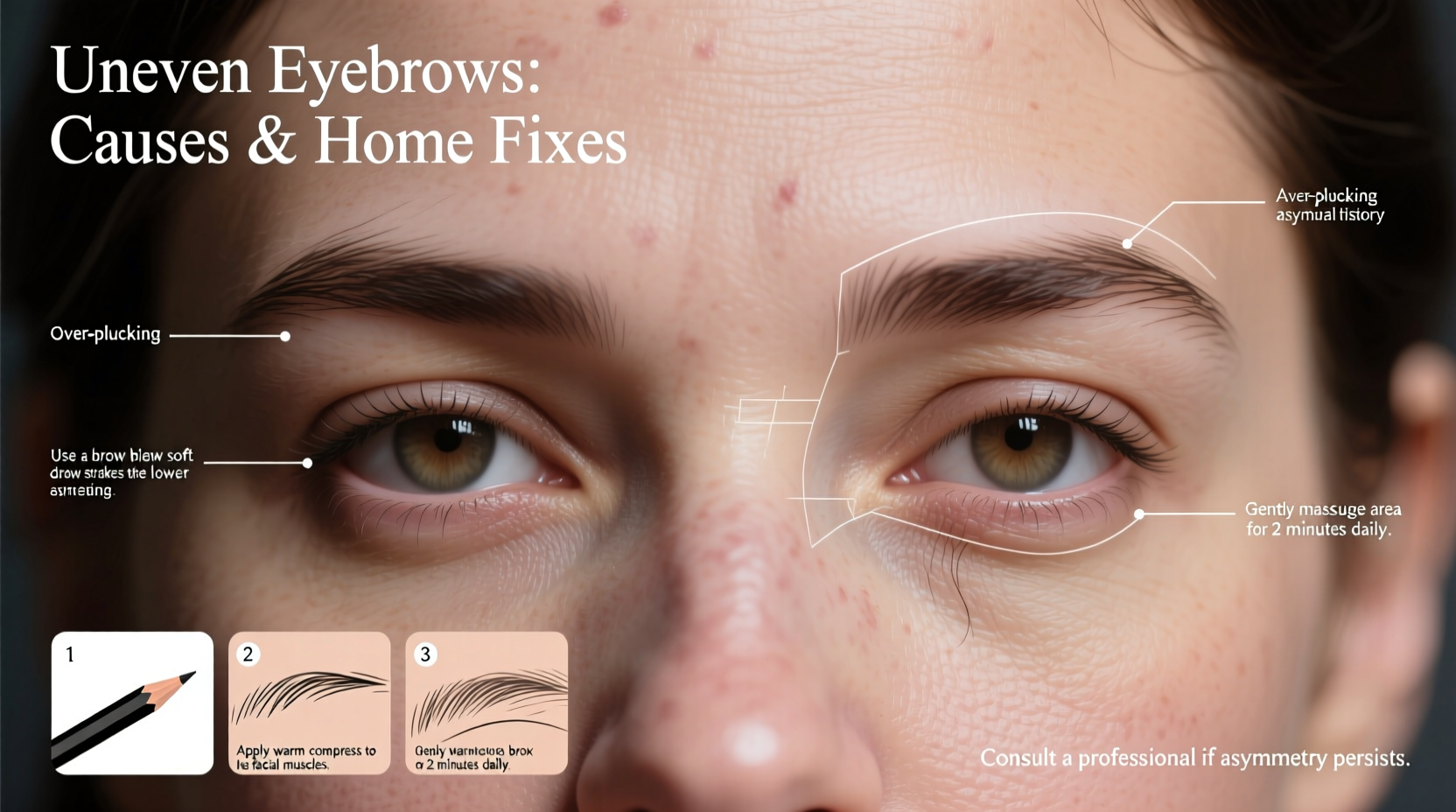
Before diving into solutions, it's important to recognize that no face is perfectly symmetrical—and that includes eyebrows. Studies show that slight differences between the left and right sides of the face are normal and often unnoticeable to others. However, when these differences become pronounced due to over-plucking, hair loss, or muscle use, they can draw attention.
Facial asymmetry may stem from:
- Genetics: Your brow bone structure and natural hair growth patterns are inherited.
- Aging: Skin loses elasticity over time, which can cause one brow to droop slightly.
- Habitual expressions: Frequently raising one eyebrow or squinting on one side can influence shape over years.
- Previous grooming mistakes: Over-tweezing or waxing one side more aggressively creates lasting thinning.
“Most patients come in thinking their brows are ‘crooked,’ but upon assessment, we find it’s usually minor asymmetry exaggerated by uneven grooming.” — Dr. Lena Patel, Dermatologist & Cosmetic Specialist
Common Causes of Uneven Eyebrows
Identifying the root cause is essential before attempting any correction. Here are the most frequent reasons why eyebrows appear uneven:
1. Over-Plucking or Waxing
One of the leading causes is inconsistent shaping. It’s easy to remove more hairs from one side without realizing it, especially if you’re doing it yourself in a mirror. Over time, this leads to thinner, shorter, or misshapen brows.
2. Uneven Hair Growth Patterns
Sometimes, one side of the brow simply grows slower or sparser due to hormonal fluctuations, nutritional deficiencies, or localized trauma (like acne scarring).
3. Facial Nerve or Muscle Imbalance
Conditions like Bell’s palsy or even long-term habits such as sleeping on one side can subtly affect brow position. This type of asymmetry affects the lift and movement of the brow rather than just hair distribution.
4. Aging and Skin Laxity
As collagen production declines, the skin around the eyes and forehead loosens. One eyebrow may begin to sag, making it appear lower or heavier than the other.
5. Incorrect Shaping Techniques
Using outdated stencils, following trends that don’t suit your face shape, or failing to map brows properly can result in mismatched arches or tails.
Step-by-Step Guide to Fixing Uneven Eyebrows at Home
Correcting uneven brows requires a combination of careful grooming, targeted enhancement, and patience. Follow this timeline-based approach for best results:
- Week 1–2: Stop Plucking and Assess
Halt all tweezing or waxing to allow natural regrowth. Take daily photos in natural light to track changes. Use a ruler or brow mapping guide to measure symmetry points: start, arch, and tail. - Week 3–6: Encourage Regrowth
Apply a brow serum containing peptides, biotin, or castor oil nightly. Gently massage the thinner side to stimulate circulation. Avoid harsh makeup removers near brows. - Week 7–8: Re-Shape Strategically
Only groom the fuller side to match the recovering one. Never over-pluck the weaker brow. Use a slanted tweezer for precision and work under bright lighting. - Week 9+: Maintain and Enhance
Once balance improves, maintain shape weekly. Use pencils, powders, or gels to fill gaps and create optical symmetry. Brush brows upward daily to train hairs.
Brow Mapping: The Foundation of Symmetry
Proper brow alignment starts with accurate measurement. Use a simple three-point method:
- Start: Hold a straight edge (like a brush) vertically from the nose wing to the inner corner of the eye. That’s where your brow should begin.
- Arch: Angle the tool from the nose wing through the outer edge of the iris. This marks the highest point of the arch.
- Tail: Extend the tool from the nose wing through the outer corner of the eye. That’s where the brow should end.
Repeat on both sides. Note any discrepancies—this helps determine whether the issue is placement, length, or fullness.
Do’s and Don’ts: Brow Correction Table
| Do’s | Don’ts |
|---|---|
| Use a magnifying mirror with good lighting | Pluck immediately after a hot shower (pores are open, increases irritation) |
| Fill in sparse areas with light, feathery strokes | Follow social media trends blindly—shape should complement your face |
| Apply castor oil or serums nightly on thinning brows | Wax frequently—it can damage follicles over time |
| Trim long brow hairs monthly with small scissors | Over-line your brows beyond natural boundaries |
| Take weekly progress photos for comparison | Rely solely on tweezers—consider threading or professional help if needed |
Real Example: Sarah’s 10-Week Transformation
Sarah, a 32-year-old graphic designer, had struggled for years with her left eyebrow appearing shorter and flatter than the right. She admitted to “tweezing more on the left because it looked bushier,” not realizing she was worsening the imbalance.
She followed a structured at-home plan: stopped plucking for two months, applied a peptide-based serum nightly, and used a brow pencil to mimic fuller growth on the left side. By week 10, her left brow had visibly thickened, and she began lightly shaping both sides using mapped guidelines. Friends noticed her “more awake” expression, and Sarah reported feeling more confident in minimal makeup.
Her key takeaway? “I didn’t need microblading—I just needed to stop over-grooming and give my brows a chance to recover.”
Effective At-Home Remedies and Products
Natural and commercial products can support brow health and encourage fuller appearance:
- Castor Oil: Rich in ricinoleic acid, it moisturizes follicles and may boost circulation. Apply nightly with a clean spoolie.
- Biotin Supplements: Supports keratin production. Consult a doctor before starting, especially if pregnant or on medication.
- Brow Serums: Look for ingredients like prostaglandin analogs (e.g., isopropyl cloprostenate), peptides, or panthenol. Popular brands include RevitaBrow, RapidBrow, and Vegamour.
- Coconut Oil: A gentler alternative for sensitive skin; helps condition hairs and prevent breakage.
Makeup Techniques for Instant Symmetry
While waiting for regrowth, makeup offers an immediate fix. The goal is to create optical balance, not mask entirely.
- Brush and Define: Use a clear brow gel to set hairs in place. This reveals the true shape and any gaps.
- Fill Lightly: Choose a shade matching your natural brow color. Use short, upward strokes to mimic hair-like texture. Focus only on sparse zones.
- Extend Subtly: If one tail ends early, extend it by 1–2mm with a fine pencil. Blend with a spoolie to avoid harsh lines.
- Highlight Beneath: Dab a tiny bit of concealer under the higher brow to visually lift the lower one, creating balance.
Remember: less is more. Over-filling can look unnatural and exaggerate asymmetry.
When to Seek Professional Help
While most cases improve at home, certain situations warrant expert consultation:
- Sudden or severe drooping of one eyebrow (could indicate nerve issues)
- Complete hair loss in patches (possible alopecia areata)
- No improvement after 4–6 months of consistent care
Dermatologists or licensed estheticians can offer treatments like prescription minoxidil (for hair regrowth), botox (to lift a drooping brow), or semi-permanent options such as microblading—though these should be considered only after exhausting conservative methods.
Frequently Asked Questions
Can uneven eyebrows be fixed permanently at home?
While complete permanence depends on underlying causes, most people achieve long-term improvement through consistent regrowth care, proper grooming, and maintenance. Genetics and aging will always play a role, but daily habits significantly influence appearance.
How long does it take to see results from brow serums?
Visible changes typically appear within 6–8 weeks, with optimal results after 3–4 months of nightly use. Patience is crucial—hair growth cycles vary from person to person.
Is it safe to use castor oil on eyebrows every night?
Yes, for most skin types. However, perform a patch test first if you have sensitive skin or allergies. Avoid getting oil into the eyes, as it can cause temporary blurriness or irritation.
Final Checklist: Correcting Uneven Brows at Home
- Pause plucking/waxing for 4–6 weeks to assess natural shape
- Map both brows using the three-point technique
- Identify which side needs more volume or length
- Apply a nourishing serum or oil nightly to the weaker brow
- Use makeup to create visual symmetry during regrowth
- Groom only the fuller side to match—never over-pluck the thin one
- Take weekly photos to monitor progress
- Consult a professional if no improvement occurs after 3 months
Conclusion: Embrace Balance, One Hair at a Time
Uneven eyebrows don’t define your beauty—they’re a common, correctable concern rooted in habits, biology, and grooming choices. The journey to balanced brows isn’t about perfection; it’s about awareness, consistency, and self-care. By understanding your natural anatomy, avoiding aggressive grooming, and supporting healthy growth, you can achieve brows that frame your face with harmony and confidence.
Start today: put down the tweezers, pick up a spoolie, and commit to a kinder, smarter brow routine. Your most balanced look might be just a few weeks away.




 浙公网安备
33010002000092号
浙公网安备
33010002000092号 浙B2-20120091-4
Comments
No comments yet. Why don't you start the discussion?