
Clumpy mascara is a common frustration that can turn a polished makeup look into a messy one in seconds. No matter how expensive the tube or how carefully you swipe, lashes sometimes end up stuck together in thick, spider-like strands. Understanding why this happens—and how to prevent it—is essential for achieving fluttery, separated, and voluminous lashes without the globs.
The root causes of clumping go beyond simple application errors. They involve product formulation, brush design, lash condition, and even environmental factors. By identifying what’s contributing to the clumps, you can adjust your routine and tools for consistently clean, defined results.
Why Eyelashes Clump When Applying Mascara
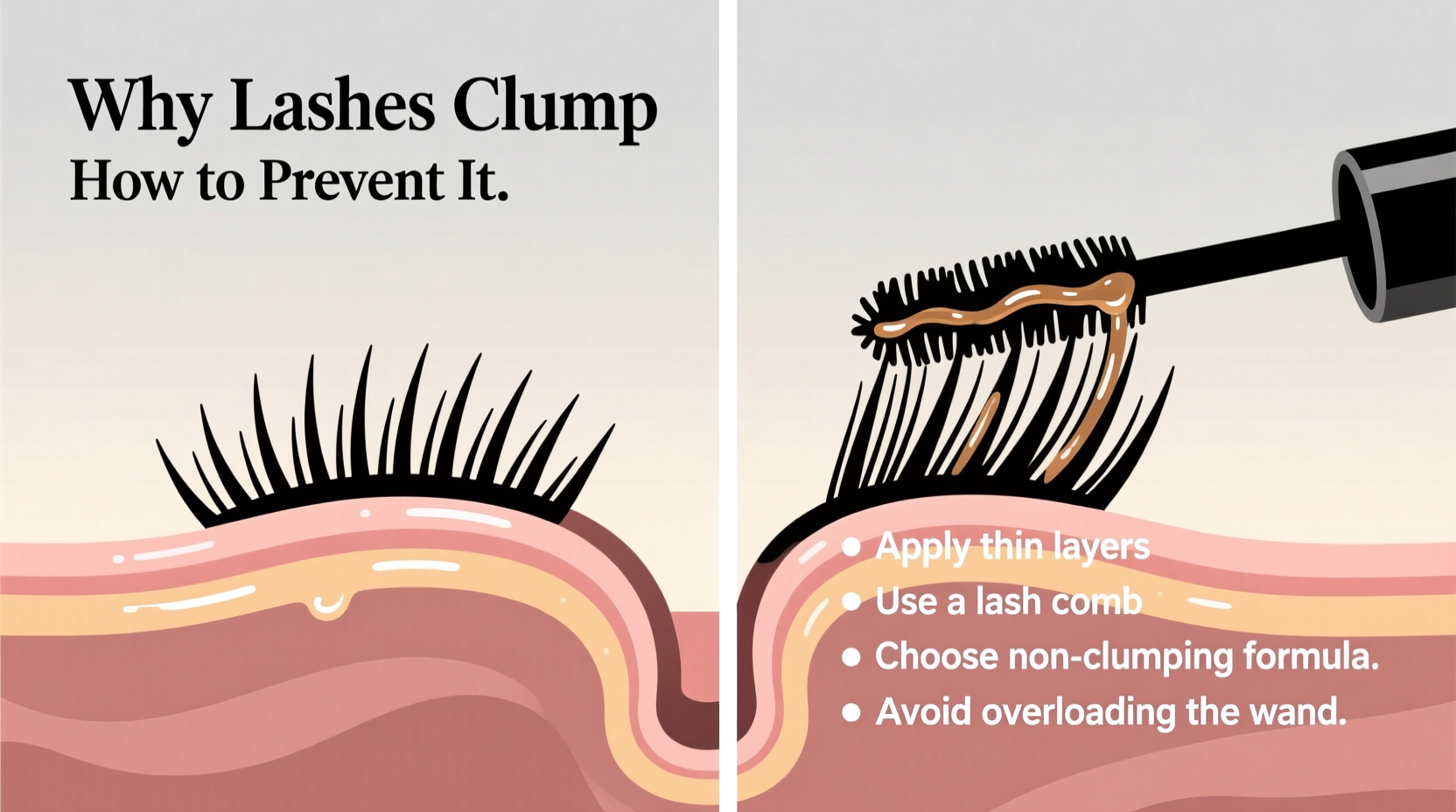
Mascara clumping occurs when excess product accumulates on lashes, causing them to stick together. While occasional clumping might seem unavoidable, recurring issues point to specific underlying causes.
1. Overloading the Brush with Product
One of the most frequent culprits is scooping too much mascara from the tube. Many people pump the wand in and out repeatedly, which forces air into the tube and dries out the formula over time. More critically, it coats the brush with an excessive amount of product before it even touches the lashes.
2. Using Old or Dried-Out Mascara
Mascara has a shelf life—typically 3 to 6 months. As it ages, the formula begins to dry and thicken, making it more likely to form clumps. Dried particles inside the tube also contribute to uneven application and flaking.
“Mascara is one of the fastest-expiring cosmetics due to its exposure to bacteria and moisture. Using old mascara not only affects performance but can also irritate the eyes.” — Dr. Lena Torres, Ophthalmic Aesthetic Consultant
3. Poor Wand Design or Formula Consistency
Not all mascaras are created equal. Some formulas are inherently thicker or stickier, especially those marketed for extreme volume. Similarly, wands with densely packed bristles can deposit too much product at once, particularly on shorter or finer lashes.
4. Layering Too Quickly Without Letting Layers Dry
Applying multiple coats of mascara too rapidly doesn’t give the first layer time to set. This traps wet product between lashes, encouraging them to stick together as they dry. The result? Thick clusters instead of lifted definition.
5. Natural Lash Texture and Density
People with naturally straight, short, or sparse lashes may experience more clumping because there's less structure for the mascara to adhere to evenly. Curlier or longer lashes tend to separate more easily during application.
How to Prevent Mascara Clumping: Proven Techniques
Preventing clumps isn’t about using fewer products—it’s about smarter application, better tools, and proper maintenance. Here’s how to refine your routine for flawless results.
Use the Right Application Technique
Start at the base of your lashes and wiggle the wand upward in a zigzag motion. Avoid sweeping in a single stroke like a paintbrush. The side-to-side movement helps distribute product evenly and separates lashes as you go.
Focus on small sections at a time, especially near the inner and outer corners where clumping often begins. Use the tip of the wand for precision on shorter lashes.
Limit Coats and Allow Drying Time
Two coats are usually sufficient—one for color and length, the second for volume. Apply the first coat, wait 30–60 seconds for it to dry slightly, then add the next. Rushing leads to smudging and clumping.
Curl Before You Coat
A lash curler creates space between lashes, reducing contact points where clumping occurs. Always curl *before* applying mascara. Curling after can cause breakage and tug on dried, brittle lashes.
For added hold, warm the curler slightly with a blow dryer (test on skin first) or use a heated lash curler for longer-lasting lift.
Choose the Right Formula for Your Lash Type
Different lashes need different formulas. If you’re prone to clumping, consider a lengthening or separating mascara rather than a heavy volumizing one. Look for terms like “featherlight,” “defined,” or “no-clump” on the label.
| Lash Type | Recommended Mascara Type | Why It Works |
|---|---|---|
| Fine or thin lashes | Lengthening or defining formula | Adds extension without weighing down lashes |
| Dense or long lashes | Volumizing or waterproof | Holds shape and resists smudging |
| Straight lashes | Curl-enhancing or lifting formula | Supports upward hold and separation |
| All lash types (clump-prone) | Separating brush + lightweight serum-based formula | Reduces buildup and improves glide |
Step-by-Step Guide to Clump-Free Lashes
Follow this detailed process to minimize clumping and maximize definition:
- Start with clean, dry lashes. Remove any oils, moisturizers, or leftover makeup. Residual product can interfere with mascara adhesion and cause uneven texture.
- Curl your lashes. Use a clean lash curler and press gently in two or three stages from base to tip for a natural curve.
- Select the right mascara. For prevention, opt for a non-waterproof formula with a slim, flexible wand designed for separation.
- Remove excess product. After pulling the wand out, roll it lightly against the tube opening to eliminate drips and globs.
- Apply the first coat with precision. Begin at the roots, wiggle upward, and use short strokes. Focus on separating lashes as you move outward.
- Wait 45 seconds. Let the first layer set slightly before adding more. This prevents layers from merging into clumps.
- Apply a second coat if desired. Use the same technique, concentrating on tips for extra length or outer corners for a fanned effect.
- Check for clumps immediately. If you spot a cluster while the mascara is still wet, gently pull the lashes apart with a clean spoolie or tweezers.
- Finish with a lash separator (optional). Slide a clean spiral lash comb through from root to tip to ensure full separation.
Tips and Tools That Make a Difference
Beyond technique, the right accessories and habits can dramatically reduce clumping.
Use a Lash Comb or Separator
A fine-toothed lash comb is one of the most effective tools for preventing and fixing clumps. Run it through your lashes immediately after the final coat while the product is still workable. Metal combs tend to be more durable and precise than plastic ones.
Replace Mascara Regularly
To maintain hygiene and performance, replace your mascara every 3 months. Write the opening date on the tube with a marker to track freshness. Expired mascara not only clumps more easily but increases the risk of eye infections.
Store Mascara Properly
Keep your mascara in a cool, dry place away from humidity (like the bathroom). Heat and moisture accelerate drying and bacterial growth. Store it upright to prevent formula settling at the brush end.
Try a Primer First
Lash primers create a smooth base that allows mascara to adhere evenly. They often contain conditioning ingredients that improve flexibility, reducing brittleness and flaking. Apply primer, let it dry for 20 seconds, then follow with your regular mascara.
Real-Life Example: Fixing Chronic Clumping
Sarah, a 29-year-old office worker, struggled with mascara clumps daily. She used a popular volumizing formula and applied three coats for “drama,” but by midday, her lashes were stuck together and flaking.
After consulting a makeup artist, she made three key changes: switched to a lengthening formula, limited herself to two coats with a 60-second gap, and started using a lash comb. She also began replacing her mascara every 90 days instead of stretching it to six months.
Within a week, her lashes appeared longer and cleaner. “I was shocked how much difference just waiting a minute between coats made,” she said. “Now I get compliments instead of questions about ‘spider lashes.’”
Common Mistakes That Cause Clumping
- Pumping the wand – Introduces air, drying out the formula faster.
- Using the same mascara for months – Thickened, old product is harder to control.
- Skipping lash prep – Oils or residue make mascara slide and clump.
- Applying mascara on damp lashes – Water dilutes the formula unpredictably.
- Layering without drying time – Traps wetness and sticks lashes together.
- Using expired tools – Dirty spoolies or brushes transfer gunk back into the tube.
FAQ: Your Clumping Questions Answered
Can I fix clumpy mascara without starting over?
Yes—if caught early. While the mascara is still wet, use a clean spoolie or micro-comb to gently pull lashes apart. For dried clumps, avoid peeling or tugging. Instead, remove with micellar water and reapply fresh product.
Is waterproof mascara more likely to clump?
It can be. Waterproof formulas are typically thicker and more adhesive to resist moisture. They require more careful application and removal. If you're prone to clumping, reserve waterproof mascara for special occasions or humid environments.
Does mascara temperature affect clumping?
Yes. Extreme heat or cold alters the viscosity of the formula. Leaving mascara in a hot car can cause it to separate or thicken unevenly. Store it at room temperature for consistent performance.
Final Checklist for Clump-Free Lashes
- Before Application
- ☐ Cleanse lashes thoroughly
- ☐ Check mascara expiration date
- ☐ Curl lashes
- ☐ Wipe excess product off the wand
- During Application
- ☐ Wiggle the wand at the base
- ☐ Use a zigzag motion
- ☐ Apply first coat, then wait 45–60 seconds
- ☐ Use the wand tip for corner lashes
- After Application
- ☐ Run a lash comb through from root to tip
- ☐ Inspect for early clumps and correct them
- ☐ Store mascara upright in a dry place
Conclusion: Achieve Flawless Lashes with Confidence
Clumpy mascara doesn’t have to be a daily battle. With the right product choices, mindful application, and consistent habits, you can enjoy defined, fluttery lashes that enhance your eyes—not distract from them. The key lies in understanding your lashes’ needs and respecting the limitations of the product.
Small adjustments—like wiping the wand, waiting between coats, or using a lash comb—can transform your results. Replace old tubes, avoid pumping, and never underestimate the power of a good primer or curler.




 浙公网安备
33010002000092号
浙公网安备
33010002000092号 浙B2-20120091-4
Comments
No comments yet. Why don't you start the discussion?