
It’s not uncommon to notice more natural lashes falling out shortly after getting eyelash extensions—or even weeks later. While some shedding is normal due to the natural hair growth cycle, excessive or premature loss can be alarming. Many assume the extensions caused permanent damage, but in most cases, the issue lies in improper application techniques or, more frequently, inadequate aftercare. Understanding the science behind lash cycles, the role of adhesives, and how daily habits impact lash health is essential to preserving both your extensions and your natural lashes.
Natural eyelashes follow a growth cycle similar to scalp hair: anagen (growth), catagen (transition), and telogen (resting/shedding). Each lash grows independently, meaning you naturally shed 1–5 lashes per day. Extensions are attached to individual natural lashes, so when a natural lash sheds, the extension falls with it. However, if multiple lashes fall out at once or you notice thinning along the lash line, something may be wrong—either with the application process or your post-service routine.
Understanding the Natural Lash Cycle and Extension Retention
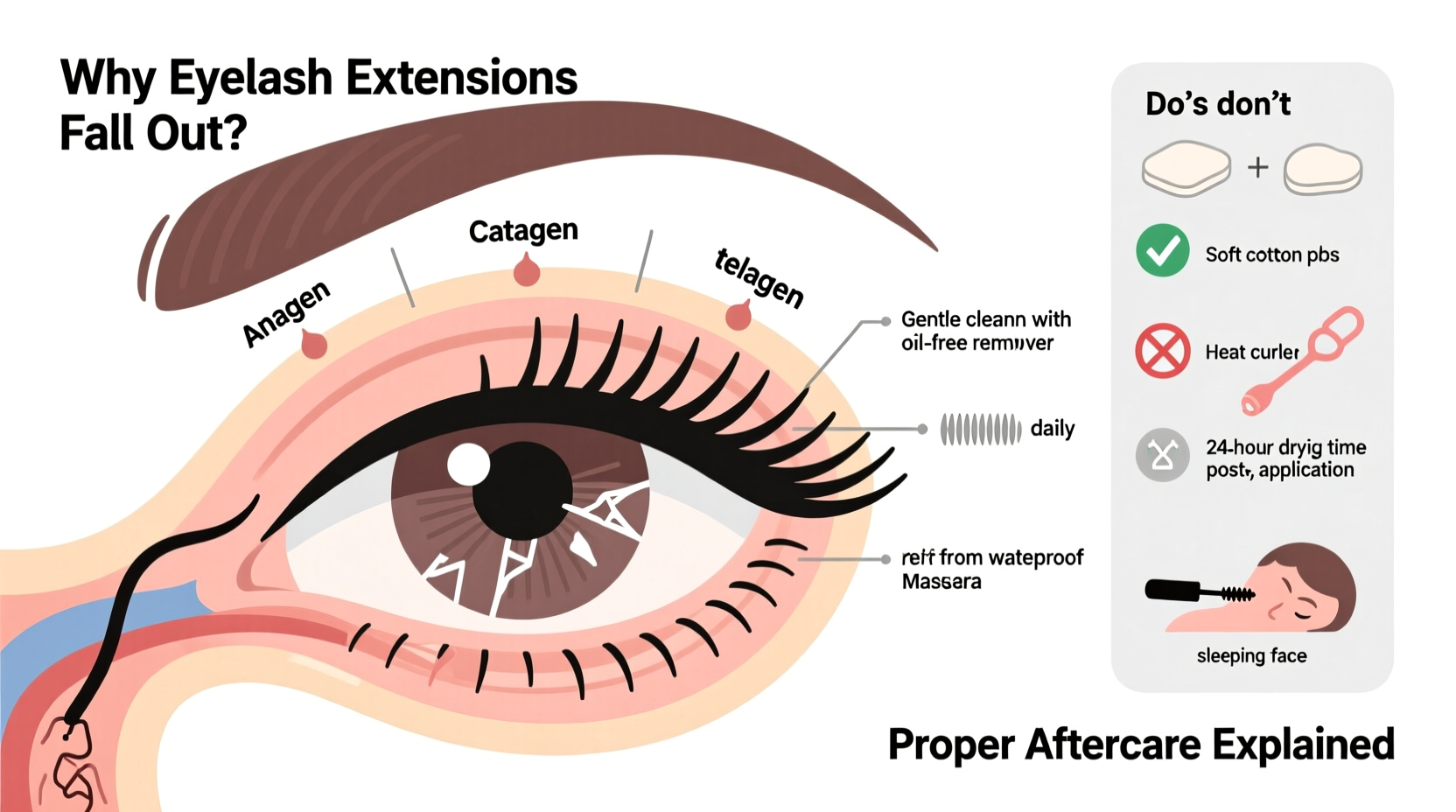
The lifespan of a natural eyelash ranges from 4 to 11 weeks, depending on genetics, age, and overall health. During this time, each lash progresses through three distinct phases:
- Anagen (Growth Phase): Lasts 30–45 days. The lash actively grows from the follicle.
- Catagen (Transition Phase): A short phase (about 2–3 weeks) where growth stops and the follicle shrinks.
- Telogen (Resting/Shedding Phase): Lasts up to 100 days. The lash detaches naturally and is replaced by a new one.
When eyelash extensions are applied during the anagen phase, they remain intact for several weeks. But as the natural lash enters the telogen phase, it will shed—taking the extension with it. This is completely normal and expected. The problem arises when external factors accelerate shedding or damage the follicles prematurely.
Common Causes of Premature Lash Loss After Extensions
While some shedding is inevitable, excessive fallout can result from several preventable causes:
- Poor application technique: Overloading lashes with thick or heavy extensions strains the natural hair, leading to traction alopecia over time.
- Incorrect adhesive use: Harsh glues containing high levels of cyanoacrylate can irritate the follicle or cause allergic reactions that disrupt growth.
- Frequent rubbing or touching: Touching your eyes transfers oils and bacteria, weakening the bond and increasing friction on delicate lashes.
- Skipping infills: As extensions shed unevenly, remaining clusters can create imbalance, pulling on neighboring lashes.
- Using oil-based products: Oil breaks down the adhesive and weakens the keratin structure of natural lashes.
A study published in the *Journal of Cosmetic Dermatology* found that 68% of clients reporting lash thinning after extensions had used waterproof mascara or oily eye creams regularly between appointments—both known to degrade adhesive bonds and compromise follicle health.
Essential Aftercare Practices for Healthy Lash Retention
Proper aftercare doesn’t just extend the life of your extensions—it protects your natural lashes. Here’s what experts recommend:
1. Keep Lashes Clean and Oil-Free
Use a sulfate-free, oil-free lash cleanser every other day. Buildup from makeup, sweat, and environmental pollutants creates a breeding ground for bacteria and weakens the bond. Avoid micellar water with oils—even “gentle” versions can contain fatty alcohols that degrade adhesive over time.
2. Avoid Water Exposure for 24–48 Hours Post-Application
Fresh adhesive needs time to fully cure. Exposing lashes to steam, saunas, or long showers too soon can cause premature loosening. Wait at least two full days before swimming or intense sweating.
3. Sleep on Your Back or Use a Silk Pillowcase
Cotton pillowcases create friction that tugs at extensions. Silk reduces resistance, minimizing breakage. One client reported losing nearly 40% of her extensions within a week—only after realizing she slept face-down on a rough cotton pillow.
“Patients often blame their lash technician when the real culprit is nighttime friction or product misuse.” — Dr. Lena Patel, Oculofacial Specialist
4. Never Rub or Pull at Extensions
If an extension becomes loose, never pluck it. This risks pulling out adjacent natural lashes still in the growth phase. Instead, schedule a fill or have a professional remove it safely.
5. Schedule Regular Infill Appointments Every 2–3 Weeks
Infills maintain balance across the lash line, preventing clumping and strain. Waiting longer than four weeks forces technicians to remove old, tangled extensions—increasing manipulation and stress on follicles.
Do’s and Don’ts: A Quick Reference Table
| Do | Don’t |
|---|---|
| Wash lashes with oil-free cleanser 2–3 times a week | Use oil-based makeup removers or moisturizers near eyes |
| Sleep on a silk pillowcase or use a travel eye mask | Rub or pick at loose extensions |
| Brush lashes daily with a clean spoolie | Apply waterproof mascara (even on bottom lashes) |
| Get refills every 2–3 weeks | Wait more than 4 weeks between appointments |
| Shower carefully—keep head tilted back to avoid direct spray | Use mechanical eyelash curlers |
Mini Case Study: Sarah’s Lash Recovery Journey
Sarah, a 32-year-old marketing executive, loved her voluminous mink lash extensions but noticed significant thinning after six months of continuous wear. She visited a dermatologist after seeing patches along her upper lash line. Upon examination, it was clear she wasn’t following proper aftercare: she used coconut oil to remove eye makeup, slept on her stomach, and skipped infills for over five weeks.
Her lash technician and doctor collaborated on a recovery plan: a four-week break from extensions, daily cleansing with a pH-balanced foam, and application of a peptide-rich lash serum. After eight weeks, Sarah’s natural lashes regained density and strength. She resumed extensions—but now follows a strict aftercare regimen and schedules infills religiously every 18 days.
“I thought I was being low-maintenance,” Sarah said. “But I learned that maintenance isn’t optional—it’s protection.”
Step-by-Step Guide to Daily Lash Aftercare
Follow this simple routine to maximize retention and minimize damage:
- Morning: Gently brush lashes upward with a clean spoolie to remove any overnight crusting.
- Evening: Dampen a lint-free pad with oil-free lash cleanser. Close eyes and swipe gently along the lash line for 10 seconds per eye.
- Rinse: Use cool water on a soft cloth to wipe away residue. Do not splash directly.
- Dry: Air-dry or pat lightly with a clean towel. Never rub.
- Brush: Once dry, comb through lashes with a spoolie to maintain alignment.
- Weekly: Perform a deeper cleanse using a foaming lash shampoo and soft brush once a week.
This routine removes debris without disturbing the adhesive bond or irritating the follicle. Consistency is key—just like skincare, lash care works best when practiced daily.
When to Take a Break from Extensions
Continuous extension wear without breaks can lead to cumulative stress on follicles. Dermatologists recommend taking a 4- to 6-week break every 6–12 months to allow natural lashes to regenerate fully.
Signs you need a break include:
- Noticeable thinning or sparse areas
- Lashes breaking mid-shaft
- Increased shedding beyond the usual 1–5 per day
- Irritation, redness, or itching along the lash line
During this break, focus on nourishing your natural lashes. Use a lash-enhancing serum containing peptides, biotin, and panthenol. Avoid all mascara and eye treatments with alcohol or fragrance.
Frequently Asked Questions
Can eyelash extensions cause permanent lash loss?
Permanent loss is rare but possible with chronic misuse—such as wearing overly heavy extensions, using improper removal methods, or ignoring signs of irritation. Most cases of thinning are reversible with proper rest and care.
How long should I wait before getting extensions again after a break?
After a 4–6 week break, your natural lashes should be strong enough to support extensions again. Consult your technician to assess lash health before reapplying.
Why do my extensions last only a week?
If extensions fall out within days, the adhesive may not have cured properly, or you’re exposing them to moisture too soon. It could also indicate poor application technique or incompatible skin chemistry. Discuss this with your technician—they may switch to a humidity-controlled glue or adjust their method.
Final Checklist: Are You Protecting Your Lashes?
Before and after every extension appointment, ask yourself:
- Am I using oil-free products around my eyes?
- Have I avoided rubbing or touching my lashes?
- Did I keep my lashes dry for the first 48 hours?
- Am I brushing them daily with a clean spoolie?
- Have I scheduled my next infill within 2–3 weeks?
- Do I sleep on a silk pillowcase or avoid face-down positions?
- Have I taken a break from extensions recently to let my natural lashes recover?
Checking these boxes consistently makes a dramatic difference in both appearance and long-term lash health.
Conclusion: Care Today, Confidence Tomorrow
Seeing lashes fall out after extensions can be unsettling, but it’s often a sign of manageable issues—not irreversible damage. With the right knowledge and discipline, you can enjoy beautiful, fluttery extensions without sacrificing the health of your natural lashes. The key lies in understanding your lash cycle, choosing a qualified technician, and committing to a sustainable aftercare routine.
Remember: extensions are an enhancement, not a replacement. Their true value isn’t just in how they look on day one—but in how well they preserve the lashes beneath. Start today by reviewing your current habits, making small adjustments, and treating your lashes with the same care you’d give to fine silk or delicate jewelry.




 浙公网安备
33010002000092号
浙公网安备
33010002000092号 浙B2-20120091-4
Comments
No comments yet. Why don't you start the discussion?