
Losing a few eyelashes daily is normal—just like scalp hair, lashes follow a growth cycle and naturally shed. But when clumps come out with mascara on them or you notice thinning over time, it’s a sign something in your beauty routine may be to blame. Increasingly, people are reporting excessive lash loss after using certain mascaras, especially long-wearing or waterproof formulas. The good news: this isn’t inevitable. Understanding the ingredients and habits that damage lashes allows you to make smarter choices without sacrificing volume or drama.
This article explores the science behind lash fallout linked to mascara use, identifies high-risk product types and behaviors, and offers practical, dermatologist-backed strategies to keep your lashes healthy while still enjoying enhanced definition.
Why Eyelash Loss Happens: The Biology Behind It
The eyelash growth cycle consists of three phases: anagen (growth), catagen (transition), and telogen (resting/shedding). Each lash stays in the anagen phase for about 30 to 45 days, significantly shorter than scalp hair, which explains their limited length. On average, you have 150–200 upper lashes and 75–100 lower ones, and losing 1–5 per day is typical.
Problems arise when external factors disrupt this natural cycle. Mascara can contribute to premature shedding in several ways:
- Mechanical stress: Rubbing, tugging, or aggressive removal damages the follicle.
- Chemical irritation: Harsh preservatives or synthetic polymers inflame the delicate eye area.
- Follicle blockage: Buildup from heavy formulas clogs follicles, inhibiting regrowth.
- Allergic reactions: Sensitivities to fragrance or latex can trigger inflammation and lash loss.
When these factors combine, they don’t just cause temporary shedding—they can lead to traction alopecia or even permanent thinning if repeated over time.
Common Mascara Ingredients That Harm Lashes
Not all mascaras are created equal. Some contain ingredients designed for dramatic effects but come at the cost of lash integrity. Here are the most frequent culprits:
1. Parabens and Formaldehyde Releasers
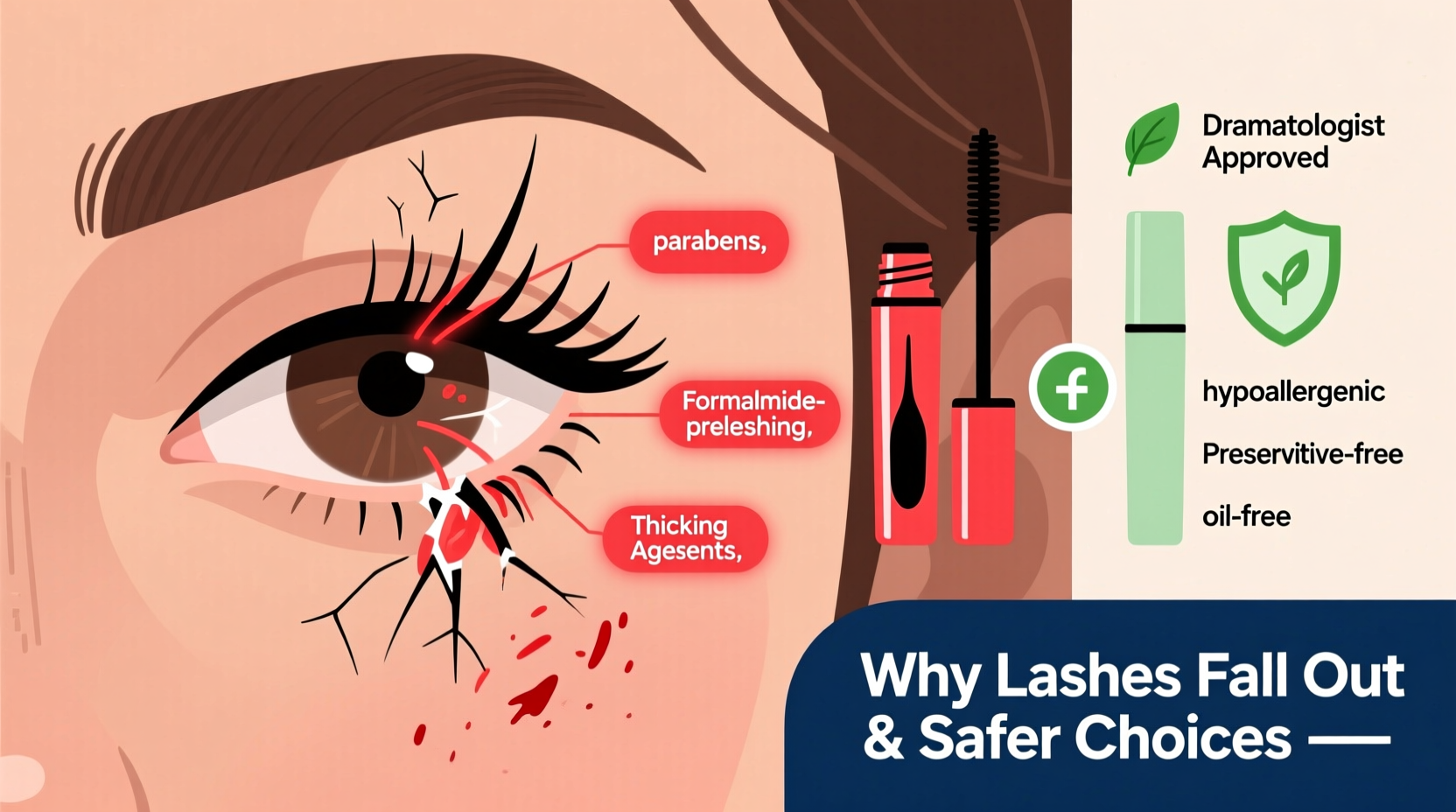
Used as preservatives to extend shelf life, parabens (like methylparaben) and formaldehyde-releasing agents (e.g., DMDM hydantoin) can irritate the follicle. While deemed safe in small amounts by regulatory bodies, repeated exposure near sensitive ocular skin increases the risk of contact dermatitis, which may accelerate lash shedding.
2. Synthetic Waxes and Polymers
Beeswax, carnauba wax, and lanolin are natural thickeners, but many brands use synthetic versions like paraffin wax or acrylates. These create a rigid film that stiffens lashes. Over time, this stiffness makes lashes brittle and prone to breakage, especially when bending during blinking or removal.
3. Waterproof Formulas with High Film-Formers
Waterproof mascaras rely on strong polymers such as VP/eicosene copolymer or styrene/acrylates to resist moisture. While effective, they require harsh removers—often oil-based or dual-phase cleansers—that strip natural oils from lashes and the lash line, weakening the hair shaft.
4. Fragrance and Dyes
Fragrances—even “natural” essential oils—can trigger allergic reactions around the eyes. Red dyes like CI 19140 or CI 42090 are also common irritants. Chronic low-grade inflammation from sensitization can impair follicle function and reduce lash density.
“Repeated exposure to allergens or irritants in eye cosmetics can lead to chronic marginal blepharitis, which disrupts the lash growth environment.” — Dr. Lena Patel, Oculoplastics Specialist, Massachusetts Eye Institute
Safer Alternatives: Choosing Lash-Friendly Mascaras
You don’t need to give up mascara to protect your lashes. The key is choosing products formulated with care for ocular health. Look for labels that say “ophthalmologist-tested,” “hypoallergenic,” or “suitable for contact lens wearers.” These are more likely to undergo rigorous safety testing.
What to Look for in a Lash-Safe Mascara
- Conditioning ingredients: Peptides, panthenol (pro-vitamin B5), castor oil, or keratin help strengthen and nourish lashes.
- Low-irritant preservatives: Opt for products using phenoxyethanol or benzyl alcohol instead of parabens.
- Flexible polymers: Look for nylon-6 or cellulose derivatives that provide hold without brittleness.
- No added fragrance or dye: Minimizes allergy risk.
Top Safer Mascara Types
| Type | Pros | Cons | Best For |
|---|---|---|---|
| Tube Mascaras | Coat each lash individually; no smudging; easy water-based removal | Can feel stiff; less volumizing | Sensitive eyes, those prone to fallout |
| Mineral-Based | Free from synthetics; gentle on skin | Limited shade range; lighter pigmentation | Allergy-prone users |
| Gentle Wash-Off Formulas | Removable with warm water; less stripping | Not waterproof; may flake | Daily wear, short-term use |
| Lash Serums with Tint | Double-duty: color + growth support | Expensive; results take weeks | Thinning lashes, long-term care |
Step-by-Step Guide to Protecting Your Lashes
Changing your mascara alone isn’t enough. A complete lash-care routine minimizes damage and supports regrowth. Follow this five-step protocol:
- Remove makeup nightly: Always cleanse before bed. Leaving mascara on overnight dehydrates lashes and increases bacterial buildup.
- Use a gentle remover: Choose a non-comedogenic, oil-free micellar water or balm specifically for eyes. Avoid rubbing—press and glide.
- Cleanse the lash line: Use a mild facial cleanser or diluted baby shampoo on a cotton swab to remove residue from the base of lashes.
- Moisturize the brows and lash line: Apply a drop of castor oil or a peptide serum with clean fingertips or a spoolie brush 2–3 times per week.
- Replace mascara every 3 months: Old mascara harbors bacteria that can cause infections and inflammation, further stressing follicles.
Mini Case Study: Recovering Lash Health After Damage
Sarah, a 32-year-old marketing executive, noticed her lashes were thinner and breaking off after six months of using a popular waterproof tubing mascara. She wore it daily for client meetings and removed it with a strong bi-phase cleanser. After waking up with multiple lashes stuck to her pillow, she consulted a dermatologist.
The diagnosis: mechanical trauma compounded by chemical drying. Her routine involved vigorous scrubbing to remove stubborn product, which weakened the keratin structure of her lashes. The doctor advised switching to a washable formula, using a hydrating eye makeup remover, and applying a nightly lash serum containing biotin and peptides.
Within eight weeks, Sarah reported less shedding and improved flexibility. After four months, her lashes were longer and fuller. The change wasn’t due to a miracle product—it was consistent, gentle care.
Checklist: How to Use Mascara Without Losing Lashes
Use this actionable checklist to safeguard your lashes every time you apply or remove mascara:
- ✅ Replace mascara every 90 days
- ✅ Avoid sharing mascara (risk of infection)
- ✅ Don’t pump the wand (introduces air and bacteria)
- ✅ Remove with a soft, soaked pad—no tugging
- ✅ Skip waterproof unless absolutely necessary
- ✅ Let lashes breathe—take breaks from mascara weekly
- ✅ Use a lash conditioner or serum between applications
- ✅ Check ingredient lists for known irritants
Frequently Asked Questions
Can mascara cause permanent lash loss?
Typically, no—if caught early. Temporary shedding due to irritation or mechanical stress reverses once the damaging product or habit stops. However, chronic traction (from tight extensions or aggressive removal) or untreated inflammation can lead to scarring alopecia, where follicles are destroyed and regrowth isn’t possible.
Is it better to go bare or use a lash serum instead of mascara?
If you're experiencing active thinning, giving your lashes a break is beneficial. During recovery, use a lash serum with proven ingredients like prostaglandin analogs (e.g., isopropyl cloprostenate) or peptides. These can improve density over 8–12 weeks. Once stabilized, reintroduce a gentle mascara sparingly.
Are natural or organic mascaras safer?
Not always. “Natural” doesn’t mean non-irritating—some plant extracts (like lavender oil) are common allergens. Focus on formulation integrity: minimal ingredients, no fragrance, and ophthalmologist testing matter more than buzzwords. Brands like ILIA, Kjaer Weis, and Alima Pure offer clean options with clinical backing.
Conclusion: Beauty Shouldn’t Come at the Cost of Health
Your eyelashes aren’t just cosmetic—they’re protective barriers for your eyes. When mascara use leads to noticeable fallout, it’s a signal to reassess your choices. Harsh chemicals, improper removal, and neglecting lash hygiene can undermine both appearance and ocular wellness. By switching to gentler formulas, adopting a mindful removal routine, and supporting lash strength with conditioning treatments, you can enjoy defined, fluttery lashes without compromise.
The safest mascara is one that enhances without harming. Start today by checking your current product’s expiration date and ingredient list. Small changes now can preserve your lashes for years to come.




 浙公网安备
33010002000092号
浙公网安备
33010002000092号 浙B2-20120091-4
Comments
No comments yet. Why don't you start the discussion?