
Many people turn to magnetic lashes for a quick, glue-free way to enhance their look without the commitment of extensions or daily mascara application. They’re convenient, reusable, and often marketed as gentle alternatives. But if you’ve noticed your natural lashes thinning or falling out more than usual after regular use, you're not imagining things—and you're certainly not alone. While magnetic lashes themselves aren’t inherently damaging, improper use, poor habits, and overlooked factors can lead to significant lash loss over time.
Natural eyelashes play a crucial role in protecting your eyes from debris and irritants. When they begin shedding excessively, it’s a sign that something is disrupting their growth cycle. The good news? Most causes are preventable once identified. This article breaks down the most common reasons behind post-magnetic lash fallout, backed by dermatological insight and real-world patterns, so you can enjoy enhanced beauty without sacrificing lash health.
How Magnetic Lashes Work and Their Impact on Natural Lashes
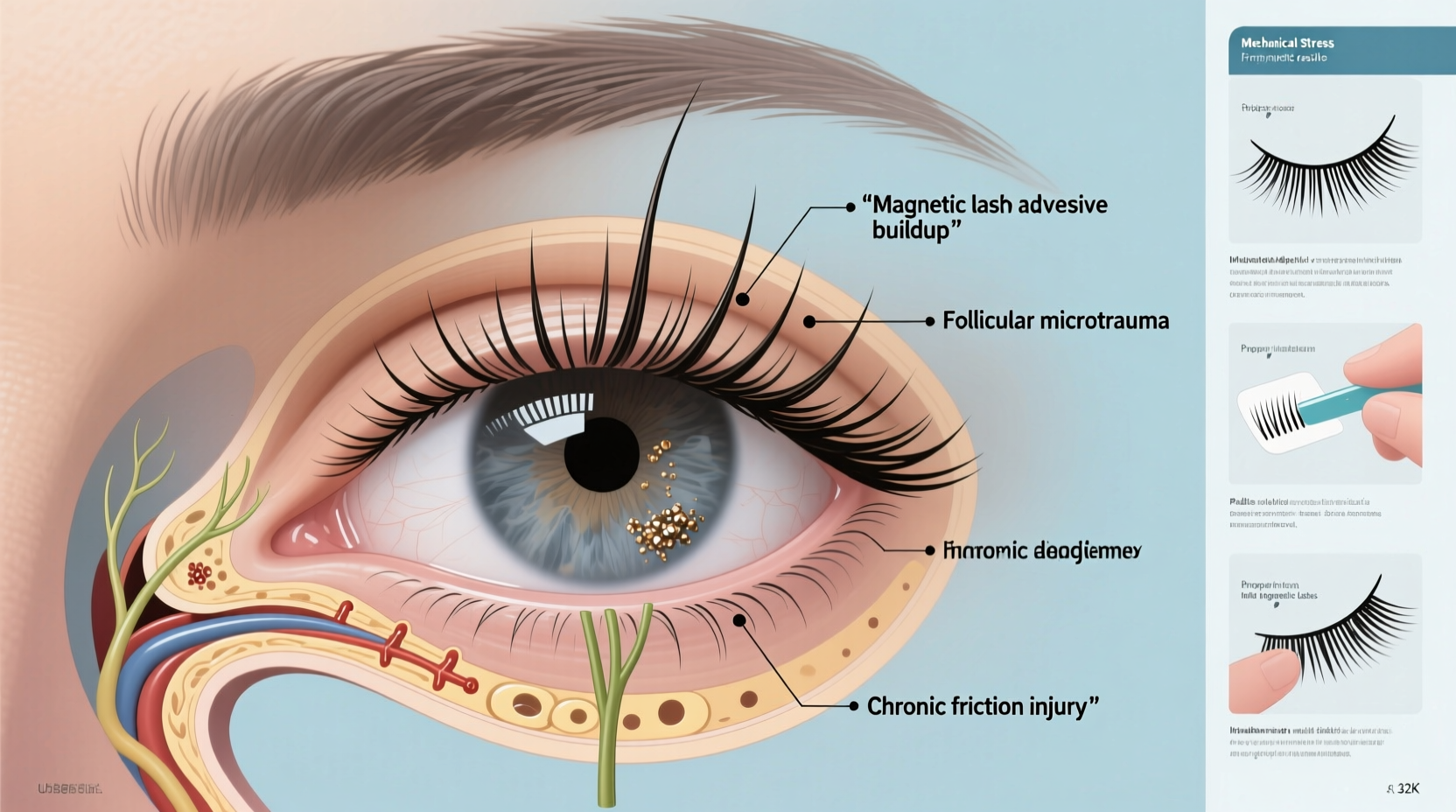
Magnetic lashes consist of two strips—top and bottom—that sandwich your natural lashes between them using small magnets embedded in the lash bands. Unlike traditional false lashes, they don’t require adhesive, which reduces chemical exposure. However, the physical mechanics of how they attach still place stress on your natural lashes.
When applied correctly, magnetic lashes should rest slightly above your lash line, with the magnets holding the strip in place against your eyelid skin. But in practice, many users position the top magnet too close to the base of their lashes, effectively clamping down on them. This constant pressure can weaken the hair follicles over time, leading to premature shedding and even traction alopecia—a condition caused by repeated pulling on hair follicles.
Dermatologists emphasize that while occasional use is generally safe, frequent or prolonged wear increases mechanical stress. “The weight and grip of magnetic lashes, especially heavier styles, create micro-trauma with each blink,” explains Dr. Lena Patel, board-certified dermatologist specializing in hair and scalp disorders. “Over weeks or months, this cumulative strain disrupts the anagen (growth) phase of the lash cycle.”
“Even non-adhesive systems like magnetic lashes exert force on delicate lash follicles. Repeated tension leads to weakening and eventual fallout.” — Dr. Lena Patel, Dermatologist
Top 5 Reasons Your Eyelashes Fall Out After Using Magnetic Lashes
1. Excessive Weight and Poor Design
Not all magnetic lashes are created equal. Some styles feature thick, heavy bands or overly long fibers that add unnecessary weight. When worn daily, these heavier sets drag down your natural lashes, straining the follicles and accelerating breakage. Long-term use of such designs mimics the effects seen in people who frequently wear tight hairstyles—constant pull leads to gradual thinning.
2. Incorrect Application Technique
Improper placement is one of the most common culprits. If you press the magnets too tightly against your lash line or clamp them directly onto your natural lashes instead of letting them sit on the eyelid, you’re creating friction and tension. Over time, this damages both the shaft and root of your lashes.
Additionally, rushing the application process often results in misalignment, requiring multiple adjustments. Each repositioning increases rubbing and tugging, further weakening fragile hairs.
3. Failure to Clean Lashes and Eyelids
Residue from makeup, oils, and bacteria can accumulate on both your magnetic lashes and eyelids. When left uncleaned, this buildup clogs hair follicles, increasing the risk of inflammation and infection—conditions that disrupt normal lash growth. Blepharitis, an inflammatory eyelid condition, is commonly linked to poor hygiene around eye cosmetics.
Cleaning your magnetic lashes after every 2–3 uses prevents grime transfer. Similarly, removing eye makeup thoroughly at night ensures your follicles remain unclogged and healthy.
4. Overuse Without Rest Periods
Just like skin needs recovery time from makeup, your lashes need breaks from any foreign attachment. Wearing magnetic lashes every single day doesn’t allow your natural lashes to breathe or regenerate. Continuous wear interferes with the natural shedding and regrowth cycle, potentially pushing more lashes into the telogen (resting) phase prematurely.
Experts recommend limiting magnetic lash use to special occasions or no more than 3–4 times per week, allowing at least 48 hours between applications for full recovery.
5. Underlying Lash or Health Conditions
Sometimes, fallout isn’t solely due to the lashes themselves. Pre-existing conditions such as hypothyroidism, nutritional deficiencies (especially biotin, iron, or protein), or autoimmune disorders like alopecia areata can make lashes more vulnerable to damage. In these cases, even mild stressors like magnetic lashes can trigger noticeable shedding.
If you notice widespread thinning beyond just the outer corners—or if regrowth is slow—it’s worth consulting a healthcare provider to rule out systemic issues.
Do’s and Don’ts of Magnetic Lash Use
| Do’s | Don’ts |
|---|---|
| Use a light hand when applying; let magnets align naturally | Force the magnets together or clamp down hard |
| Choose lightweight, flexible-band designs | Wear thick, stiff, or overly long lashes daily |
| Clean lashes weekly with alcohol-free wipes | Share your lashes or skip cleaning altogether |
| Give your eyes a break—go bare at least 3 days a week | Sleep in your magnetic lashes |
| Store lashes flat in their case to maintain shape | Bend or crush the magnetic band during storage |
Step-by-Step Guide to Safer Magnetic Lash Use
To minimize damage while still enjoying the benefits of enhanced lashes, follow this science-backed routine:
- Prep Your Eyes: Remove all makeup and ensure your eyelids are clean and dry. Use a gentle micellar water or oil-free cleanser.
- Inspect Your Lashes: Check for dirt, bent magnets, or frayed edges. Replace damaged pairs immediately.
- Position Correctly: Place the upper magnet strip just above your lash line on the eyelid skin, not on the lashes. Align the lower strip beneath your natural lashes.
- Secure Gently: Bring the two strips together slowly until they snap. Avoid pressing down forcefully.
- Limit Wear Time: Remove within 10–12 hours. Never sleep in them.
- Clean After Use: Wipe bands with a lint-free cloth dampened with saline or mild soap solution. Let air dry.
- Rotate Pairs: Use multiple sets to avoid over-wearing one pair and extend their lifespan.
Mini Case Study: Sarah’s Experience with Lash Thinning
Sarah, a 29-year-old marketing executive, started using magnetic lashes five days a week to maintain a polished appearance for client meetings. Within two months, she noticed her outer lashes were noticeably shorter and sparser. She also experienced mild irritation along her lash line.
After visiting a dermatologist, she learned that the combination of heavy lash bands and nightly makeup residue had led to follicular stress and low-grade blepharitis. Her doctor advised her to stop wearing magnetic lashes for six weeks, prescribed a gentle lid scrub, and recommended omega-3 supplements.
By switching to lighter magnetic styles, reducing usage to twice a week, and adopting a strict cleaning regimen, Sarah saw full regrowth within four months. “I didn’t realize how much damage daily wear could cause,” she said. “Now I treat my natural lashes like I would my hair—care matters.”
Lash Care Checklist for Magnetic Lash Users
- ✅ Clean magnetic lashes after every 2–3 uses
- ✅ Wash face and remove eye makeup before application
- ✅ Apply and remove lashes gently—no pulling or tugging
- ✅ Limit wear to 3–4 times per week maximum
- ✅ Store lashes in a protective case away from heat
- ✅ Monitor lash density monthly for early signs of thinning
- ✅ Support lash health with a balanced diet rich in protein, vitamins A, C, E, and biotin
Frequently Asked Questions
Can magnetic lashes cause permanent lash loss?
In most cases, lash loss from magnetic lashes is temporary and reversible if caught early. However, chronic misuse—especially involving tight clamping, heavy styles, or daily wear—can lead to permanent follicle damage and scarring alopecia. Early intervention and proper care usually restore growth.
How long does it take for eyelashes to grow back after falling out?
The average eyelash growth cycle lasts 4–11 weeks. With consistent care and elimination of damaging habits, most people see noticeable regrowth within 6–8 weeks. Full restoration may take up to 16 weeks depending on individual biology and underlying health.
Are magnetic lashes safer than glue-on falsies or extensions?
Magnetic lashes eliminate the need for adhesives, which reduces chemical exposure and allergic reactions. However, they are not automatically safer. The mechanical pressure from magnets can be just as damaging—if not more so—than glue-based methods if used improperly. Safety depends on frequency, technique, and product quality.
Protecting Your Lashes for the Long Term
Your natural lashes are not just cosmetic—they’re functional and fragile. Treating them with care means balancing aesthetic desires with biological limits. Just because a product is marketed as “easy” or “gentle” doesn’t mean it’s risk-free with overuse.
Consider integrating nourishing serums containing peptides or prostaglandin analogs (like those approved for hypotrichosis) to strengthen your lash line. Also, pay attention to nutrition: deficiencies in iron, zinc, or essential fatty acids can impair regeneration. A simple blood test can reveal hidden imbalances affecting your lashes.
Remember, beauty should enhance confidence—not compromise health. If you love the look of magnetic lashes, continue using them—but do so mindfully. Prioritize lightweight designs, meticulous hygiene, and scheduled rest days to keep your natural lashes strong and resilient.




 浙公网安备
33010002000092号
浙公网安备
33010002000092号 浙B2-20120091-4
Comments
No comments yet. Why don't you start the discussion?