
As the temperature drops and indoor heating kicks in, many people notice a surprising change—not in their skin or hair alone, but specifically in their eyelashes. Thinning, brittle lashes that shed more than usual can be alarming, especially when you’re not sure what’s causing it. The truth is, seasonal lash loss in winter is common, but it’s not inevitable. Understanding the underlying causes and taking targeted action can make a significant difference in both lash retention and strength—often within weeks.
The delicate nature of eyelashes makes them particularly vulnerable to environmental stressors. Unlike scalp hair, they lack sebaceous glands at their base and are exposed directly to dry air, wind, and frequent makeup use. Winter amplifies these challenges. However, with the right care regimen, you can reverse excessive shedding and build stronger, healthier lashes faster than you might think.
Why Winter Increases Eyelash Shedding
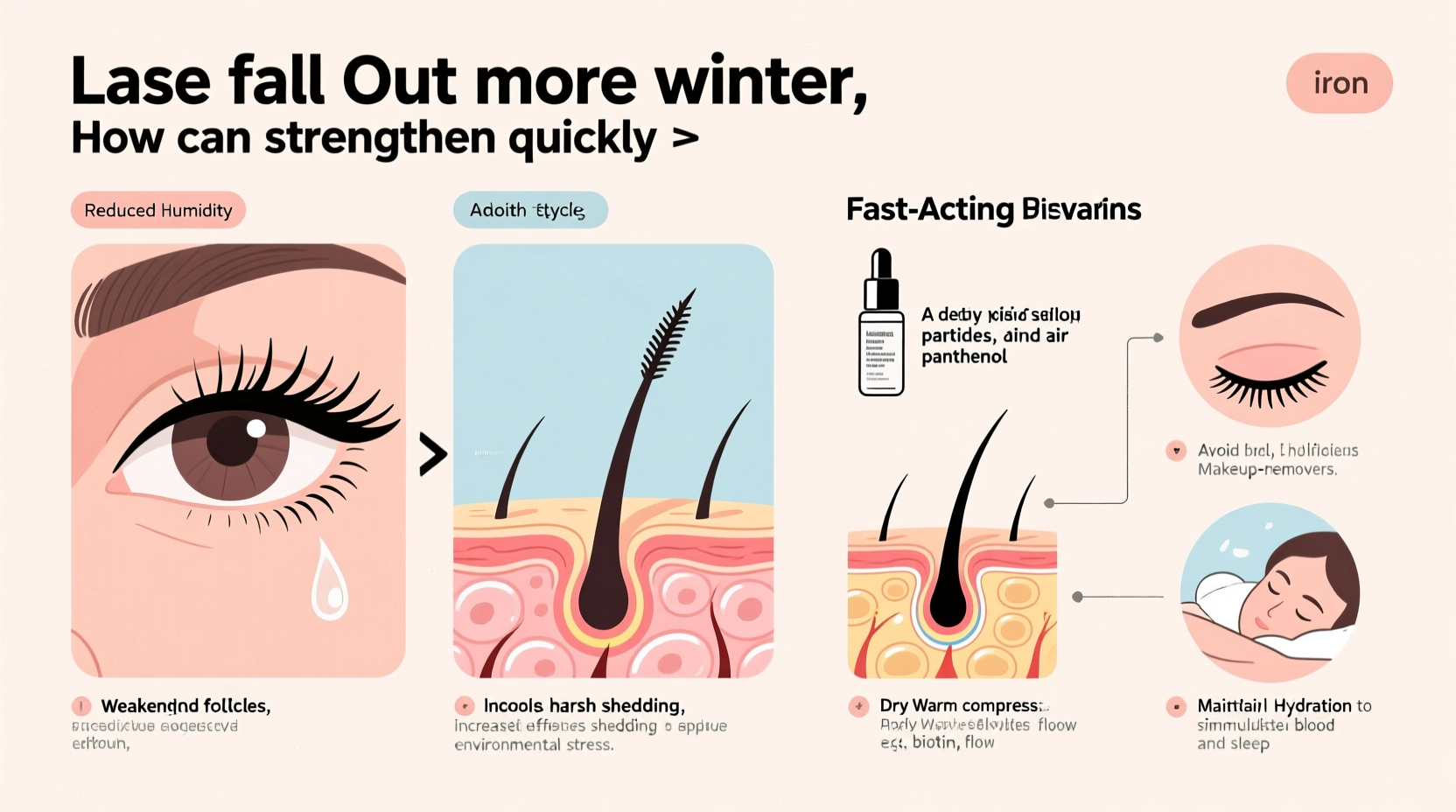
Eyelash shedding follows a natural cycle, just like scalp hair. Each lash goes through three phases: growth (anagen), transition (catagen), and rest/shedding (telogen). Normally, losing 1–5 lashes per day is considered normal. But during winter, this number often increases due to several compounding factors.
Dry Air and Low Humidity: Cold outdoor air holds less moisture, and indoor heating further dehydrates the environment. This double exposure strips moisture from your skin—and your lashes. Without sufficient hydration, lashes become brittle and prone to breakage before their natural shedding phase.
Increased Friction: Scarves, wool hats, and even rubbing your eyes due to dryness or irritation increase physical stress on lashes. These micro-traumas weaken the follicles and accelerate fallout.
Reduced Sebum Production: Cooler temperatures slow down oil production across the body, including along the lash line. Sebum acts as a natural conditioner and protective barrier. When it's diminished, lashes lose their natural defense against environmental damage.
Harsh Skincare Ingredients: Many turn to heavier creams and exfoliants in winter to combat dry skin. If these products migrate near the eyes—especially those containing retinoids, acids, or alcohol—they can irritate the follicles and disrupt lash health.
How to Strengthen Eyelashes Fast: Science-Backed Strategies
Rebuilding lash strength doesn’t require expensive treatments or invasive procedures. With consistent, gentle care, visible improvement can occur in as little as 3–6 weeks. The key is targeting both external protection and internal nourishment.
1. Use a Lash Serum with Proven Ingredients
Lash serums have evolved beyond marketing hype. Clinical studies support certain active ingredients for enhancing lash thickness, length, and anchoring strength.
- Panthenol (Pro-Vitamin B5): Penetrates the lash shaft to improve elasticity and reduce breakage.
- Biotin: Supports keratin infrastructure, though topical efficacy depends on formulation stability.
- Peptides (e.g., Myristoyl Pentapeptide-17): Stimulate follicle activity and prolong the anagen (growth) phase.
- Hyaluronic Acid: Attracts moisture to the lash base, improving flexibility and resilience.
Apply serum nightly to clean lash lines using the applicator brush. Consistency matters—most users see results after 4–8 weeks.
2. Switch to a Nourishing Oil Treatment
Natural oils provide occlusive protection and deliver fatty acids essential for strong keratin fibers. Two stand out for winter care:
- Castor Oil: Rich in ricinoleic acid, known for its anti-inflammatory and moisturizing properties. Studies suggest it may enhance blood circulation to follicles when applied regularly.
- Jojoba Oil: Mimics human sebum closely, making it ideal for restoring the natural lipid barrier along the lash line without clogging glands.
Apply a single drop on a clean spoolie or cotton swab and gently glide it along the upper lash line every evening before bed. Avoid getting excess oil into the eyes, which can cause irritation.
3. Protect Lashes from Environmental Stress
Just as you layer clothing in winter, your lashes need shielding too. Consider these daily habits:
- Wear sunglasses outdoors—even on cloudy days—to block wind and UV exposure.
- Avoid pulling scarves over your face; instead, drape them loosely around your neck.
- Use fragrance-free, hypoallergenic eye makeup removers to prevent chemical irritation.
- Limit waterproof mascara use, which requires aggressive rubbing to remove.
“Winter is the most challenging season for eyelash integrity. The combination of dehydration and mechanical stress leads to premature shedding. Targeted conditioning can offset these effects significantly.” — Dr. Lena Torres, Ocular Dermatologist
Lash Care Do’s and Don’ts: A Quick Reference Table
| Do | Don’t |
|---|---|
| Use a humidifier in your bedroom at night | Sleep with eye makeup on |
| Apply castor or jojoba oil 3–4 times per week | Rub your eyes vigorously when dry or itchy |
| Choose non-waterproof, ophthalmologist-tested mascaras | Use expired or dried-out mascara (replace every 3 months) |
| Cleanse eyelids gently with micellar water | Pull on lashes when removing false lashes or extensions |
| Stay hydrated and eat protein-rich foods | Overuse eyelash curlers, especially on dry lashes |
Step-by-Step: 30-Day Lash Recovery Plan
If you're noticing thinning lashes this winter, follow this structured plan to restore strength and minimize fallout.
- Day 1–3: Reset
Cease all harsh makeup use. Remove existing product residue with a gentle micellar solution. Begin nightly cleansing of the lash line to eliminate buildup and support follicle health. - Day 4–7: Hydrate & Protect
Introduce a hydrating lash serum or a diluted application of jojoba oil (mix 1 part oil with 1 part distilled water for lighter consistency). Start using a bedroom humidifier if available. - Day 8–14: Nourish Deeply
Increase oil treatment to alternate nights. Add castor oil once every three nights. Focus on diet—include eggs, salmon, nuts, and leafy greens high in biotin, omega-3s, and vitamins A and E. - Day 15–21: Minimize Stress
Avoid mascara entirely for one week. Let lashes breathe. Use sunscreen near the eyes instead of relying on squinting, which strains lash roots. - Day 22–30: Reassess & Refine
Resume minimal makeup if desired, choosing fiber-free, non-tubular formulas. Track changes: take weekly photos under consistent lighting to monitor regrowth and density.
Real Example: How Sarah Regrew Her Lashes in 6 Weeks
Sarah, a 34-year-old teacher from Chicago, noticed her lashes were falling out in clumps each morning during December. “I’d find them on my pillow, in my coffee cup, even stuck to my glasses,” she recalls. After ruling out thyroid issues with her doctor, she suspected winter dryness and her nightly habit of sleeping with mascara on.
She began a simple routine: washing her face thoroughly each night, applying castor oil every other evening, and placing a small humidifier beside her bed. She stopped using waterproof mascara and switched to a peptide-infused lash serum after two weeks.
By mid-February, Sarah noticed new, darker stubs growing in along her lash line. Friends commented that her eyes looked brighter. “It wasn’t overnight, but by six weeks, I could see real density coming back,” she says. “Now I never skip my nighttime lash care—it’s part of my self-care ritual.”
Frequently Asked Questions
Can cold weather permanently damage eyelashes?
No, cold weather itself does not cause permanent damage. However, prolonged exposure to dry conditions and physical trauma (like rubbing or tugging) can weaken follicles over time. With proper care, most seasonal shedding is reversible.
Is it safe to use Vaseline on eyelashes?
Vaseline (petroleum jelly) is generally safe for external use on lashes but should be used cautiously. While it creates a protective barrier, it’s heavy and can clog meibomian glands along the lash line, potentially leading to blepharitis or styes in sensitive individuals. Opt for lighter alternatives like jojoba oil if you’re prone to eye irritation.
How long does it take for eyelashes to grow back fully?
The full growth cycle of an eyelash ranges from 4 to 11 weeks, depending on individual biology and health. After shedding, it takes about 1–2 weeks for new growth to become visible. Complete regrowth to original length typically occurs within 6–8 weeks under optimal conditions.
Final Checklist: Your Winter Lash Protection Routine
To ensure your lashes stay strong and healthy all season, follow this concise checklist:
- ✅ Cleanse eyelids nightly with a gentle, non-irritating remover
- ✅ Apply a nourishing oil or lash serum 4–7 times per week
- ✅ Run a humidifier in your bedroom during sleep hours
- ✅ Replace mascara every 3 months and avoid sharing tubes
- ✅ Wear sunglasses outdoors to shield from wind and UV rays
- ✅ Stay hydrated and consume protein- and vitamin-rich foods
- ✅ Avoid rubbing your eyes, even when itchy or tired
Conclusion: Stronger Lashes Start Now
Seasonal lash loss in winter is common, but it’s not something you have to accept. By understanding the environmental and behavioral factors at play, you can take immediate, effective steps to protect and strengthen your lashes. The strategies outlined here—ranging from targeted serums to lifestyle adjustments—are backed by dermatological insight and real-world success.
What matters most is consistency. Just a few minutes each night dedicated to lash care can yield noticeable results in weeks. Your lashes are more than just cosmetic; they’re a protective feature of your eyes, and they deserve thoughtful attention—especially in harsh seasons.




 浙公网安备
33010002000092号
浙公网安备
33010002000092号 浙B2-20120091-4
Comments
No comments yet. Why don't you start the discussion?