
It’s not uncommon to notice more eyelashes on your pillow or in the sink during the colder months. While losing a few lashes daily is part of the natural hair cycle, a noticeable increase in shedding during winter can raise concerns. The good news is that for most people, seasonal lash loss is temporary and linked to environmental and lifestyle factors rather than serious health issues. Understanding the underlying causes—dry air, harsh skincare routines, stress, and changes in circulation—can help you take proactive steps to maintain healthy lashes year-round.
Understanding the Natural Eyelash Growth Cycle
Eyelashes, like all hair on the body, follow a predictable growth cycle consisting of three phases: anagen (growth), catagen (transition), and telogen (resting and shedding). Each lash stays in the anagen phase for about 30 to 45 days, significantly shorter than scalp hair, which explains why lashes don’t grow very long. After this, they enter the resting phase before naturally falling out to make room for new growth.
On average, a person has between 150 to 200 lashes per eye, and it’s normal to lose 1 to 5 lashes per day. This shedding is usually unnoticeable because it happens gradually. However, during winter, multiple external stressors can accelerate the transition into the telogen phase, making the shedding more apparent.
Why Winter Increases Eyelash Shedding
The colder season brings unique challenges that directly impact the health of your lashes. Unlike scalp hair, eyelashes are exposed to both indoor heating systems and outdoor cold, creating a volatile environment that compromises their strength and resilience.
Dry Air and Low Humidity
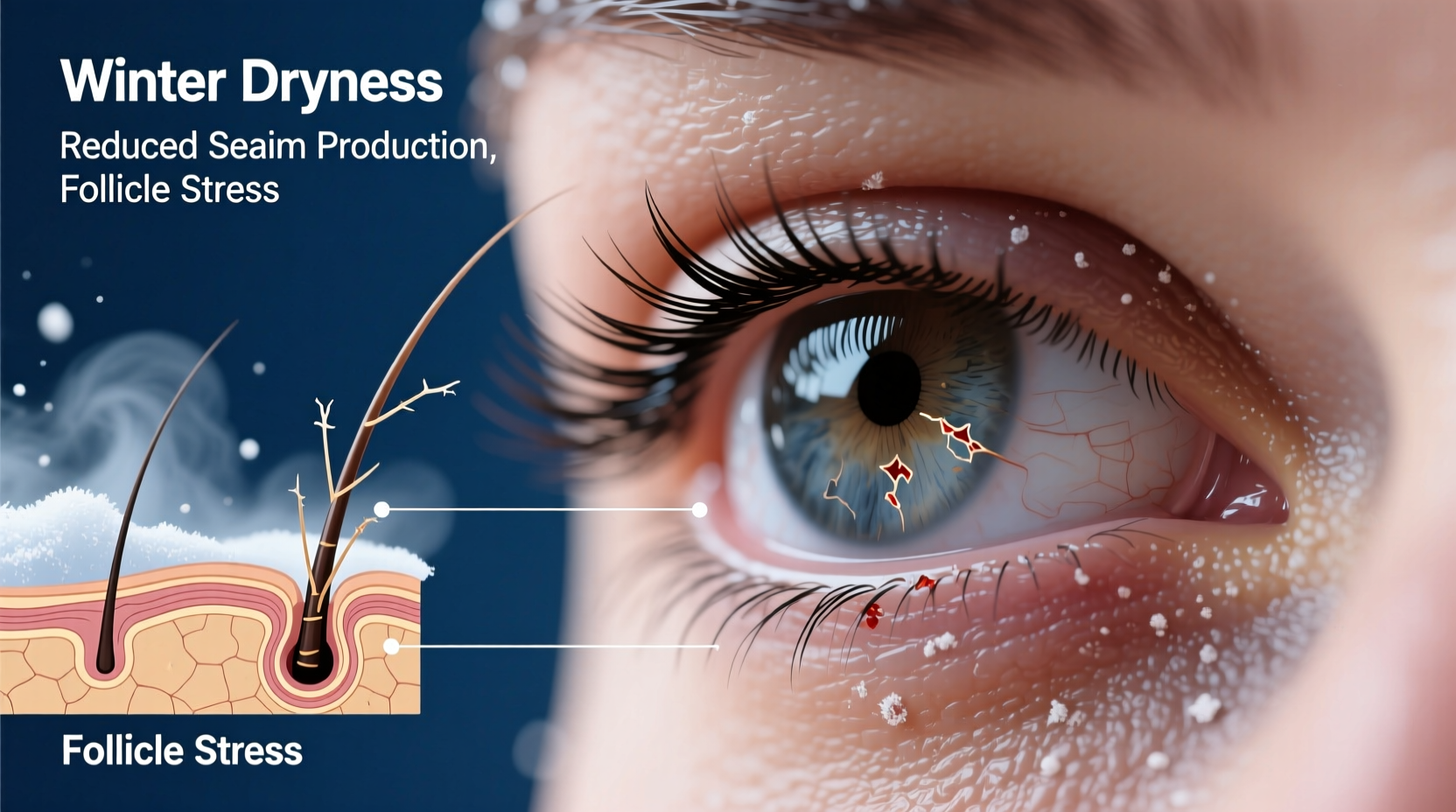
Winter air, especially indoors with heating systems running, is notoriously dry. Central heating reduces indoor humidity to as low as 10–20%, far below the ideal 40–60%. This lack of moisture dehydrates the skin and hair follicles, including those along the lash line. Dry follicles become brittle, leading to increased breakage and premature shedding.
Increased Exposure to Wind and Cold
Cold winds strip natural oils from the delicate skin around the eyes. These oils help condition lashes and keep them anchored securely. When the protective lipid layer is compromised, lashes are more prone to falling out. Additionally, frequent temperature shifts—from freezing outdoors to overheated interiors—can stress the hair follicles, disrupting their normal cycle.
Harsh Skincare and Makeup Habits
In winter, many people switch to richer creams and stronger cleansers to combat dry skin. However, these products may contain ingredients that irritate the sensitive eye area or weaken lash roots. Waterproof mascara, commonly used in winter for its smudge-proof qualities, requires rigorous removal, often involving rubbing or oil-based removers that can tug at lashes over time.
Reduced Blood Circulation
Cold temperatures cause blood vessels to constrict, reducing circulation to extremities—including the face. Since lash growth depends on nutrient-rich blood flow to the follicles, reduced circulation can slow regrowth and make shedding more noticeable.
“Seasonal changes, particularly winter dryness and temperature fluctuations, are among the top non-medical reasons patients report increased lash loss.” — Dr. Lena Patel, Board-Certified Dermatologist
When Should You Be Concerned?
While mild seasonal shedding is normal, certain signs may indicate an underlying issue that requires medical attention. It’s important to distinguish between expected winter-related loss and symptoms of a more serious condition.
Consider consulting a dermatologist or ophthalmologist if you experience any of the following:
- Sudden, dramatic thinning or complete loss of lashes
- Redness, swelling, or crusting along the eyelid margins
- Itching, burning, or a gritty sensation in the eyes
- Lash loss accompanied by hair loss elsewhere on the body
- Patchy bald spots near the lash line
These symptoms could point to conditions such as blepharitis (inflammation of the eyelids), alopecia areata (an autoimmune disorder), thyroid dysfunction, or allergic reactions to cosmetics. In such cases, professional diagnosis and treatment are essential.
Common Misconceptions About Lash Loss
Many people assume that lash shedding always means poor hygiene or aging. In reality, genetics, hormonal changes, and even diet play significant roles. Others believe that using lash serums will prevent all loss, but while some products can support growth, they cannot override environmental stressors or medical conditions.
Practical Steps to Protect Your Lashes in Winter
Preventing excessive winter lash loss doesn’t require drastic measures. Simple adjustments to your routine can make a meaningful difference in maintaining strong, healthy lashes throughout the season.
1. Hydrate the Eye Area
Apply a gentle, fragrance-free moisturizer to the skin around your eyes. Avoid getting product directly into the eyes, but allow a light layer to condition the lash line. Look for ingredients like hyaluronic acid, ceramides, or squalane, which attract and retain moisture without clogging follicles.
2. Use a Humidifier
Running a humidifier in your bedroom at night helps maintain optimal humidity levels, preventing your skin and lashes from drying out. Aim for 40–50% humidity, which supports overall skin barrier function.
3. Choose Gentle Makeup and Removal Methods
Opt for non-waterproof mascara during winter, as it requires less aggressive removal. When cleansing, use a soft cotton pad soaked in micellar water or a mild oil-free eye makeup remover. Hold it over closed eyes for 10–15 seconds to dissolve makeup before gently wiping—never rub or pull.
4. Avoid Heat-Based Tools Near Lashes
Using blow dryers or heated facial tools close to your face can dehydrate lashes. Keep hot air away from your eyes when styling hair, and avoid direct exposure to space heaters.
5. Support Lash Health from Within
Nutrition plays a crucial role in hair health. Ensure your diet includes adequate protein, biotin, omega-3 fatty acids, and vitamins A, C, and E. Foods like eggs, salmon, nuts, spinach, and sweet potatoes provide essential nutrients for strong lashes.
| Action | Benefit | Frequency |
|---|---|---|
| Use a humidifier | Prevents dryness-induced breakage | Nightly |
| Switch to non-waterproof mascara | Reduces friction during removal | Throughout winter |
| Apply hydrating eye cream | Moisturizes lash follicles | Morning and night |
| Take a biotin supplement | Supports keratin production | Daily (consult doctor) |
| Wear sunglasses outdoors | Shields lashes from wind and UV | Whenever outside |
Mini Case Study: Sarah’s Winter Lash Recovery
Sarah, a 34-year-old teacher from Chicago, noticed her lashes thinning noticeably every December. She attributed it to aging until she began tracking her habits. She realized she was using a heavy-duty waterproof mascara and removing it nightly with a greasy, oil-based cleanser that required vigorous rubbing. Her home had no humidifier, and she frequently wore wool scarves that brushed against her eyes.
After consulting a dermatologist, Sarah made several changes: she switched to a hydrating micellar water, started using a bedside humidifier, applied a peptide-infused lash serum, and wore silk-lined gloves when adjusting her scarf. Within six weeks, her lash shedding decreased significantly, and new growth became visible. By spring, her lashes were fuller than they’d been in years.
Sarah’s case highlights how small, consistent changes can reverse seasonal lash loss without medical intervention.
Do’s and Don’ts for Winter Lash Care
- Do:
- • Use a gentle, oil-free makeup remover
- • Apply a nourishing eye cream nightly
- • Wear wraparound sunglasses in windy weather
- • Stay hydrated and eat a balanced diet
- • Consider a lash serum with peptides or panthenol
- Don’t:
- • Rub your eyes vigorously, especially when tired
- • Sleep in eye makeup
- • Use expired mascara (replace every 3–6 months)
- • Share eye makeup to avoid bacterial transfer
- • Pull on lashes when applying false lashes or extensions
Frequently Asked Questions
Is it normal to lose more eyelashes in winter?
Yes, it’s common to experience slightly increased shedding during winter due to dry air, indoor heating, and harsh weather. As long as the loss is gradual and not accompanied by irritation or bald patches, it’s typically not a cause for concern.
Can I use Vaseline on my eyelashes?
Yes, applying a tiny amount of petroleum jelly (Vaseline) to clean lashes at night can help lock in moisture and protect against dryness. However, ensure your hands and lashes are clean to avoid introducing bacteria or clogging follicles.
How long does it take for eyelashes to grow back?
If a lash falls out naturally or is pulled out, it typically takes 6 to 8 weeks to fully regrow, assuming the follicle is healthy. Regrowth may be slower in winter due to reduced circulation and dry conditions.
Conclusion: Take Action Before Spring
Experiencing more eyelash loss in winter is a common, often manageable issue. By understanding the environmental triggers and adopting a mindful care routine, you can minimize shedding and support healthier regrowth. The key is consistency—small daily habits compound into visible results over time. Don’t wait until spring to address winter damage. Start today by adding a humidifier to your bedroom, switching to gentler eye products, and nourishing your body from within. Your lashes will thank you when the snow melts and the sun returns.




 浙公网安备
33010002000092号
浙公网安备
33010002000092号 浙B2-20120091-4
Comments
No comments yet. Why don't you start the discussion?