
It’s not uncommon for people to notice increased lash shedding after wearing eyelash extensions. While extensions can enhance beauty and save time on daily makeup routines, they also come with risks—especially when applied or maintained incorrectly. The good news is that most cases of excessive lash loss are preventable. Understanding the science behind lash growth cycles, the impact of extension techniques, and proper aftercare can make all the difference between healthy, full lashes and thinning, brittle ones.
Natural eyelashes follow a life cycle similar to scalp hair: growth (anagen), transition (catagen), and rest/shedding (telogen). On average, you lose 1–5 natural lashes per day as part of this normal process. But if you're suddenly noticing clumps falling out or your eyes looking sparse after removing extensions, something may be off in how they were applied or cared for.
Why Natural Lashes Fall Out with Extensions
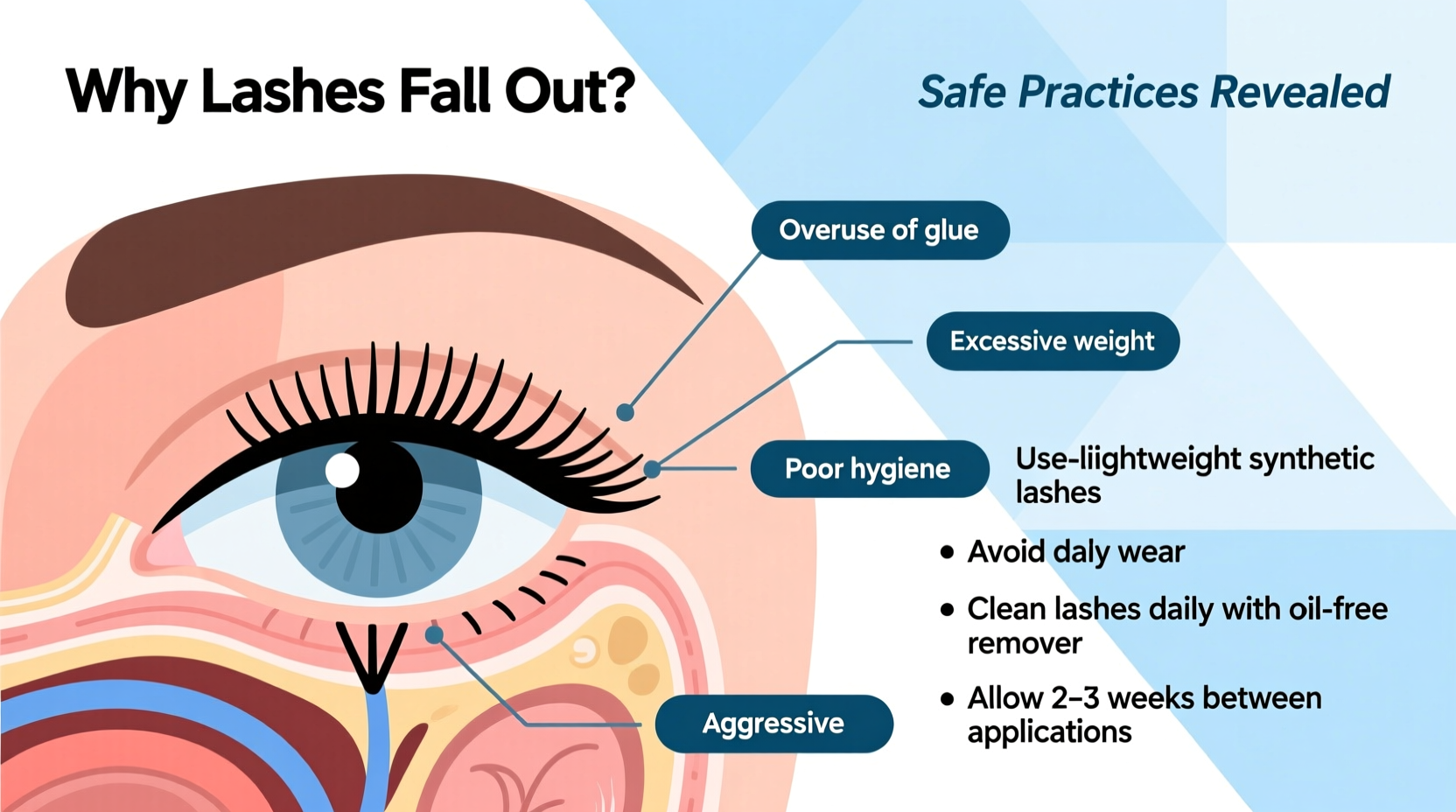
The primary reason eyelashes appear to \"fall out\" more when wearing extensions isn't always due to the extensions themselves—but rather how they interact with your natural lashes. When an extension is properly attached, it bonds to a single natural lash and stays in place until that lash naturally sheds. However, problems arise when:
- Too many extensions are glued to one natural lash (overloading)
- Extensions are too heavy or long for your natural lash strength
- Poor application technique causes glue to stick to multiple lashes or the eyelid skin
- Improper removal methods pull out natural hairs prematurely
This leads to what professionals call “traction alopecia”—a condition caused by constant pulling stress on hair follicles. Over time, repeated trauma can weaken follicles, shorten the growth phase, and even lead to permanent lash loss in severe cases.
“Many clients blame their lashes for being ‘weak,’ but often the real issue lies in improper extension weight, length, or bonding technique.” — Dr. Lena Torres, Oculofacial Specialist
Safe Extension Practices Every Client Should Know
Choosing the right technician and understanding safe application standards are critical. Not all lash artists follow best practices, so being informed empowers you to ask the right questions before booking.
Choose the Right Curl, Length, and Diameter
Your natural lashes vary in thickness and strength depending on genetics and age. Using extensions heavier than your natural lashes can support will cause strain. For example, using 0.20mm diameter extensions on naturally fine 0.10–0.12mm lashes increases breakage risk.
Avoid Double-Dipping and Glue Misuse
One common mistake among inexperienced technicians is double-dipping the extension into adhesive, which creates excess glue buildup. This not only makes the extension heavier but also increases the chance of sealing multiple natural lashes together—a situation known as \"lash sticking.\" When one lash sheds, it pulls others out prematurely.
Additionally, cyanoacrylate-based adhesives must be formulated specifically for eyelash use. Industrial-strength glues can irritate the eye area and damage follicles over time.
Maintain Proper Isolation During Application
Each extension should be isolated and bonded to a single natural lash. If adjacent lashes are glued together during the process, it disrupts their independent growth cycles and causes unnatural tension. A skilled technician uses precision tweezers and works under magnification to ensure clean separation.
Do’s and Don’ts of Eyelash Extension Care
| Do’s | Don’ts |
|---|---|
| Wash your lashes daily with oil-free cleanser | Use oil-based makeup removers or moisturizers near eyes |
| Sleep on your back or use a silk pillowcase | Rub or tug at your eyes when tired or removing makeup |
| Get refills every 2–3 weeks to maintain balance | Wait longer than 4 weeks between fills—old extensions drag new growth |
| Gently brush lashes upward with a spoolie daily | Use mechanical curlers—they can snap extensions and natural lashes |
| Remove extensions professionally with proper solvent | Pull off extensions yourself or let them linger past 6 weeks |
Following these guidelines minimizes stress on your lash line and supports healthier regrowth once extensions are removed.
Step-by-Step Guide to Protecting Your Natural Lashes
If you love the look of extensions but want to keep your natural lashes strong, follow this routine before, during, and after wear:
- Consultation First: Discuss your natural lash type with your technician. Ask about the weight and length they plan to use and why.
- Start Light: Begin with a classic set (one extension per natural lash) rather than volume fans unless your lashes are thick and healthy.
- First Week Check-In: After 7 days, assess comfort and retention. If lashes feel heavy or you see early fallout, contact your artist.
- Weekly Cleansing: Use a foaming lash cleanser twice a week and rinse gently. Buildup weakens the bond and invites bacteria.
- Refill Schedule: Book touch-ups every 2–3 weeks. Waiting too long means remaining extensions bear more weight as new growth comes in.
- Take Breaks: After two full sets (about 6–8 weeks), go bare for at least 2 weeks to allow follicles to recover.
- Strengthen Naturally: Apply a peptide-rich lash serum during breaks to boost density and resilience.
Real-Life Case Study: Sarah’s Lash Recovery Journey
Sarah, a 32-year-old marketing executive, wore eyelash extensions continuously for over a year. She loved the convenience but began noticing her lashes looked thinner each time she got a refill. After removing her extensions, she was alarmed to find barely any natural lashes remained along her lower outer corners.
She consulted a dermatologist who diagnosed early-stage traction alopecia due to prolonged use of overly long (14mm) and thick (0.25mm) extensions. Her technician had also been applying triple-layer volume fans without assessing her natural lash density.
Following medical advice, Sarah took a four-month break from all enhancements. She used a prescription-strength bimatoprost serum and followed a strict cleansing and nourishing regimen. By month three, new growth appeared. At six months, her lashes regained 90% of their original fullness.
Now, she wears extensions only seasonally, chooses lightweight styles (0.15mm diameter, 10–12mm length), and insists on isolation checks during application. Her experience underscores the importance of moderation and monitoring.
How to Spot a Qualified Lash Technician
Not all certifications are equal, and the lash industry remains largely unregulated in many regions. To avoid damage, verify your technician meets these criteria:
- Holds certification from a recognized academy (e.g., Xtreme Lashes, Nouveau Lashes, Lash Perfect)
- Performs a pre-application consultation discussing your goals and lash health
- Uses high-quality, medical-grade adhesive with low fume output
- Works slowly—full sets should take 90–150 minutes for classics, longer for volumes
- Provides written aftercare instructions and emergency contact info
“A great lash artist doesn’t just create beauty—they preserve health. If someone rushes through your appointment or dismisses your concerns, walk away.” — Naomi Reed, Master Lash Educator & Trainer
Frequently Asked Questions
Is it normal to lose lashes after removing extensions?
Yes, some shedding is expected because extensions stay attached until the natural lash completes its cycle. However, losing large patches or experiencing delayed regrowth is not normal and may indicate prior damage.
Can eyelash extensions cause permanent loss?
In rare cases, yes. Repeated trauma from poorly applied extensions can scar hair follicles, leading to permanent thinning. This is more likely with chronic misuse, such as wearing extensions nonstop for over a year without breaks.
How long should I wait before reapplying extensions after removal?
Give your lashes at least 2–4 weeks to rest and regenerate. During this time, focus on strengthening with serums and gentle care. Rushing back into extensions prevents recovery.
Conclusion: Beauty Without Sacrifice
Eyelash extensions don’t have to come at the cost of your natural lash health. With informed choices, responsible application, and consistent maintenance, you can enjoy enhanced lashes while keeping your own strong and resilient. The key is balance—choosing appropriate styles, trusting qualified professionals, and listening to your body’s signals.
If you’ve experienced excessive fallout, don’t panic. Most damage is reversible with proper care and time. Start today by evaluating your current routine, asking better questions at your next appointment, and prioritizing long-term health over short-term glamour.




 浙公网安备
33010002000092号
浙公网安备
33010002000092号 浙B2-20120091-4
Comments
No comments yet. Why don't you start the discussion?