
Many contact lens wearers experience a familiar discomfort: by midday, their eyes begin to feel dry, scratchy, or as though there’s sand trapped beneath the lenses. This gritty sensation isn’t just annoying—it can interfere with work, screen time, and daily comfort. While occasional irritation may seem normal, persistent grittiness is not something you should ignore. It often signals underlying issues related to lens material, wearing habits, environmental factors, or ocular surface health. Understanding the root causes and implementing targeted solutions can restore comfort and keep your vision clear throughout the day.
Understanding the Gritty Sensation
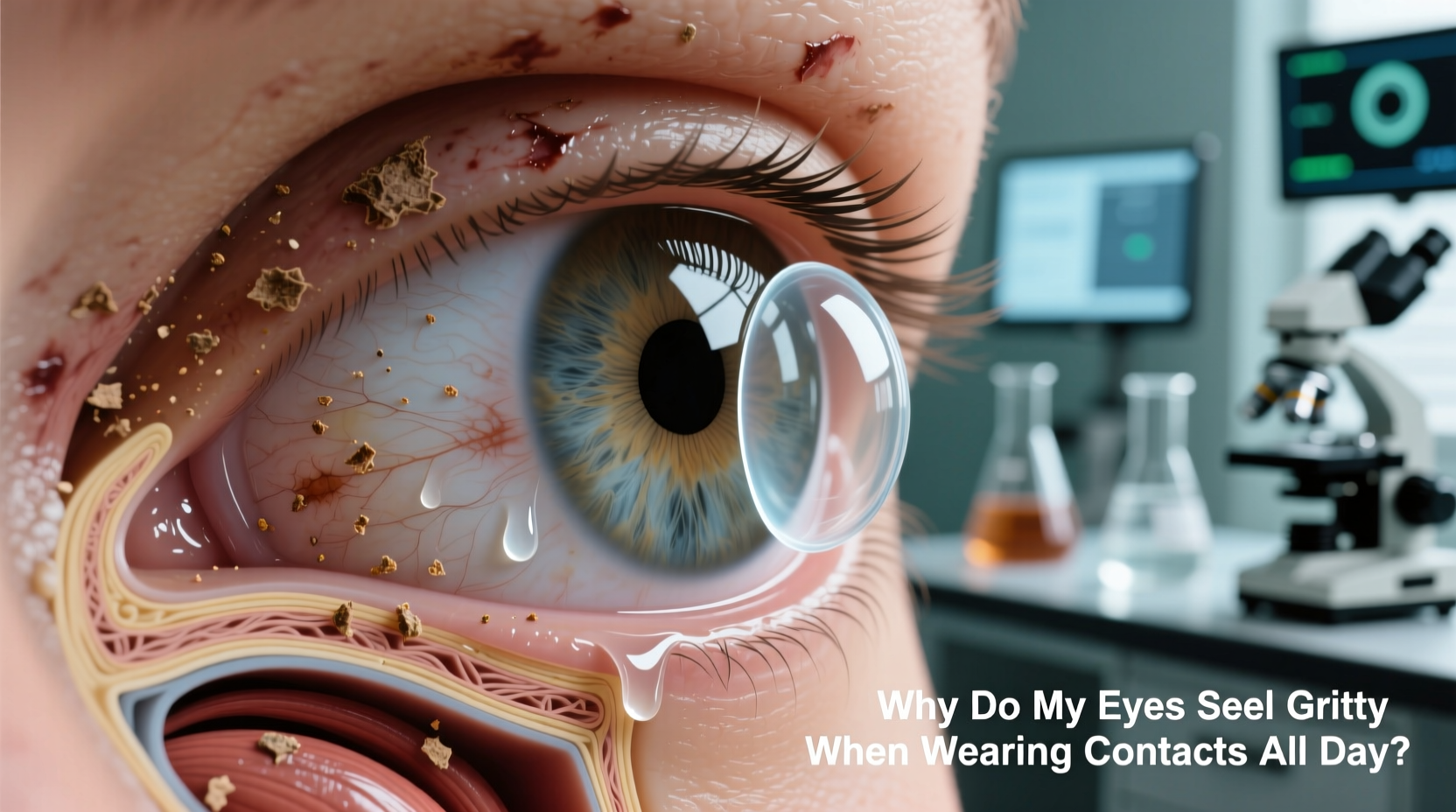
The feeling of grittiness when wearing contact lenses typically stems from disrupted tear film stability or mechanical irritation on the ocular surface. The cornea—the clear front surface of the eye—is densely packed with nerve endings, making it extremely sensitive to even minor changes. When contacts interfere with natural lubrication or cause micro-abrasions, the brain interprets this as a foreign body sensation, often described as “gritty,” “scratchy,” or “burning.”
This sensation tends to worsen over the course of the day, especially during prolonged screen use, in dry environments, or after extended lens wear. It’s important to recognize that while some mild dryness may be expected, consistent discomfort is not a normal part of wearing contacts and usually indicates a correctable issue.
Common Causes of Gritty Eyes with Contacts
- Dry Eye Syndrome: Reduced tear production or poor tear quality leads to inadequate lubrication, causing friction between the lens and the eye.
- Lens Dehydration: Some soft lenses absorb moisture from the eye, especially in low-humidity environments or during long wear periods.
- Poor Lens Fit: Lenses that are too tight, too loose, or improperly shaped can rub against the eye or move excessively.
- Protein and Lipid Buildup: Deposits accumulate on lenses over time, altering surface smoothness and increasing irritation.
- Environmental Irritants: Air conditioning, fans, smoke, wind, and pollution can accelerate tear evaporation and irritate the ocular surface.
- Extended Wear: Wearing lenses beyond recommended hours reduces oxygen flow and increases debris accumulation.
- Allergies: Seasonal or perennial allergies can trigger inflammation and mucus production, worsening discomfort.
Choosing the Right Contact Lenses for All-Day Comfort
Not all contact lenses are created equal when it comes to comfort and breathability. The material and design significantly influence how your eyes feel after hours of wear.
Silicone hydrogel lenses are widely regarded as superior for extended wear due to their high oxygen permeability. Unlike traditional hydrogel lenses, silicone hydrogels allow more oxygen to reach the cornea, reducing hypoxia-related dryness and fatigue. Additionally, newer lens designs incorporate water-gradient technology, where the outer layer retains moisture while maintaining structural integrity.
For individuals prone to dryness, daily disposable lenses are often the best choice. Since they’re discarded every 24 hours, there’s no opportunity for protein buildup or degradation of lens surface quality. Brands like DAILIES Total1, Precision1, and Biotrue ONEday are specifically engineered for comfort in dry-eye-prone users.
“Daily disposables are the gold standard for patients with sensitivity or dry eye. They offer a fresh, clean surface every morning.” — Dr. Laura Nguyen, Optometrist and Cornea Specialist
Do’s and Don’ts When Selecting Lenses
| Do | Don’t |
|---|---|
| Choose lenses with high oxygen transmissibility (Dk/t) | Select lenses based solely on cost or availability |
| Opt for daily disposables if you experience frequent dryness | Reuse two-week or monthly lenses beyond their intended lifespan |
| Discuss your lifestyle and screen time with your eye care provider | Assume all ‘comfort-focused’ lenses perform the same |
| Try specialty lenses (e.g., scleral) if conventional options fail | Self-prescribe lens types without professional guidance |
Step-by-Step Guide to Reducing Grittiness
Addressing gritty eyes requires a multifaceted approach. Follow this timeline-based strategy to improve comfort over days and weeks:
- Day 1–3: Evaluate Your Routine
Track when discomfort begins, your environment, screen time, and lens wear duration. Note any allergies or medications that could contribute to dryness. - Day 4–7: Optimize Lens Care
If using reusable lenses, switch to a peroxide-based cleaning system (e.g., ClearCare) to remove protein deposits more effectively. Rub lenses gently even if using “no-rub” solutions. - Week 2: Upgrade Your Solution
Use preservative-free saline and rewetting drops. Avoid multipurpose solutions containing chlorhexidine or thimerosal if you’re sensitive. - Week 3: Adjust Environmental Factors
Add a humidifier to your workspace, position monitors below eye level to reduce blink strain, and take 20-20-20 breaks (every 20 minutes, look 20 feet away for 20 seconds). - Week 4: Consult Your Eye Doctor
Schedule a follow-up to assess tear film quality, lens fit, and rule out conditions like meibomian gland dysfunction or blepharitis.
Real-Life Example: Sarah’s Turnaround
Sarah, a 32-year-old graphic designer, wore monthly silicone hydrogel lenses for up to 14 hours a day. By noon, her eyes felt like they had “ground glass under the lids.” She assumed it was normal until her vision began fluctuating. After visiting her optometrist, she discovered she had mild meibomian gland dysfunction—oil glands in her eyelids weren’t secreting properly, leading to rapid tear evaporation.
Her doctor recommended switching to daily disposables, using warm compresses twice daily, and applying a lipid-based artificial tear. Within two weeks, Sarah reported a dramatic improvement. “I didn’t realize how much I was squinting until I stopped,” she said. “Now I can work through the afternoon without constant discomfort.”
This case highlights how seemingly routine contact lens discomfort can stem from treatable underlying conditions—and how targeted interventions make a significant difference.
Comprehensive Checklist for Contact Lens Comfort
Use this checklist weekly to ensure optimal eye health and lens performance:
- ✅ Wash hands before handling lenses
- ✅ Replace lens case every 1–3 months
- ✅ Never top off old solution—always discard and refill
- ✅ Limit wear to 8–12 hours max (unless approved for extended wear)
- ✅ Use rewetting drops formulated for contact lens wearers
- ✅ Remove lenses before swimming or showering
- ✅ Attend annual eye exams—even if vision seems stable
- ✅ Stay hydrated; dehydration affects tear production
- ✅ Avoid sleeping in lenses unless prescribed for overnight wear
- ✅ Monitor for signs of infection: redness, pain, light sensitivity, discharge
Frequently Asked Questions
Can wearing contacts too long cause permanent damage?
Prolonged or improper contact lens use can lead to complications such as corneal neovascularization (growth of blood vessels into the cornea), microbial keratitis (infection), or corneal scarring. While many issues are reversible if caught early, untreated infections or chronic hypoxia can result in permanent vision changes. Always adhere to your eye doctor’s wearing schedule and seek immediate care for pain or sudden vision loss.
Are daily disposables really better for comfort?
Yes, for most people. Daily disposables eliminate the need for cleaning and disinfecting, reducing the risk of contamination and deposit buildup. Each day starts with a fresh, sterile lens surface, minimizing irritation and improving overall comfort—especially for those with allergies or dry eye. Though slightly more expensive upfront, the benefits often outweigh the costs in terms of ocular health and reduced discomfort.
Why do my eyes feel worse in the afternoon?
Tear production naturally decreases throughout the day, and environmental stressors like screen exposure, indoor heating, and reduced blinking compound this effect. Contact lenses can dehydrate over time, particularly in dry air. Additionally, prolonged focus reduces blink rate by up to 60%, disrupting tear film renewal. This cumulative effect explains why symptoms often peak in the late afternoon.
When to See an Eye Care Professional
While minor dryness can often be managed at home, certain symptoms warrant prompt evaluation:
- Persistent grittiness despite changing solutions or lens types
- Redness, swelling, or pain
- Blurred vision that doesn’t improve with lens cleaning
- Sensitivity to light
- Feeling that the lens is “stuck” or difficult to remove
These could indicate serious conditions such as corneal ulcers, allergic reactions, or severe dry eye disease. Early diagnosis prevents complications and preserves long-term eye health.
Conclusion: Take Control of Your Comfort
Gritty eyes shouldn’t be the price you pay for clear vision. With the right lenses, proper hygiene, and mindful habits, all-day comfort is achievable. Start by evaluating your current routine, upgrading to daily disposables if needed, and addressing environmental triggers. Small changes—like taking screen breaks, using preservative-free drops, and staying hydrated—can have a big impact.




 浙公网安备
33010002000092号
浙公网安备
33010002000092号 浙B2-20120091-4
Comments
No comments yet. Why don't you start the discussion?