
For many people, eyeliner is a staple in their makeup routine—used to define the eyes, enhance shape, or create dramatic looks. But if you’ve noticed that your eyes frequently water after applying eyeliner, you’re not alone. Excessive tearing isn’t just inconvenient; it can blur vision, smudge makeup, and signal underlying eye sensitivity or irritation. Understanding the root causes behind this reaction is essential to maintaining both comfort and eye health. This article explores the most common reasons why eyeliner triggers watery eyes and offers practical, expert-approved strategies to resolve the issue.
Understanding the Eye’s Natural Defense System
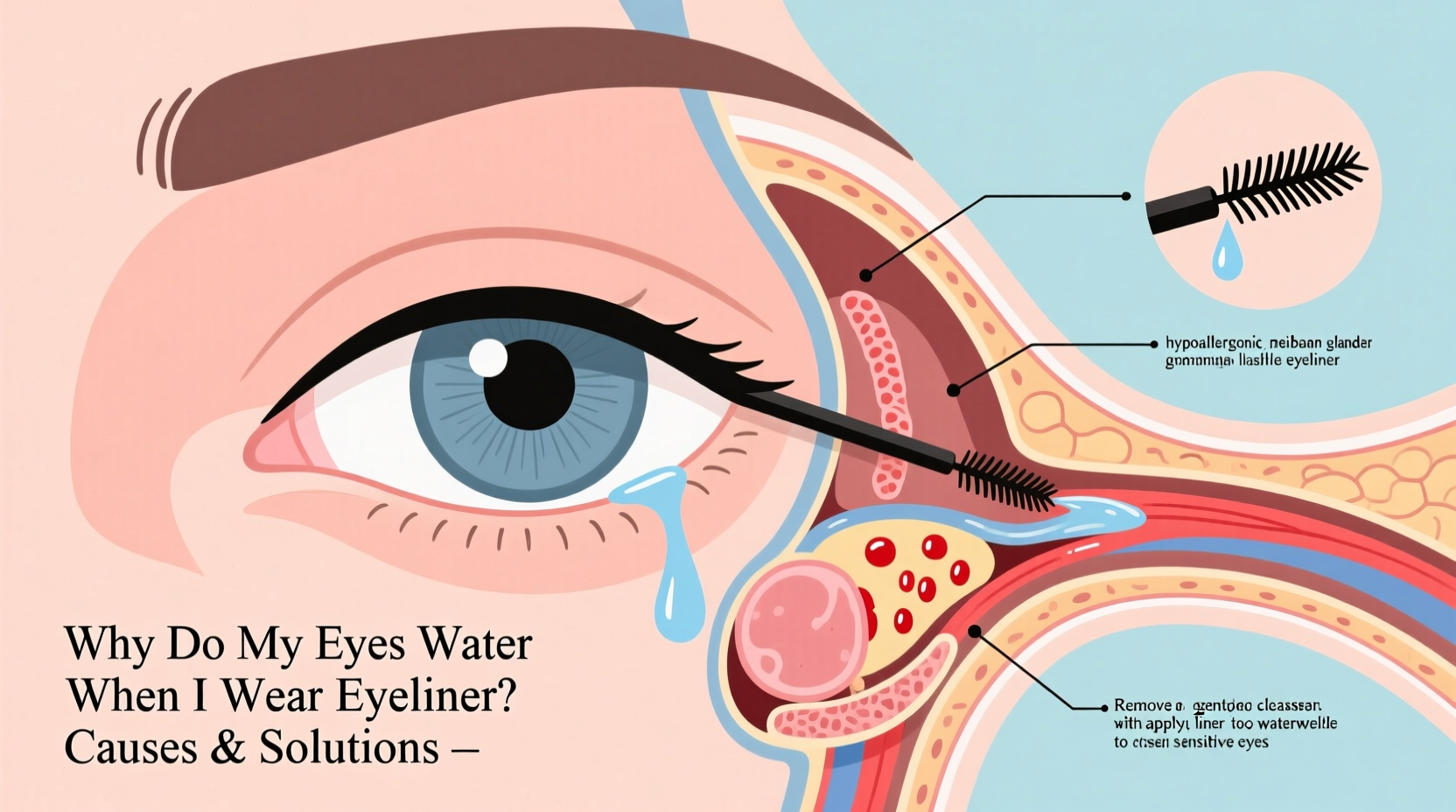
The human eye is designed to protect itself from irritants through a reflex known as lacrimation—the production of tears. When foreign particles, chemicals, or even physical pressure near the lash line disrupt the ocular surface, the tear glands respond by flushing out potential threats. Eyeliner, especially when applied close to the waterline (the inner rim of the eyelid), can inadvertently trigger this protective mechanism.
The delicate tissues around the eye are highly sensitive. The meibomian glands, located along the eyelid margins, secrete oils that stabilize the tear film. When these glands are blocked or irritated—often by makeup buildup—tear balance is disrupted, leading to either dryness or excessive watering as the eye attempts to compensate.
“Any product placed near the eye must be non-irritating and free of allergens. The ocular surface reacts quickly to foreign substances, sometimes with overproduction of tears as a defense.” — Dr. Lena Patel, Ophthalmologist and Cornea Specialist
Common Causes of Watery Eyes When Wearing Eyeliner
Several factors contribute to tearing when using eyeliner. Some are related to product composition, others to application technique or individual physiology.
1. Irritation from Product Ingredients
Many eyeliners contain preservatives, fragrances, waxes, and synthetic dyes that can irritate sensitive eyes. Common culprits include parabens, alcohol-based solvents, and coal tar derivatives (like those found in black pigments). Even products labeled “hypoallergenic” may contain ingredients that provoke reactions in certain individuals.
2. Application Too Close to the Waterline
Applying eyeliner directly on the waterline blocks the meibomian glands, which release oils necessary for preventing tear evaporation. When these glands are obstructed, the eye may become unstable, prompting reflex tearing. Additionally, liner in this area can flake into the tear film, causing mechanical irritation.
3. Poor-Quality or Expired Products
Cheap or old eyeliners degrade over time, increasing bacterial growth and ingredient separation. Using expired products raises the risk of microbial contamination, which can lead to inflammation and excessive tearing. Pencil eyeliners, if not sharpened regularly, collect bacteria and dead skin cells on the surface.
4. Sensitivity or Allergic Reactions
Some individuals have allergic conjunctivitis triggered by specific cosmetic ingredients. Symptoms include redness, itching, swelling, and watery eyes. Unlike general irritation, true allergies involve the immune system and may worsen with repeated exposure.
5. Mechanical Pressure or Rubbing
Firm application or frequent touching of the eyeliner during the day can cause micro-trauma to the eyelid margin. This physical irritation signals the lacrimal glands to produce more tears. People who wear contact lenses are especially prone, as the combination of liner particles and lens wear amplifies discomfort.
Do’s and Don’ts: Eyeliner Use for Sensitive Eyes
| Do’s | Don’ts |
|---|---|
| Choose fragrance-free, ophthalmologist-tested formulas | Apply liner inside the waterline |
| Replace eyeliner every 3–6 months | Share makeup with others |
| Use soft, creamy pencils instead of harsh kohl | Use expired or dried-out products |
| Wash hands before application | Sleep with eyeliner on |
| Opt for hypoallergenic, mineral-based brands | Apply too much pressure while lining |
Step-by-Step Guide to Safer Eyeliner Application
If you want to continue using eyeliner without triggering watery eyes, follow this methodical approach to minimize irritation:
- Assess Your Current Products
Review the ingredient list of your eyeliner. Look for common irritants like parabens, propylene glycol, lanolin, and synthetic dyes. Consider switching to mineral-based or dermatologist-recommended brands. - Cleanse Your Eyes Thoroughly
Before applying makeup, wash your face with a gentle, non-comedogenic cleanser. Remove any residual oils or debris that could mix with eyeliner and increase irritation. - Sharpen or Clean Applicators
If using a pencil, sharpen it before each use to eliminate bacteria. For liquid liners, ensure the brush or felt tip is clean and free of clumps. - Apply Above the Lash Line
Instead of drawing on the waterline, place the liner just above the upper lashes. This creates definition while avoiding gland blockage. For lower lids, use a soft shadow instead of liner. - Use Light, Gentle Strokes
Avoid pressing hard on the lid. A light hand reduces friction and prevents micro-abrasions that stimulate tear production. - Remove Makeup Completely at Night
Use an oil-free, ophthalmologist-tested eye makeup remover. Soak a cotton pad and hold it over the eye for 10–15 seconds to dissolve liner gently, then wipe softly outward—never rub back and forth. - Monitor for Reactions
After trying a new product, wear it for a few hours and observe for redness, itching, or watering. Discontinue use immediately if symptoms appear.
Choosing the Right Eyeliner for Sensitive Eyes
Not all eyeliners are created equal. For those prone to tearing or irritation, selecting the right formula makes a significant difference.
- Pencil vs. Liquid vs. Gel: Pencil liners are generally gentler than liquid or gel types, which often contain higher concentrations of preservatives and polymers. Creamy, blendable pencils are easier to control and less likely to flake.
- Mineral-Based Options: Brands using natural pigments like iron oxides and titanium dioxide tend to be less irritating. These are often free from synthetic fragrances and parabens.
- Hypoallergenic & Contact Lens-Safe Labels: Look for products tested under ophthalmic supervision. Labels such as “ophthalmologist-tested,” “safe for contact lens wearers,” or “dermatologist-approved” indicate better safety profiles.
Mini Case Study: Reducing Tearing Through Product Change
Sarah, a 29-year-old graphic designer, had worn eyeliner daily for years but began experiencing persistent watery eyes and mild burning sensations. She visited an optometrist, who ruled out dry eye syndrome and allergies but noted slight inflammation along her lash line. Upon reviewing her routine, Sarah realized she was using a budget kohl pencil she’d had for nearly a year—well past its recommended shelf life.
She switched to a fresh, hypoallergenic pencil liner labeled safe for sensitive eyes and stopped applying it on her waterline. Within a week, her tearing reduced significantly. After two weeks, she no longer experienced discomfort. This real-world example highlights how simple changes in product choice and application technique can resolve chronic irritation.
When to See a Professional
Occasional tearing due to makeup is common and usually resolves with adjustments. However, persistent symptoms may indicate a more serious condition:
- Chronic conjunctivitis
- Blepharitis (inflammation of the eyelid margins)
- Meibomian gland dysfunction
- Allergic reactions requiring medication
If watery eyes are accompanied by redness, swelling, blurred vision, or pain, consult an eye care professional. They may recommend treatments such as warm compresses, lid scrubs, or prescription drops to address underlying issues.
FAQ: Common Questions About Eyeliner and Watery Eyes
Can eyeliner cause long-term eye damage?
While occasional irritation is common, chronic misuse—such as regularly blocking the meibomian glands or using contaminated products—can contribute to long-term issues like dry eye disease or recurrent infections. Proper hygiene and technique reduce these risks.
Is there a type of eyeliner that doesn’t irritate eyes?
Yes. Mineral-based, fragrance-free, and ophthalmologist-tested eyeliners are formulated for sensitive eyes. Brands like Almay, Clinique, and Burt’s Bees offer options specifically designed to minimize irritation.
Why do my eyes water only with certain eyeliners?
Different formulations contain varying levels of preservatives, binders, and pigments. One product may contain an ingredient your eyes react to, while another does not. It’s also possible that older or drier liners shed more particles, increasing mechanical irritation.
Checklist: Prevent Watery Eyes When Wearing Eyeliner
- ☑ Switch to a hypoallergenic, fragrance-free eyeliner
- ☑ Avoid applying liner on the waterline
- ☑ Replace eyeliner every 3–6 months
- ☑ Sharpen pencil liners before each use
- ☑ Remove makeup thoroughly every night
- ☑ Perform a patch test with new products
- ☑ Consult an eye doctor if symptoms persist
Conclusion: Comfortable, Clear-Eyed Makeup Is Possible
Watery eyes when wearing eyeliner don’t have to be inevitable. By understanding the causes—from blocked glands to chemical irritation—you can make informed choices about products and techniques. Small adjustments, like changing where you apply liner or upgrading to a gentler formula, can dramatically improve comfort and eye health. Makeup should enhance your confidence, not compromise your well-being. Take control of your routine today and enjoy the benefits of beautiful, irritation-free eyes.




 浙公网安备
33010002000092号
浙公网安备
33010002000092号 浙B2-20120091-4
Comments
No comments yet. Why don't you start the discussion?