
Foot odor is a common but often misunderstood issue. Many people wash their feet daily, wear clean socks, and still struggle with persistent foot smell. The frustration is real—especially when you're confident in your hygiene routine yet still notice an unpleasant odor when removing your shoes. The truth is, foot odor isn’t just about poor cleaning habits. It’s a complex interplay of sweat, bacteria, footwear choices, and even genetics. Understanding the root causes is the first step toward eliminating the problem permanently.
Sweat itself doesn’t smell. The odor comes from bacteria that thrive on damp skin, breaking down sweat into compounds that produce a foul smell—often resembling vinegar, cheese, or ammonia. Your feet have over 250,000 sweat glands, more per square inch than any other part of the body, making them a prime breeding ground for odor-causing microbes. Even thorough washing may not reach the deeper layers where bacteria linger, especially between toes or under nails.
The Science Behind Smelly Feet
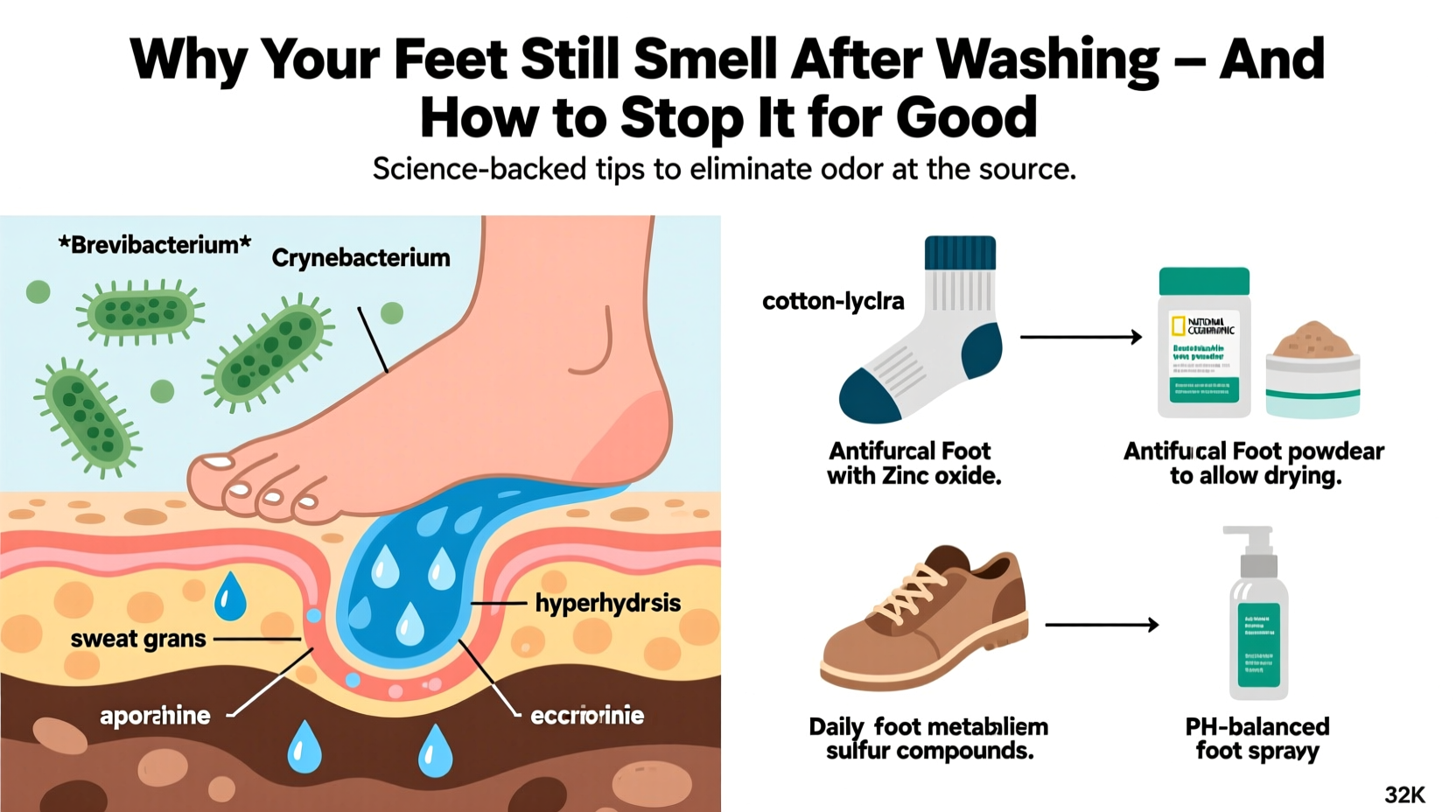
Medically known as bromodosis, smelly feet occur when bacteria such as *Micrococcus sedentarius*, *Staphylococcus epidermidis*, and *Brevibacterium linens* break down keratin (a protein in dead skin) and sweat. These microbes release volatile sulfur compounds and organic acids as byproducts, which are responsible for the pungent smell.
While sweating is normal, some people naturally perspire more—a condition called hyperhidrosis. Excessive moisture creates a perfect environment for bacterial growth, especially when trapped inside non-breathable shoes. Synthetic materials like polyester socks and rubber-lined footwear trap heat and sweat, accelerating bacterial activity.
“Even with regular washing, if the environment stays moist and warm, bacteria will continue to multiply. You’re not fighting dirt—you’re managing microbial ecosystems.” — Dr. Lena Torres, Podiatrist and Foot Health Specialist
Why Washing Alone Isn’t Enough
Washing your feet removes surface-level bacteria and sweat residue, but it doesn’t eliminate the conditions that allow bacteria to return rapidly. Here’s why:
- Bacteria hide in micro-cracks and between toes: Moisture gets trapped in these areas, creating ideal hiding spots for microbes.
- Nail fungus contributes to odor: Fungal infections under toenails produce a cheesy or rotten smell and increase bacterial load.
- Dead skin buildup: Thick, calloused skin provides more material for bacteria to feed on.
- Shoes retain bacteria: A single pair of shoes can harbor millions of bacteria, reinfecting your feet daily.
Step-by-Step Guide to Eliminate Foot Odor for Good
Stopping foot odor requires a consistent, multi-pronged approach. Follow this seven-step protocol to address both cause and effect:
- Exfoliate weekly: Use a pumice stone or foot scrub to remove dead skin cells. This reduces the food source for odor-causing bacteria.
- Soak feet in antibacterial solutions: Try a 10–15 minute soak in a mix of warm water and one of the following:
- ½ cup Epsom salt + ¼ cup apple cider vinegar
- 3 tablespoons baking soda
- Tea tree oil (5–10 drops)—a natural antifungal and antibacterial agent
- Apply antifungal or antimicrobial foot powder: Sprinkle powder inside shoes and on feet before wearing socks. Look for ingredients like clotrimazole, miconazole, or zinc oxide.
- Wear moisture-wicking socks: Choose socks made from merino wool, bamboo, or synthetic blends designed to pull sweat away from the skin. Avoid cotton—it absorbs moisture but doesn’t dry quickly.
- Rotate your shoes: Never wear the same pair two days in a row. Shoes need at least 24 hours to air out completely.
- Clean and deodorize shoes regularly: Wipe interiors with rubbing alcohol, use UV shoe sanitizers, or insert odor-absorbing insoles.
- See a doctor if odor persists: Chronic odor may indicate fungal infection, hyperhidrosis, or an underlying medical condition like diabetes.
Do’s and Don’ts: What Actually Works
| Do | Don't |
|---|---|
| Wear open-toed sandals when possible to ventilate feet | Wear plastic or non-breathable shoes all day |
| Use antiperspirant on feet (yes, really) | Apply regular deodorant meant for underarms |
| Wash socks in hot water with tea tree oil or vinegar | Reuse socks without washing, even if they don’t look dirty |
| Go barefoot at home to let feet breathe | Walk barefoot in public showers or gyms (risk of fungal spread) |
| Treat athlete’s foot promptly with OTC creams | Ignore peeling, itching, or discoloration between toes |
Real Case: How Mark Fixed His Persistent Foot Odor
Mark, a 34-year-old software developer, washed his feet every night and changed socks twice daily, yet coworkers avoided sitting near him. He tried scented foot sprays and medicated powders with little success. After visiting a podiatrist, he learned he had mild athlete’s foot and was wearing low-quality synthetic socks with non-ventilated work shoes.
His solution included:
- Switching to moisture-wicking Merino wool socks
- Using antifungal cream for four weeks
- Alternating between three pairs of breathable leather shoes
- Soaking feet in vinegar-water solution three times a week
Within six weeks, his foot odor disappeared. More importantly, he maintained the routine and hasn’t had a recurrence in over a year.
“Treating foot odor isn’t about masking the smell—it’s about changing the environment so bacteria can’t thrive.” — Dr. Arjun Patel, Dermatology Consultant
Checklist: Daily & Weekly Routine to Prevent Foot Odor
Follow this simple checklist to stay ahead of foot odor:
- ✅ Wash feet daily with antibacterial soap
- ✅ Dry thoroughly between toes after showering
- ✅ Wear clean, moisture-wicking socks every day
- ✅ Rotate shoes—never wear the same pair two days in a row
- ✅ Use foot powder or antiperspirant if prone to sweating
- ✅ Soak feet in vinegar or Epsom salt solution 2–3 times weekly
- ✅ Exfoliate dead skin once a week
- ✅ Inspect feet weekly for signs of fungus or cracks
- ✅ Clean shoe insoles monthly and replace every 6 months
- ✅ See a professional if odor persists beyond 4 weeks of care
Frequently Asked Questions
Can foot odor be a sign of a serious health problem?
In most cases, foot odor is harmless and related to hygiene and lifestyle. However, persistent odor combined with excessive sweating, skin changes, or foot ulcers could indicate conditions like hyperhidrosis, diabetes, or thyroid disorders. If you have concerns, consult a healthcare provider.
Is it safe to use antiperspirant on my feet?
Yes. Clinical-strength antiperspirants containing aluminum chloride are commonly recommended by dermatologists for excessive foot sweating. Apply to clean, dry feet at night and wash off in the morning. Start with every other night to avoid irritation.
Why do my feet smell worse in certain shoes?
Different shoes create different microclimates. Closed, synthetic shoes trap heat and moisture, increasing bacterial growth. Leather and mesh shoes allow better airflow. Additionally, older shoes accumulate bacteria and sweat residues that are hard to remove without deep cleaning.
Long-Term Prevention: Building Sustainable Habits
Eliminating foot odor isn’t a one-time fix—it’s a lifestyle adjustment. Just like dental hygiene prevents cavities, consistent foot care prevents odor. Think of your feet like any other part of your body that needs routine maintenance.
Invest in quality footwear and socks. Prioritize breathability over fashion when spending long hours on your feet. Keep a spare pair of socks at work. Store shoes in a well-ventilated area, not stuffed in a gym bag or dark closet. Consider using cedar shoe inserts—they absorb moisture and naturally repel odors.
If you're active or work in hot environments, consider foot-specific products like odor-control insoles, silver-ion infused socks, or UV shoe sanitizers. These tools aren’t gimmicks—they’re designed to disrupt bacterial growth at the source.
Conclusion: Take Control of Your Foot Health
Smelly feet don’t define you—and they don’t have to be permanent. With the right knowledge and habits, you can stop foot odor for good. Washing is just the beginning. True prevention lies in managing moisture, eliminating bacterial habitats, and making smart choices about footwear and foot care.
Start today. Implement one or two changes from this guide—maybe switch your socks or begin weekly vinegar soaks. Track your progress. Within weeks, you’ll notice a dramatic difference. Share what works with others who might be silently struggling. Because no one should feel embarrassed by something so common and so fixable.




 浙公网安备
33010002000092号
浙公网安备
33010002000092号 浙B2-20120091-4
Comments
No comments yet. Why don't you start the discussion?