
It’s a common experience: you step off a long-haul flight feeling tired, only to notice your shoes are tighter than when you boarded. Your ankles look puffy, your socks have left deep indentations, and walking feels awkward. This phenomenon—known medically as edema—is the accumulation of fluid in the lower extremities, particularly the feet and ankles. While usually harmless, it can be uncomfortable and concerning if you don’t know what’s causing it. The good news is that swelling after flying is largely preventable and manageable with practical steps before, during, and after your journey.
What Causes Feet to Swell During and After Flying?
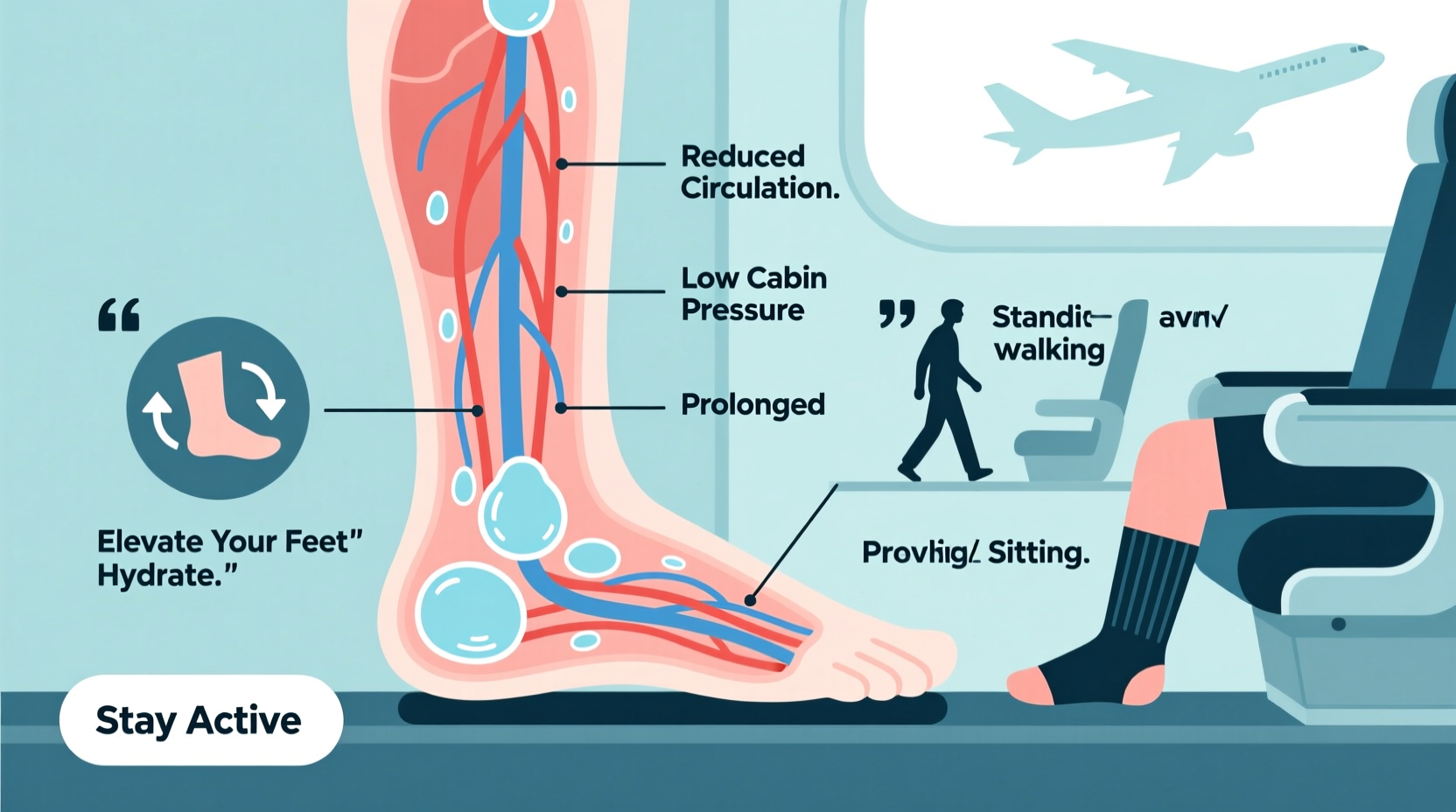
The primary reason for foot swelling during air travel is prolonged immobility combined with changes in cabin pressure and low humidity. When you sit for several hours without moving, blood and fluid tend to pool in your legs due to gravity. The muscles in your calves, which normally act as pumps to return blood to your heart, remain inactive. This sluggish circulation leads to fluid leakage into surrounding tissues—a process called dependent edema.
Aircraft cabins are pressurized to an altitude equivalent to 6,000–8,000 feet above sea level. At this simulated elevation, oxygen levels are slightly reduced, prompting subtle physiological changes. Blood vessels may dilate slightly, increasing permeability and allowing more fluid to escape into soft tissues. Additionally, the dry cabin air (typically under 20% humidity) can cause mild dehydration, which paradoxically worsens fluid retention because the body holds onto water when it senses imbalance.
Certain individuals are more prone to post-flight swelling. These include older adults, pregnant women, people with heart or kidney conditions, those who are overweight, and anyone taking medications like calcium channel blockers or estrogen-based hormones.
“Prolonged sitting during flights disrupts normal venous return, leading to temporary fluid buildup. It’s not just discomfort—it’s a sign your circulatory system needs movement.” — Dr. Alan Reyes, Vascular Health Specialist
Simple Prevention Strategies Before and During Your Flight
Preventing swollen feet starts well before takeoff. By preparing your body and making smart choices during the flight, you can significantly reduce or even eliminate post-flight puffiness.
1. Stay Hydrated (But Time Your Intake)
Dehydration causes the body to retain sodium and water, worsening swelling. Drink plenty of water in the 24 hours leading up to your flight. Aim for at least 2–3 liters unless contraindicated by a medical condition.
During the flight, continue sipping water—but avoid excessive intake right before landing to minimize bathroom urgency. Steer clear of alcohol and caffeine, both of which are dehydrating and can dilate blood vessels, promoting fluid leakage.
2. Wear Compression Socks
Graduated compression socks apply gentle pressure to the ankles and lower legs, helping veins push blood upward and reducing fluid pooling. Look for socks rated 15–20 mmHg, which are effective for most travelers without causing discomfort.
Put them on before boarding—not after swelling has started—for maximum benefit. Ensure they fit properly; socks that are too tight can restrict circulation.
3. Choose the Right Seat
If possible, book an aisle seat or one with extra legroom. More space means easier access to stand, stretch, or walk every hour. Exit rows, emergency exits, and premium economy often offer better leg extension, reducing pressure on circulation.
4. Move Regularly
Every 60–90 minutes, get up and walk the cabin for 3–5 minutes. If mobility is limited, perform seated exercises:
- Ankle circles: Rotate each ankle clockwise and counterclockwise for 30 seconds.
- Toe raises: Lift toes while keeping heels on the floor, then reverse.
- Calf pumps: Press balls of feet down, then heels, mimicking walking motion.
- Leg extensions: Straighten one leg at a time, hold for 10 seconds, then switch.
These movements activate the calf muscle pump, improving venous return and reducing fluid stagnation.
Relief Methods After Landing
Even with precautions, some swelling may still occur. Fortunately, most cases resolve within a few hours of resuming activity. Here’s how to speed recovery:
Elevate Your Legs
Lie down and prop your feet above heart level for 15–30 minutes. Gravity helps drain excess fluid back into circulation. Use pillows under your calves, not knees, to avoid restricting blood flow.
Walk and Stretch
Moving immediately upon arrival kickstarts circulation. Take a brisk walk through the terminal or around baggage claim. Once home, do light stretching—especially of the calves, hamstrings, and Achilles tendon—to encourage fluid redistribution.
Hydrate and Reduce Salt
After landing, drink water and eat potassium-rich foods like bananas, spinach, or avocados. Potassium helps balance sodium levels and supports healthy fluid regulation. Avoid salty snacks, fast food, or processed meals, which increase water retention.
Consider a Cool Shower or Contrast Bath
A cool (not cold) shower can constrict blood vessels and reduce inflammation. For faster relief, try contrast therapy: alternate 1 minute of warm water with 30 seconds of cool water for 10–15 minutes. This stimulates circulation and lymphatic drainage.
When to Be Concerned: Red Flags
Mild foot swelling after flying is normal and typically resolves within 6–12 hours. However, certain symptoms warrant medical attention:
- Swelling that persists beyond 24 hours despite movement and elevation
- Pain, redness, or warmth in one leg—possible signs of deep vein thrombosis (DVT)
- Sudden shortness of breath or chest pain after landing
- Significant asymmetry (one leg much more swollen than the other)
- History of heart, liver, or kidney disease with worsening edema
DVT is rare but serious. It occurs when a blood clot forms in a deep vein, often due to prolonged immobility. Risk increases with age, recent surgery, cancer, or genetic clotting disorders. If you suspect DVT, seek immediate medical evaluation.
“Don’t ignore unilateral leg swelling after a flight. What looks like ordinary puffiness could be a clot. Early diagnosis saves lives.” — Dr. Lila Chen, Hematology Consultant
Traveler’s Checklist: Prevent Swollen Feet on Your Next Flight
Use this actionable checklist to prepare for your next trip:
- ✅ Drink 2–3 liters of water in the 24 hours before flying
- ✅ Pack graduated compression socks (15–20 mmHg)
- ✅ Book an aisle or extra-legroom seat if possible
- ✅ Wear loose, non-restrictive clothing and shoes that slip on easily
- ✅ Set a timer to move every 60–90 minutes during the flight
- ✅ Perform seated calf and ankle exercises hourly
- ✅ Avoid alcohol and high-sodium meals during the flight
- ✅ Elevate legs and walk soon after landing
- ✅ Monitor for warning signs like pain or persistent swelling
Real Example: Sarah’s Long-Haul Lesson
Sarah, a 42-year-old marketing executive, flew from New York to Tokyo for a business conference. On her 13-hour flight, she drank two glasses of wine, slept upright the entire time, and didn’t leave her window seat once. Upon arrival, she couldn’t bend her ankles and struggled to walk to the taxi. Her feet remained swollen for nearly two days, delaying her ability to explore the city.
On her return flight, she changed her approach. She wore compression socks, chose an aisle seat, set hourly reminders to stretch, and drank only water and herbal tea. Though mildly puffy upon landing, her symptoms resolved within three hours. “I felt human again,” she said. “Now I pack my compression socks like toothbrushes—non-negotiable.”
Do’s and Don’ts: Quick Reference Table
| Do | Don’t |
|---|---|
| Stay hydrated with water and electrolyte-balanced drinks | Drink alcohol or excessive caffeine |
| Wear compression socks throughout the flight | Wear tight socks or restrictive footwear |
| Move every 60–90 minutes (walk or stretch) | Sit continuously without movement |
| Elevate legs after landing | Stand or sit still for hours post-flight |
| Eat potassium-rich, low-sodium foods | Consume salty snacks or processed meals |
| Monitor for asymmetrical swelling or pain | Ignore leg pain or breathing difficulties |
Frequently Asked Questions
Is foot swelling after flying dangerous?
In most cases, no. Mild swelling due to inactivity and cabin pressure is normal and resolves quickly. However, if swelling is severe, one-sided, painful, or accompanied by shortness of breath, it could indicate a blood clot or other medical issue requiring urgent care.
Can I prevent swelling without compression socks?
Yes, though socks are highly effective. You can still reduce risk by staying hydrated, avoiding alcohol, moving frequently, wearing loose clothing, and elevating your legs post-flight. But for flights over 4 hours, compression socks are strongly recommended.
How long does post-flight swelling usually last?
For healthy travelers, swelling typically subsides within 6–12 hours after resuming normal activity. If it lasts longer than 24 hours or worsens, consult a healthcare provider to rule out underlying conditions.
Final Thoughts: Fly Smart, Land Comfortable
Swollen feet after flying don’t have to be an inevitable part of travel. Understanding the physiology behind the puffiness empowers you to take control. Simple habits—like drinking water, wearing compression gear, and moving regularly—can make a dramatic difference in how you feel upon arrival. Whether you’re crossing continents or just a few time zones, treating your body with care during transit pays off in comfort, energy, and mobility.




 浙公网安备
33010002000092号
浙公网安备
33010002000092号 浙B2-20120091-4
Comments
No comments yet. Why don't you start the discussion?