
Bleeding gums during flossing is a common experience that many people dismiss as normal. However, it’s rarely something to ignore. While occasional bleeding may result from aggressive flossing, consistent or frequent bleeding is often an early warning sign of gum disease—particularly gingivitis. Understanding the difference between bleeding caused by poor technique and that triggered by underlying inflammation is essential for maintaining long-term oral health. This article breaks down the root causes, compares gingivitis with mechanical trauma from rough flossing, and provides actionable steps to address both.
Understanding Gum Bleeding: The Basics
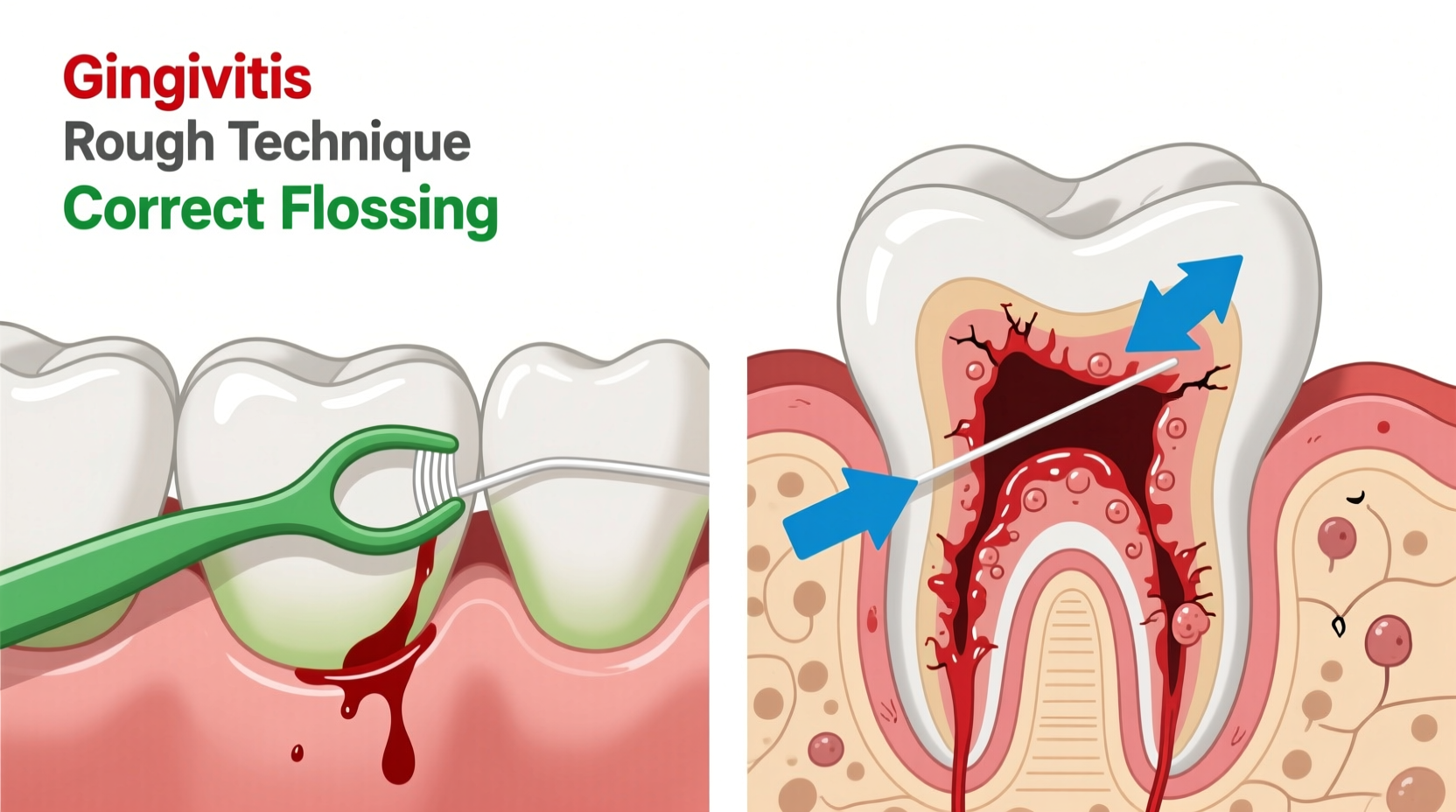
The gums, or gingiva, are soft tissues that surround and support your teeth. When healthy, they appear firm, pink, and do not bleed easily—even during brushing or flossing. Bleeding occurs when these tissues become irritated, inflamed, or injured. Two primary causes dominate clinical observations: gingivitis (a form of periodontal disease) and physical trauma from improper flossing techniques.
Gingivitis develops due to plaque accumulation along the gumline. Plaque is a sticky biofilm composed of bacteria, food debris, and saliva. If not removed daily through effective oral hygiene, it hardens into tartar, which irritates the gums and triggers an immune response. This leads to inflammation—redness, swelling, and increased fragility of the tissue—which makes the gums prone to bleeding even with light contact.
In contrast, mechanical trauma occurs when floss is forced aggressively between teeth, snapping into the gums instead of gliding gently. This can cause small lacerations or bruising, especially if using waxed floss too quickly or at sharp angles. Unlike inflammation-based bleeding, this type typically resolves within a day or two once proper technique is adopted.
Gingivitis: The Silent Culprit Behind Persistent Bleeding
Gingivitis affects nearly half of adults over 30 in the United States, according to the CDC. It begins silently, often without pain, making it easy to overlook until more obvious symptoms like persistent bad breath, gum recession, or tooth sensitivity appear. Bleeding during flossing is usually the earliest noticeable symptom.
The progression starts with bacterial buildup. Within 24 hours of inadequate brushing, plaque forms. After 72 hours, it begins to mineralize into calculus (tartar), which cannot be removed by brushing alone. Tartar harbors bacteria that release toxins, irritating the gingival margin and causing capillaries in the tissue to dilate and become fragile. These weakened blood vessels rupture easily during routine stimulation such as flossing.
Key indicators of gingivitis include:
- Gums that appear red or purplish rather than pale pink
- Swollen or puffy gum tissue
- Bleeding during brushing or flossing
- Chronic bad breath (halitosis)
- Tenderness or mild discomfort around the gumline
Left untreated, gingivitis can advance to periodontitis—an irreversible condition involving bone loss and potential tooth mobility. Early intervention through improved home care and professional cleanings can reverse gingivitis entirely within weeks.
“Bleeding gums are not normal at any age. They’re the body’s way of signaling inflammation—similar to how a swollen ankle signals injury.” — Dr. Alan Wong, Periodontist and Clinical Instructor, University of California, San Francisco
Rough Flossing Technique: A Common but Fixable Cause
While gingivitis is a biological issue rooted in infection, rough flossing is a behavioral one. Many people apply excessive force when inserting floss between tight teeth, especially in areas where contact points are narrow. Snapping floss downward onto the gum tissue can tear the interdental papilla—the triangular gum tissue between teeth—leading to immediate pinpoint bleeding.
This kind of trauma tends to be isolated. For example, you might notice bleeding only between two specific molars where pressure was applied too forcefully. The site may feel sore for a day, but healing occurs quickly if gentle technique is used afterward. In contrast, gingivitis-related bleeding is typically widespread, affecting multiple sites throughout the mouth.
Common mistakes in flossing technique include:
- Using a “sawing” motion instead of a gentle up-and-down glide
- Pressing floss too hard against the gumline
- Failing to curve the floss around each tooth in a C-shape
- Reusing the same section of floss for multiple teeth, transferring bacteria
- Skipping back teeth due to difficulty accessing them
Correct flossing involves forming a C-shape around the side of each tooth and moving the floss vertically from beneath the gumline up to the top of the crown, removing plaque without injuring tissue.
Comparing Causes: Gingivitis vs. Rough Technique
Distinguishing between inflammation-driven and mechanically induced bleeding helps determine whether lifestyle changes, professional care, or both are needed. The following table outlines key differences:
| Factor | Gingivitis-Related Bleeding | Bleeding from Rough Technique |
|---|---|---|
| Pattern | Widespread; multiple teeth affected | Localized; one or two sites |
| Pain Level | Mild tenderness or none | Immediate sharp pain or stinging |
| Appearance | Red, swollen gums | Normal-looking gums with pinpoint bleed spot |
| Timing | Bleeds consistently during every flossing session | Bleeds only after aggressive flossing |
| Response to Care | Improves over 7–14 days with consistent hygiene | Resolves within 24–48 hours |
| Other Symptoms | Bad breath, gum recession, plaque buildup | None beyond minor irritation |
If bleeding persists across most areas of the mouth despite careful flossing, gingivitis is likely present. Conversely, isolated incidents following vigorous flossing suggest technique correction will resolve the issue.
Step-by-Step Guide to Proper Flossing
Mastering correct flossing technique reduces trauma and enhances plaque removal. Follow this sequence for optimal results:
- Cut an 18-inch strand of floss—long enough to use clean sections for each tooth.
- Wind most of the floss around the middle finger of one hand, and the remainder around the other, leaving 1–2 inches taut between fingers.
- Gently guide the floss between teeth using a zigzag motion—never snap it.
- Curve the floss into a C-shape against one tooth and slide it upward from under the gumline to the edge of the crown.
- Repeat on the adjacent tooth, using a fresh section of floss before moving to the next gap.
- Use thumbs for front teeth, index fingers for back teeth to improve control.
- Rinse after flossing to remove dislodged debris and bacteria.
For those with dexterity issues or tightly spaced teeth, consider alternatives like floss picks, water flossers, or interdental brushes. These tools can be just as effective when used correctly.
When to See a Dentist
While improving technique may resolve mechanical bleeding, persistent or generalized bleeding warrants professional evaluation. Schedule a dental visit if:
- Bleeding continues for more than two weeks despite proper flossing
- Gums appear puffy, dark red, or receding
- You notice loose teeth or shifting alignment
- There’s persistent bad breath unresponsive to oral hygiene
- You haven’t had a professional cleaning in over six months
A dentist or hygienist can perform a periodontal assessment, measuring pocket depths around each tooth. Healthy pockets range from 1–3 mm; deeper measurements indicate gum detachment and possible periodontitis. Scaling and root planing may be recommended to remove tartar below the gumline and smooth root surfaces for reattachment.
Mini Case Study: Sarah’s Turnaround
Sarah, a 34-year-old teacher, noticed her gums bled every time she flossed. She assumed she was flossing too hard and avoided it for months. Eventually, her dentist pointed out significant plaque buildup and inflamed gums during a check-up. Diagnosed with moderate gingivitis, Sarah began flossing daily with proper technique and switched to an antibacterial mouthwash. Within three weeks, bleeding stopped, and her gums returned to a healthy pink hue. A follow-up cleaning removed residual tartar, reinforcing her commitment to consistency.
Her case illustrates how early detection and adherence to simple protocols can reverse gum disease before complications arise.
Prevention Checklist
Protect your gum health with this actionable checklist:
- ✅ Brush twice daily with a soft-bristled toothbrush using fluoride toothpaste
- ✅ Floss once per day using the C-shape method
- ✅ Use an antimicrobial mouth rinse if prone to plaque buildup
- ✅ Replace your toothbrush every 3–4 months or sooner if bristles fray
- ✅ Attend dental cleanings every six months—or more frequently if advised
- ✅ Avoid smoking, which impairs gum circulation and healing
- ✅ Limit sugary foods and drinks that feed harmful oral bacteria
- ✅ Monitor changes in gum color, texture, or bleeding frequency
FAQ
Is it normal for gums to bleed when starting to floss?
Some initial bleeding may occur if you’ve gone without flossing for a while and have developing gingivitis. However, bleeding should subside within 5–7 days of consistent, gentle flossing. If it doesn’t, consult a dentist.
Can I damage my gums permanently by flossing too hard?
Occasional rough flossing won’t cause permanent damage, but repeated trauma can lead to gum recession over time. Once gum tissue recedes, it does not regenerate, potentially exposing sensitive root surfaces.
What kind of floss is best for sensitive gums?
Ultra-fine shred-resistant floss, PTFE floss (like Glide), or soft woven flosses are ideal for sensitive or tight spaces. Water flossers are also excellent for reducing irritation while maintaining cleanliness.
Conclusion: Take Action Before Minor Bleeding Becomes Major Trouble
Bleeding gums are a signal—not a standard part of oral care. Whether the cause is gingivitis or rough technique, the solution lies in awareness, education, and consistency. You don’t need perfection, just persistence. By refining your flossing method, recognizing the signs of inflammation, and partnering with your dental provider, you can halt gum disease in its tracks and maintain a healthy, resilient smile for life.




 浙公网安备
33010002000092号
浙公网安备
33010002000092号 浙B2-20120091-4
Comments
No comments yet. Why don't you start the discussion?