
Jeans are a wardrobe staple—versatile, durable, and timeless. Yet many people find their favorite pair losing its deep indigo or rich black hue after only a handful of washes. Fading isn’t inevitable, but it does stem from a combination of fabric construction, washing habits, and environmental exposure. Understanding the science behind denim deterioration empowers you to extend the life and appearance of your jeans significantly. This guide breaks down exactly why fading occurs and delivers actionable, expert-approved strategies to keep your denim looking sharp for years.
The Science Behind Denim Fading
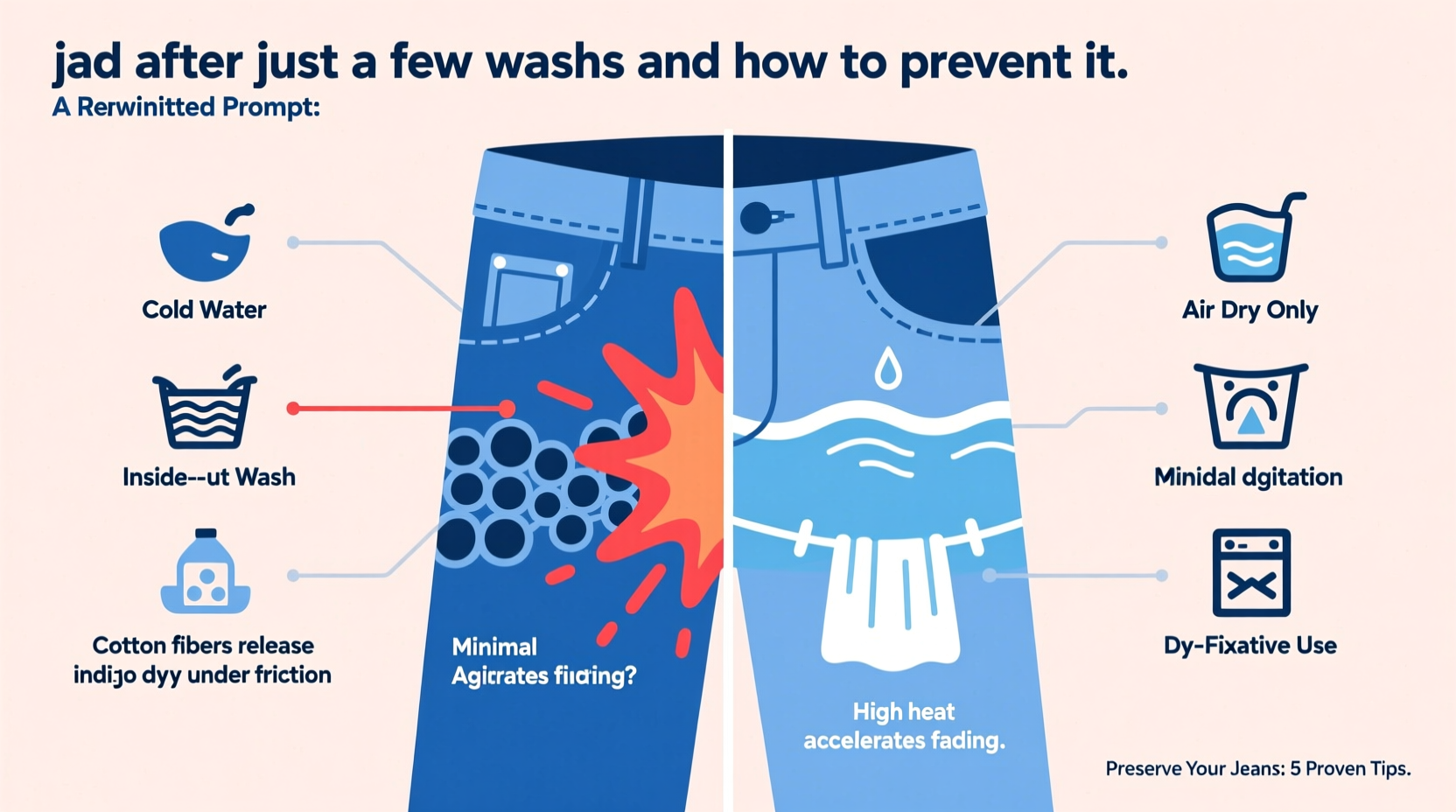
Denim is typically made from cotton twill, woven with a blue (or black) warp thread and a white weft thread. The iconic blue color comes from indigo dye, which doesn’t chemically bond deeply with cotton fibers. Instead, it coats the surface. This surface-level adherence is what gives raw denim its character as it molds to the wearer’s body over time—but it also makes the dye vulnerable to removal through friction, water, and detergent exposure.
When you wash jeans, agitation during the cycle causes fibers to rub against each other, dislodging dye particles. Hot water accelerates this process by opening up the cotton fibers, allowing more dye to escape. Detergents, especially those with bleaching agents or enzymes, further break down the dye molecules. Over time, repeated washing leads to cumulative fading, particularly in high-movement areas like the thighs, knees, and seat.
Additionally, sunlight plays a major role. Ultraviolet (UV) rays degrade organic dyes like indigo through photodegradation. Even wearing your jeans in direct sunlight contributes to gradual color loss—a phenomenon often seen as “sun bleaching” along the outer thighs and back pockets.
Common Washing Mistakes That Accelerate Fading
Most people treat jeans like any other garment, tossing them into the washing machine after every few wears. But denim doesn’t need frequent cleaning—and when washed improperly, it pays a steep price in longevity and appearance.
- Washing too often: Jeans don’t require laundering after every wear unless visibly soiled. Sweat and oils can be aired out, reducing unnecessary exposure to water and detergents.
- Using hot water: High temperatures cause cotton fibers to swell and release dye. Always opt for cold water cycles.
- Overloading the machine: Crowded loads increase friction between garments, accelerating fabric wear and dye loss.
- Using harsh detergents: Standard laundry detergents often contain optical brighteners and bleach substitutes that strip color. Use a pH-neutral, denim-specific detergent instead.
- Tumble drying: The heat and tumbling action of dryers are extremely damaging. Air drying is far gentler on fabric integrity.
“Many consumers don’t realize that the biggest threat to denim color isn’t time—it’s improper care. A single aggressive wash can do more damage than months of regular wear.” — Lena Torres, Textile Conservation Specialist, Museum of Fabric History
How to Wash Jeans the Right Way
Preserving your jeans starts with adopting a smarter laundry routine. Follow this step-by-step approach to minimize fading and maximize lifespan.
Step-by-Step Guide: Washing Jeans Without Fading
- Wear before washing: Unless stained or odorous, wear jeans 5–10 times before laundering. This reduces unnecessary stress on the fabric.
- Turn inside out: This protects the outer surface from abrasion and shields dyed fibers from direct contact with other clothes.
- Use cold water: Set your washing machine to the coldest setting (ideally below 30°C / 86°F).
- Select a gentle cycle: Choose hand-wash or delicate mode to reduce mechanical agitation.
- Choose the right detergent: Use a mild, liquid detergent formulated for darks or denim. Avoid powders, which may not dissolve fully and can scratch fabric.
- Wash alone or with similar items: Wash jeans separately or only with other dark, non-abrasive clothing to prevent dye transfer and friction.
- Air dry flat or hanging: Never use a dryer. Lay jeans flat on a drying rack or hang them by the waistband to avoid stretching.
- Spot clean between washes: For small stains, use a damp cloth with a drop of mild soap to gently dab the area.
Do’s and Don’ts of Denim Care
| Do’s | Don’ts |
|---|---|
| Wash infrequently (every 5–10 wears) | Wash after every single wear |
| Turn jeans inside out before washing | Wash inside out with heavy towels or zippers |
| Use cold water and gentle cycle | Use hot water or heavy-duty cycles |
| Air dry away from direct sunlight | Tumble dry on high heat |
| Store folded or hung properly | Leave jeans crumpled in a laundry basket |
| Use denim-specific detergent | Use bleach or brightening detergents |
Advanced Tips for Long-Term Color Preservation
Beyond basic washing techniques, several advanced practices can dramatically improve the longevity of your jeans’ color and structure.
Vinegar Rinse for Dye Locking
A natural method used by denim enthusiasts involves a vinegar rinse after the first wash. Mix one cup of white vinegar with cold water and soak newly purchased jeans for 30 minutes. Vinegar helps set the dye by slightly lowering the pH, tightening the cotton fibers around the indigo. While it won’t make jeans completely fade-proof, it can reduce initial dye bleed and stabilize color early on.
Freeze Myth vs. Reality
Some suggest freezing jeans to \"kill bacteria\" and avoid washing. However, studies show freezing does not eliminate odor-causing microbes effectively. Moisture trapped in fabric can even encourage mold growth. Instead, hang jeans in a well-ventilated area overnight to refresh them naturally.
Rotate Your Denim Collection
Just like shoes, rotating multiple pairs of jeans allows each to rest between wears. Cotton fibers recover shape and strength when given time to relax. Wearing the same pair daily leads to faster breakdown and uneven fading. Having two or three go-to pairs extends the life of each by 40% or more.
Storage Best Practices
Never leave jeans bunched at the bottom of a drawer. Fold them neatly along the seams or hang them using wide, padded hangers to prevent creasing and distortion. Avoid plastic bags, which trap moisture and promote mildew. Store in a cool, dry closet away from windows to limit UV exposure.
Real Example: How Mark Extended His Jeans’ Life by 3 Years
Mark, a graphic designer from Portland, noticed his favorite black slim-fit jeans began fading at the knees within three months. After researching denim care, he changed his routine. He stopped washing them weekly, switched to cold water and Woolite Dark, turned them inside out, and air-dried them flat. He also began spot-cleaning minor stains and rotated between three pairs. After two years, the original pair still retained 80% of their color and held their shape. By year three, they showed only natural wear patterns—no holes, no thinning. “I used to replace jeans every six months,” he said. “Now I get three years out of one pair. It saves money and feels better knowing I’m not wasting resources.”
Checklist: Denim Care Routine for Lasting Color
- ☑ Wear jeans 5–10 times before washing
- ☑ Turn jeans inside out before laundering
- ☑ Use cold water and delicate cycle
- ☑ Choose a dye-safe, pH-neutral detergent
- ☑ Wash with similar colors only
- ☑ Air dry—never tumble dry
- ☑ Store folded or on a proper hanger
- ☑ Spot clean between full washes
- ☑ Avoid direct sunlight during wear and storage
- ☑ Rotate between multiple pairs
Frequently Asked Questions
Can I wash raw denim?
Yes, but sparingly. Raw denim is unwashed before purchase, meaning it hasn’t undergone shrinkage or softening processes. Many enthusiasts recommend avoiding washing for the first 6 months to allow natural fades (called “whiskers” and “honeycombs”) to develop. If needed, spot clean or hand-wash gently in cold water. Expect some shrinkage and stiffness initially.
Why do black jeans fade faster than blue ones?
Black denim often uses sulfur-based dyes or synthetic pigments in addition to indigo. These dyes are less stable and more prone to oxidation and wash-off. Black jeans also show fading more visibly due to contrast. To combat this, always use detergents labeled for darks and avoid chlorine-based products.
Is hand-washing better than machine-washing?
Hand-washing offers greater control and less agitation, making it ideal for preserving delicate or vintage denim. Fill a tub with cold water and a small amount of gentle detergent. Submerge jeans and gently swish for 3–5 minutes. Rinse thoroughly with cold water and air dry. While more time-consuming, it’s the gentlest method available.
Conclusion: Make Your Jeans Last Longer Starting Today
Fading isn’t a flaw in your jeans—it’s a consequence of how they’re treated. With mindful habits, even everyday denim can retain its richness and structure for years. From turning jeans inside out to choosing cold washes and skipping the dryer, small changes yield dramatic results. You’re not just protecting a garment; you’re investing in sustainability, saving money, and honoring the craftsmanship behind quality denim.




 浙公网安备
33010002000092号
浙公网安备
33010002000092号 浙B2-20120091-4
Comments
No comments yet. Why don't you start the discussion?