
Joint cracking—whether in the knees, shoulders, fingers, or spine—is something nearly everyone experiences at some point. The sound can range from a subtle pop to a loud snap, often accompanied by a brief sensation of relief. For many, it’s just a curious bodily quirk. But when the cracking becomes frequent or painful, questions naturally arise: Is this normal? Could it signal early arthritis? Should I be worried?
The truth is that most joint noises are harmless. However, understanding the mechanisms behind them—and knowing when to seek medical advice—can help you maintain long-term joint health and avoid unnecessary anxiety.
The Science Behind Joint Cracking
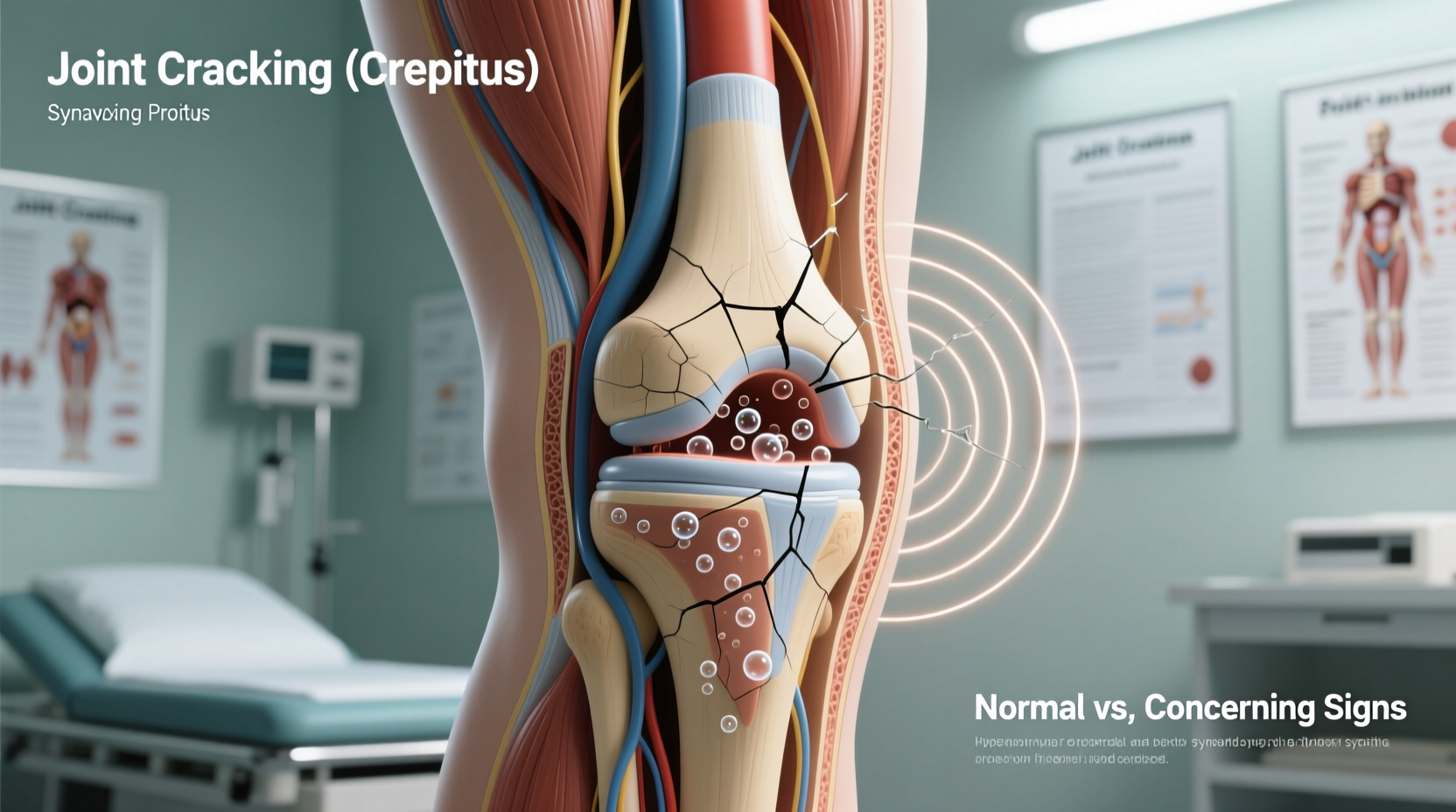
The most common explanation for joint cracking is a phenomenon called *cavitation*. When you stretch or bend a joint, the pressure within the synovial fluid—a lubricating substance inside your joints—drops rapidly. This sudden change causes dissolved gases (primarily nitrogen) to form tiny bubbles that quickly collapse, producing the familiar popping sound.
This process is entirely mechanical and not damaging. In fact, after a joint cracks, it typically takes about 15 to 30 minutes before it can \"crack\" again, which corresponds to the time needed for gases to re-dissolve into the synovial fluid.
Another cause of joint noise is tendons or ligaments snapping over bony structures as they shift during movement. For example, when you rotate your shoulder or extend your knee, a tendon may momentarily catch on a ridge of bone and then slip back into place with an audible click. These sounds are usually painless and don’t indicate structural damage.
When Joint Popping Is Normal vs. When It’s a Warning Sign
Frequent joint cracking isn’t inherently dangerous. Many people crack their knuckles daily without any adverse effects. A well-known study by Dr. Donald Unger, who cracked the knuckles on one hand for over 60 years and left the other untouched, found no difference in arthritis development between the two hands. His informal experiment earned him an Ig Nobel Prize and supports clinical findings that habitual knuckle cracking does not increase arthritis risk.
However, context matters. The presence of additional symptoms can transform a harmless noise into a red flag. Consider the following distinctions:
| Feature | Normal Joint Cracking | Potentially Concerning |
|---|---|---|
| Pain | No pain associated | Pain during or after cracking |
| Swelling | No swelling | Visible puffiness or warmth |
| Frequency | Occasional or situational | New onset or increasing frequency |
| Mobility | Full range of motion | Stiffness or locking sensation |
| Sound Type | Single pop, infrequent repetition | Grinding, grating, or repetitive clicks |
If your joint makes a grinding noise—especially if it’s accompanied by discomfort—it may indicate cartilage wear, as seen in conditions like osteoarthritis. This type of sound, known as *crepitus*, occurs when roughened joint surfaces rub together, losing the smooth glide provided by healthy cartilage.
“Not all joint sounds are created equal. A single pop during stretching is typically nothing to worry about. But persistent grinding or clicking with pain should be evaluated.” — Dr. Lena Patel, Rheumatologist and Joint Health Specialist
Common Joints That Crack and What It Means
Different joints produce different types of sounds for various reasons. Understanding where the noise comes from can provide clues about its significance.
Fingers and Knuckles
Knuckle cracking is perhaps the most studied form of joint popping. The cavitation theory applies strongly here. Despite widespread myths, decades of research have failed to link knuckle cracking with arthritis. However, excessive force could potentially strain ligaments over time, though evidence remains limited.
Knees
Knee cracking, especially when squatting or climbing stairs, is extremely common. One cause is the patella (kneecap) shifting slightly as it glides over the femur. If misalignment or muscle imbalance exists, the tracking may become uneven, leading to repetitive snapping. In younger individuals, this might be due to patellar instability; in older adults, it could reflect early cartilage degeneration.
Shoulders
Shoulder pops often result from tendons moving across the rounded surface of the humerus or scapula. Athletes and those who perform overhead motions—like swimmers or weightlifters—may notice more frequent clicking. While usually benign, persistent shoulder noise with weakness or pain may suggest rotator cuff issues or labral tears.
Spine (Neck and Back)
Chiropractic adjustments often produce loud spinal cracks, but even natural movements like turning your head or bending sideways can generate similar sounds. These are typically due to gas release in facet joints. However, if spinal cracking is accompanied by numbness, tingling, or radiating pain, nerve involvement should be ruled out.
Hips
Hip joint noises may stem from a tight iliotibial (IT) band flicking over the greater trochanter or from internal hip joint changes. Deep, internal clicks could indicate a labral tear, particularly if there’s groin pain or a catching sensation during movement.
Mini Case Study: Emily’s Knee Popping Journey
Emily, a 34-year-old yoga instructor, began noticing a consistent clicking in her right knee during lunges and downward dog poses. At first, she ignored it—many of her students reported similar sounds. But after a few months, the noise started coming with a dull ache and occasional swelling.
She consulted a physical therapist who observed her movement patterns and discovered weak gluteal muscles contributing to poor knee alignment. An MRI showed mild chondromalacia—the softening of cartilage under the kneecap. With targeted strengthening exercises, gait retraining, and temporary modification of high-impact poses, Emily reduced both the pain and frequency of the clicking within 10 weeks.
Her case illustrates how seemingly minor joint noises can escalate when underlying biomechanical imbalances go unaddressed. Early intervention prevented further cartilage wear and avoided potential long-term complications.
Step-by-Step Guide to Assessing Your Joint Health
If you're concerned about frequent joint cracking, follow this practical timeline to evaluate whether professional care is needed:
- Observe the Pattern (Days 1–7): Note when and where the cracking occurs. Is it during certain movements? Does it happen on one side only?
- Check for Pain or Swelling: Keep a simple log: “Clicking + pain = yes/no,” “Morning stiffness duration,” etc.
- Assess Function (Week 2): Try basic mobility tests—squatting, reaching overhead, walking up stairs. Can you move freely without discomfort?
- Modify Activity Temporarily: Avoid movements that consistently trigger painful popping. See if symptoms improve.
- Try Gentle Strengthening (Week 3–4): Incorporate low-resistance exercises targeting muscles around the affected joint (e.g., straight-leg raises for knee support).
- Consult a Professional (By Week 6 if unresolved): Visit a physical therapist, sports medicine physician, or rheumatologist if symptoms persist or worsen.
This structured approach prevents overreaction while ensuring timely evaluation when necessary.
Checklist: When to See a Doctor About Joint Cracking
- ✅ Pain during or after the joint cracks
- ✅ Swelling, redness, or warmth around the joint
- ✅ Reduced range of motion or feeling of “locking”
- ✅ New or worsening symptoms despite rest
- ✅ History of joint injury or arthritis in the family
- ✅ Clicking followed by instability (e.g., knee giving out)
Meeting even one of these criteria warrants a medical assessment. Early diagnosis of conditions like meniscal tears, ligament injuries, or inflammatory arthritis can significantly improve outcomes.
FAQ
Can cracking my joints cause arthritis?
No, scientific evidence does not support a link between habitual joint cracking—such as knuckle popping—and the development of osteoarthritis. The main risk factors for arthritis include age, genetics, prior injury, obesity, and repetitive joint stress, not cavitation sounds.
Why do my joints crack more as I get older?
As we age, synovial fluid production decreases, and cartilage gradually thins. Tendons and ligaments also become stiffer. These changes can make joint movements less smooth, increasing the likelihood of audible snaps or creaks. While some noise is expected with aging, painful or limiting crepitus should be evaluated.
Is it bad to crack my back every day?
Occasional self-adjustment isn’t harmful if done gently and without pain. However, forcefully manipulating your spine daily can lead to hypermobility or strain supporting muscles and ligaments. Chronic reliance on self-cracking may mask underlying issues like poor posture or muscle imbalances. Consider seeing a licensed chiropractor or physical therapist for safer, targeted care.
Protecting Your Joints for the Long Term
Even if your joint cracking is currently pain-free, proactive joint care pays dividends over time. Joints are designed for movement, but they thrive best under controlled, balanced loads. Sedentary lifestyles weaken supporting muscles, while excessive high-impact activity without recovery can accelerate wear.
Maintaining a healthy weight reduces mechanical stress on weight-bearing joints like hips and knees. Regular strength training improves joint stability, and flexibility work—such as yoga or dynamic stretching—helps preserve smooth articulation.
Nutrition also plays a role. Diets rich in omega-3 fatty acids (found in fatty fish and flaxseeds), antioxidants (berries, leafy greens), and collagen-supporting nutrients (vitamin C, zinc) contribute to connective tissue resilience. Staying hydrated ensures synovial fluid remains effective.
“The goal isn’t silence—it’s function. A joint that moves well, even if it occasionally pops, is healthier than a quiet but stiff one.” — Dr. Marcus Tran, Sports Medicine Physician
Conclusion
Frequent joint cracking is usually a normal part of human movement, driven by harmless physical processes like gas bubble formation or tendon shifts. For the vast majority of people, it’s nothing to fear. But when cracking is paired with pain, swelling, or restricted motion, it becomes a signal worth heeding.
Understanding the difference between benign noise and warning signs empowers you to take informed action. Whether through self-monitoring, targeted exercise, or professional evaluation, you can preserve joint health and maintain mobility throughout life.




 浙公网安备
33010002000092号
浙公网安备
33010002000092号 浙B2-20120091-4
Comments
No comments yet. Why don't you start the discussion?