
It’s a familiar sensation: you reach overhead, bend your knee, or roll your shoulders—and suddenly, a sharp pop echoes from your joint. For many, this sound is routine, even satisfying. But it also raises questions. Is that cracking sign of something serious? Could repeated popping lead to arthritis or long-term damage? Understanding the science behind joint noise can ease anxiety and guide smarter movement choices.
Joint cavitation—the technical term for that pop—is usually harmless. Yet in certain cases, it may signal underlying issues like inflammation, cartilage wear, or ligament strain. The key lies in distinguishing between normal physiological sounds and warning signs that warrant medical attention.
The Science Behind Joint Cracking
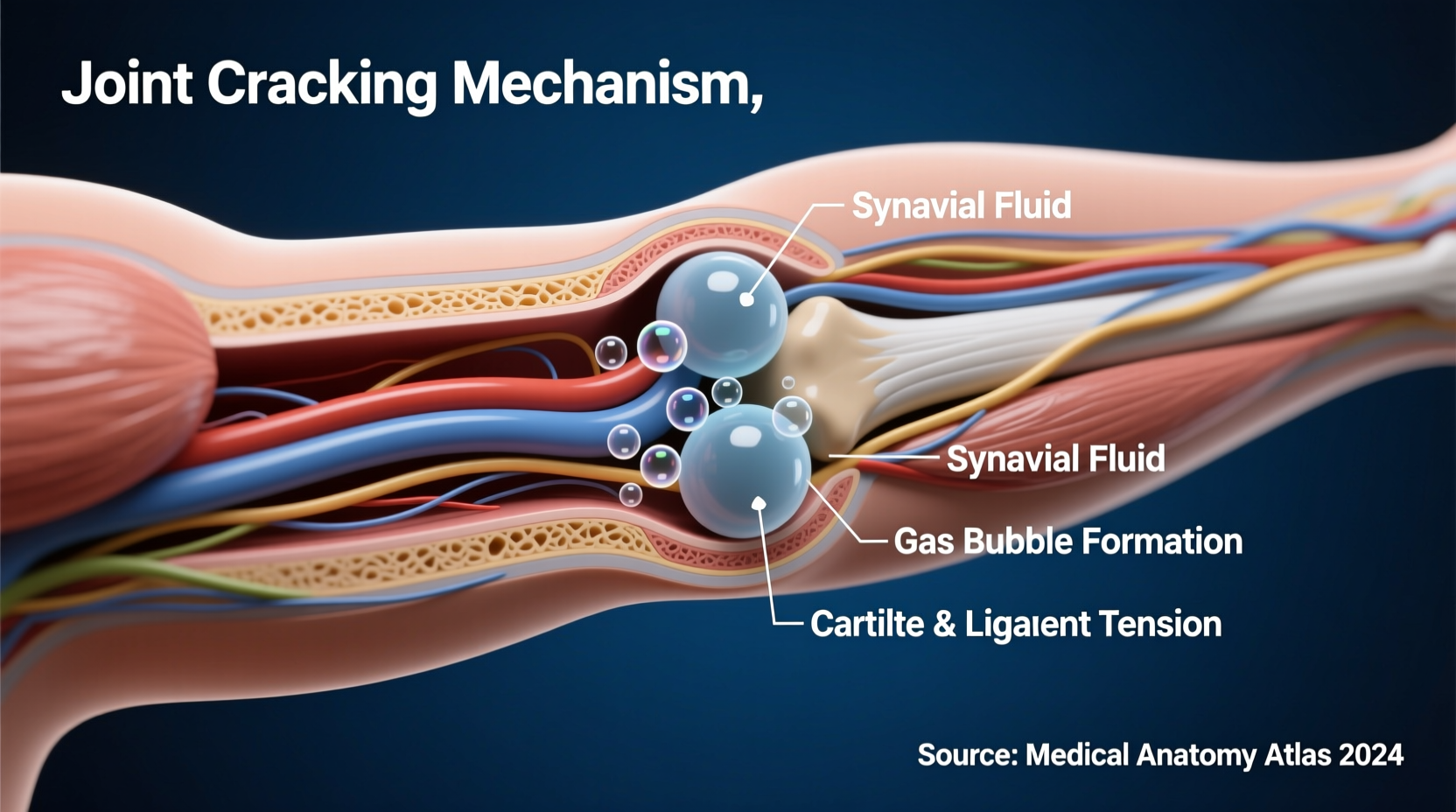
When you stretch or move a joint, changes in pressure occur within the synovial fluid—a lubricating substance that cushions joints. This fluid contains dissolved gases, primarily nitrogen, oxygen, and carbon dioxide. Rapid joint movement can create a vacuum effect, causing these gases to form a bubble that subsequently collapses with an audible pop. This process is known as cavitation.
A landmark study published in *PLOS ONE* (2015) used real-time MRI to observe what happens during knuckle cracking. Researchers found that the pop occurs when a cavity forms rapidly in the joint, not when it collapses. Once the gas dissipates back into the fluid, it takes about 15–30 minutes before the same joint can “crack” again—this refractory period supports the gas bubble theory.
This phenomenon isn’t limited to fingers. It commonly occurs in the neck, spine, hips, knees, and shoulders during stretching or rotational movements. Because no tissue damage is involved, occasional cracking without pain is considered a normal biomechanical event.
“The sound of a joint popping is often just physics in action—gas release under pressure. It’s not inherently harmful.” — Dr. Laura Chen, Sports Medicine Physician
Common Causes of Joint Popping During Stretching
Not all joint noises are created equal. While cavitation explains many pops, other mechanisms contribute to the sounds you hear when stretching:
- Tendon or ligament snapping: As tendons shift over bony structures during motion, they can snap back into place, producing a click or pop. Common in the hip (iliotibial band) or ankle.
- Cartilage wear (crepitus): In older adults or those with joint stress, roughened cartilage surfaces may grind together, creating a grating noise accompanied by stiffness or discomfort.
- Joint hypermobility: Individuals with looser ligaments may experience more frequent joint noises due to increased range of motion and soft tissue movement.
- Adhesions or scar tissue: After injury or surgery, fibrous tissue can restrict smooth joint glide, leading to audible releases during initial stretches.
In most cases, especially among younger, active individuals, these sounds are benign—particularly if they occur infrequently and without pain, swelling, or instability.
When Joint Cracking Warrants Attention
The presence of sound alone rarely indicates a problem. However, certain red flags suggest further evaluation is needed. These include:
- Pain accompanying the pop
- Swelling or warmth around the joint
- Recurrent locking or catching sensations
- Loss of strength or joint instability
- Reduced range of motion after cracking
For example, a knee that pops with every squat and causes sharp pain could indicate a meniscus tear or patellar tracking disorder. Similarly, persistent shoulder clicks during arm elevation might reflect rotator cuff dysfunction or labral injury.
Chronic joint noise combined with discomfort—especially if it worsens over time—should prompt consultation with a physical therapist or orthopedic specialist. Diagnostic tools such as ultrasound or MRI can identify structural abnormalities invisible to surface observation.
Case Example: Runners and Hip Snapping
Mark, a 32-year-old recreational runner, began noticing a loud snap on the outside of his right hip each time he lifted his leg during stretching. Initially painless, the sound became bothersome after increasing his mileage. Over several weeks, mild soreness developed at the site.
After evaluation, Mark was diagnosed with external coxa saltans—commonly known as \"snapping hip syndrome\"—caused by the iliotibial (IT) band flicking over the femoral head. His treatment plan included targeted foam rolling, hip abductor strengthening, and temporary activity modification. Within six weeks, both the noise and discomfort resolved significantly.
This case illustrates how seemingly minor joint sounds can escalate if ignored, particularly under repetitive strain.
Debunking Myths About Joint Cracking
Despite decades of research, misconceptions persist about joint cracking and its consequences.
| Myth | Reality |
|---|---|
| Cracking your knuckles causes arthritis. | No credible evidence supports this. Longitudinal studies show no increased risk of osteoarthritis in habitual knuckle crackers. |
| More cracking means more joint damage. | Frequency of sound does not correlate with degeneration unless pain or dysfunction is present. |
| If it pops, something is out of place. | Joints don’t “go in and out” of alignment from normal stretching. Subluxation is rare and typically traumatic. |
| You should stop moving if your joints crack. | Movement is beneficial. Avoiding motion due to fear of noise can lead to stiffness and weakness. |
The myth linking knuckle cracking to arthritis originated from anecdotal assumptions, not science. One well-known study followed two groups—one that cracked their knuckles regularly and one that didn’t—over decades. No difference in arthritis rates was found.
How to Maintain Healthy Joints and Reduce Unwanted Noise
While you can’t always prevent joint sounds, you can support overall joint health through proactive habits. Below is a checklist of effective strategies:
Joint Health Checklist
- ✅ Warm up before stretching or exercise to increase synovial fluid circulation
- ✅ Strengthen muscles surrounding major joints (e.g., quads for knees, glutes for hips)
- ✅ Stay hydrated—synovial fluid production depends on adequate water intake
- ✅ Incorporate mobility drills (like dynamic lunges or shoulder circles) into daily routines
- ✅ Avoid prolonged static postures that stiffen joints
- ✅ Use proper form during strength training to minimize uneven joint loading
- ✅ Address muscle imbalances through corrective exercises or professional assessment
Additionally, nutrition plays a role. Omega-3 fatty acids, vitamin D, collagen peptides, and antioxidants support connective tissue integrity. Foods rich in these nutrients—such as fatty fish, leafy greens, eggs, and bone broth—can complement physical care.
Step-by-Step: Reducing Knee Popping During Squats
If you experience knee cracking while squatting or stretching, follow this sequence to assess and improve function:
- Evaluate symptoms: Does the pop happen once per repetition or repeatedly? Is there pain, swelling, or buckling?
- Check footwear: Wear supportive shoes with minimal heel lift to promote natural alignment.
- Improve warm-up: Perform 5–10 minutes of light cardio followed by leg swings and bodyweight squats.
- Strengthen stabilizers: Add clamshells, glute bridges, and step-ups to target hip abductors and external rotators.
- Refine technique: Keep knees aligned over toes; avoid inward collapse (valgus).
- Monitor progress: Track symptoms weekly. If improvement stalls after 4–6 weeks, consult a physical therapist.
This structured approach helps isolate contributing factors and builds resilience over time.
Frequently Asked Questions
Is it bad to crack my back every day?
Daily back cracking isn’t inherently harmful if done gently and without pain. However, relying on self-manipulation to relieve tension may mask underlying issues like poor posture or weak core muscles. Chronic need for cracking could benefit from professional evaluation and targeted strengthening.
Can stretching cause joint damage if it makes noise?
No—stretching-induced joint sounds are typically safe. Damage requires excessive force or trauma. As long as you're not forcing movements beyond comfort or experiencing pain, noise during stretching is not a danger sign.
Why do my joints crack more in the morning?
During sleep, synovial fluid redistributes and gas accumulates in joints. Morning movement releases this built-up pressure, making cavitation more common upon waking. This is normal and usually diminishes after a few motions.
Conclusion: Listen to Your Body, Not Just the Sounds
Your joints will make noises throughout life. Most are simply the result of natural mechanics—gas bubbles forming, tendons shifting, or tissues adapting to movement. There’s no need to suppress every pop or avoid stretching out of fear.
What matters most is context. Pain-free, occasional cracking is not a warning sign. But persistent discomfort, swelling, or mechanical symptoms like locking deserve attention. By building strength, improving mobility, and staying informed, you empower yourself to move confidently and safely.




 浙公网安备
33010002000092号
浙公网安备
33010002000092号 浙B2-20120091-4
Comments
No comments yet. Why don't you start the discussion?