
Waking up with stiff joints that pop or crackle as you stretch can be unsettling—especially if it happens every morning. You might wonder: Is this a sign of something serious, or just a quirk of the human body? The truth is, joint cracking upon waking is extremely common, but understanding the underlying causes can help you distinguish between harmless noise and potential warning signs.
Joints are complex structures where bones meet, cushioned by cartilage and lubricated by synovial fluid. When movement resumes after hours of stillness, various physical processes come into play. Some produce audible pops; others result in subtle grinding sensations. While most are benign, persistent pain or swelling accompanying these sounds warrants attention.
The Science Behind Morning Joint Cracking
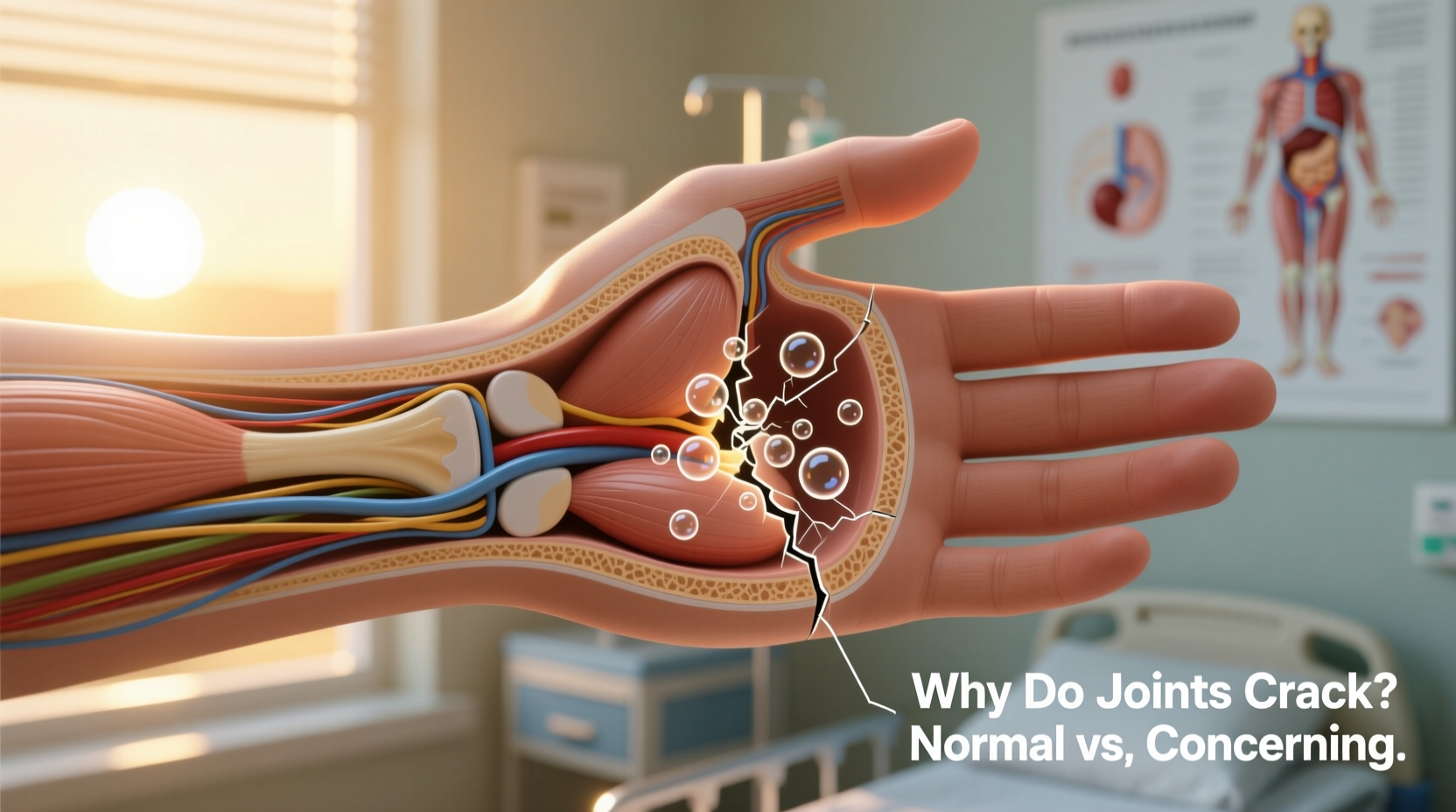
Joint cavitation—the scientific term for the familiar \"pop\"—occurs when gases dissolved in synovial fluid form bubbles and then collapse rapidly during movement. This process, known as tribonucleation, creates a small vacuum within the joint capsule. As pressure changes, nitrogen, oxygen, and carbon dioxide bubble out of solution, producing the cracking sound.
This phenomenon is especially noticeable after prolonged inactivity, such as sleep. Overnight, joints remain relatively immobile for 6–8 hours, allowing gas concentrations to build up. When you finally move—rolling over, sitting up, or stretching—those accumulated gases release suddenly, causing multiple pops throughout the spine, fingers, knees, and shoulders.
“Crepitus, or joint noise, is often physiological. In the absence of pain or dysfunction, it’s usually nothing more than mechanical feedback from normal joint motion.” — Dr. Alan Kim, Rheumatologist at Boston Arthritis Center
Another factor contributing to morning joint sounds is **adhesion formation** between connective tissues. During rest, soft tissues like tendons and ligaments may temporarily stick together due to reduced circulation and lack of movement. Upon initial motion, these micro-adhesions break apart, sometimes creating snapping or clicking noises.
Is It Normal or a Sign of Trouble?
In most cases, painless joint cracking upon waking is completely normal. However, context matters. Frequency, location, associated symptoms, and personal medical history all influence whether joint noise should raise concern.
Consider the following distinctions:
| Feature | Normal Joint Cracking | Potentially Problematic |
|---|---|---|
| Pain | No discomfort | Pain during or after cracking |
| Swelling | Absent | Visible puffiness or warmth |
| Mobility | Full range of motion restored quickly | Stiffness lasting over an hour |
| Sound Type | Occasional pop or snap | Grinding, grating, or crunching (crepitus) |
| Frequency | Intermittent, resolves with movement | Daily, worsening over time |
If your joint noises are isolated events without pain, swelling, or restricted movement, they are likely part of your body’s natural mechanics. But consistent grinding sensations—particularly in weight-bearing joints like knees or hips—could indicate cartilage wear linked to early osteoarthritis.
Common Joints Affected and Why
Different joints crack for different reasons. Here's a breakdown of the most frequently reported areas and what drives their behavior in the morning.
Fingers and Hands
Kneading your hands upon waking often produces a series of sharp cracks. This results from rapid separation of finger joints, particularly the metacarpophalangeal (MCP) and interphalangeal (IP) joints. The short duration of immobility during sleep allows enough gas buildup for noticeable release upon first movement.
Spine (Neck and Back)
Cervical and lumbar spine cracking is common when turning in bed or standing up. Facet joints—small stabilizing joints along the spine—can trap gas overnight. Twisting motions cause sudden decompression, leading to popping. Tight paraspinal muscles may also shift over bony prominences, creating snapping sensations.
Knees
Standing from a seated position or stepping down from bed may trigger knee pops. These are often due to the patella (kneecap) gliding over the femur after being static. If accompanied by a gritty feeling, it could reflect cartilage irregularities—a condition called chondromalacia patellae.
Shoulders
Reaching overhead or rolling the arms backward can produce deep clicks. The shoulder’s ball-and-socket joint has a large range of motion and relies heavily on surrounding tendons. A tendon catching on bone or shifting through thickened tissue may create audible snaps.
When Should You Be Concerned?
While occasional joint noise is normal, certain red flags suggest underlying pathology. Seek medical advice if you experience any of the following:
- Pain with each crack: Discomfort indicates inflammation, injury, or degeneration.
- Swelling or redness: Signs of active joint disease such as arthritis.
- Locking or catching: Suggests mechanical issues like meniscal tears or loose bodies.
- Progressive stiffness: Especially if it lasts more than 60 minutes after waking—common in inflammatory conditions like rheumatoid arthritis.
- Weakness or instability: Feeling like a joint might give out points to ligament damage or advanced cartilage loss.
One real-world example involves Mark, a 47-year-old office worker who began noticing loud knee cracking every morning. Initially dismissed as aging, the sound grew louder and was soon followed by a dull ache. After six months, he struggled to climb stairs. An MRI revealed moderate medial compartment osteoarthritis. Early intervention with physical therapy and activity modification helped slow progression.
“Patients often wait until pain becomes unbearable before seeking help. But early diagnosis of joint degeneration opens doors to conservative treatments that preserve function.” — Dr. Lena Patel, Orthopedic Specialist
Supporting Joint Health: A Practical Guide
You can’t eliminate all joint noise—and you shouldn’t try. But you can support long-term joint integrity through daily habits that enhance lubrication, flexibility, and strength.
Step-by-Step Morning Routine for Healthy Joints
- Hydrate First Thing: Drink a glass of water upon waking. Synovial fluid production depends on hydration. Dehydration reduces joint lubrication, increasing friction and noise.
- Gentle Range-of-Motion Exercises: Perform slow neck rolls, wrist circles, ankle pumps, and shoulder shrugs while still in bed. This eases adhesions and stimulates synovial fluid distribution.
- Warm-Up Before Stretching: Avoid aggressive stretches immediately upon rising. Cold muscles and stiff connective tissues are prone to strain. Walk for 2–3 minutes or take a warm shower first.
- Focus on Posture: Poor alignment increases uneven joint loading. Check your workstation setup and avoid slouching during morning routines.
- Nutrition Support: Include omega-3 fatty acids (found in fish, flaxseeds), vitamin D, and collagen-rich foods (bone broth, leafy greens) to support cartilage and reduce inflammation.
Checklist: Daily Habits for Joint Longevity
- ✅ Stay well-hydrated throughout the day
- ✅ Move regularly—even brief walks every hour help maintain joint lubrication
- ✅ Maintain a healthy weight to reduce stress on knees and hips
- ✅ Practice low-impact exercise: swimming, cycling, yoga
- ✅ Avoid repetitive motions that strain specific joints
- ✅ Use proper ergonomics at work and home
- ✅ Listen to your body: don’t ignore persistent joint discomfort
Frequently Asked Questions
Can cracking my joints cause arthritis?
No, there is no scientific evidence that habitual joint cracking leads to arthritis. A famous study by Dr. Donald Unger—who cracked the knuckles on one hand for over 60 years and left the other uncracked—showed no difference in arthritis development between hands. Excessive force or manipulation under pain, however, can damage soft tissues.
Why do my knees crack only in the morning and not later in the day?
This is due to prolonged joint immobilization during sleep. Gas accumulates in the synovial fluid, and tissues stiffen slightly. Movement throughout the day keeps joints lubricated and prevents significant re-accumulation. By evening, the system is already “primed” and less likely to produce dramatic pops.
Does everyone experience joint cracking?
Most people do, though sensitivity varies. Some individuals never notice it, either because their joints produce quieter sounds or because they’re less attuned to bodily sensations. Genetics, joint structure, and lifestyle factors influence both frequency and perception.
Conclusion: Listen to Your Body, Not Just the Noise
Morning joint cracking is a near-universal experience rooted in basic biomechanics. For the vast majority, it’s a harmless echo of your body reactivating after rest. But your joints communicate through more than sound—they speak through sensation, mobility, and endurance.
Instead of fixating on the pop, focus on the bigger picture: How does the joint feel? Can you move freely? Does stiffness fade within minutes? These cues matter far more than noise alone. By adopting proactive joint care strategies—staying active, hydrated, and mindful of posture—you empower your body to stay resilient for years to come.




 浙公网安备
33010002000092号
浙公网安备
33010002000092号 浙B2-20120091-4
Comments
No comments yet. Why don't you start the discussion?