
It’s a familiar sound—pop, crackle, or even a sharp snap—as you lower into a squat. For many people, knee cracking during movement is common and usually harmless. But when it happens regularly, especially with discomfort or stiffness, it raises concerns. Is it a sign of joint damage? Could it lead to arthritis down the line? Or is it just your body doing what bodies do?
The truth is, knee crepitus—the medical term for joint noise—is often benign. However, understanding why it happens and knowing how to respond can make a significant difference in long-term joint function and comfort. This article breaks down the science behind knee cracking during squats, identifies when it might signal a problem, and provides practical, evidence-backed stretches to support knee health.
What Causes Knee Cracking When Squatting?
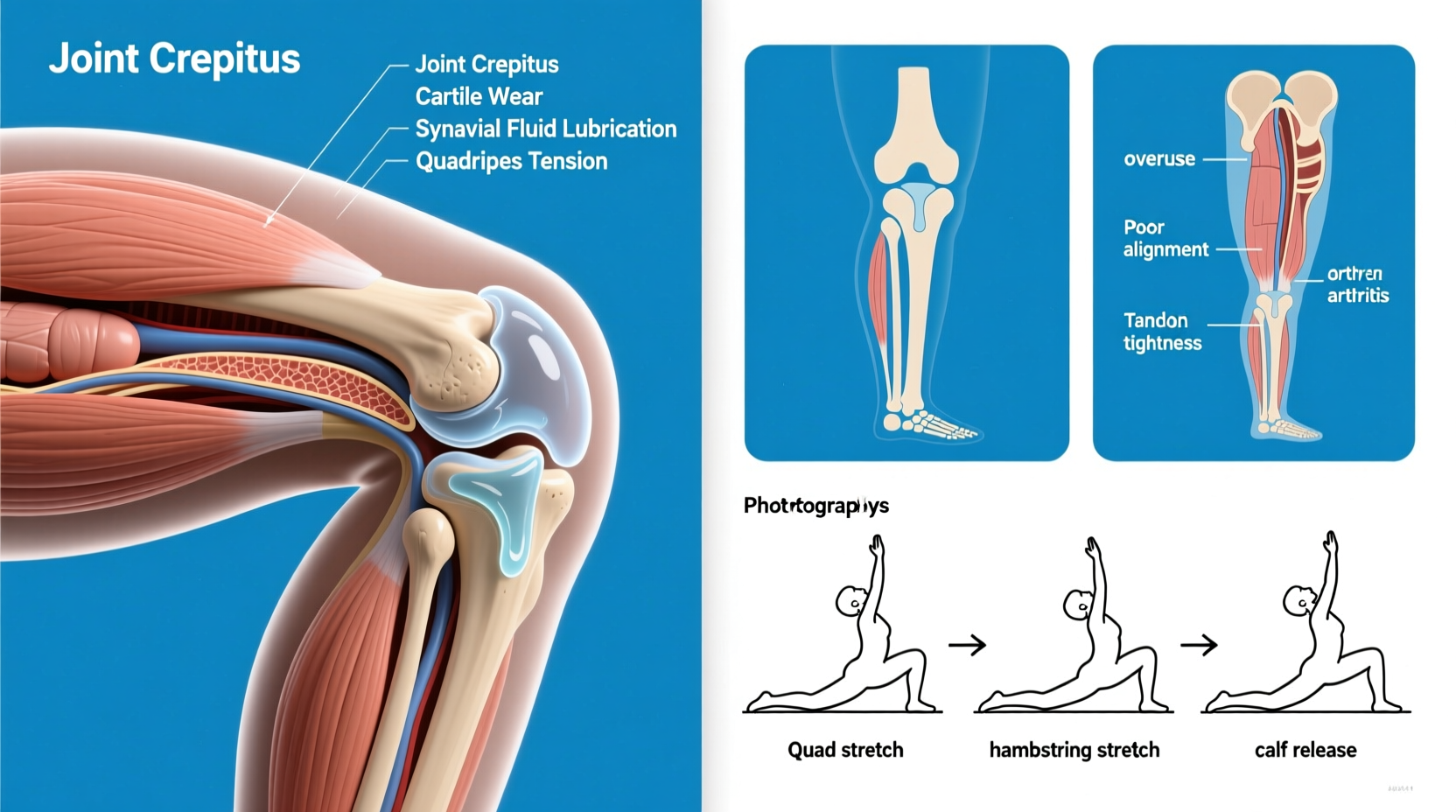
Knee noises are rarely caused by a single factor. Instead, they result from a combination of biomechanical, physiological, and lifestyle influences. The most common explanations include:
- Cavitation: When you move your knee, pressure changes within the synovial fluid (the lubricant inside joints) can cause tiny gas bubbles to form and pop. This is similar to what happens when someone cracks their knuckles. It’s typically painless and not harmful.
- Tendon or ligament snapping: As tendons shift over bony structures during motion, they may momentarily catch and release, producing a snapping sensation or audible pop. This is especially common in individuals with tight hamstrings or iliotibial (IT) bands.
- Cartilage wear or irregularities: Over time, cartilage surfaces can become rough due to age, overuse, or early degenerative changes. As the knee bends, these uneven areas may rub together, creating a grinding or crackling sound—often referred to as “crepitus.”
- Poor tracking of the patella (kneecap): If the kneecap doesn’t glide smoothly in its groove due to muscle imbalances, it can create friction and noise during flexion and extension.
- Previous injury or surgery: Past trauma such as meniscus tears, ligament sprains, or fractures can alter joint mechanics, leading to persistent noises even after healing.
According to Dr. Laura Chen, a sports medicine specialist at Pacific Orthopedics, “The majority of knee pops are mechanical and non-concerning. But if there's pain, swelling, or a feeling of instability, that shifts the conversation from normal variation to potential pathology.”
“Not all joint sounds are created equal. Pain-free crepitus is usually nothing to worry about. But painful clicking, especially with locking or giving way, warrants evaluation.” — Dr. Laura Chen, Sports Medicine Physician
When Should You Be Concerned?
While occasional knee cracking without symptoms is normal, certain red flags suggest the need for professional assessment:
- Pain localized around the kneecap or joint line
- Swelling or warmth in the knee after activity
- Sensation of the knee \"giving out\" or buckling
- Stiffness lasting more than 30 minutes after waking or sitting
- Difficulty fully straightening or bending the knee
- Clicking accompanied by a catching or locking sensation
If any of these symptoms accompany knee cracking, conditions like chondromalacia patellae (softening of kneecap cartilage), meniscal tears, or early osteoarthritis may be involved. In such cases, imaging studies like MRI or X-rays, along with a physical exam, help determine the root cause.
Simple Stretches to Reduce Knee Cracking and Improve Joint Function
Muscle tightness and imbalance are major contributors to abnormal knee mechanics. Tight quadriceps pull the kneecap upward, while tight hamstrings increase posterior tension on the joint. Likewise, restricted hip flexors and weak glutes force the knees to compensate during movements like squats.
The following stretches target key muscle groups that influence knee alignment and movement quality. Performing them daily—especially before and after workouts—can reduce strain on the joint and minimize cracking sounds over time.
1. Standing Quad Stretch
Targets the front of the thigh and helps balance quadriceps-to-hamstring strength.
- Stand near a wall or chair for balance.
- Bend one knee, bringing your heel toward your glute.
- Hold the ankle with your hand and gently pull until you feel a stretch in the front of the thigh.
- Keep your knees close together and avoid arching your back.
- Hold for 30 seconds; repeat 2–3 times per leg.
2. Seated Hamstring Stretch
Loosens tight hamstrings, which can otherwise tug on the knee joint during flexion.
- Sit on the edge of a firm surface, like a bench or chair.
- Extend one leg straight with the heel on the floor.
- Lean forward slightly from the hips, keeping your back straight.
- You should feel a stretch along the back of the thigh.
- Hold for 30 seconds; switch legs. Repeat twice per side.
3. Hip Flexor Lunge Stretch
Addresses tight hip flexors—a common issue from prolonged sitting—that tilt the pelvis and affect squat mechanics.
- Kneel on one knee with the other foot flat in front, forming a 90-degree angle at both knees.
- Gently push your hips forward while keeping your torso upright.
- You should feel a stretch in the front of the hip of the kneeling leg.
- Hold for 30 seconds; switch sides. Perform 2–3 sets.
4. IT Band Foam Roll (Self-Myofascial Release)
Although not a traditional stretch, foam rolling the iliotibial band reduces lateral tension on the knee.
- Lie on your side with a foam roller under the outer thigh of the bottom leg.
- Support your upper body with your forearm and opposite foot.
- Slowly roll from just above the knee to below the hip.
- Pause on tender spots for 10–15 seconds.
- Spend 1–2 minutes per side.
5. Calf Stretch Against Wall
Tight calves contribute to altered foot and knee positioning during squats.
- Face a wall and place both hands on it at shoulder height.
- Step one foot back, pressing the heel into the ground.
- Bend the front knee while keeping the back leg straight.
- Lean forward until you feel a stretch in the calf of the back leg.
- Hold 30 seconds; switch legs. Repeat twice.
Do’s and Don’ts for Healthy Knees During Squats
| Do’s | Don’ts |
|---|---|
| Do maintain proper squat form: Keep your chest up, back neutral, and knees aligned with toes. | Don’t let your knees cave inward: This increases stress on ligaments and cartilage. |
| Do strengthen glutes and core: Strong stabilizers improve knee alignment. | Don’t overload too soon: Adding heavy weight before mastering form worsens joint strain. |
| Do warm up before squatting: Light cardio and dynamic stretches prepare joints. | Don’t ignore pain: Pushing through discomfort risks injury. |
| Do stretch regularly: Daily flexibility work supports smooth joint motion. | Don’t skip recovery days: Joints need time to adapt and repair. |
Real Example: How One Runner Reduced Knee Popping
Mark, a 34-year-old recreational runner and gym-goer, began noticing loud cracking in both knees whenever he performed bodyweight squats or descended stairs. There was no pain, but the sound worried him. After reading online forums, he feared early arthritis.
He consulted a physical therapist who assessed his movement patterns. The evaluation revealed tight hip flexors, weak gluteus medius muscles, and limited ankle dorsiflexion—all contributing to poor knee alignment during squatting motions.
Over six weeks, Mark followed a routine including the stretches outlined above, plus targeted strengthening exercises like clamshells and banded lateral walks. He also modified his squat depth and focused on controlled tempo.
By week eight, the knee cracking had diminished significantly. More importantly, his overall squat form improved, and he reported greater confidence in his workouts. His case illustrates how addressing muscular imbalances—not just the symptom—leads to lasting results.
Step-by-Step Plan to Address Knee Cracking
Follow this structured approach over 4–6 weeks to assess, correct, and prevent excessive knee noise:
- Week 1: Assess and Record
Notice when and how your knees crack. Note whether it’s painful, occurs at certain angles, or follows specific activities. Take note of any swelling or stiffness. - Week 2–3: Begin Stretching Routine
Perform the five stretches listed above daily, ideally post-workout or after a warm shower. Focus on consistency, not intensity. - Week 4: Add Strengthening Exercises
Incorporate glute bridges, step-ups, and bodyweight squats with perfect form. Use a mirror to monitor knee alignment. - Week 5–6: Refine Movement Patterns
Practice squatting slowly, focusing on hip hinge mechanics and knee tracking. Consider filming yourself to spot deviations. - Ongoing: Monitor Progress
Reassess every two weeks. If improvement stalls or pain develops, consult a physical therapist.
Frequently Asked Questions
Is knee cracking during squats dangerous?
No, not necessarily. Most knee noises are painless and caused by harmless gas release or soft tissue movement. However, if cracking is accompanied by pain, swelling, or instability, it could indicate an underlying issue requiring medical attention.
Can stretching really stop my knees from cracking?
Stretching alone won’t eliminate all joint noise, but it addresses common contributors like muscle tightness and poor alignment. Combined with strengthening and proper movement technique, regular stretching can significantly reduce unwanted sounds and improve joint function.
Should I stop squatting if my knees crack?
Not unless you experience pain or dysfunction. Avoiding movement leads to stiffness and weakness, which can worsen joint health. Instead, focus on improving form, mobility, and muscular balance. Modify depth or load if needed, but don’t abandon the exercise entirely.
Take Control of Your Knee Health Today
Knee cracking during squats is more common than most people realize—and in most cases, completely normal. But dismissing it outright means missing opportunities to optimize joint longevity and performance. By understanding the causes, recognizing warning signs, and applying targeted stretches and corrective strategies, you can move with greater confidence and comfort.
Your knees carry you through life—one step, lunge, and squat at a time. Treat them with care, listen to what they’re telling you, and take proactive steps now to ensure they remain strong and functional for years to come.




 浙公网安备
33010002000092号
浙公网安备
33010002000092号 浙B2-20120091-4
Comments
No comments yet. Why don't you start the discussion?