
It’s a familiar sound—pop, crack, or grind—as you lower into a squat. For many, knee noise is just an odd bodily quirk. But when that cracking becomes frequent or painful, questions arise: Is this normal? Could it signal damage? Should I stop squatting altogether?
Knee crepitus—the medical term for joint noises—is surprisingly common. Research suggests over 90% of people experience some form of joint popping during movement, especially in the knees. While often harmless, certain symptoms can indicate underlying issues. Understanding the causes, distinguishing between benign and concerning signs, and knowing how to support long-term joint health are essential for staying active and pain-free.
The Science Behind Knee Cracking
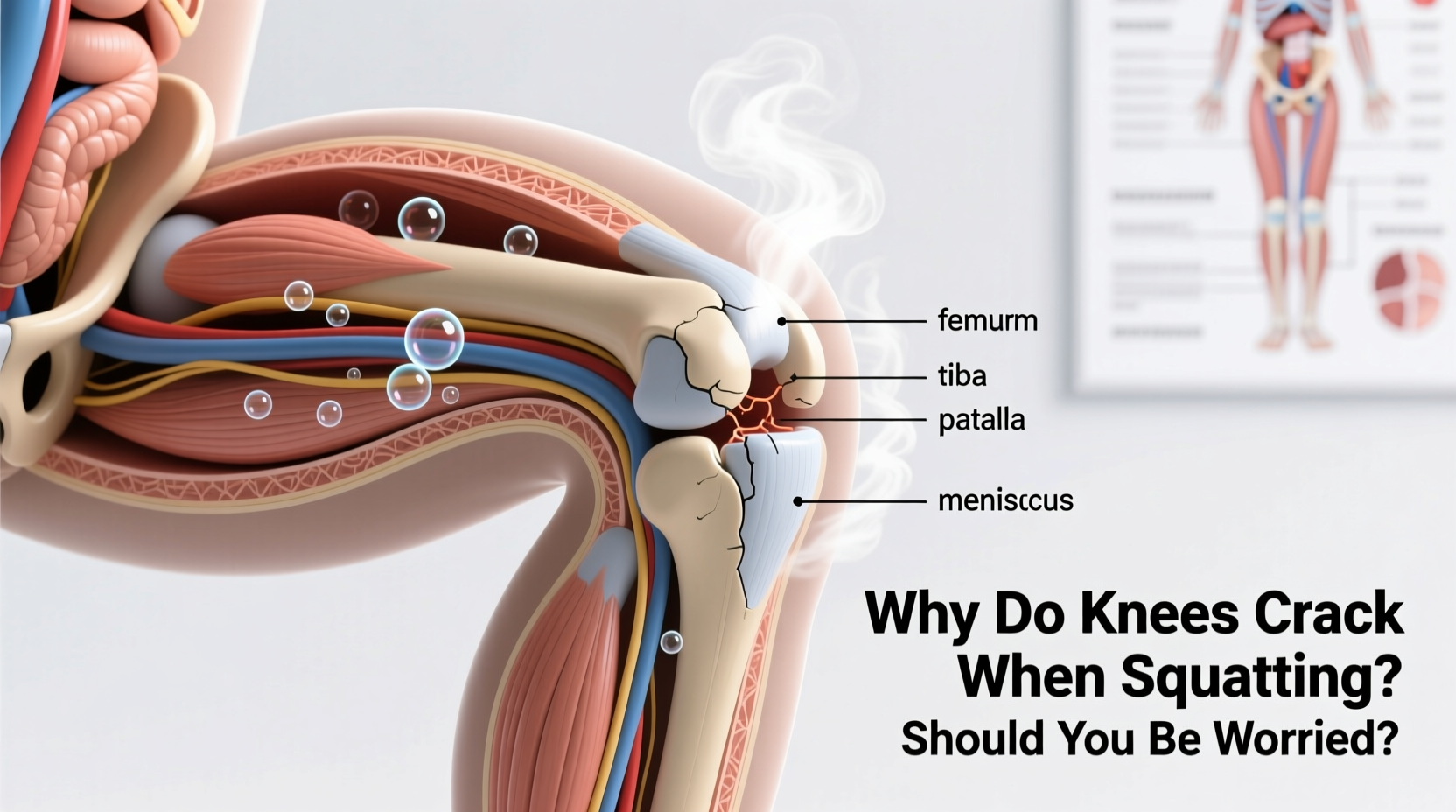
The sound of cracking knees isn’t magic—it’s physics and biology working together. When you squat, pressure changes within the joint cause gases dissolved in synovial fluid (the lubricant inside your joints) to form tiny bubbles. These bubbles can rapidly collapse or pop, producing the familiar cracking or popping noise. This process, known as cavitation, is the same mechanism behind knuckle cracking.
In addition to gas release, other mechanical factors contribute to knee sounds:
- Tendon or ligament movement: As tendons shift over bony structures during motion, they may snap or flick, creating a clicking sound.
- Cartilage wear: Over time, cartilage surfaces may become rougher, leading to grinding sensations or sounds, particularly in older adults or those with joint stress.
- Joint surface irregularities: Minor imperfections on the kneecap (patella) or femoral groove can cause intermittent catching and noise during flexion.
Most of these processes are painless and not inherently dangerous. In fact, a 2015 study published in the Journal of the American Osteopathic Association found no link between habitual knuckle cracking and arthritis. Similar principles apply to the knees—noise alone does not equal damage.
When Cracking Becomes a Concern
Not all knee noise is created equal. The key differentiator between harmless crepitus and potential pathology is the presence of symptoms beyond sound. Pain, swelling, instability, or reduced range of motion are red flags that warrant further evaluation.
Consider the following warning signs:
- Pain during or after squatting
- Swelling around the knee joint
- Sensation of the knee “giving way”
- Stiffness lasting more than 30 minutes after activity
- Increasing frequency or intensity of noise over time
If any of these accompany knee cracking, the issue may extend beyond simple gas release. Possible conditions include:
- Patellofemoral Pain Syndrome (PFPS): Often called \"runner’s knee,\" this involves irritation under or around the kneecap due to misalignment or muscle imbalance.
- Chondromalacia Patellae: Softening or breakdown of cartilage beneath the patella, commonly causing grinding sensations with movement.
- Osteoarthritis: Degeneration of joint cartilage, typically seen in older adults or those with prior injury, often presenting with stiffness, swelling, and persistent crepitus.
- Meniscus Tears: Damage to the shock-absorbing cartilage in the knee, which may produce clicking or locking sensations.
“Joint noise without pain is usually nothing to fear. But if there's discomfort or functional limitation, it’s worth getting assessed by a physical therapist or orthopedic specialist.” — Dr. Rebecca Lang, Sports Medicine Physician
Do’s and Don’ts: Managing Knee Health During Squats
Whether you're lifting weights, doing bodyweight squats, or simply lowering yourself to sit, how you move matters. Poor mechanics increase stress on the knee joint, potentially accelerating wear or triggering inflammation.
| Do’s | Don’ts |
|---|---|
| Maintain neutral spine and heel engagement | Allow knees to cave inward (valgus collapse) |
| Keep toes aligned with knees during descent | Force depth beyond comfortable range |
| Engage glutes and hamstrings to distribute load | Squat through sharp or localized pain |
| Warm up with dynamic stretches before loading | Ignore asymmetries between left and right leg |
| Progress gradually in weight and volume | Use momentum or bounce at the bottom |
Proper squat technique reduces strain on the patellofemoral joint and ensures forces are distributed across hips, knees, and ankles. A well-executed squat should feel stable and controlled—not like a joint negotiation.
Real Example: From Fear to Function
Mark, a 34-year-old office worker, began noticing loud cracking in both knees whenever he stood from his desk or performed air squats at the gym. Initially unconcerned, he grew anxious when mild soreness started appearing after workouts. Fearing early arthritis, he nearly stopped all lower-body training.
After consulting a physical therapist, Mark learned his cracking was primarily due to tight iliotibial (IT) bands and weak glute medius muscles, causing his knees to drift inward during movement. His joint structure was healthy, but poor biomechanics were increasing friction under the kneecap.
Over eight weeks, Mark followed a targeted program including hip strengthening, soft tissue work, and movement retraining. The cracking didn’t disappear completely—but it became less frequent, and the pain vanished. Today, he deadlifts and squats heavier than ever, with greater confidence in his joint resilience.
His story illustrates a crucial point: symptoms often stem from modifiable factors like strength imbalances or movement patterns, not irreversible degeneration.
Step-by-Step Guide to Assessing and Improving Knee Joint Health
If you’re hearing cracks and wondering what to do next, follow this practical sequence to evaluate and enhance your knee function:
- Monitor Symptoms Objectively: Track when cracking occurs, whether it’s painful, and if any swelling or stiffness follows. Use a journal or notes app for consistency.
- Perform a Self-Movement Screen: Stand in front of a mirror and perform 5 slow bodyweight squats. Watch for:
- Knees caving inward
- Excessive forward lean
- Asymmetrical depth or wobbling
- Test Strength & Mobility:
- Can you hold a single-leg squat (pistol squat) for 5 seconds without pain?
- Do you feel tightness in hips, calves, or quads when descending?
- Is there noticeable weakness in glutes or hamstrings?
- Begin Corrective Exercises: Incorporate daily drills such as:
- Clamshells (3 sets of 15 per side) – targets glute medius
- Banded lateral walks (2 sets of 10 steps each way) – improves hip control
- Heel-elevated squats (3 sets of 8–10 reps) – reduces knee shear while building confidence
- Consult a Professional if Needed: If pain persists beyond 2–3 weeks despite corrective efforts, seek assessment from a physical therapist. Imaging is rarely needed initially; movement analysis often reveals the root cause.
Prevention Checklist: Protect Your Knees Long-Term
Maintaining healthy knees isn’t about avoiding movement—it’s about moving well. Use this checklist to build sustainable joint resilience:
☐ Perform warm-up drills before lower-body workouts
☐ Strengthen glutes and hip abductors twice weekly
☐ Stretch quads, hamstrings, and calves regularly
☐ Avoid prolonged sitting without movement breaks
☐ Maintain healthy body weight to reduce joint load
☐ Progress squat depth and load gradually
☐ Wear supportive footwear during high-repetition activities
Frequently Asked Questions
Is it bad to crack your knees on purpose?
No evidence suggests that intentionally cracking your knees causes harm, provided it’s pain-free. However, repeatedly forcing joint manipulation isn’t recommended, as it may irritate surrounding tissues over time. Natural movement is preferable to deliberate popping.
Can knee crepitus go away?
Yes—especially when caused by muscular imbalances or poor tracking of the kneecap. With targeted strengthening, improved flexibility, and better movement habits, many people report reduced or eliminated knee noise within weeks to months.
Should I stop squatting if my knees crack?
Not necessarily. If cracking is painless and doesn’t limit function, continuing to squat—with proper form—is beneficial. Squatting helps maintain joint mobility, strengthens supporting muscles, and promotes healthy cartilage nutrition. Only halt activity if pain, swelling, or instability develops.
Conclusion: Listen to Your Body, Not Just the Sounds
Knee cracking during squatting is overwhelmingly normal. Joints make noise for a variety of mechanical and physiological reasons, most of which pose no threat to long-term health. What matters most isn't the sound—it's how your knee feels and functions.
Instead of fearing every pop or grind, focus on building strength, improving alignment, and moving with control. Address discomfort early, correct imbalances proactively, and trust that resilient joints come from consistent, intelligent use—not avoidance.




 浙公网安备
33010002000092号
浙公网安备
33010002000092号 浙B2-20120091-4
Comments
No comments yet. Why don't you start the discussion?