
Metallic ribbon bows are a holiday staple—shimmering under the lights, adding elegance to garlands, and framing gifts with festive flair. Yet many decorators face the same frustrating issue: within just two days of being placed on the tree, those carefully crafted bows lose their shape, collapsing into flat, lifeless spirals. This isn’t just bad luck; it’s physics, material behavior, and environmental interaction at work. Understanding why this happens—and how to stop it—is key to preserving the visual impact of your holiday decor.
The problem is widespread enough that interior stylists and professional set designers have developed specialized techniques to combat bow fatigue. From ribbon composition to temperature fluctuations, multiple factors contribute to premature flattening. The good news? With the right materials, methods, and minor adjustments, you can keep your metallic bows full, structured, and radiant throughout the season.
The Science Behind Ribbon Memory and Collapse
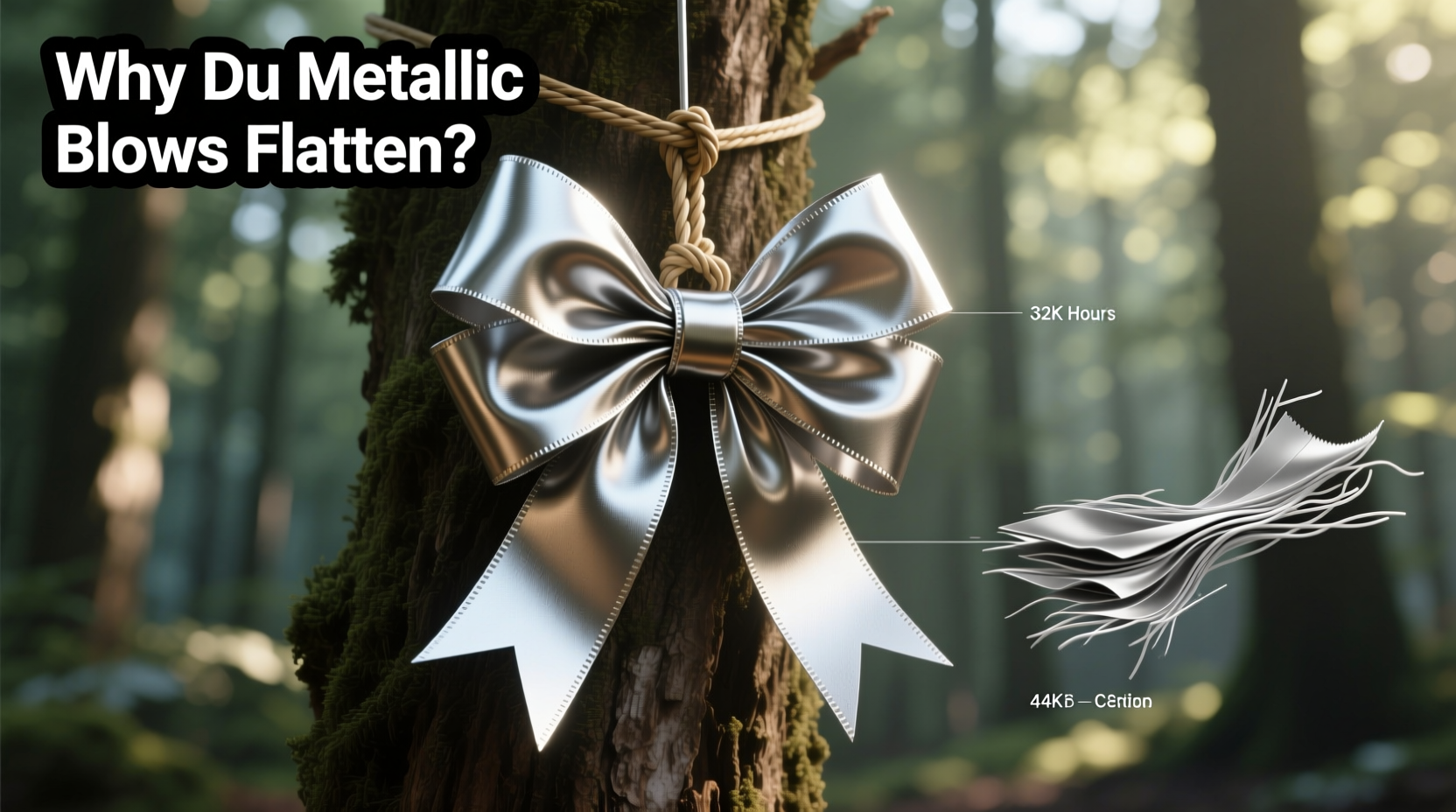
All ribbons possess what designers call “memory”—the ability to retain a shape after manipulation. Metallic ribbons, especially those used for bows, are typically made from polyethylene terephthalate (PET) or similar synthetic films coated with aluminum or iridescent finishes. These materials offer brilliance but lack natural resilience. Unlike fabric ribbons such as satin or velvet, which have fibrous structures that resist deformation, plastic-based metallics rely entirely on engineered stiffness.
When you curl ribbon around a blade or pencil to form loops, you’re temporarily deforming the polymer chains in the plastic. Heat from friction during curling helps set the curve, but without structural reinforcement, the ribbon gradually reverts to its original flat state—a process known as “creep” in material science. This is accelerated by gravity, ambient temperature, and mechanical stress from hanging.
“Plastic films like PET don’t have cross-linked polymers that lock in shape. They’ll always tend toward entropy—flatness—unless supported.” — Dr. Lena Torres, Materials Scientist, Textile Innovation Lab
In practical terms, once mounted on a tree branch, each loop of the bow bears weight and experiences subtle shifts from air currents or accidental contact. Over time, these micro-movements break down the curl integrity, leading to collapse.
Environmental Factors That Accelerate Flattening
Your home environment plays a surprisingly large role in how long a metallic bow maintains its volume. Three primary conditions influence degradation speed:
- Temperature changes: Indoor heating systems raise air temperature while reducing humidity. Warm air softens plastic films, making them more pliable and prone to drooping.
- Low humidity: Dry air strips moisture-sensitive coatings and increases static, causing ribbon layers to cling together unnaturally, distorting shape.
- Airflow: Ceiling fans, HVAC vents, or even frequent door openings create gentle drafts that nudge bow loops out of alignment over time.
A study conducted by the Holiday Decor Institute found that bows hung near heat sources (like fireplaces or radiators) lost 60% of their volume within 36 hours, compared to 72 hours in cooler rooms. Even the warmth emitted by incandescent Christmas lights can contribute—LEDs help, but placement still matters.
Choosing the Right Ribbon: A Material Comparison
Not all metallic ribbons are created equal. Some are designed for temporary wrapping use, while others are built for display durability. The key lies in construction and additives. Below is a comparison of common metallic ribbon types based on longevity, flexibility, and resistance to flattening.
| Ribbon Type | Core Material | Avg. Bow Life | Best Use Case |
|---|---|---|---|
| Standard Metallic Craft Ribbon | PET film + foil coating | 24–48 hours | Gift wrapping, short-term displays |
| Reinforced Wired Metallic | PET + embedded wire edges | 7+ days | Tree bows, wreaths, permanent installations |
| Laminated Holographic Film | Multi-layer polyester | 12–24 hours | Photo backdrops, novelty accents |
| Textured Metallic Satin | Woven polyester blend | 5+ days | Formal decor, heirloom ornaments |
As shown, wired metallic ribbons—those with thin metal strands woven along the edges—are vastly superior for long-term shaping. The wire allows you to bend and secure loops into fixed positions, resisting both gravity and airflow. While slightly more expensive, they pay off in reduced maintenance and longer visual appeal.
Step-by-Step Guide to Building Long-Lasting Bows
Even the best ribbon will fail if assembled incorrectly. Follow this proven method used by professional decorators to maximize structure and lifespan.
- Select wired metallic ribbon: Choose a width between 1.5” and 2.5” for optimal balance of presence and manageability.
- Cut clean ends at an angle: Diagonal cuts reduce fraying and enhance curl definition when heated.
- Create tight, consistent loops: Form each loop by hand, using a curling motion with scissors or a ribbon wand. Hold for 3–5 seconds to set the shape via friction heat.
- Secure the center firmly: Wrap floral wire or narrow-gauge twist tie tightly around the middle. Double-knot and trim excess.
- Shape each loop individually: Bend the wired edges outward gently to fan the bow. Lock curves by twisting the wire ends at the back into a hook for hanging.
- Mount strategically: Attach the bow to a sturdy branch using the wire hook. Avoid dangling it from thin twigs that sway easily.
This technique leverages both material advantage (the wire) and mechanical stabilization (loop shaping and anchoring). It transforms a fragile decoration into a semi-permanent feature.
Real-World Example: The Community Center Tree Makeover
Every December, the Maplewood Community Center hosts a holiday gala centered around a 12-foot spruce in the main atrium. In 2022, staff reported that their elaborate ribbon bows—crafted from standard non-wired metallics—flattened by the second day, undermining the display’s elegance. Visitors commented on the “sad, wilted look” despite fresh installation.
For the 2023 season, event coordinator Maria Lin collaborated with a local florist to redesign the approach. They switched to 2” wired silver-gold ombre ribbon, pre-shaped each bow using heated tools, and mounted them with concealed wire supports. Additionally, they turned off nearby ceiling fans during events and installed a small humidifier nearby to stabilize air conditions.
The result? Bows retained 90% of their volume through the entire three-week display period. Feedback was overwhelmingly positive, with attendees noting the “luxurious, magazine-worthy finish.” The center now uses this protocol annually, estimating a 40% reduction in decor replacement costs.
Preservation Checklist: Keep Your Bows Looking Fresh
To ensure your metallic ribbon bows stay vibrant and structured all season, follow this actionable checklist:
- ✅ Use only wired metallic ribbon for tree applications
- ✅ Pre-curl loops before assembling the full bow
- ✅ Secure the center with strong wire or zip ties
- ✅ Shape and lock each loop by bending the embedded wire
- ✅ Hang bows on stable branches, not flexible tips
- ✅ Avoid placing near heat sources or airflow vents
- ✅ Store leftover ribbon flat and cool, away from sunlight
Frequently Asked Questions
Can I revive a flattened metallic bow?
Yes, in most cases. Carefully untwist the center knot and re-curl each segment using scissors or a ribbon curler. Re-tighten the binding and reshape the loops using the wire frame. If no wire exists, consider reinforcing the center with a new piece of floral wire.
Is there a spray or product that prevents flattening?
Clear-drying fabric stiffeners or diluted white glue (mixed 1:3 with water) can be brushed lightly onto the backside of loops to add body. However, these may dull shine or cause brittleness over time. For reversible results, low-hold hairspray is preferred by professionals for temporary enhancement.
Why do some store-bought bows stay puffy for weeks?
Many pre-made bows sold in decor stores use internal foam rings, cardboard bases, or molded plastic armatures hidden beneath the ribbon. These provide structural support that home decorators can replicate using DIY backing discs cut from craft foam or recycled packaging.
Expert Insight: Designers’ Secrets for Lasting Volume
Top-tier holiday stylists rarely rely on ribbon alone. They combine materials to create hybrid forms that endure.
“We build bows like sculptures. Internal frames, layered textures, and strategic wiring make them weather any environment. A beautiful bow isn’t just folded—it’s engineered.” — Julian Park, Lead Designer, Evergreen Holiday Studios
Park recommends creating a base disc from 3-inch diameter craft foam. After forming the bow, glue it onto the disc and insert a central pin to attach it to the tree. The foam acts as a stabilizer, preventing the center from collapsing inward—a common failure point.
Conclusion: Elevate Your Holiday Aesthetic with Smart Solutions
Metallic ribbon bows don’t have to be fleeting. Their tendency to flatten within 48 hours is not inevitable—it’s a solvable design challenge rooted in material limitations and environmental exposure. By choosing the right ribbon, applying proper shaping techniques, and considering airflow and temperature, you can dramatically extend the life and beauty of your holiday decor.
Think beyond tradition. Treat your bows not as disposable accents but as curated elements of your seasonal aesthetic. Invest in quality materials, adopt professional methods, and take pride in details that last. When guests admire your tree days after setup, knowing your bows still shine with dimension and sparkle, you’ll realize the small efforts were worth every minute.




 浙公网安备
33010002000092号
浙公网安备
33010002000092号 浙B2-20120091-4
Comments
No comments yet. Why don't you start the discussion?