
There’s something uniquely satisfying about breaking in a new pair of leather boots—the crisp look, the sturdy feel, the confidence they bring with every step. But that satisfaction can vanish the moment you hear it: a high-pitched squeak with each footfall. Whether you're walking across a quiet office floor or strolling through a silent hallway, that sound draws attention you didn’t ask for. The good news? Squeaky leather boots are a common issue—and one that’s almost always fixable, often within minutes.
The root cause isn’t a defect in craftsmanship or a sign your boots are failing. Instead, it’s usually due to friction, moisture, or internal components rubbing where they shouldn’t. Understanding *why* this happens is the first step toward silencing the squeak—permanently.
Why New Leather Boots Squeak: The Science Behind the Sound
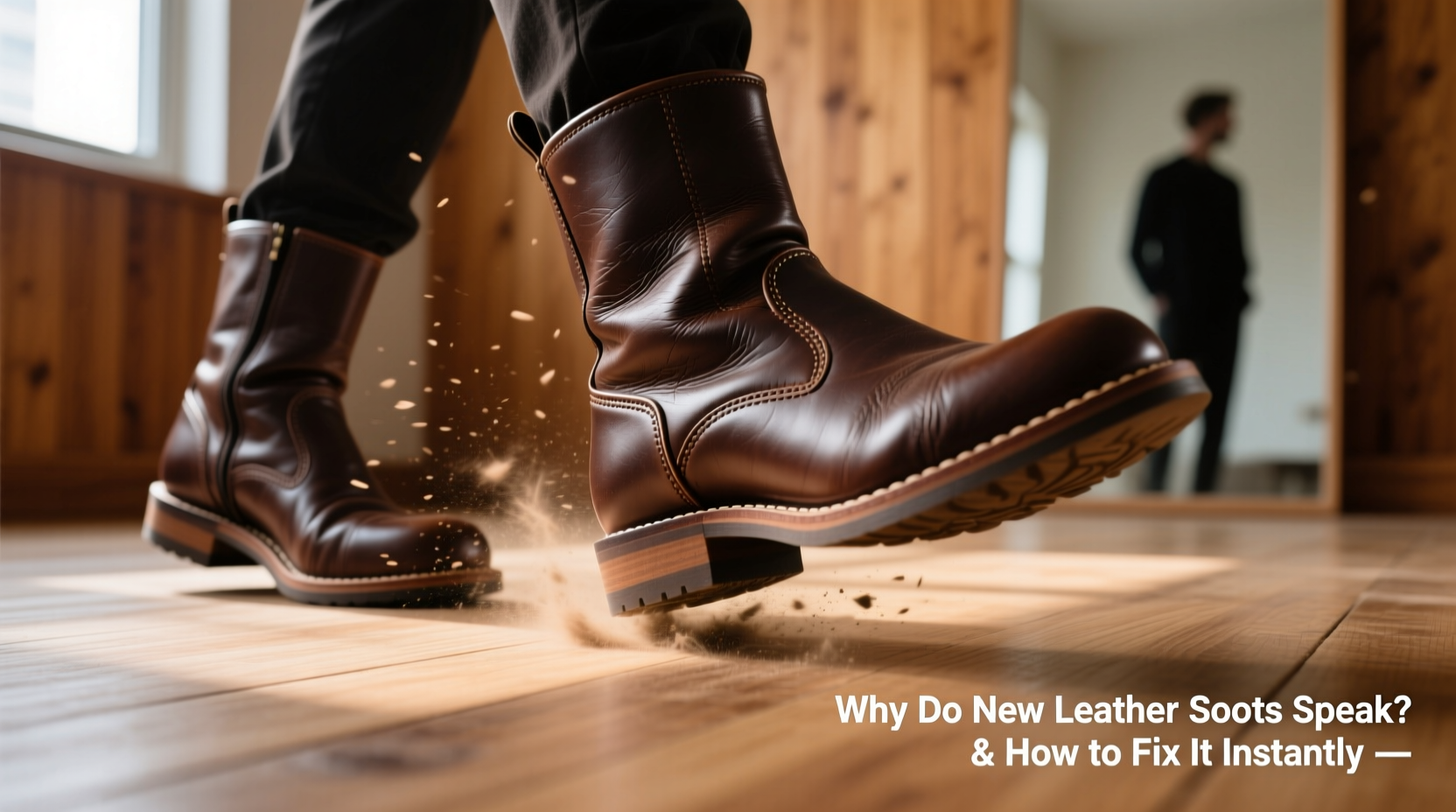
Squeaking in new leather boots typically stems from one or more mechanical or material interactions inside the shoe. Unlike older boots that may creak due to drying leather, new boots squeak because of construction dynamics. Here are the most common culprits:
- Foam padding or insoles rubbing against the midsole or outsole – Many modern boots use layered cushioning systems. When these layers shift slightly during movement, they create friction that produces sound.
- Dry leather fibers rubbing together – Even though the leather appears smooth, microscopic ridges on the surface can generate noise when flexed repeatedly.
- Metal shanks or stabilizers making contact with other materials – Some boots include steel or composite shanks for arch support. If not properly insulated, they can rub against surrounding materials.
- Moisture trapped between layers – Sweat, humidity, or damp conditions can cause slight swelling and increased friction between boot components.
- Loose stitching or internal linings shifting – In rare cases, poorly secured interior fabric moves as you walk, creating a fluttering or squeaking noise.
It's important to note that squeaks aren't necessarily a sign of poor quality. High-end work boots, fashion oxfords, and even designer ankle boots can develop this issue due to complex layering and tight manufacturing tolerances.
“Squeaking in new leather footwear is more common than people realize. It’s often just physics meeting design under pressure.” — Daniel Reeves, Footwear Engineer & Product Developer
Instant Fixes: How to Stop the Squeak in Under 10 Minutes
If you need silence fast—before a job interview, an evening event, or a long commute—these immediate solutions can help eliminate the squeak without waiting days for treatments to settle in.
1. Apply Talcum Powder Inside the Boot
Pour a small amount (about a teaspoon) of talcum powder or cornstarch into the boot. Insert your foot and walk around for 2–3 minutes. The powder reduces friction between the insole and midsole by absorbing moisture and lubricating contact points.
2. Rub a Dry Bar of Soap on the Insole Edges
Lift the insole if removable. Run a dry bar of glycerin soap along the underside and edges. Replace the insole and test-walk. Soap acts as a dry lubricant and neutralizes static buildup that contributes to squeaking.
3. Place a Piece of Paper Under the Insole
Insert a single sheet of printer paper beneath the insole. This creates a micro-thin buffer that stops direct contact between moving layers. Works best for boots where the insole shifts slightly during gait.
4. Tap the Heel Gently with a Rubber Mallet
If the squeak originates near the heel, it might be due to a loose outsole attachment. Place the boot on a soft surface and gently tap the heel counter with a rubber mallet or hammer wrapped in cloth. This can reseat components and eliminate vibration-induced noise.
Long-Term Solutions: Prevent Squeaking Before It Starts
While instant fixes offer relief, lasting results require addressing the underlying cause. These strategies go beyond temporary patches and help ensure your boots stay quiet for months—or years.
Condition the Leather Properly
New leather is often stiff and dry. Over time, lack of conditioning leads to increased internal stress and noise. Use a high-quality leather conditioner (like Lexol or Bick 4) every 4–6 weeks. Apply evenly with a soft cloth, focusing on flex zones like the ball of the foot and ankle collar.
Add a Cushioned Insole
Replace the stock insole with a memory foam or gel insert. Not only does this improve comfort, but it also fills gaps that allow movement between layers. Look for insoles with anti-friction coatings.
Seal Stitching and Seams with Flex Sealant
If the squeak seems to come from the upper, apply a flexible fabric sealant (such as Shoe Goo or Gear Aid Seam Grip) along internal seams. Let dry for 24 hours. This stabilizes moving parts without compromising breathability.
Store Boots with Cedar Shoe Trees
Cedar helps regulate moisture and maintains shape. Consistent use prevents warping and shifting of internal components that lead to noise over time.
Step-by-Step Guide: Diagnose and Silence Your Squeaky Boots
Follow this systematic approach to identify the source of the squeak and apply the correct fix.
- Locate the Source: Walk slowly on different surfaces (carpet, tile, wood). Note whether the sound changes. A consistent pitch suggests internal friction; a variable tone may indicate sole separation.
- Remove the Insole: Check for wear marks or moisture. Wipe dry and inspect for warping.
- Apply Talcum Powder: Sprinkle inside the boot cavity. Reinsert insole and walk for 5 minutes. If the squeak stops, the issue was friction-related.
- Test with Added Padding: Place a folded tissue or thin cloth under the insole. If the noise disappears, consider replacing the insole permanently.
- Examine the Outsole: Press firmly on the heel and forefoot. Listen for cracking sounds or movement. If detected, the sole may need professional resoling.
- Condition the Leather: After cleaning, apply leather conditioner. Allow 24 hours to absorb before wearing again.
- Reassess After 24 Hours: Wear the boots normally. If squeaking persists, repeat steps or try alternative methods below.
Do’s and Don’ts: What to Avoid When Fixing Squeaky Boots
| Do’s | Don’ts |
|---|---|
| Use talc or cornstarch to reduce friction | Use WD-40 or oil-based lubricants—these degrade adhesives |
| Condition leather every 4–6 weeks | Over-apply conditioner—it can soften structural layers |
| Tap heels gently to reseat soles | Soak boots in water to “soften” them—this damages glue and stitching |
| Use cedar shoe trees for storage | Store boots in direct sunlight or humid basements |
| Replace worn insoles with padded alternatives | Ignore persistent squeaks—they may signal deeper structural issues |
Real-World Example: Fixing a Squeaky Work Boot
Mark, a warehouse supervisor in Denver, bought a new pair of premium steel-toe leather boots for his daily rounds. Within two days, he noticed a sharp squeak every time he stepped on the concrete floor. Embarrassed during team meetings, he tried wiping the soles and drying them thoroughly—but the sound persisted.
Following the diagnostic steps above, he removed the insole and found fine white powder residue—signs of friction. He applied talcum powder liberally, inserted a spare gel insole, and conditioned the exterior leather. The squeak vanished after 10 minutes of walking. Three months later, with regular maintenance, the boots remain completely silent.
This case illustrates how a combination of quick diagnosis and simple interventions can resolve what feels like a major annoyance.
Expert Tips for Maintaining Silent, Long-Lasting Boots
Prevention is always better than repair. Incorporate these habits into your routine to keep future pairs quiet from day one.
- Break in boots gradually: Wear them for short periods initially to allow materials to adjust without stress.
- Avoid extreme temperature shifts: Going from freezing outdoors to heated indoors causes expansion and contraction, increasing internal movement.
- Rotate your footwear: Give boots at least 24 hours of rest between wears to let moisture escape and components settle.
- Inspect new boots before first use: Press on all areas to check for looseness. Address minor issues early.
“The best way to avoid squeaks is to treat your boots like precision instruments. Small adjustments make a huge difference in performance.” — Lena Torres, Master Cobbler & Footwear Conservator
Frequently Asked Questions
Can I use baby wipes to clean inside squeaky boots?
No. Most baby wipes contain alcohol and fragrances that can dry out leather and break down adhesives over time. Use a slightly damp microfiber cloth with distilled water instead, followed by thorough air drying.
Will the squeak go away on its own?
Sometimes. As boots break in, materials compress and conform, reducing movement. However, if the squeak is due to trapped moisture or improper fit, it may worsen without intervention. Don’t rely on time alone.
Is a squeaky boot a sign of poor quality?
Not necessarily. Even well-made boots can squeak due to design choices, such as dual-density midsoles or ventilated linings. Quality is determined by durability and construction integrity—not the absence of initial noise.
Conclusion: Silence Starts Today
Your new leather boots don’t have to come with an unwanted soundtrack. With a clear understanding of the causes and a few smart techniques, you can stop the squeak instantly and prevent it from returning. Whether you choose a quick dusting of powder or a deeper conditioning routine, the solution is within reach—and likely already in your home.
Treat your boots with care, listen to what they’re telling you, and respond with precision. A quiet stride isn’t just comfortable—it reflects confidence, attention to detail, and respect for craftsmanship.




 浙公网安备
33010002000092号
浙公网安备
33010002000092号 浙B2-20120091-4
Comments
No comments yet. Why don't you start the discussion?