
Seeing your houseplants wilt immediately after watering can be confusing—and disheartening. You’ve just given them what they need, so why are their leaves sagging? Contrary to intuition, the issue isn’t underwatering; it’s often the opposite. Overwatering is the most common cause of plant drooping post-watering, and it affects even experienced plant owners. Unlike drought stress, which develops gradually, overwatering can trigger rapid decline by suffocating roots and promoting rot. Understanding the science behind this reaction, recognizing early warning signs, and knowing how to respond can save your plants from irreversible damage.
The Science Behind Drooping After Watering
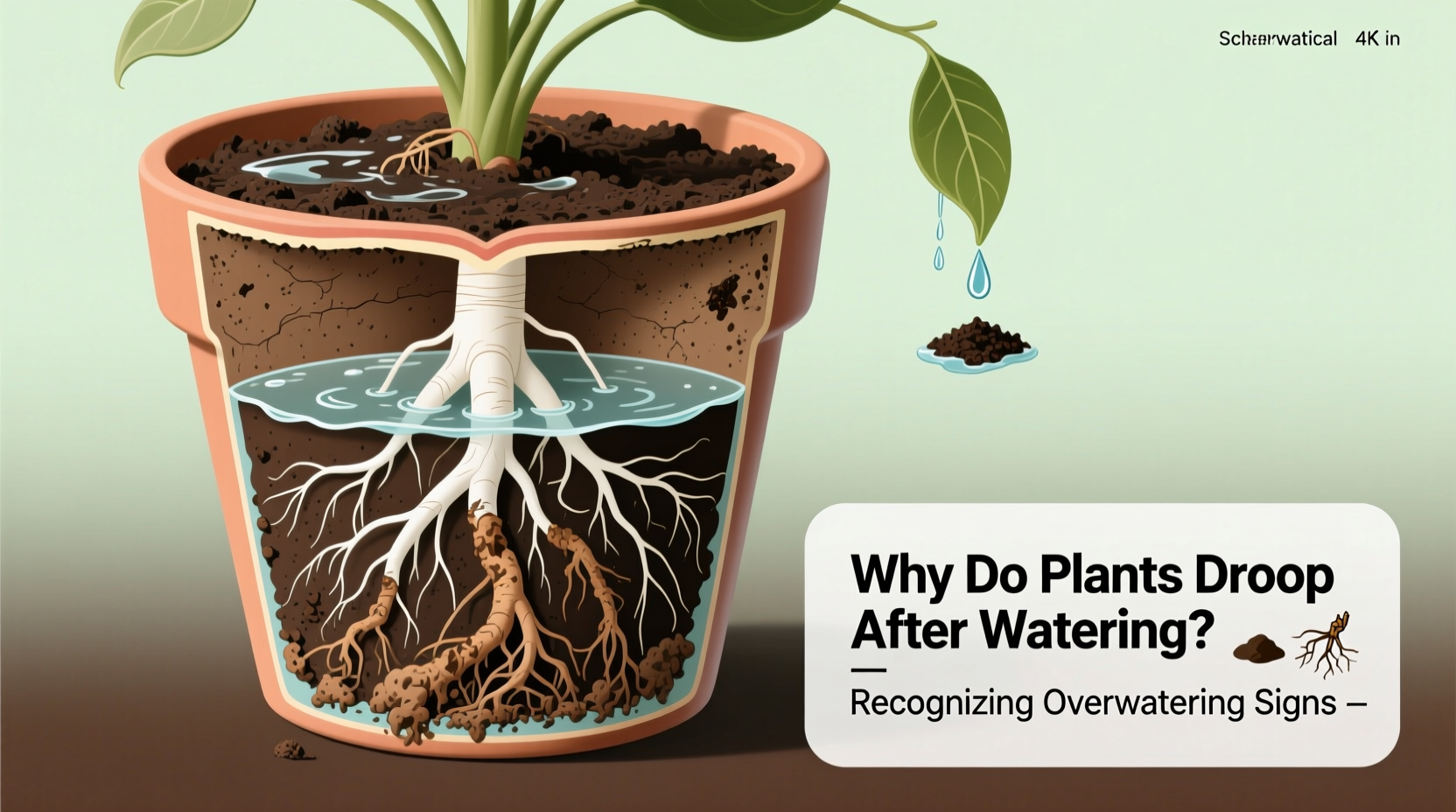
Plants rely on a delicate balance between water uptake and oxygen availability in the root zone. When you water a plant, moisture fills the air pockets in the soil. In well-draining conditions, excess water drains away, allowing air to return. But when soil remains saturated, oxygen is displaced. Roots require oxygen to function—specifically, to absorb water and nutrients. Without it, they begin to suffocate and decay.
This root dysfunction leads to a paradox: the plant is surrounded by water but cannot use it. As root cells die, water transport through the xylem halts. The plant’s upper structure—stems and leaves—loses turgor pressure, resulting in drooping. This condition mimics thirst, misleading many caregivers into watering again, worsening the problem.
Different plants have varying tolerance levels. Succulents and cacti, adapted to arid environments, suffer quickly from over-saturation. Tropical species like pothos or peace lilies are more forgiving but still vulnerable if drainage is poor or watering is frequent.
Key Signs of Overwatering Beyond Drooping
Drooping is often the first visible symptom, but it rarely appears alone. Recognizing accompanying signs helps confirm overwatering as the culprit:
- Yellowing leaves, especially lower ones, that feel soft rather than crisp.
- Mushy, dark stems or bases, indicating stem rot.
- Foul odor from soil, caused by anaerobic bacteria thriving in waterlogged conditions.
- Mold or algae on soil surface, signaling excessive moisture and poor airflow.
- Roots that are brown, black, or slimy instead of firm and white.
It’s important to distinguish overwatering from other issues. Underwatered plants also droop, but their soil is dry, leaves become crispy, and recovery is usually quick after watering. Overwatered plants show no improvement—or worsen—after additional water.
“Overwatering doesn’t just drown roots—it creates a breeding ground for pathogens that can kill a plant within days.” — Dr. Lena Torres, Urban Horticulturist, Brooklyn Botanic Garden
Common Causes of Post-Watering Drooping
Several factors contribute to overwatering, even with good intentions. Identifying these can help prevent future incidents:
- Poor drainage: Pots without drainage holes trap water at the bottom, creating a reservoir that roots sit in.
- Heavy soil mix: Garden soil or dense potting mixes retain too much moisture for indoor plants.
- Incorrect pot size: Oversized pots hold excess soil that stays wet long after watering.
- Watering on a schedule: Ignoring actual plant needs in favor of a fixed routine leads to overwatering during cooler months or low-light periods.
- Low light or poor ventilation: These slow evaporation and transpiration, extending soil wetness.
A real-world example illustrates this: A client brought in a fiddle-leaf fig that drooped two hours after watering. The plant sat in a decorative outer pot with no hole, and the soil remained soggy for over a week. Upon inspection, the roots were blackened and mushy. Despite appearing thirsty, the plant was drowning. After repotting into a porous container with aerated soil and removing damaged roots, it recovered within three weeks.
Do’s and Don’ts of Watering Indoor Plants
| Do’s | Don’ts |
|---|---|
| Use pots with drainage holes | Use containers without drainage |
| Choose fast-draining potting mix (e.g., with perlite or orchid bark) | Use garden soil indoors |
| Check soil moisture before watering | Water on a fixed weekly schedule |
| Empty saucers after 15–30 minutes | Let plants sit in standing water |
| Adjust frequency based on season and light | Assume all plants need the same amount of water |
Step-by-Step Guide to Rescue an Overwatered Plant
If your plant droops shortly after watering and shows other signs of overwatering, act quickly. Follow this timeline to improve its chances:
- Stop watering immediately. Do not add more moisture under any circumstances.
- Remove the plant from its pot. Gently loosen the root ball and inspect roots.
- Trim damaged roots. Use sterilized scissors to cut away any black, brown, or mushy sections. Healthy roots are firm and white or tan.
- Prune affected foliage. Remove yellow or rotting leaves to reduce stress on the plant.
- Repot in fresh, well-draining mix. Use a clean pot with drainage holes. A mix designed for succulents or aroid plants works well for most houseplants.
- Allow time to recover. Place the plant in bright, indirect light. Do not fertilize for at least four weeks.
- Resume cautious watering. Wait until the top 1–2 inches of soil are dry before watering again. For sensitive plants, wait longer.
Recovery may take 10–14 days. New growth or firming leaves indicate progress. If the plant continues to decline, root rot may be too advanced. In such cases, propagate healthy stems or leaves to salvage genetic material.
Prevention Checklist for Healthy Root Systems
Preventing overwatering is simpler than treating it. Use this checklist to maintain optimal moisture levels:
- ✅ Choose pots with adequate drainage holes.
- ✅ Use a gritty, fast-draining potting mix tailored to your plant type.
- ✅ Water only when the top layer of soil feels dry to the touch.
- ✅ Empty outer pots or saucers within 30 minutes of watering.
- ✅ Adjust watering frequency with the seasons—less in winter, more in summer.
- ✅ Rotate plants regularly to ensure even light exposure and drying.
- ✅ Monitor humidity and airflow, especially in bathrooms or kitchens.
- ✅ Label each plant with its preferred watering schedule and light needs.
For added precision, consider using a moisture meter. These inexpensive tools measure moisture at root level, eliminating guesswork. Calibrate them monthly for accuracy.
Frequently Asked Questions
Can a plant recover from overwatering?
Yes, if caught early. Plants with minor root damage often rebound within two to three weeks after corrective repotting and drying. However, if more than half the root system is compromised, survival is unlikely. Focus on propagating healthy parts to preserve the plant.
Why does my plant droop right after I water it?
Immediate drooping after watering typically indicates root dysfunction due to overwatering. Saturated soil prevents oxygen exchange, causing roots to fail in transporting water. The plant wilts despite wet soil—a sign of physiological drought.
How is overwatering different from underwatering?
Underwatered plants have dry, crispy leaves and parched soil. They perk up within hours of watering. Overwatered plants have soft, yellowing leaves, soggy soil, and show no improvement—or worsen—after watering. The key difference lies in soil moisture and root health.
Final Thoughts and Action Steps
Drooping after watering is a red flag, not a death sentence. It’s your plant’s way of signaling distress in the root zone. By understanding the mechanisms behind overwatering—oxygen deprivation, root rot, and impaired water uptake—you gain the insight needed to intervene effectively. The goal isn’t to eliminate watering but to master timing, technique, and environment.
Start today: inspect your plants’ pots, test their soil, and evaluate your routine. Replace dense soil with a porous alternative. Invest in self-draining containers. Most importantly, shift from a calendar-based approach to one guided by observation. Every plant communicates its needs—if you’re willing to listen.




 浙公网安备
33010002000092号
浙公网安备
33010002000092号 浙B2-20120091-4
Comments
No comments yet. Why don't you start the discussion?