
Prelit Christmas trees offer convenience, consistency, and a polished holiday look with minimal setup. But over the years, many owners notice a gradual decline in brightness—what was once a vibrant, eye-catching display now appears dull and underwhelming. If you’ve found yourself asking why your prelit tree lights dim over time, you’re not alone. The issue is both common and multifaceted, rooted in everything from material fatigue to electrical inefficiencies. Understanding the underlying causes isn’t just about fixing a symptom—it’s about preserving the longevity of your investment and ensuring your holiday centerpiece remains as dazzling as the first year you brought it home.
How Prelit Trees Work: A Quick Overview
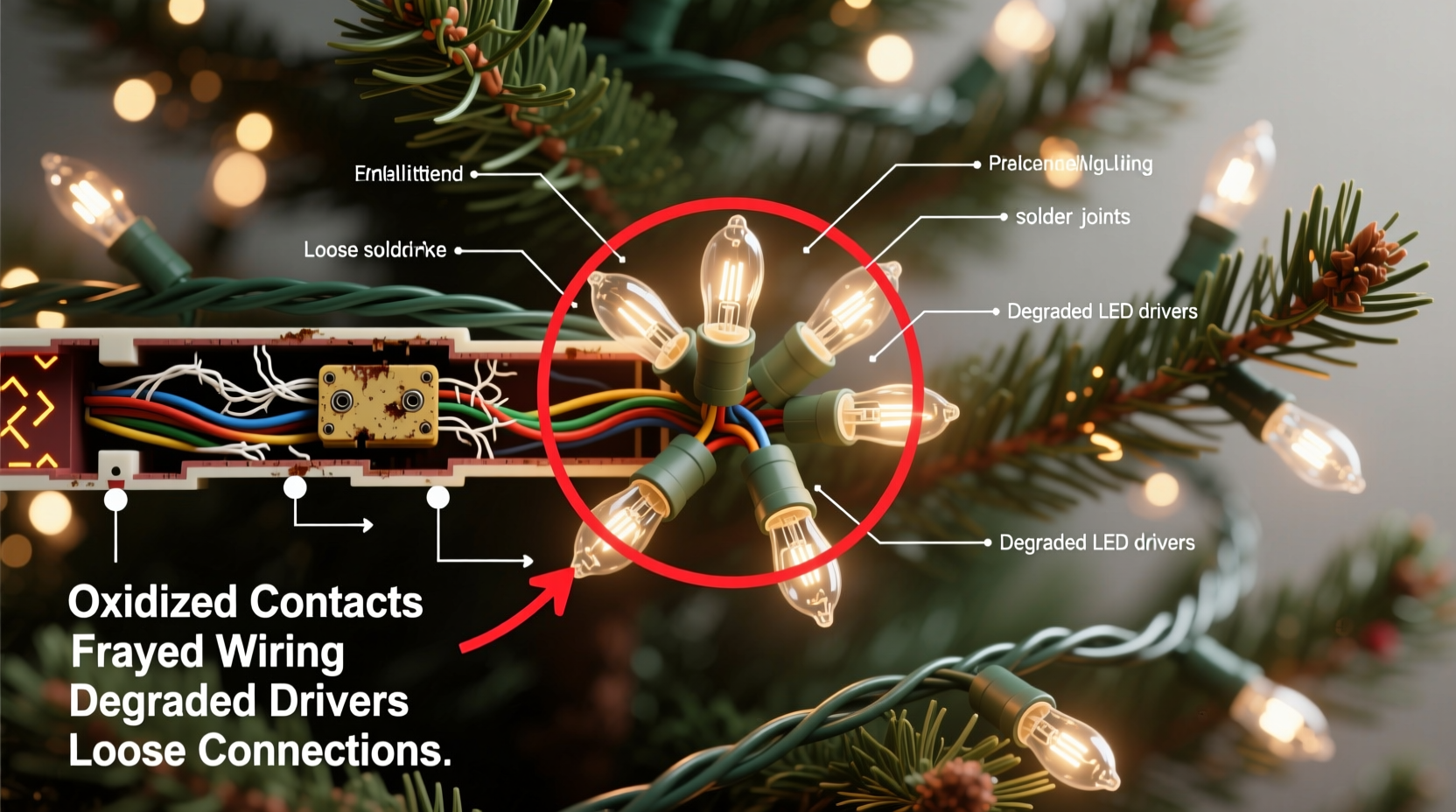
Prelit artificial trees come with built-in LED or incandescent lighting systems wired directly into the branches during manufacturing. Most modern models use LED (light-emitting diode) technology due to its energy efficiency, cooler operation, and longer lifespan. These lights are typically arranged in series or parallel circuits, depending on the design, and powered through a single plug-in cord that connects to an outlet via a control box—often housing fuses, dimmer switches, or remote controls.
The integration simplifies decoration but also means any failure in the circuit can affect multiple bulbs—or the entire string. Unlike traditional string lights where you can replace individual strands, prelit trees require more nuanced troubleshooting because the wiring is internal and often inaccessible without damaging the tree.
“LEDs in prelit trees are designed to last 30,000 to 50,000 hours, but real-world conditions like heat exposure, voltage fluctuations, and poor storage can cut that lifespan in half.” — Dr. Alan Reeves, Electrical Engineer & Holiday Lighting Specialist
Primary Causes of Dimming in Prelit Tree Lights
Dimming doesn’t happen overnight. It’s usually the result of cumulative stressors acting on the lighting system over several seasons. Below are the most common culprits behind fading brilliance.
1. LED Degradation Over Time
Even high-quality LEDs degrade gradually. This process, known as lumen depreciation, occurs as the semiconductor materials inside the diode slowly deteriorate. While LEDs don't “burn out” like incandescent bulbs, they lose luminous output over time. In prelit trees, this means a slow, steady dimming across all or most lights.
Factors accelerating LED degradation include:
- Excessive heat buildup from prolonged use
- Exposure to humidity during storage
- Voltage spikes from unstable power sources
- Poor heat dissipation due to dense bulb placement
2. Voltage Drop Due to Long Circuit Runs
Many prelit trees wire lights in long series circuits to reduce manufacturing complexity. However, the farther electricity travels along a wire, the more resistance it encounters—leading to a phenomenon called voltage drop. Lights at the end of the chain receive less power than those near the source, causing them to appear dimmer.
This effect worsens with age as internal wiring corrodes or connections loosen, increasing resistance. You may notice the top sections of your tree remain bright while lower tiers grow progressively dimmer each year.
3. Corroded or Loose Wiring Connections
Inside every prelit tree are dozens—if not hundreds—of tiny wire splices connecting lights to the main harness. These junctions are vulnerable to corrosion, especially if the tree is stored in damp basements or attics. Even minor oxidation increases electrical resistance, reducing current flow and causing dimness.
Additionally, repeated assembly and disassembly can loosen connectors between tree sections. A slightly misaligned pole plug or bent pin in the base can interrupt clean power delivery, leading to inconsistent brightness or flickering.
4. Failing Power Supply or Control Box
The control box—whether simple on/off or feature-rich with remote dimming—is the heart of the lighting system. Internal components like transformers, rectifiers, and microchips degrade over time. Capacitors dry out, solder joints crack, and circuit boards warp due to thermal cycling.
If the control unit cannot regulate voltage properly, it may deliver inconsistent power, resulting in overall dimming or erratic behavior. Some users report that their lights start bright but fade after 30 minutes of operation—a telltale sign of overheating electronics.
5. Dirt and Dust Accumulation on Bulbs
It sounds simple, but grime matters. Over years of storage and use, dust, pet dander, and even cooking oils from nearby kitchens settle on bulb surfaces. This layer scatters and absorbs light, making LEDs appear significantly dimmer—even if they’re functioning perfectly.
Cleanliness is often overlooked, yet one of the easiest fixes. A tree that hasn’t been wiped down since its first season could be losing up to 30% of its perceived brightness simply due to surface contamination.
Troubleshooting Checklist: Diagnose the Cause of Dimming
Before replacing or repairing, systematically evaluate your tree using this checklist to identify the root cause:
- Inspect for visible dirt: Use a soft cloth to gently wipe several bulbs. Compare brightness before and after cleaning.
- Check section alignment: Ensure all tree sections are fully seated and connector pins are straight and secure.
- Test the power source: Plug the tree into a different outlet, preferably on a dedicated circuit. Avoid extension cords.
- Listen for buzzing or smell for burning: Unusual sounds or odors suggest electrical faults in the control box or wiring.
- Observe pattern of dimming: Is it uniform? Gradual toward the bottom? Intermittent? Each pattern points to a different issue.
- Use a multimeter: Test output voltage at the plug and at the farthest light section. A drop of more than 5% indicates wiring problems.
- Compare with previous years: Has dimming accelerated recently? Sudden changes point to component failure rather than natural aging.
Do’s and Don’ts: Maintaining Your Prelit Tree Lights
| Do’s | Don’ts |
|---|---|
| Store the tree in a climate-controlled environment away from moisture and pests. | Store in damp basements or hot attics where temperature swings accelerate wear. |
| Clean bulbs gently with a microfiber cloth before and after each season. | Use harsh chemicals or abrasive scrubbing that can damage plastic lenses. |
| Use surge protectors to shield against voltage spikes. | Plug directly into wall outlets in older homes with unstable wiring. |
| Handle connectors carefully; align pins precisely when assembling. | Force connections or yank cords to disconnect sections. |
| Limit continuous run time to 8–12 hours per day to reduce heat stress. | Leave the tree lit 24/7 for weeks, especially near heat sources. |
Real-World Example: Sarah’s Fading Fraser Fir
Sarah purchased a 7.5-foot prelit Fraser fir in 2018. For the first two years, it was the brightest fixture in her living room. By 2021, she noticed the lower half looked noticeably dimmer. She assumed the LEDs were failing and considered buying a new tree.
Instead, she took a closer look. After wiping down the bulbs—revealing a thick layer of dust—the lower tier regained some brightness. Still, a gap remained. Using a multimeter, she tested voltage at the base and at the bottom section. The base read 120V, but the final branch connector showed only 108V—a 10% drop.
Further inspection revealed a loose wire nut inside the trunk connector. She re-seated it, secured the joint with electrical tape, and reassembled the tree. The brightness returned almost completely. The fix cost nothing and added at least three more usable seasons to her tree.
Sarah’s experience highlights how multiple factors—dirt, connection issues, and voltage drop—can compound. Addressing each layer leads to better outcomes than assuming total failure.
Step-by-Step Guide to Revive Dimming Prelit Lights
If your tree has lost its sparkle, follow this practical sequence to diagnose and restore performance:
- Unpack and inspect: Lay out all sections. Look for damaged wires, bent pins, or cracked bulbs.
- Clean thoroughly: Wipe every bulb and branch with a dry or slightly damp microfiber cloth. Let dry completely.
- Reassemble carefully: Connect sections slowly, ensuring audible clicks or firm seating. Don’t force connections.
- Power on in stages: Plug in one section at a time to isolate issues. Note any flickering or non-responsive zones.
- Test voltage (if possible): Use a multimeter to check input and output voltages at key junctions.
- Check fuses: Many control boxes have replaceable fuses. Swap them even if they look intact—internal breaks aren’t always visible.
- Upgrade the power strip: Plug into a high-quality surge protector with indicator lights to monitor stable power delivery.
- Monitor performance: Run the tree for 1–2 hours and observe whether brightness stabilizes or continues to fade.
If dimming persists after these steps, the issue may be internal wire corrosion or failing LEDs—both harder to repair without professional rewiring.
Frequently Asked Questions
Can I replace individual LED bulbs on a prelit tree?
In most cases, no. LEDs on prelit trees are soldered into sealed circuits and not designed for user replacement. Attempting to remove or swap bulbs often damages the wiring. Some premium models use plug-and-play LED modules, but these are rare. Check your manufacturer’s manual for specific guidance.
Why do only the bottom lights dim?
This is typically due to voltage drop in series-wired circuits. Electricity weakens as it travels down the line, and older trees with degraded wiring amplify this effect. It can also result from poor grounding at the base connector or accumulated dust in lower sections, which are closer to floor-level contaminants.
Is it safe to keep using a dimming prelit tree?
Dimming alone isn’t dangerous, but it can signal underlying electrical issues. If accompanied by flickering, overheating, frayed wires, or burning smells, discontinue use immediately. Regular inspection and proper storage minimize fire risks associated with aging holiday lights.
Expert Tips for Extending Light Lifespan
Conclusion: Preserve the Glow, Season After Season
Your prelit tree is more than a decoration—it’s a tradition, a centerpiece, and often a family heirloom in the making. Dimming lights don’t mean the end of its life; they’re a call to care. By understanding the science behind LED aging, voltage dynamics, and environmental wear, you gain the power to intervene early and effectively.
Simple habits—cleaning, careful handling, proper storage, and smart power management—can extend your tree’s peak performance for a decade or more. Before you write off a dimming display, investigate methodically. Often, the fix is simpler than expected, and the reward is a brighter, safer, and more joyful holiday season.




 浙公网安备
33010002000092号
浙公网安备
33010002000092号 浙B2-20120091-4
Comments
No comments yet. Why don't you start the discussion?