
It’s a mystery as old as laundry itself: you load a full basket of socks into the washing machine, and when you pull everything out, one—sometimes two—socks have vanished without a trace. No note. No explanation. Just an orphaned partner left behind, waiting for reunion that will never come. This isn’t just bad luck. It’s a systemic issue rooted in household habits, appliance mechanics, and human behavior. The good news? Sock loss is not inevitable. With the right strategies, you can reclaim your laundry sanity and keep every pair intact.
The Science Behind the Missing Sock Phenomenon
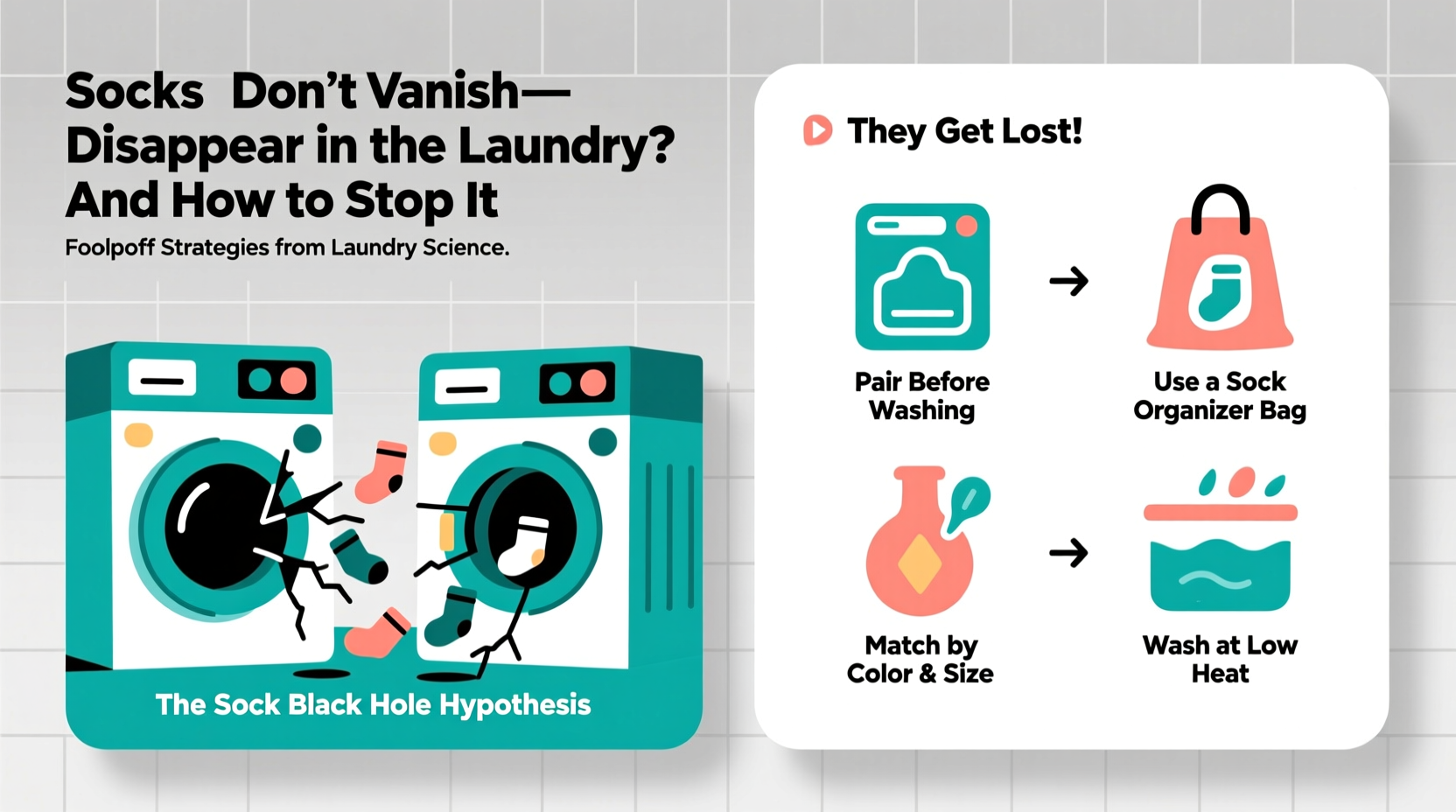
Sock disappearance isn't supernatural—it's mechanical and behavioral. Researchers at Samsung conducted a study analyzing over 2,000 households and found that the average person loses 1.3 socks per month. That adds up to nearly 16 lost socks per year per household. But where do they go?
The primary culprits fall into three categories: mechanical entrapment, human error, and poor sorting practices.
- Mechanical Entrapment: Socks get trapped in washing machines—wedged between the drum and the outer casing, caught in detergent drawers, or sucked into drain hoses during spin cycles.
- Human Error: Misloading, forgetting to check pockets, or tossing clothes haphazardly leads to socks slipping behind furniture, under appliances, or into other baskets mid-process.
- Poor Sorting: Mixing loads with bulky items like towels or jeans increases friction and tumbling force, making small garments like socks more likely to escape unnoticed.
In rare cases, socks may even survive the wash only to vanish in the drying phase—lodged in lint traps, stuck to larger clothing items via static cling, or simply folded into sleeves or pant legs and forgotten.
Foolproof Prevention Strategies You Can Start Today
Preventing sock loss doesn’t require magic—just consistency, awareness, and a few smart systems. Implement these evidence-based methods to drastically reduce (or eliminate) future losses.
Use Mesh Laundry Bags for Delicates
The simplest defense is containment. Washing socks inside a zippered mesh bag keeps them together and protected from mechanical hazards. Choose a fine-weave bag labeled for delicates or underwear.
For best results, assign one bag per person or household member. This prevents mix-ups and makes matching post-wash effortless.
Adopt the \"Pair Before Wash\" Rule
Never toss loose socks into the hamper. Instead, enforce a strict policy: all socks must be paired before entering the laundry stream. Use a small clip, hair tie, or snap button to fasten each pair together.
This small habit eliminates mismatching and ensures both socks share the same journey through the wash cycle.
Inspect Machines Regularly
Washing machines accumulate debris. Over time, small gaps around the drum can trap clothing. Monthly inspection helps recover lost items and prevents long-term damage.
- Unplug the machine and wipe down the rubber gasket (the seal around the door).
- Check the detergent and fabric softener trays—common hiding spots.
- Run an empty hot water cycle with vinegar monthly to clear residue and dislodge trapped fibers.
Standardize Your Sock Collection
Limit variety. If every sock is black, crew-length, and from the same brand, losing one matters less—and replacements are easier to integrate.
Alternatively, embrace uniformity: buy multiple identical pairs so that any sock can pair with any other. This “sock democracy” model removes emotional attachment to individual pairs and reduces stress over mismatches.
Do’s and Don’ts of Sock Laundry Management
| Do | Don’t |
|---|---|
| Always pair socks before washing | Throw single socks into the hamper |
| Use mesh bags for small items | Wash socks with heavy towels or blankets |
| Check pockets and cuffs before loading | Overload the washing machine |
| Label children’s socks with initials | Assume dryers are self-cleaning |
| Empty lint traps after every dryer use | Skip routine appliance maintenance |
Real-Life Case Study: The Johnson Family’s Sock Recovery Plan
The Johnsons—a family of five in suburban Ohio—were losing an average of 27 socks per year. After implementing a structured system, they reduced losses to zero within six months.
Here’s what changed:
- They purchased color-coded mesh bags: blue for dad, pink for mom, green for teens, yellow for kids.
- Installed a sock pairing station near the hamper with mini clips and a mirror for quick matching.
- Switched to buying only navy athletic socks in bulk (50 pairs annually), eliminating uniqueness.
- Assigned weekly appliance checks to rotating family members.
Within three months, they recovered 14 missing socks—mostly trapped in the dryer’s lint channel or tucked inside sweatshirts. By standardizing their approach, they turned chaos into control.
“Laundry efficiency starts with tiny habits. The Johnsons didn’t overhaul their lives—they just added structure.” — Dr. Lena Pruitt, Household Systems Researcher, University of Michigan
Step-by-Step Guide to a Sock-Safe Laundry Routine
Follow this sequence every time you do laundry to protect your socks:
- Sort by Type: Separate socks from other laundry. Include tights, gloves, and washcloths in the same category.
- Pair & Clip: Match each sock and secure with a plastic ring or silicone band. Discard unmatched ones unless recently lost.
- Bag Up: Place all paired socks into a designated mesh laundry bag. Label if needed.
- Load Smart: Avoid overfilling the washer. Leave space for proper tumbling—about ¾ full.
- Wash on Gentle: Use cold water and delicate cycle to minimize wear and tangling.
- Dry Carefully: Remove promptly from the washer. If using a dryer, use low heat and remove while slightly damp to reduce static.
- Immediate Folding: Fold and store socks within one hour of drying to prevent misplacement.
- Monthly Audit: Check behind appliances, under furniture, and in unused drawers for strays.
This routine takes minimal extra time but delivers maximum protection. Consistency is key—the more automatic the process, the fewer mistakes occur.
Expert-Backed Tips Beyond the Basics
While basic organization helps, deeper interventions yield longer-term results. Experts recommend the following advanced tactics:
Invest in High-Efficiency Appliances
Newer front-loading machines with sealed drums and improved baffles reduce garment escape. Look for models with \"small load\" sensors and dedicated delicates cycles.
Use RFID Tags (For High-Value Socks)
Though unconventional, some travelers and athletes tag expensive performance socks with tiny RFID chips. These can be scanned post-wash to confirm presence—ideal for compression or medical-grade hosiery.
Create a “Lost Sock” Holding Zone
Designate a small bin or drawer for unmatched socks. Review it every 30 days. If no mate appears, donate or repurpose the lone sock (e.g., dusting rag, toy stuffing).
Teach Kids Early
Children lose socks at twice the rate of adults. Introduce pairing habits early—use fun clips shaped like animals or superheroes to encourage compliance.
“The earlier kids learn laundry responsibility, the fewer mysteries they’ll face as adults.” — Maria Tran, Parenting & Organization Coach
FAQ: Common Questions About Disappearing Socks
Can socks really get destroyed in the washing machine?
Yes. Thin cotton blends may degrade after repeated high-heat cycles, especially when mixed with abrasive fabrics like denim. However, complete destruction is rare—most “lost” socks are merely misplaced. True disintegration usually only occurs if a sock tears and its pieces flush through the drain system.
Is there a difference between top-load and front-load machines for sock safety?
Front-loaders are generally safer. Their tumbling action is gentler, and the horizontal drum design reduces the chance of items slipping into crevices. Top-loaders with agitators increase friction and can trap small items beneath the central column. If using a top-loader, skip the agitator zone by placing socks in a mesh bag near the center.
Should I blame the dryer?
Partially. Dryers contribute through static cling (socks stick to towels), lint trap absorption, and shrinkage (making socks harder to spot). But most disappearances originate in the wash phase. Always check the transition point: did the sock make it from washer to dryer? That’s often where the trail goes cold.
Final Checklist: Build Your Sock Protection System
Use this checklist weekly until the habits become second nature:
- 🔲 Pair all socks before laundry day
- 🔲 Secure pairs with clips or bands
- 🔲 Load socks into labeled mesh bags
- LayoutConstraint: Do not overload the machine
- 🔲 Run a pre-cycle visual check of drum and seals
- 🔲 Empty lint trap before and after drying
- 🔲 Fold and store socks immediately after drying
- 🔲 Conduct a monthly appliance inspection
- 🔲 Audit the “lost sock” bin quarterly
- 🔲 Replace worn-out socks proactively (before they tear)
Conclusion: Take Control of Your Laundry, One Sock at a Time
The vanishing sock is not a myth. It’s a symptom of overlooked details, inconsistent routines, and under-maintained appliances. But now you know the truth: socks don’t just disappear—they’re misplaced, trapped, or forgotten. And every one of those fates is preventable.
By applying the strategies outlined here—from pairing and bagging to regular audits and appliance care—you’re not just saving socks. You’re building a more efficient, mindful home. Imagine opening your drawer and seeing every pair intact. No orphans. No frustration. Just order.
Start tonight. Gather your loose socks. Pair them. Clip them. Bag them. Make the change real. Then challenge yourself to go 90 days without losing a single sock. Track it. Celebrate it. Share it.




 浙公网安备
33010002000092号
浙公网安备
33010002000092号 浙B2-20120091-4
Comments
No comments yet. Why don't you start the discussion?