
Solar-powered outdoor lights are a popular choice for eco-conscious homeowners looking to reduce energy costs while enhancing landscape aesthetics. They’re marketed as low-maintenance, self-sufficient, and reliable—charging during the day and illuminating gardens, walkways, and patios after dark. But when your solar lights appear to charge completely under bright sunlight only to flicker out by early evening, frustration sets in. What’s going wrong?
The issue isn’t uncommon. Many users report that their solar lights perform well initially but fail to last through the night, even after full sun exposure. The root causes often lie not in the solar panels themselves, but in overlooked components like battery health, light sensor sensitivity, environmental conditions, or product quality. Understanding these factors can help you diagnose the problem and restore lasting performance.
How Solar Lights Are Supposed to Work
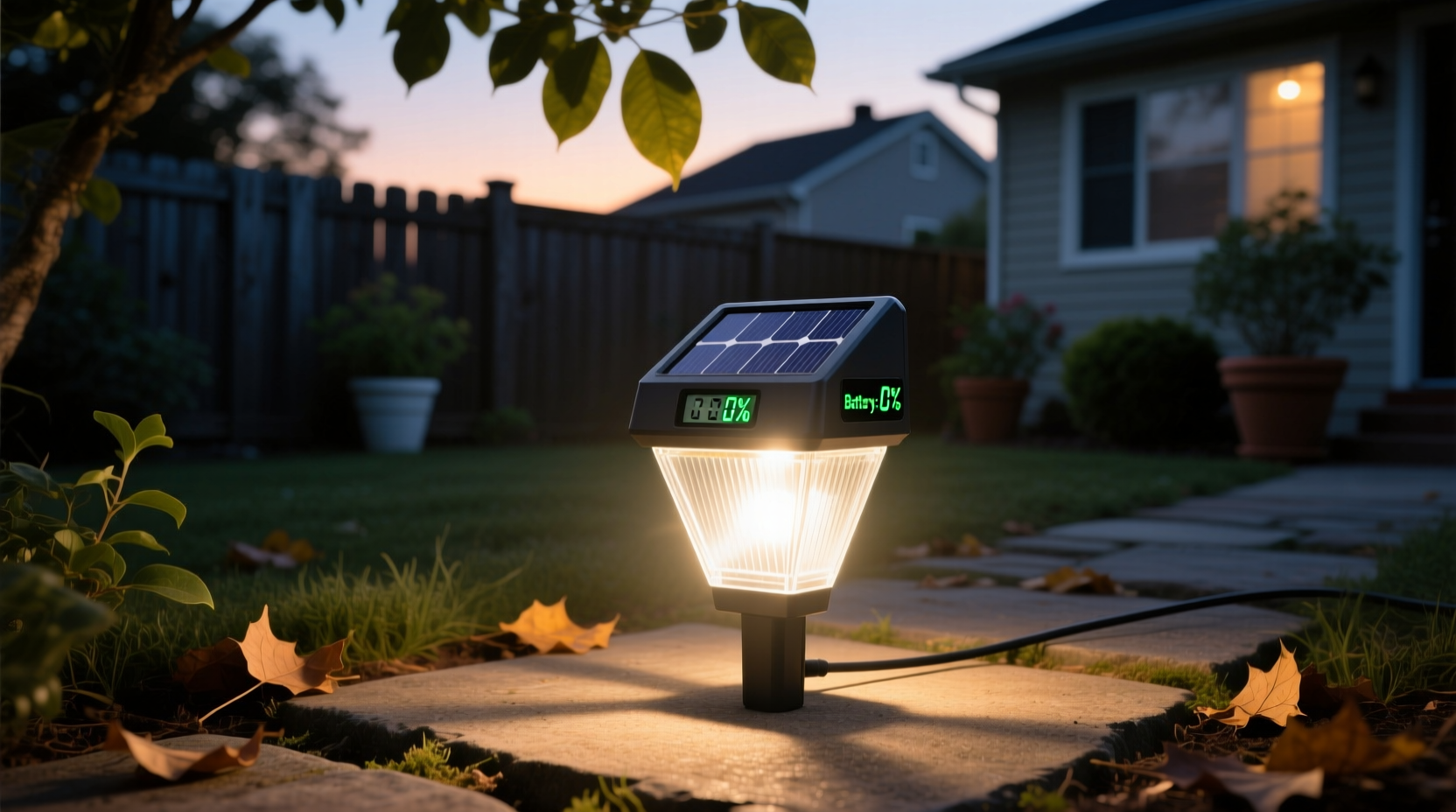
Solar lights operate on a simple photovoltaic principle: sunlight hits the solar panel, generating electricity that charges an internal rechargeable battery during the day. Once ambient light drops at dusk, a built-in photoresistor (light sensor) detects darkness and triggers the LED light to turn on, drawing power from the stored energy.
In ideal conditions, this cycle should provide 6–10 hours of illumination, depending on the model, battery capacity, and amount of daily sunlight received. However, real-world variables frequently disrupt this balance. A light that dies prematurely—even after apparent full charging—is typically suffering from one or more underlying inefficiencies.
Common Reasons Why Solar Lights Die Early Despite Full Day Charging
1. Degraded or Low-Capacity Rechargeable Batteries
The most frequent culprit behind short runtime is battery failure. Most solar lights use NiMH (nickel-metal hydride) or, less commonly, NiCd (nickel-cadmium) batteries rated between 1.2V and 1.5V with capacities ranging from 200mAh to 1000mAh. These batteries degrade over time—typically within 1–3 years—losing their ability to hold a full charge.
Even if the solar panel functions perfectly, weak batteries cannot store sufficient energy. As a result, the light may turn on brightly at sunset but dim rapidly and shut off by 8 or 9 PM.
“Battery degradation is the number one reason solar lights underperform after the first year. Users often blame the panel when it’s actually the storage component failing.” — Dr. Alan Reeves, Renewable Energy Systems Engineer
2. Poor Sun Exposure Due to Placement or Obstruction
A solar light must receive direct, unfiltered sunlight for at least 6–8 hours to achieve full charge. Many installations fall short due to subtle shading from trees, walls, roof overhangs, or even accumulated dirt on the panel surface.
Even partial shading—such as morning fog or afternoon shadows—can significantly reduce energy intake. Additionally, solar panels lose efficiency when mounted at suboptimal angles or facing north (in the northern hemisphere), further limiting daily charge.
3. Faulty or Misaligned Light Sensors
The photoresistor that controls automatic operation can malfunction or become obstructed. If covered by dirt, paint, or debris—or shaded by surrounding fixtures—the sensor may incorrectly detect “darkness” earlier than actual dusk, causing the light to activate prematurely and drain faster.
Conversely, some sensors remain exposed to artificial light sources (e.g., porch lights), tricking the system into staying off during nighttime hours, which users sometimes misinterpret as battery failure.
4. Aging or Low-Quality LEDs
While LEDs are known for long lifespans, cheaper models may use inefficient diodes that draw more current than necessary. Over time, heat buildup and moisture damage can increase electrical resistance, forcing the system to consume more power to maintain brightness—shortening overall runtime.
5. Environmental and Seasonal Factors
Colder temperatures reduce battery efficiency. In winter months, even well-charged batteries deliver less usable energy due to slowed chemical reactions inside the cells. Similarly, shorter daylight hours mean less opportunity for recharging, compounding the issue.
Humidity and water ingress also play a role. Although many solar lights are labeled “weatherproof,” prolonged exposure to rain or condensation can corrode internal circuits or create micro-shorts, increasing power leakage.
Troubleshooting Checklist: Diagnose and Fix Your Failing Solar Lights
Before replacing your entire set, go through this step-by-step checklist to identify and resolve the most likely causes:
- Inspect the solar panel surface: Clean with a soft cloth and mild soap. Remove any dirt, bird droppings, or snow blocking sunlight.
- Verify placement and sun exposure: Ensure the panel faces south (in the northern hemisphere) and receives direct sun for 6+ hours daily. Trim nearby foliage if needed.
- Test the light sensor: Cover the sensor manually at noon—it should turn on the light. Uncover it, and the light should turn off. If unresponsive, clean around the sensor or consider replacement.
- Check for external light interference: Make sure no nearby lamps or floodlights shine directly on the sensor at night.
- Replace old batteries: Swap out existing NiMH cells with fresh, high-capacity replacements (e.g., 600–1000mAh). Avoid mixing old and new batteries.
- Ensure proper battery orientation: Double-check that positive and negative terminals are correctly aligned.
- Assess LED brightness and stability: Look for flickering, dimming, or uneven output. This may indicate circuit wear or moisture damage.
- Monitor seasonal patterns: Track performance across seasons. If lights work fine in summer but fail in winter, temperature and daylight length are likely contributors.
Battery Replacement Guide: A Step-by-Step Process
Replacing degraded batteries is often the single most effective fix. Follow this procedure carefully:
- Turn off the light (if equipped with an on/off switch) or bring it indoors during daylight to prevent activation.
- Open the battery compartment, usually located on the back or bottom of the unit. Use a small screwdriver if screws are present.
- Remove the old battery pack. Note voltage (typically 1.2V) and capacity (e.g., 600mAh). Take a photo before disconnecting wires.
- Purchase a compatible replacement. Opt for high-quality NiMH batteries with matching specifications. Consider upgrading slightly in capacity if space allows.
- Reconnect the new battery, ensuring correct polarity (+/-). Secure connections with electrical tape if needed.
- Close the compartment and seal any gaskets to maintain weather resistance.
- Place the light in direct sunlight for 8 hours without turning it on to allow full initial charge.
- Test overnight to evaluate runtime improvement.
Note: Some models have non-replaceable sealed units. In such cases, consider upgrading to modular, serviceable designs for better long-term value.
Comparison Table: Common Solar Light Battery Types
| Battery Type | Voltage | Lifespan (Charge Cycles) | Pros | Cons | Best For |
|---|---|---|---|---|---|
| NiMH (Nickel-Metal Hydride) | 1.2V | 500–1000 | High capacity, environmentally friendly, widely available | Performance drops in cold weather | Most modern solar lights |
| NiCd (Nickel-Cadmium) | 1.2V | 500–800 | Durable in extreme temps, fast charging | Lower capacity, toxic materials, memory effect | Older or industrial-grade models |
| Lithium-Ion (Li-ion) | 3.7V | 800–1500 | High energy density, excellent longevity | Requires voltage regulation; rarely used in basic models | Premium solar lighting systems |
Real Example: A Homeowner's Experience with Premature Failure
Julie M., a homeowner in Portland, Oregon, installed eight solar pathway lights along her garden path in April. Initially impressed by their bright white glow lasting until midnight, she noticed by July that several units were shutting off by 8:30 PM—even though they sat in full sun all day.
After ruling out shading issues and cleaning each panel, she opened one unit and found the battery was swollen and leaking. She replaced all eight with higher-capacity NiMH batteries (from 400mAh to 800mAh) and repositioned two units blocked by a growing hydrangea bush.
The results were immediate: all lights now run for 9+ hours nightly. Julie attributes the original failure to poor factory-installed batteries and minor seasonal shading she hadn’t noticed.
“Just because a light looks like it’s getting sun doesn’t mean it’s getting *enough* sun. Small changes make a big difference.” — Julie M., DIY Enthusiast
When to Upgrade vs. Repair
Not all solar lights are worth repairing. Consider these guidelines:
- Repair if: The unit is relatively new (<2 years), has replaceable batteries, and shows no signs of physical damage or corrosion.
- Upgrade if: The housing is cracked, the LED is dim beyond adjustment, the solar panel is peeling, or the model uses obsolete or proprietary parts.
Modern solar lights increasingly feature improved battery management, motion sensors, and brighter, more efficient LEDs. Investing in reputable brands with modular designs ensures easier maintenance and longer service life.
Frequently Asked Questions
Can I use regular alkaline batteries in my solar lights?
No. Alkaline batteries are not rechargeable and will be damaged by the solar charging circuit. Only use rechargeable batteries specifically designed for solar applications (NiMH, NiCd, or Li-ion).
Why do my solar lights work fine in summer but fail in winter?
Winter brings shorter days, weaker sunlight, and colder temperatures—all of which reduce charging efficiency and battery output. Adding supplemental reflectors or relocating lights temporarily can help maintain performance.
Is it safe to leave solar lights out in the rain?
Most are rated IP44 or higher, meaning they resist splashing water. However, prolonged exposure to heavy rain or submersion can compromise seals over time. Inspect gaskets annually and replace damaged units promptly.
Final Thoughts: Maximizing Solar Light Performance
Your solar lights don’t have to disappoint. While it’s tempting to assume they’re “set and forget,” they require periodic attention just like any electronic device exposed to the elements. The fact that they charge fully but die early is actually a helpful diagnostic clue—it points toward storage or discharge issues rather than generation problems.
By focusing on battery health, optimizing placement, and performing routine maintenance, you can extend the functional life of your solar lighting system for years. Treat them not as disposable decor, but as small-scale renewable energy devices that thrive with informed care.




 浙公网安备
33010002000092号
浙公网安备
33010002000092号 浙B2-20120091-4
Comments
No comments yet. Why don't you start the discussion?