
Solar pathway lights offer an energy-efficient, eco-friendly way to illuminate walkways, gardens, and entryways. They charge during the day using sunlight and turn on automatically at dusk. But many homeowners report a puzzling issue: when holiday string lights are installed nearby—especially during festive seasons—their solar lights begin blinking unpredictably, flickering on and off, or failing to stay lit at all.
This erratic behavior isn’t just annoying—it can undermine the charm of your outdoor lighting display. The root causes often lie in how solar lights detect ambient light and manage power. Understanding these mechanisms is key to diagnosing and resolving the problem.
How Solar Pathway Lights Work
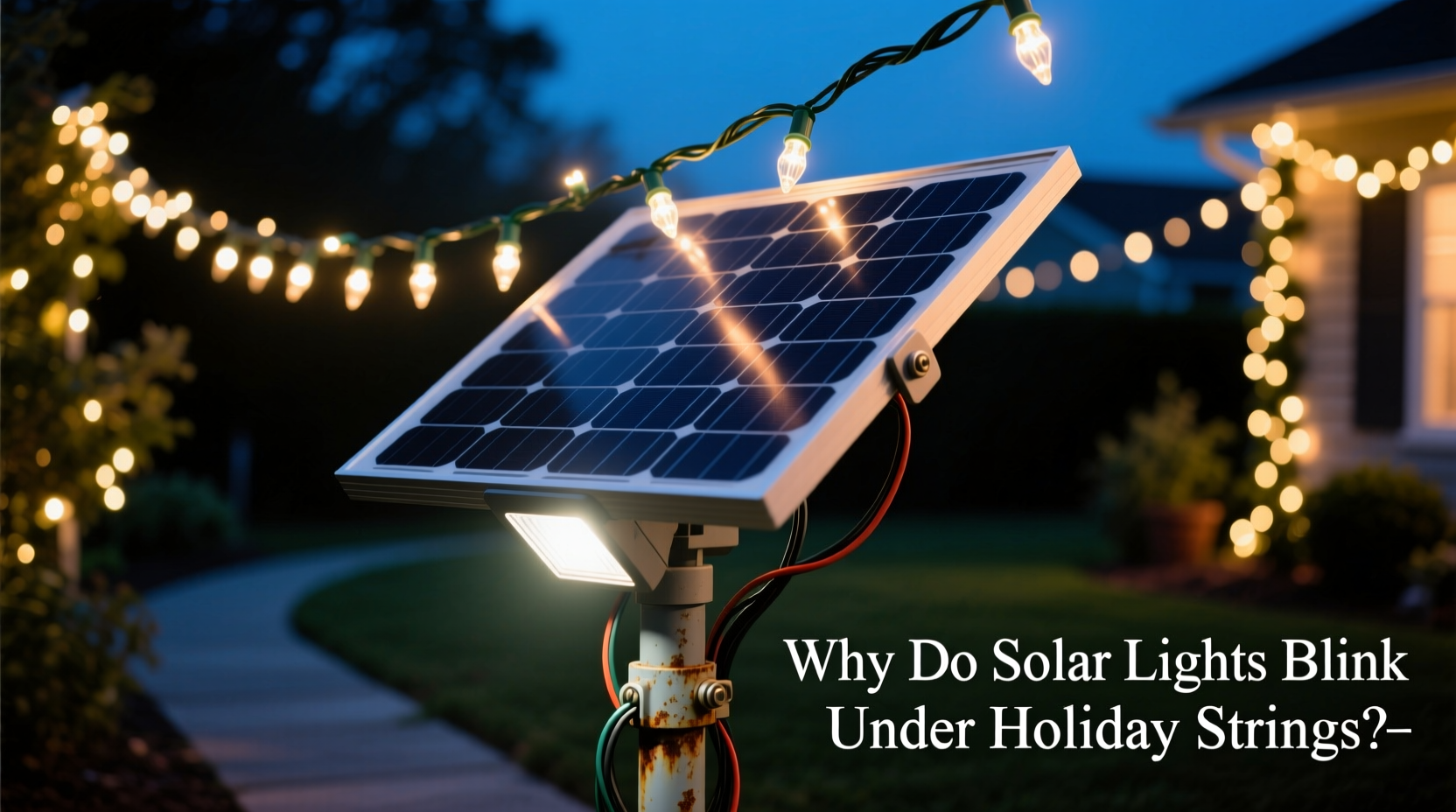
Solar pathway lights operate through a simple but precise system involving three core components: a solar panel, a rechargeable battery, and a light sensor (usually a photoreceptor or photoresistor). During daylight hours, the solar panel converts sunlight into electricity, which charges the internal battery. As natural light diminishes at dusk, the light sensor detects the drop in ambient brightness and triggers the LED to turn on.
The timing and consistency of this process depend heavily on uninterrupted exposure to sunlight during the day and accurate detection of darkness at night. Any interference with either phase can disrupt performance. This includes artificial light sources that confuse the sensor or block necessary solar charging.
“Solar lights rely on clean, unobstructed access to both sunlight and darkness cues. Even low-level artificial lighting can trick their sensors into thinking it’s still daytime.” — Dr. Alan Reyes, Renewable Energy Systems Engineer
The Impact of Holiday String Lights on Solar Sensors
Holiday string lights, while beautiful, emit continuous low-level illumination that can interfere with the operation of solar pathway lights in two critical ways:
- Light Sensor Confusion: Most solar lights use photoresistors to determine when to activate. These sensors respond to overall light levels, not just sunlight. When string lights shine near or directly onto a solar light’s sensor, they may prevent it from registering true darkness. As a result, the light enters a cycle of turning on briefly, detecting “light” again, shutting off, then repeating—creating a visible blinking effect.
- Charging Interference: If holiday lights remain on throughout the night and extend into early morning hours, they may reduce the effective “dark period” for the solar light. While this doesn’t directly impact charging, prolonged artificial light exposure can delay or disrupt the reset cycle needed for proper sensor calibration.
In some cases, the placement of string lights above or adjacent to solar fixtures creates overlapping zones of illumination where the solar unit receives inconsistent signals—partially dark, yet intermittently lit—leading to unstable switching behavior.
Common Environmental and Technical Factors
Beyond direct interference from decorative lighting, several other factors contribute to erratic blinking, especially during the winter holidays when usage spikes:
Reduced Daylight Hours and Weak Sun Exposure
During fall and winter months, daylight hours shorten significantly. Solar lights receive less total sunlight, leading to incomplete battery charging. A partially charged battery struggles to power the LED consistently, causing dimming, delayed activation, or rapid blinking as voltage fluctuates.
Battery Degradation Over Time
Most solar pathway lights use NiMH or lithium-ion batteries rated for 1–3 years of service. As these batteries age, their capacity diminishes. Even minor disruptions—like temporary shading from string light wires or seasonal decorations—can push weakened batteries past their operational threshold.
Dirt, Snow, or Obstruction on Solar Panels
A layer of dust, snow, or debris on the solar panel reduces efficiency. If combined with already limited winter sunlight, this can severely hamper charging. Some users install string lights without realizing that drooping strands or support stakes cast shadows over solar units during peak sun hours.
Poor Unit Placement Relative to Artificial Light Sources
Lights placed too close to porch lamps, motion sensors, or illuminated signs face similar issues year-round. Adding temporary holiday lighting exacerbates the problem by increasing ambient nighttime brightness in previously dark zones.
Troubleshooting Checklist: Fixing Erratic Blinking
If your solar pathway lights are blinking abnormally under holiday string lights, follow this step-by-step checklist to identify and resolve the cause:
- Inspect sensor location: Locate the light sensor (often a small dark dot near the top) and ensure no string light bulbs are shining directly onto it.
- Reposition string lights: Adjust the angle or height of holiday lights to direct illumination downward and away from solar fixtures.
- Test in full darkness: Temporarily remove or turn off string lights overnight to see if blinking stops. If it does, artificial light is the culprit.
- Clean the solar panel: Wipe the panel surface with a soft, damp cloth to remove dirt, frost, or grime.
- Check battery health: Replace old or swollen batteries with compatible replacements (typically AA NiMH or Li-ion).
- Ensure full sun exposure: Make sure the solar panel gets at least 6–8 hours of direct sunlight daily, unshaded by decorations or foliage.
- Reset the light: Cover the sensor completely for 30 seconds during daylight to force a reset, then uncover to reinitialize night mode.
| Issue | Signs | Solution |
|---|---|---|
| Artificial light interference | Blinking starts only when string lights are on | Relocate or shield string lights; cover sensor from stray light |
| Low battery charge | Flickering after initial glow; weak output | Replace battery; ensure full sun exposure |
| Degraded battery | Poor performance even in summer | Install new high-capacity rechargeable battery |
| Dirty/malfunctioning sensor | Stays on during day or off at night | Clean gently; test in controlled conditions |
| Shading during daylight | New blinking pattern after decoration setup | Adjust decor layout to avoid casting shadows |
Real-World Example: A Homeowner’s Holiday Lighting Dilemma
Jamie Thompson, a homeowner in Portland, Oregon, decorated her front garden annually with warm-white string lights draped across shrubs and archways. One November, she noticed her six solar pathway lights along the walkway began flickering wildly each evening shortly after sunset. The blinking persisted until midnight, then stabilized—but never fully resolved.
After replacing two batteries with no improvement, she conducted a test: turning off the string lights while leaving everything else unchanged. Within minutes, the solar lights stabilized, glowing steadily throughout the night. She realized the lower-hanging strings were casting diffuse light directly onto the sensors.
Her solution? She raised the string light lines by six inches using insulated hooks and added small cardboard shields around each solar light’s sensor to block lateral light. The blinking stopped immediately. Jamie now adjusts her holiday lighting setup every year with solar compatibility in mind.
Step-by-Step Guide to Coexistence: Solar + Decorative Lighting
You don’t have to choose between festive ambiance and functional pathway lighting. Follow this timeline to integrate both safely and effectively:
- Week Before Installation: Map out your planned lighting zones. Identify where solar lights are located and assess potential conflict areas.
- Day of Setup (Morning): Install holiday string lights first, ensuring cables and bulbs don’t shade solar panels during midday sun.
- Midafternoon Test: Turn on string lights temporarily to observe any direct beam hitting solar sensors. Adjust positioning as needed.
- At Dusk: Activate both systems and monitor behavior. Look for flickering, delayed start-up, or premature shutoff.
- Nightly Monitoring (First 3 Nights): Check performance each evening. Note patterns and adjust shielding or angles incrementally.
- Ongoing Maintenance: Clean solar panels weekly during the season, especially after snow or rain. Recheck alignment if blinking resumes.
Consider using timers on string lights to limit operation to peak viewing hours (e.g., 5 PM to 11 PM), giving solar units a full dark period for stable sensor function later at night.
FAQ: Common Questions About Solar Light Behavior
Can LED string lights affect solar lights more than incandescent ones?
Not necessarily due to bulb type, but because LEDs are often brighter, more efficient, and used in higher densities, they tend to produce more consistent ambient light. This increases the chance of confusing a solar sensor. However, any persistent light source—regardless of technology—can trigger interference if positioned incorrectly.
Will covering the solar light sensor stop the blinking?
No—covering the sensor tricks the light into thinking it’s always dark, causing it to turn on during the day. Instead, shield only the sides or top of the sensor from stray light while allowing it to detect ambient darkness naturally. Never obstruct the sensor entirely.
Is there a way to make solar lights ignore artificial light?
Most consumer-grade solar lights lack advanced filtering. However, some premium models include dusk-to-dawn sensors with better shielding or programmable delays. Alternatively, you can manually override by placing physical barriers or choosing locations where artificial light intrusion is minimal.
Conclusion: Harmony Between Function and Festivity
Solar pathway lights blinking under holiday string lights is a common but solvable issue rooted in light sensing mechanics and environmental interference. With careful planning, simple adjustments, and routine maintenance, you can enjoy both reliable pathway illumination and a beautifully lit outdoor space during the holidays.
The key lies in respecting the operational needs of solar technology—uninterrupted daylight charging and accurate darkness detection—while creatively managing artificial light placement. Small changes, like adjusting heights, adding shields, or replacing aging batteries, can restore stability and extend the life of your lighting system.




 浙公网安备
33010002000092号
浙公网安备
33010002000092号 浙B2-20120091-4
Comments
No comments yet. Why don't you start the discussion?