
String lights create ambiance, enhance outdoor spaces, and bring warmth to interiors. But when they start flickering—intermittently blinking or dimming—the effect turns from enchanting to frustrating. While occasional flickering might seem harmless, persistent issues often point to deeper electrical problems, including unstable voltage flow. Understanding the root causes and learning how to stabilize power delivery isn’t just about aesthetics—it’s a matter of safety, longevity, and performance.
Flickering can stem from simple fixes like loose bulbs or escalate to complex grid-level fluctuations. The key is identifying whether the issue lies in the fixture, circuit, or power source. This guide breaks down the science behind flickering string lights, explores real-world scenarios, and provides actionable solutions to ensure smooth, steady illumination.
Understanding Voltage Fluctuations and Light Behavior
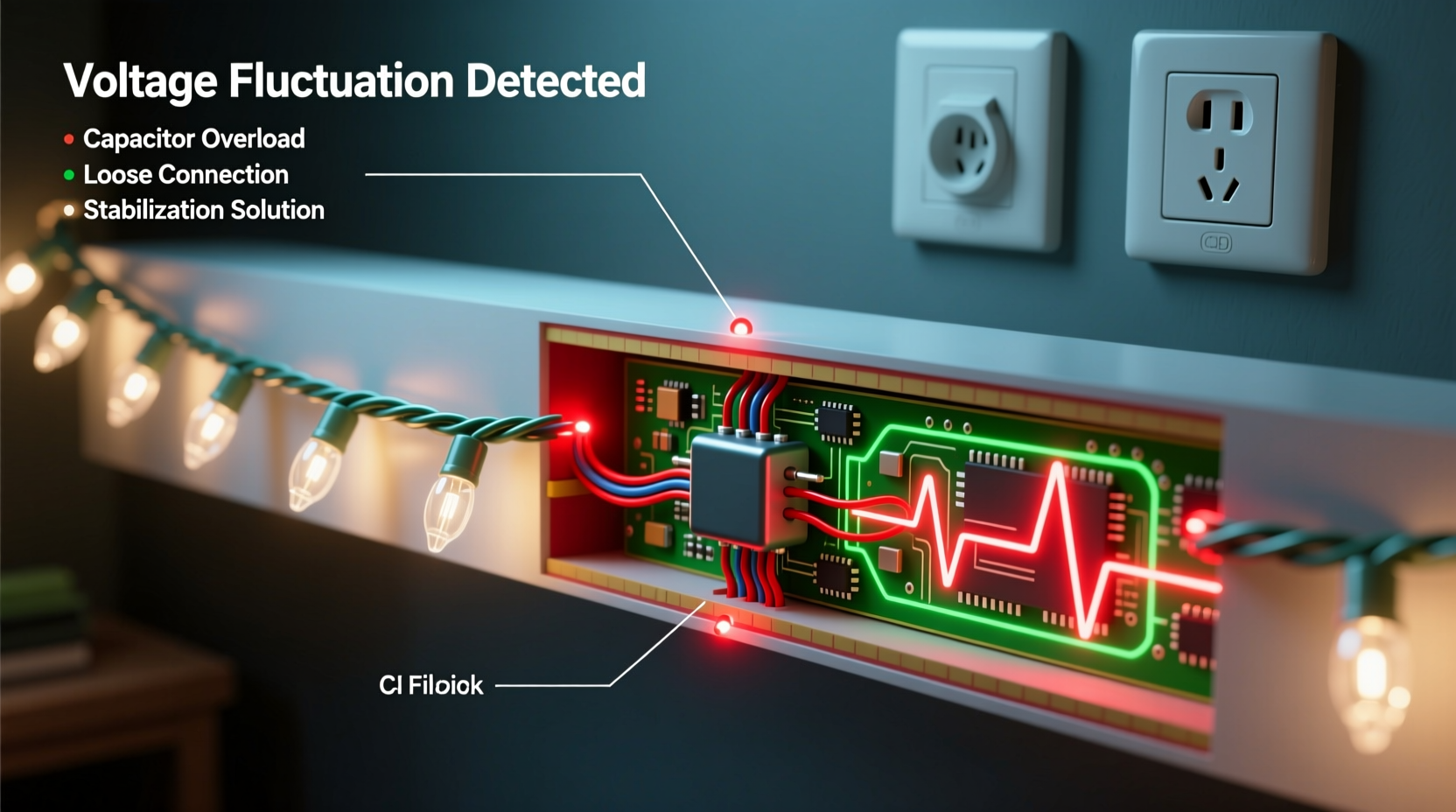
Voltage is the electrical pressure that drives current through wires to power devices. String lights, especially LED versions, are sensitive to changes in this pressure. Even minor dips or surges—too low or too high—can disrupt their operation. LEDs operate on low-voltage DC (direct current), but most household circuits supply AC (alternating current) at 120V or 240V. A built-in or external transformer converts this power, and any instability in input or conversion leads to visible flicker.
Filament-based incandescent string lights also flicker under inconsistent voltage, though the thermal inertia of the filament sometimes masks rapid changes. LEDs, however, respond instantly to voltage shifts. When incoming power fluctuates faster than the human eye can detect—typically above 50–60 Hz—flicker becomes imperceptible but still present, potentially causing eye strain or headaches over time.
“LEDs don’t forgive poor power quality. Even small voltage sags can cause noticeable flicker because there's no thermal buffer like with incandescent bulbs.” — Dr. Alan Reyes, Electrical Systems Engineer, GridWise Labs
The acceptable voltage range for most string lights is ±5% of nominal (e.g., 114V–126V on a 120V system). Beyond this, performance degrades. Devices such as dimmers, surge protectors, or shared circuits with high-draw appliances can introduce ripple effects into what should be a stable line.
Common Causes of Flickering String Lights
Not all flicker stems from the same source. Diagnosing the problem starts with isolating where it occurs: at the bulb level, within the string, or across the entire electrical network.
1. Loose or Corroded Connections
A common mechanical cause is poor contact between bulbs and sockets. Over time, vibration, weather exposure, or repeated installation can loosen bulb seating. In outdoor sets, moisture leads to oxidation, increasing resistance and interrupting current flow. One faulty connection can disrupt the entire series circuit.
2. Overloaded Circuits
Plugging multiple light strings into a single outlet or daisy-chaining beyond manufacturer limits draws excessive current. As demand spikes, voltage drops occur, especially if wiring is aged or undersized. This “brownout” effect dims lights momentarily before they recover—a classic sign of overload-induced flicker.
3. Incompatible or Failing Transformers/Drivers
LED string lights rely on drivers to convert AC to regulated DC. Low-quality or damaged drivers fail to smooth out voltage ripples. Using third-party adapters not rated for the specific light set introduces mismatched output, leading to erratic behavior.
4. Dimmer Switch Conflicts
Many indoor string lights connect to wall dimmers. Traditional dimmers use phase-cutting methods designed for incandescent loads. LEDs draw far less power, causing dimmers to misfire or cycle unpredictably. The result? Pulsing or shimmering lights even when controls appear stable.
5. External Power Variability
In rural areas or older buildings, utility-side voltage instability is common. Heavy machinery startup, transformer switching, or long feeder lines contribute to fluctuating supply. If flickering coincides with appliance use (e.g., HVAC systems turning on), the issue likely originates upstream.
How to Stabilize Voltage Flow: A Step-by-Step Guide
Stabilizing voltage isn’t just about fixing symptoms—it’s about creating a consistent power environment. Follow these steps systematically to eliminate flicker at its source.
- Unplug and inspect each bulb. Remove every bulb and check for darkening, bent bases, or corrosion. Clean socket contacts with a dry cloth or electrical contact cleaner. Reinsert firmly.
- Test individual sections. If using multiple strands, disconnect them and power each separately. Identify which segment flickers independently. Isolate faulty strings for repair or replacement.
- Verify power supply compatibility. Confirm the transformer or plug adapter matches the voltage and amperage requirements listed on the light packaging. Replace generic adapters with OEM-certified units.
- Use a dedicated circuit. Plug string lights into an outlet not shared with refrigerators, microwaves, or space heaters. Dedicated circuits minimize load competition and maintain steady voltage.
- Install a voltage regulator or stabilizer. For persistent issues, especially outdoors or in workshops, connect lights through an automatic voltage regulator (AVR). These devices monitor input and adjust output to stay within safe bounds.
- Upgrade to a compatible dimmer. If controlling brightness, replace old dimmers with LED-compatible models labeled “trailing-edge” or “ELV” (electronic low voltage).
- Consider a UPS for critical displays. For permanent installations like patios or signage, a small uninterruptible power supply (UPS) filters noise and provides backup during brief sags.
Tools and Devices That Help Stabilize Power
Beyond basic troubleshooting, specialized equipment ensures clean, consistent power delivery. Here’s a comparison of effective solutions:
| Device | Function | Best For | Limits |
|---|---|---|---|
| Surge Protector with Voltage Regulation | Filters spikes and corrects minor sags | Indoor holiday displays, living room accents | Limited correction range; not for chronic low voltage |
| Automatic Voltage Regulator (AVR) | Actively adjusts output to maintain 120V | Outdoor installations, garages, rural homes | Larger size; higher cost (~$80–$200) |
| Uninterruptible Power Supply (UPS) | Provides battery backup and power conditioning | Permanent landscape lighting, commercial signs | Requires periodic battery replacement |
| LED-Compatible Dimmer | Smoothly controls brightness without flicker | Wall-controlled ambient lighting | Only solves dimmer-related flicker |
For most homeowners, a mid-range AVR offers the best balance of protection and affordability. Look for models with LED indicators showing voltage status and auto-shutdown during extreme conditions.
Mini Case Study: Solving Flicker in a Backyard Patio Setup
Jamie installed 120 feet of LED string lights across her backyard pergola for evening entertaining. Within weeks, the lights began flickering erratically, worsening at dusk when the pool pump cycled on.
Initial checks revealed no loose bulbs or water damage. She tested the outlet with a multimeter and recorded voltage dropping from 121V to 108V whenever the pump started—well below the 114V minimum. The shared circuit was clearly overloaded.
Jamie consulted an electrician who recommended two actions: running a new dedicated 15-amp circuit to the patio and installing a 150-watt AVR between the outlet and light plug. After rewiring, voltage remained stable at 120V ±2V regardless of other loads. The flickering stopped completely, and the lights now perform reliably year-round.
This case highlights how environmental factors and circuit design interact. Aesthetic appeal depends on technical soundness.
Checklist: Eliminate Flicker and Stabilize Your String Lights
- ✅ Inspect all bulbs and sockets for damage or looseness
- ✅ Test outlet voltage under load with a digital multimeter
- ✅ Ensure power adapter matches light specifications exactly
- ✅ Avoid daisy-chaining beyond manufacturer limits
- ✅ Plug lights into a dedicated circuit, not shared with motors or heaters
- ✅ Replace outdated dimmers with LED-compatible versions
- ✅ Install a voltage regulator for outdoor or remote installations
- ✅ Consider a UPS for mission-critical or permanent displays
- ✅ Monitor performance weekly during peak usage seasons
Frequently Asked Questions
Can cold weather cause string lights to flicker?
Yes. Extreme cold affects both batteries in solar-powered sets and the efficiency of transformers. Additionally, contraction in metal components may loosen connections temporarily. Ensure all housings are sealed and rated for outdoor use in low temperatures.
Why do my string lights flicker only at night?
Nighttime flicker often correlates with increased household energy demand—HVAC systems, ovens, and entertainment systems running simultaneously. This collective load causes voltage sags. It may also coincide with utility grid adjustments during peak hours. A voltage regulator typically resolves this pattern.
Are flickering LED string lights dangerous?
Persistent flicker can indicate underlying electrical stress—overheating wires, failing insulation, or overloaded circuits—which poses fire risk. While occasional blinking due to a loose bulb is low-risk, systemic flicker warrants immediate investigation. Never ignore widespread or worsening instability.
Conclusion: Achieve Steady, Reliable Lighting
Flickering string lights are more than a nuisance—they’re signals. Whether caused by a wobbly bulb or an unsteady grid, each flicker points to a break in the delicate balance of electrical harmony. Addressing these issues goes beyond restoring ambiance; it safeguards your home and enhances the lifespan of your investment.
By applying systematic diagnostics, using appropriate tools, and understanding the role of stable voltage, you transform unpredictable twinkles into dependable glow. Don’t settle for temporary fixes when lasting stability is within reach. Assess your setup today, implement the right solution, and enjoy flawless illumination that lasts season after season.




 浙公网安备
33010002000092号
浙公网安备
33010002000092号 浙B2-20120091-4
Comments
No comments yet. Why don't you start the discussion?