
Vintage light strings bring charm and nostalgia to any space—whether draped across a mantel, wrapped around a tree, or strung along a patio railing. But when they spark upon plugging in, especially only at specific outlets, it raises immediate concern. While a brief spark can be normal due to inrush current, consistent or excessive sparking—particularly selective to certain outlets—can signal underlying electrical issues. Understanding the root causes is essential not just for preserving your decor, but for ensuring home safety.
This behavior isn’t random. It reflects the interaction between aging wiring in the lights, outlet condition, circuit load, grounding integrity, and household voltage stability. By diagnosing these factors systematically, you can determine whether the issue is minor or requires urgent attention.
Understanding Normal vs. Dangerous Sparking
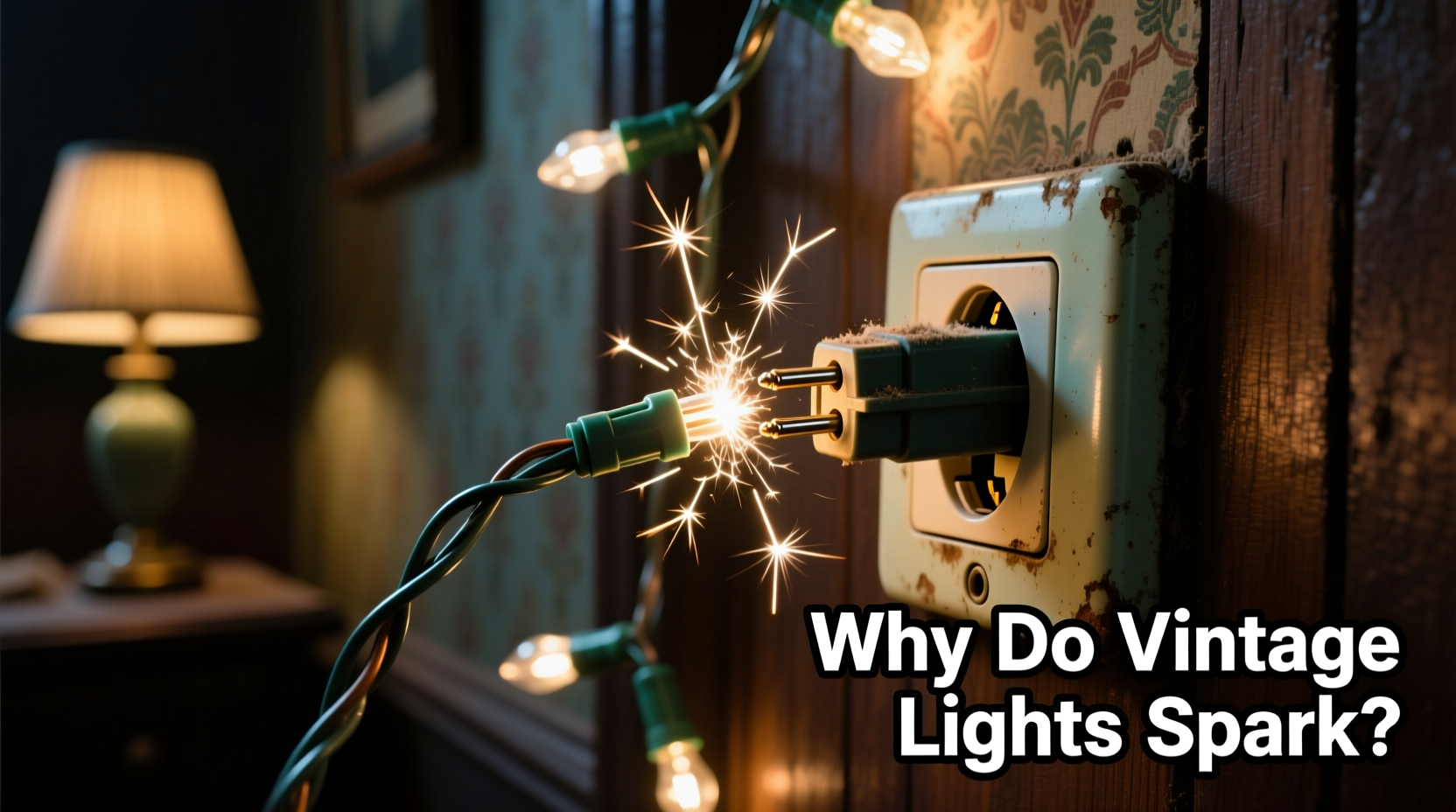
Not all sparks are created equal. A tiny, instantaneous blue flash when plugging in a device is often harmless. This occurs due to inrush current—a brief surge of electricity as the circuit closes and components like filaments or capacitors draw initial power. In vintage incandescent strings, cold filaments have lower resistance, so they momentarily pull more current until they heat up.
However, dangerous sparking includes:
- Large, sustained sparks that resemble mini lightning bolts
- Orange or yellow sparks (indicative of arcing across poor contacts)
- Sparks accompanied by buzzing, sizzling, or burning smells
- Sparking that continues after the plug is fully seated
- Visible pitting or charring on the plug or outlet
If your vintage lights spark dramatically—but only at some outlets—the problem likely lies in the compatibility between the light string’s condition and the outlet’s electrical characteristics.
“A small spark at plug-in is common with resistive loads like incandescent lights. But if it’s happening selectively at certain outlets, that’s a red flag worth investigating.” — Daniel Reeves, Licensed Electrician & Home Safety Inspector
Common Causes of Outlet-Specific Sparking
The fact that sparking occurs only at certain outlets points to localized differences in electrical conditions. Here are the most frequent culprits:
1. Loose or Worn Outlet Receptacles
Over time, outlet slots loosen from repeated plugging and unplugging. When a plug doesn’t make firm contact, electricity can arc across tiny gaps, causing visible sparks. Vintage light strings often have slightly oxidized or misshapen prongs, exacerbating poor contact. Outlets in high-traffic areas or older homes are more prone to wear.
2. Poor Grounding or Neutral Connections
Many vintage light strings lack grounding (two-prong plugs), making them reliant on stable hot and neutral connections. If an outlet has a loose neutral wire behind it, voltage can fluctuate unpredictably when a load is applied. This instability increases arcing risk during plug-in. Ungrounded outlets may also fail to dissipate static or surge energy safely.
3. Circuit Overload or Voltage Drop
Some circuits operate under higher load, especially in kitchens or living rooms where multiple devices run simultaneously. Plugging lights into an already strained circuit can cause momentary voltage sag or surge, increasing sparking likelihood. Vintage wiring in the light string may struggle with inconsistent voltage, leading to erratic current flow.
4. Corrosion or Oxidation in the Outlet
Dust, moisture, or age can lead to oxidation inside outlet contacts. This creates resistance, which promotes heating and arcing. You might not see it visibly, but internal corrosion disrupts smooth current transfer. This effect is magnified with older light strings that already have higher resistance due to aged wires and sockets.
5. Differing Outlet Ages and Quality
Modern outlets are designed with tighter tolerances and better materials than those from the 1970s–1990s. If your home has a mix of old and new outlets, the newer ones may provide crisper connections, reducing sparking. Conversely, outdated outlets with brass contacts worn thin may not grip plugs securely, inviting arcing.
How to Diagnose the Problem: A Step-by-Step Guide
Follow this process to identify whether the sparking is due to the lights, the outlets, or both.
- Unplug all non-essential devices on the same circuit to reduce load. Try plugging the lights into a suspect outlet again. If sparking decreases, circuit overload may be involved.
- Inspect the light string’s plug and cord. Look for fraying, discoloration, or bent prongs. Use a multimeter to check continuity and resistance. High resistance (>1 ohm across prongs) suggests internal degradation.
- Examine each outlet where sparking occurs. Insert a plug slowly and watch for arcing. Wiggle the plug gently—if sparking increases, the receptacle is likely loose.
- Use a circuit tester (available at hardware stores) to verify correct wiring. Check for open ground, open neutral, or reversed polarity. These faults are common in older installations.
- Test the lights on a known-good outlet, such as one recently installed or in a newer part of the house. If no sparking occurs, the original outlets are suspect.
- Try a different vintage string on the same outlet. If it also sparks, the outlet is likely the issue. If only one string sparks everywhere, the fault lies with the lights.
Do’s and Don’ts: Managing Vintage Light Safety
| Action | Recommended? | Reason |
|---|---|---|
| Plug vintage lights into GFCI outlets | ✅ Yes | GFCIs detect current imbalances and cut power, reducing fire and shock risk. |
| Use extension cords as permanent solutions | ❌ No | Increases resistance and failure points; violates electrical code. |
| Plug lights into power strips with surge protection | ✅ Yes (with caution) | Surge protectors help, but ensure the strip is rated for continuous use. |
| Leave sparking lights unattended | ❌ Never | Even minor arcing can ignite nearby flammable materials over time. |
| Replace worn outlets yourself if experienced | ✅ Yes (if qualified) | Properly replaced outlets improve safety—but turn off power first. |
Real Example: The Case of the Holiday Porch Lights
Sarah in Portland inherited a set of 1960s C7 Christmas lights from her grandmother. Each holiday season, she’d hang them on her front porch. For years, they worked fine—until one year, plugging them into the outdoor outlet caused a loud pop and bright spark. Concerned, she tried the same string indoors: no sparking. She repeated the test—same result.
She called an electrician, who discovered the outdoor outlet, though weatherproof, had corroded neutral terminals due to years of moisture exposure. The vintage lights’ higher inrush current was enough to arc across the degraded connection. Indoors, outlets were newer and tightly connected, so no sparking occurred. The electrician replaced the outdoor receptacle with a new, tamper-resistant model and recommended Sarah consider upgrading her vintage strings to LED equivalents for long-term reliability.
Sarah now inspects all her decorative lighting annually and avoids using any string that shows signs of wear. Her porch is still festive—but significantly safer.
Tips for Preserving and Using Vintage Lights Safely
If you’re committed to keeping vintage light strings operational, follow these best practices:
- Limits usage time: Run vintage strings for no more than 4–6 hours at a time. Heat buildup accelerates insulation breakdown.
- Check bulbs regularly: One burnt-out bulb can increase voltage across remaining bulbs, shortening lifespan and increasing failure risk.
- Clean contacts: Use electrical contact cleaner on plug prongs and socket tabs to reduce resistance.
- Avoid daisy-chaining: Never connect more than three strings unless the manufacturer explicitly allows it. Vintage sets weren’t designed for modern chaining loads.
- Store properly: Keep in a cool, dry place away from rodents. Use acid-free tissue paper if storing in boxes long-term.
When to Retire Vintage Lights
No amount of care can overcome fundamental degradation. Consider retiring vintage light strings if:
- The insulation is cracked, brittle, or easily peeled back
- Wires feel stiff or make cracking sounds when bent
- There’s evidence of past overheating (discoloration, melted sockets)
- They consistently trip breakers or blow fuses
- They spark excessively even on new, tested outlets
Modern LED retrofit options can mimic the warm glow of vintage incandescents while using 90% less energy and generating minimal heat. Many are designed to fit traditional C7 or C9 sockets, allowing you to preserve the aesthetic without the risk.
FAQ
Is a little spark when plugging in lights normal?
Yes, a small blue spark that lasts less than a second is typically due to inrush current and is not dangerous. However, if the spark is large, noisy, or happens repeatedly at the same outlet, further inspection is needed.
Can I replace the plug on my vintage light string to stop sparking?
Replacing the plug may help if the original is damaged, but it won’t fix deeper issues like internal wire degradation or socket corrosion. A new plug improves connection quality but doesn’t eliminate risks from aged components.
Why don’t my vintage lights spark on a power strip but do on a wall outlet?
Power strips often have built-in surge suppression and smoother internal contacts, reducing arcing. However, this doesn’t mean the lights are safe—just that the strip is buffering the flaw. Always address the root cause rather than relying on intermediaries.
Final Checklist: Is Your Setup Safe?
- ✅ Tested sparking behavior across multiple outlets
- ✅ Inspected light string for damaged wires, plugs, or sockets
- ✅ Verified outlet wiring with a circuit tester
- ✅ Ensured outlets are tight and free of debris
- ✅ Limited runtime and avoided unattended operation
- ✅ Considered upgrading to modern LED alternatives for high-use displays
Conclusion: Prioritize Safety Without Sacrificing Style
Vintage light strings spark selectively not by coincidence, but due to measurable electrical inconsistencies. While their nostalgic glow is irreplaceable, safety must come first. By understanding the interplay between aging decor and household wiring, you can enjoy seasonal charm without compromising peace of mind.
Take action today: inspect your outlets, test your lights, and replace what’s beyond saving. Whether you choose to restore, retrofit, or retire your vintage strings, doing so thoughtfully ensures your holidays stay bright—for all the right reasons.




 浙公网安备
33010002000092号
浙公网安备
33010002000092号 浙B2-20120091-4
Comments
No comments yet. Why don't you start the discussion?