
Christmas light displays have evolved far beyond individual front-yard spectacles. Across suburbs from Portland to Pittsburgh, neighborhoods now synchronize music, choreograph lighting sequences, map walking routes, and even pool resources for shared power infrastructure. This isn’t just festive flair—it’s civic ritual in LED form. Coordinated light displays reflect deeper human needs: belonging, collective joy, intergenerational connection, and resilience through shared creativity. They emerge organically—not from city mandates or HOA directives—but from neighbors knocking on doors, texting group chats, and showing up with extension cords and hot cocoa. Understanding *why* these collaborations form—and how to meaningfully enter one—is essential for anyone who wants more than glittering bulbs: they want community, continuity, and quiet magic in December.
The Social Architecture Behind Synchronized Light Displays
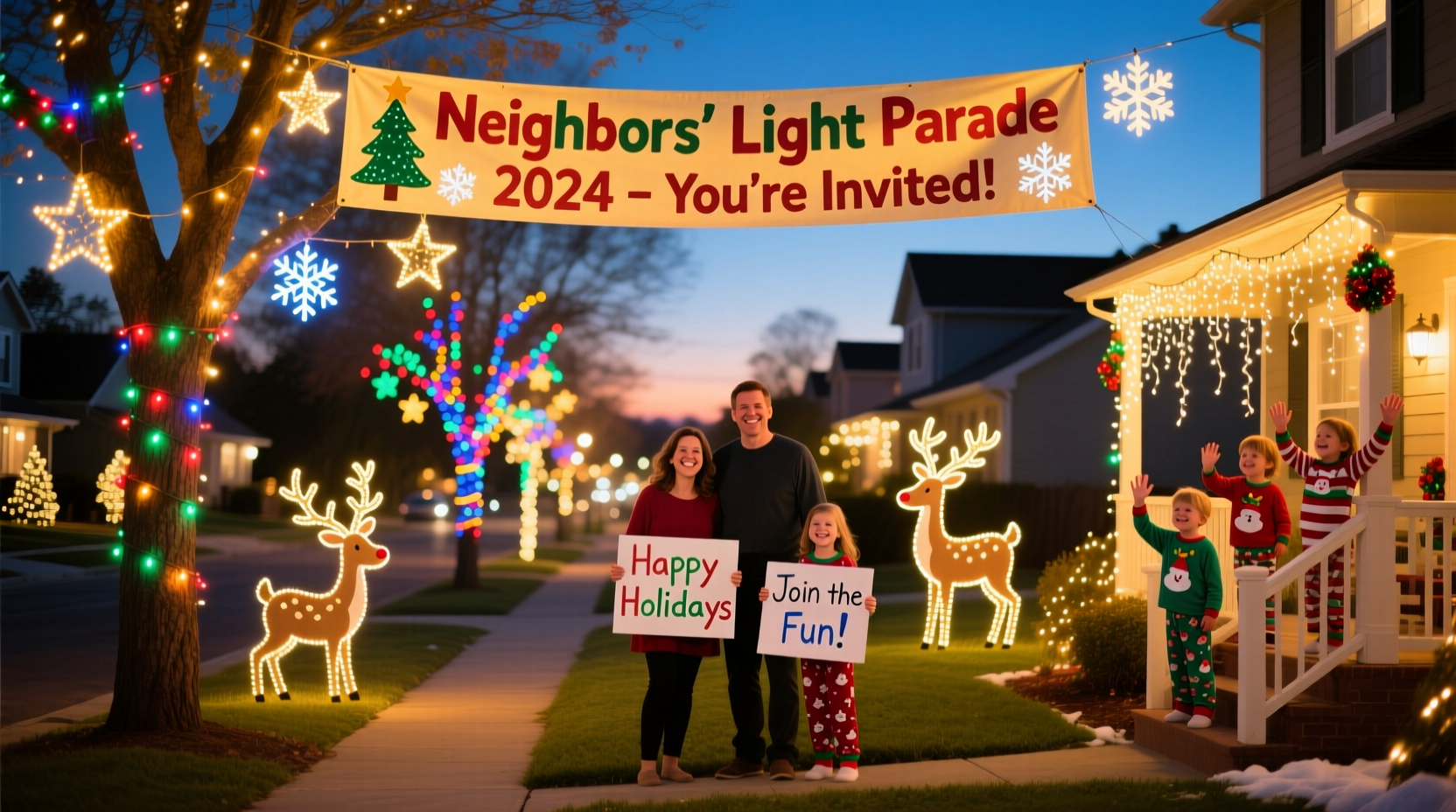
Coordination rarely begins with logistics. It starts with proximity, trust, and a shared emotional rhythm. When three or four households on a block independently install animated displays—especially if their themes align (vintage Santa, nature-inspired, musical)—a natural momentum builds. Residents notice the visual harmony, comment on it, and begin asking, “What if we synced the music?” or “Could we all turn ours on at 5:30?” That question marks the pivot from parallel activity to collaborative practice.
Sociologists call this “micro-public formation”: small-scale, voluntary, place-based collectives that generate shared meaning without formal structure. A 2023 study by the University of Michigan’s Center for Community Wellbeing found neighborhoods with coordinated light displays reported 37% higher rates of residents knowing *all* their immediate neighbors by name—and 52% greater likelihood of informal mutual aid (e.g., pet-sitting, snow shoveling, checking on elders) year-round. The lights become both symbol and scaffold: visible proof that cooperation is possible, and an ongoing invitation to participate.
“Light coordination is often the first time many adults experience unstructured, joyful collaboration since childhood play. There’s no agenda, no performance review—just shared delight and the satisfaction of making something beautiful together.” — Dr. Lena Torres, Urban Sociologist and author of Small Spaces, Shared Light
Why Coordination Happens: Five Core Drivers
Behind every synchronized display lies a constellation of motivations—not all of them obvious. These drivers shape how coordination unfolds, who participates, and how long it lasts.
- Shared Aesthetic Vision: Neighbors discover overlapping tastes—mid-century modern motifs, nostalgic Americana, or minimalist white-light elegance—and realize unity amplifies impact.
- Logistical Necessity: Power load management, Wi-Fi range for smart controllers, and avoiding signal interference between Bluetooth speakers make technical alignment practical, not just pretty.
- Intergenerational Anchoring: Families with young children seek consistency and predictability; teens volunteer to program sequences; retirees host viewing parties. Coordination creates roles across ages.
- Resilience Building: After floods, wildfires, or pandemic isolation, light coordination becomes a low-stakes, high-reward act of communal healing—a visible “we’re still here, and we’re choosing joy.”
- Legacy Creation: Multi-year traditions (e.g., “Maple Street Lights Since 2016”) foster pride, attract visitors, and give newcomers a ready-made entry point into neighborhood identity.
How to Join In: A Realistic, Step-by-Step Pathway
Walking up to a dazzling block and saying “I’d like to join” can feel daunting—especially if coordination has been running for years. Success hinges less on technical skill and more on relational intention. Here’s how to integrate authentically:
- Observe First (Weeks 1–2): Visit the display at different times. Note which houses are lit, when music plays, where people gather. Read any posted signs (“Neighborhood Light Tour – Sponsored by Maple St. Block Party Committee”).
- Connect Personally (Week 3): Knock on one or two homes—not the most elaborate ones, but mid-block houses with warm porch lighting or visible holiday decor. Say: “Hi, I’m [Name] from [Street], and your lights are wonderful. Is there a group chat or meeting I could learn about?”
- Attend the Next Gathering (Week 4–5): Most established groups hold a pre-season planning session—often in late September or early October—in a garage, community center, or via Zoom. Bring cookies. Listen more than you speak.
- Start Small & Specific (Week 6+): Volunteer for one concrete task: managing the neighborhood sign-in sheet for visitors, testing speaker volume levels, updating the Google Map of display locations, or helping a neighbor troubleshoot a controller.
- Contribute Your Strength (Ongoing): Don’t assume you need lights to belong. Are you organized? Help draft the annual timeline. Tech-savvy? Offer to document wiring diagrams. Great with kids? Lead the “light scavenger hunt” handouts. Consistency matters more than spectacle.
What Works (and What Doesn’t): A Practical Comparison Table
| Area | Effective Approach | Ineffective Approach |
|---|---|---|
| Communication | Dedicated WhatsApp/Signal group *only* for light logistics; monthly email summary for non-participants | Using Nextdoor for urgent requests; mixing light talk with general neighborhood complaints |
| Power Management | Shared GFCI-protected outlets on main street; labeled circuit map; rotating “power monitor” role | Individual households daisy-chaining 15+ extension cords; no shared understanding of breaker limits |
| Inclusivity | “Light Lite” option: string lights only, no music, no timer—still listed on map with “Quiet Zone” icon | Assuming everyone must match intensity, duration, or theme—or treating minimal participation as disengagement |
| Conflict Resolution | Pre-agreed “quiet hours” (e.g., no music after 9 p.m.); rotating facilitator for seasonal check-ins | Addressing noise complaints via anonymous notes or public Facebook posts |
| Continuity | “Stewardship folder” with vendor contacts, controller passwords, past timelines, and photos stored in shared cloud drive | Knowledge held by one person; no documentation; annual re-creation of basic systems |
A Mini Case Study: The Oakwood Avenue Collective (Columbus, OH)
Oakwood Avenue had no coordinated lights until 2019, when Maria Chen (a retired electrical engineer) noticed her neighbor Jamal’s vintage train display syncing accidentally with her own animated reindeer sequence during a rainstorm—both controllers glitched to the same 120 BPM tempo. They laughed, filmed it, and posted it to the neighborhood Facebook group. Within 48 hours, six households replied: “Can we try that on purpose?”
They met in Maria’s garage. No agenda. Just coffee, clipboards, and questions: “What music do you like?” “How much time can you spend setting up?” “Do you mind if kids walk your lawn?” By October, they’d agreed on a shared playlist (classical and jazz standards, avoiding copyright issues), mapped safe pedestrian flow, and created a shared spreadsheet tracking outlet locations and amperage. In Year 1, only eight homes participated. In Year 2, they added a “Light Ambassador” role—rotating monthly—to welcome visitors and answer questions. In Year 3, local high school students built a custom web map with accessibility filters (e.g., “low-sensory route,” “pet-friendly path”). Today, Oakwood hosts over 1,200 visitors each December weekend—and the group funds a winter coat drive using donation jars at the end of the route. Their secret? They never voted on anything. Decisions emerged from what felt generative, not what was technically optimal.
Your Action Checklist: Joining With Integrity
- ✅ Identify one neighborhood light hub (e.g., most-visited house, community bulletin board, local library display)
- ✅ Attend a non-holiday neighborhood event (farmers’ market, cleanup day) to meet faces before mentioning lights
- ✅ Review your own capacity honestly: time, budget, physical ability, tech comfort—then name one realistic contribution
- ✅ Draft a warm, low-pressure message to send after initial contact: “I’d love to help with [specific task]—no pressure to say yes!”
- ✅ Commit to showing up consistently for *three* seasons—even if your role stays small—before assuming leadership
FAQ: Practical Questions From New Participants
What if my house doesn’t have outdoor outlets—or my landlord won’t allow permanent installations?
Many coordinated groups maintain a “portable light kit” loaner program: battery-powered projectors, solar string lights, and rechargeable speaker packs available for seasonal checkout. Ask about it at the first meeting—or suggest starting one if it doesn’t exist. One Oakwood resident uses magnetic LED strips on her metal garage door, requiring zero drilling.
Do I need expensive smart lights or controllers to participate?
No. Over 60% of participating households in the 2023 National Neighborhood Light Survey used basic plug-in timers ($12–$25) and wired speakers. Coordination focuses on timing windows (“all on at 5:30 p.m.”) and thematic cohesion—not pixel-perfect synchronization. A simple “warm white only” or “red/green accent” agreement unites far more homes than advanced tech ever could.
What happens when someone moves away—or loses interest?
Healthy groups design for turnover. They document everything, rotate responsibilities quarterly, and celebrate “graduating” participants publicly (“Thanks to Ben for 4 years of sound engineering!”). One Portland neighborhood holds an “Off-Season Social” each March—coffee and light-bulb recycling—to reconnect and invite new contributors. Continuity comes from systems, not saviors.
Conclusion: Light Is the First Language of Belonging
Coordinating Christmas lights isn’t about perfection. It’s about showing up with curiosity instead of expectation, offering help before being asked, and trusting that beauty multiplies when shared—not duplicated. It’s teenagers learning to solder wires alongside retirees who remember hand-wound incandescent strings. It’s single parents finding babysitting swaps while untangling cords. It’s immigrants decorating with symbols from homelands, welcomed not as novelties but as vital threads in the neighborhood’s evolving story. The lights themselves are temporary. But the relationships forged in their glow—the shared laughter over a misfired animation, the quiet pact to keep the tradition alive after a neighbor’s illness, the child who grows up knowing every house by its light signature—that’s infrastructure. That’s legacy. That’s what transforms a collection of addresses into a place people choose to return to, year after year.
You don’t need permission to begin. You need only one conversation, one offer, one willingness to stand in the cold and admire someone else’s work before thinking about your own. Start there. The rest will illuminate itself.




 浙公网安备
33010002000092号
浙公网安备
33010002000092号 浙B2-20120091-4
Comments
No comments yet. Why don't you start the discussion?