
Parrots have long captivated humans with their uncanny ability to repeat words, phrases, and even full sentences—often with striking clarity and perfect timing. From household pets saying “hello” at the doorbell to YouTube sensations reciting Shakespeare, parrot mimicry is more than just entertainment. It’s a complex behavior rooted in biology, evolution, and social intelligence. Unlike most animals, parrots don’t just imitate sounds randomly; they use vocal mimicry as a tool for communication, integration, and cognitive expression. Understanding why parrots mimic human speech reveals not only insights into avian intelligence but also deepens our appreciation of their emotional and social lives.
The Biological Basis of Vocal Mimicry
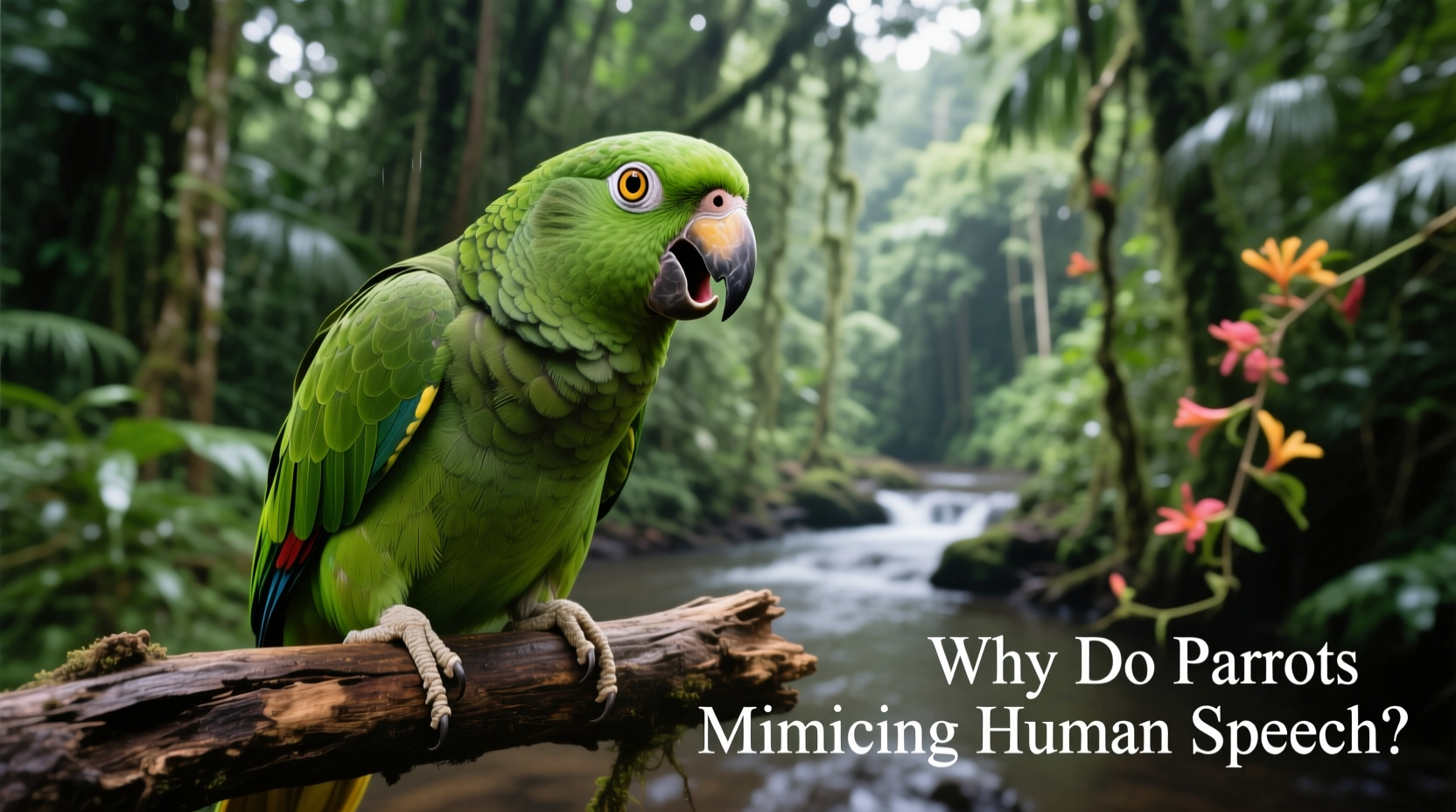
At the heart of parrot mimicry lies a specialized brain structure known as the \"song system.\" While many birds can produce calls and songs, parrots belong to a rare group—alongside songbirds and hummingbirds—that possess the neural circuitry required for vocal learning. This means they can hear a sound, process it, and reproduce it accurately, even if it’s entirely foreign to their species.
Research has shown that parrots have a unique cluster of neurons called the \"core and shell\" regions within their song nuclei. These areas are far more developed than in other birds, allowing them to not only memorize sounds but also modify pitch, tone, and rhythm. This advanced neurology enables parrots to replicate everything from car alarms to laughter, often embedding these sounds into their daily vocal routines.
Unlike humans, who use vocal cords, parrots generate sound through a specialized organ called the syrinx, located at the base of the trachea. The syrinx allows independent control of two sound sources, enabling some parrots to produce two different notes simultaneously—a phenomenon known as biphonation. This anatomical advantage contributes to their remarkable vocal precision and range.
Social Integration and Flock Identity
In the wild, parrots are highly social creatures that live in tight-knit flocks. Vocalizations play a crucial role in maintaining group cohesion, identifying members, and signaling danger. Each flock develops its own set of contact calls—essentially an acoustic \"dialect\"—that helps individuals recognize one another over long distances in dense forests.
When a parrot mimics human speech, it may be attempting to integrate into its human environment as if the household were its new flock. Dr. Irene Pepperberg, a leading expert in avian cognition and the researcher behind the famous African grey parrot Alex, observed that captive parrots often assign meaning to repeated phrases based on context. For example, a parrot might learn to say “Want a nut?” when it sees its owner approaching the treat jar, having associated the phrase with positive outcomes.
“Parrots don’t just copy sounds—they assign value to them. When a parrot says ‘I love you,’ it may not understand romance, but it likely knows that saying it results in affection.” — Dr. Irene Pepperberg, Avian Cognition Researcher
This behavior underscores a key insight: mimicry in parrots is not mindless repetition. It is a socially motivated act, driven by the need to belong and communicate effectively within their perceived social group—whether that group consists of other parrots or humans.
Cognitive Complexity Behind the Imitation
One reason parrot mimicry fascinates scientists is that it reflects high-level cognitive processing. Studies have demonstrated that some parrots can associate words with objects, colors, shapes, and even abstract concepts like “same” and “different.” Alex the African grey, for instance, could identify seven colors, five shapes, and quantities up to six—all through vocal labels he learned and used appropriately.
This suggests that when parrots mimic human speech, they’re not merely echoing sounds. They may be engaging in symbolic thinking, where specific noises represent tangible things or actions. In captivity, this ability allows parrots to interact meaningfully with their caregivers, respond to questions, and express desires such as wanting out of the cage or seeking interaction.
Moreover, parrots exhibit problem-solving skills, self-recognition in mirrors (a sign of self-awareness), and emotional attachment to individuals. Their mimicry often reflects emotional states: a content parrot might whistle cheerfully, while a stressed one could repeat anxious phrases or scream loudly. This emotional layer adds depth to their vocal behavior, making it both functional and expressive.
How Parrots Learn: A Step-by-Step Process
Mimicry doesn’t happen overnight. Parrots go through a structured learning phase, especially during early development. Here's how the process typically unfolds:
- Listening Phase: Young parrots spend weeks observing and listening to sounds in their environment, whether from parents, siblings, or human caregivers.
- Vocal Experimentation: They begin babbling—producing rough approximations of heard sounds, much like human infants.
- Refinement Through Feedback: Correct attempts are reinforced through attention, treats, or social response, encouraging repetition.
- Contextual Association: Over time, the parrot links specific words with outcomes (e.g., saying “step up” leads to being placed on a perch).
- Spontaneous Use: Eventually, the parrot uses the word independently and appropriately, demonstrating comprehension beyond rote memory.
This progression mirrors human language acquisition and highlights the sophisticated learning mechanisms at work in parrot brains.
Species Variability in Mimicry Ability
Not all parrots mimic equally. Some species are renowned for their vocal talents, while others are less inclined or capable. Below is a comparison of common pet parrots and their mimicry potential:
| Species | Vocabulary Size Potential | Clarity of Speech | Social Motivation | Best For |
|---|---|---|---|---|
| African Grey Parrot | 500–1000+ words | Excellent | Very High | Advanced learners, cognitive enrichment |
| Amazon Parrot | 100–300 words | Good to Very Good | High | Families, interactive homes |
| Budgerigar (Budgie) | 100–500 words | Fair to Good | Moderate | Beginners, children’s pets |
| Cockatoo | 50–200 words | Fair (louder, less clear) | Very High (emotionally driven) | Companionship, emotional bonding |
| Conure | 10–50 words | Poor to Fair | Moderate | Playful households, casual talkers |
While African greys consistently rank at the top for linguistic ability, smaller species like budgies can still develop impressive vocabularies with consistent training. Social motivation often outweighs raw talent—parrots that form strong bonds with humans tend to mimic more frequently and purposefully.
Real-Life Example: N’kisi and the Power of Contextual Language
N’kisi, an African grey parrot owned by animal communicator Aimee Morgana, became famous in the early 2000s for apparent spontaneous language use. On one documented occasion, N’kisi saw a picture of a man with a bald head and said, “You got hurt?” When corrected that the man wasn’t injured, N’kisi replied, “Looks like a sore head.”
This exchange suggested not only vocabulary recall but conceptual linking between visual cues (baldness resembling a wound) and verbal expression. While skeptics questioned whether these instances were prompted or coincidental, video evidence and behavioral logs indicated that N’kisi used words contextually across multiple settings. His case remains a compelling example of how parrot mimicry can transcend imitation and approach meaningful communication.
Do’s and Don’ts of Encouraging Healthy Vocalization
Encouraging mimicry should be done thoughtfully to support your parrot’s well-being. Follow this checklist to promote positive vocal development:
- Do speak clearly and consistently when teaching words.
- Do reinforce desired sounds with praise or treats.
- Do expose your parrot to varied but appropriate audio environments (e.g., calm conversation, music).
- Do monitor emotional state—excessive screaming may signal stress, not learning.
- Don’t reward unwanted noises (e.g., mimicking alarms or aggressive tones).
- Don’t force interaction; allow the parrot to initiate communication.
- Don’t use harsh tones or punishment—this damages trust and increases anxiety.
Frequently Asked Questions
Can all parrots learn to talk?
No, not all parrots will talk, even within highly vocal species. Individual personality, early exposure, social interaction, and mental stimulation play major roles. Some parrots choose not to vocalize despite ideal conditions, while others surprise owners with sudden bursts of speech after months of silence.
Why does my parrot scream certain phrases at night?
Parrots may repeat phrases during twilight hours due to natural flock-call instincts. In the wild, parrots call to regroup at dawn and dusk. Captive birds often transfer this behavior to human-made sounds. If nighttime vocalizations become disruptive, ensure your parrot has a quiet, dark sleeping area and avoid reinforcing late-night noise with attention.
Is mimicry a sign of intelligence?
Yes—but with nuance. Mimicry itself is a learned skill, but when combined with contextual use, problem-solving, and emotional responsiveness, it reflects advanced cognition. Parrots that adapt their vocalizations to specific situations demonstrate not just memory, but understanding.
Conclusion: Embracing the Voice of a Living Flock Member
Parrots mimic human speech not because they aim to entertain, but because they are deeply social, intelligent beings striving to connect. Their voices carry the echoes of ancient rainforest flocks, now adapted to living rooms and kitchens. When a parrot says “good morning” or sings along to a favorite tune, it’s extending an invitation to shared experience.
Understanding the reasons behind this behavior transforms how we interact with these birds. Instead of viewing mimicry as a party trick, we can appreciate it as a bridge between species—one built on trust, attention, and mutual recognition. Whether your parrot speaks fluently or communicates through whistles and body language, every sound is a window into its inner world.




 浙公网安备
33010002000092号
浙公网安备
33010002000092号 浙B2-20120091-4
Comments
No comments yet. Why don't you start the discussion?