
True crime has exploded in popularity over the past decade, transforming from a niche genre into a mainstream cultural phenomenon. From podcasts like \"Serial\" to documentaries such as \"Making a Murderer\" and streaming series like \"The Ted Bundy Tapes,\" audiences are consuming real-life stories of violence, deception, and justice at an unprecedented rate. But why do so many people feel compelled to binge these often-grim narratives—and what happens when this fascination turns into an all-consuming habit? More importantly, could this widespread trend be quietly taking a toll on mental health?
The allure of true crime isn't just about morbid curiosity. It taps into deep psychological mechanisms—our need for control, our desire for justice, and our instinctive drive to understand danger. However, as viewers scroll through episode after episode late into the night, questions arise: Are we desensitizing ourselves to trauma? Are we increasing anxiety without realizing it? And where does healthy interest end and harmful obsession begin?
The Psychology Behind True Crime Fascination
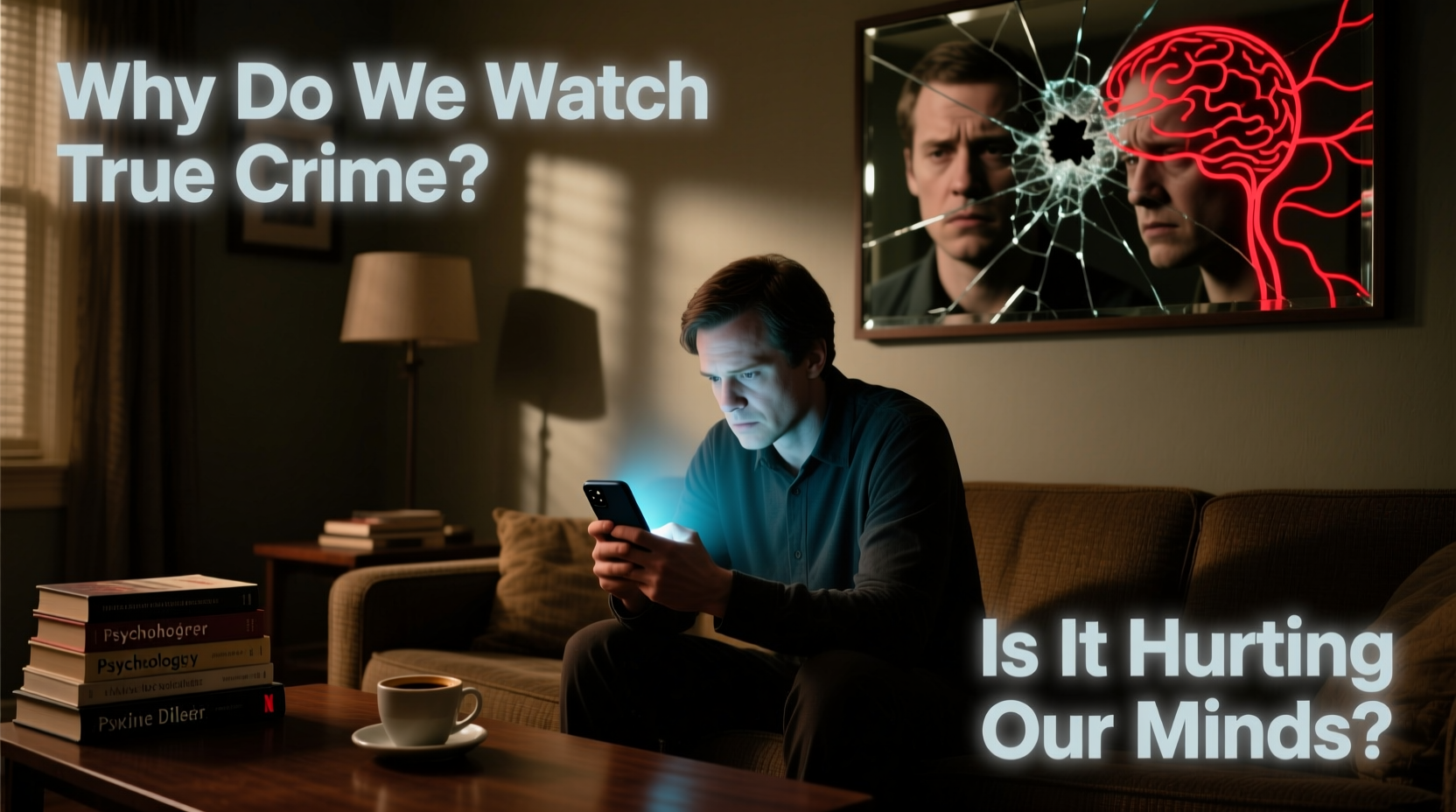
At first glance, it may seem counterintuitive that people would choose to spend their leisure time immersed in stories of murder, kidnapping, and abuse. Yet the appeal lies in a complex interplay of cognitive and emotional factors.
- Control Through Understanding: Knowing how crimes happen—and how they’re solved—can give viewers a sense of mastery over fear. By studying criminal behavior, people subconsciously believe they can better protect themselves or avoid becoming victims.
- Moral Clarity: True crime often presents clear distinctions between good and evil. In a world where ethical lines can feel blurred, this black-and-white narrative offers psychological comfort.
- Cognitive Engagement: Many true crime stories unfold like puzzles. Viewers become amateur detectives, piecing together clues and predicting outcomes—an engaging mental exercise that stimulates problem-solving instincts.
- Empathy and Advocacy: Some are drawn to cases involving wrongful convictions or systemic failures. These stories inspire outrage and motivate advocacy, turning passive viewing into a form of social engagement.
Dr. Katherine Ramsland, a forensic psychologist and author of numerous books on criminal behavior, explains:
“People are not just watching for thrills—they're seeking answers. They want to know how someone could do such things, and whether they’d recognize the signs if it happened near them.” — Dr. Katherine Ramsland, Forensic Psychologist
This quest for understanding can be both empowering and unsettling. While it satisfies intellectual curiosity, it also forces confrontation with humanity’s darker impulses.
The Binge-Watching Cycle: Why We Can’t Stop Watching
Binge-watching true crime differs from casual viewing. It involves marathon sessions—sometimes lasting hours—where one episode seamlessly leads into the next. Several factors contribute to this compulsive behavior:
- Cliffhangers and Narrative Hooks: True crime series are expertly structured to keep viewers engaged. Each episode ends with unanswered questions, creating a “just one more” mentality.
- Algorithmic Reinforcement: Streaming platforms recommend similar content immediately after finishing a show, making disengagement difficult.
- Emotional Investment: Viewers form parasocial bonds with victims, investigators, or even perpetrators. This emotional attachment makes it hard to walk away.
- Nighttime Viewing Habits: Many consume true crime before bed, using it as a distraction from daily stress. Ironically, this can worsen sleep quality and increase nighttime anxiety.
Mental Health Impacts: When Interest Becomes a Burden
Occasional viewing of true crime is unlikely to cause harm. But frequent, prolonged exposure—especially when consumed emotionally or late at night—can lead to measurable psychological effects.
Anxiety and Hypervigilance
Repeated exposure to violent scenarios can condition the brain to perceive the world as more dangerous than it is. A 2022 study published in the Journal of Trauma & Dissociation found that individuals who regularly watched true crime reported higher levels of perceived personal risk, even when statistical data contradicted those fears.
One participant noted: “After watching a string of home invasion cases, I started checking my locks three times before bed—even though I live in a low-crime neighborhood.”
Sleep Disruption
Engaging with disturbing content before bedtime activates the sympathetic nervous system, increasing cortisol and delaying the onset of sleep. The American Academy of Sleep Medicine warns that emotionally charged media can mimic symptoms of PTSD in vulnerable individuals, particularly when viewed in isolation or during periods of stress.
Desensitization and Emotional Numbing
Over time, constant exposure to graphic details may dull emotional responses to real-world suffering. This doesn’t mean viewers become indifferent—it means their brains adapt by suppressing empathy to manage cognitive overload. While this can serve as a short-term coping mechanism, long-term emotional detachment may affect relationships and moral reasoning.
Vicarious Trauma
Especially in cases involving child victims, sexual assault, or torture, viewers may experience symptoms akin to secondary traumatic stress—flashbacks, nightmares, or intrusive thoughts—even though they weren’t directly involved. Therapists report seeing clients who unknowingly absorbed trauma through binge-watching.
“I had a patient who developed insomnia and panic attacks after watching seven episodes of a serial killer documentary in one sitting. She wasn’t aware she was retraumatizing herself until we connected the timing.” — Dr. Lila Chen, Clinical Psychologist
Real-Life Example: Sarah’s Story
Sarah, a 34-year-old teacher from Portland, began watching true crime during the pandemic as a way to pass time. What started as occasional weekend viewing quickly turned into nightly rituals. She’d finish dinner, open her laptop, and dive into documentaries about missing persons and cold cases.
Within months, she noticed changes: she avoided walking alone, even in daylight; she kept her phone flashlight on at night; and she began researching self-defense classes obsessively. Her dreams became vivid and disturbing—often replaying scenes from shows she’d watched.
It wasn’t until she skipped a friend’s birthday party out of fear of driving at night that she realized something was wrong. After speaking with a therapist, Sarah learned she was experiencing anxiety fueled by media consumption. With professional support, she set boundaries: no true crime after 7 p.m., no shows involving children, and weekly digital detoxes.
“I still enjoy the genre,” she says, “but now I treat it like caffeine—something I have to regulate.”
Do’s and Don’ts of Healthy True Crime Consumption
| Do | Don’t |
|---|---|
| Limit viewing to 1–2 episodes per session | Binge entire seasons in one sitting |
| Avoid content before bedtime | Watch intense material right before sleeping |
| Choose stories focused on justice or resolution | Routinely watch graphic or unresolved cases |
| Discuss what you’ve seen with others to process emotions | Isolate yourself while consuming disturbing content |
| Take breaks if you notice increased anxiety or nightmares | Ignore emotional warning signs |
How to Consume True Crime Responsibly: A Step-by-Step Guide
If you find value in the genre but want to protect your mental well-being, follow this practical approach:
- Assess Your Motivation: Ask yourself why you’re watching. Is it for education, entertainment, or emotional arousal? Understanding your intent helps determine whether your viewing is constructive or compulsive.
- Set Time Limits: Use a kitchen timer or phone alarm to cap viewing sessions at 60–90 minutes. Avoid autoplay features by manually selecting each episode.
- Create a Watchlist with Boundaries: Decide in advance which topics are off-limits (e.g., child victims, sexual violence) and stick to them.
- Balance with Uplifting Content: Pair true crime viewing with positive media—documentaries on restorative justice, survivor stories, or community activism—to maintain emotional equilibrium.
- Check In Weekly: Reflect on how the content made you feel. Did it spark meaningful discussion? Or did it leave you anxious, restless, or detached?
- Take Monthly Breaks: Designate one week per month as a “true crime-free zone” to reset your emotional baseline.
Frequently Asked Questions
Is watching true crime unethical?
Not inherently. Many productions aim to honor victims, expose injustice, or advocate for change. However, ethical concerns arise when content sensationalizes violence, exploits grief, or prioritizes drama over facts. Choose reputable sources that emphasize accountability and sensitivity.
Can true crime make me safer?
In moderation, yes. Learning about common scams, manipulation tactics, or safety strategies can increase situational awareness. But relying solely on true crime for safety education is risky—real-world threats are often less dramatic and more subtle than portrayed on screen.
When should I stop watching?
Consider pausing if you experience any of the following: recurring nightmares, persistent anxiety about personal safety, difficulty concentrating, or a noticeable decline in mood. These may indicate that your viewing habits are negatively impacting your mental health.
Conclusion: Finding Balance in a Compelling Genre
True crime satisfies a fundamental human curiosity about morality, danger, and justice. When consumed mindfully, it can educate, inspire reform, and foster empathy. But like any powerful medium, it carries risks—especially when accessed without limits or self-awareness.
The key lies in intentionality. Ask yourself not just *what* you’re watching, but *why*, *when*, and *how it makes you feel*. Recognizing the emotional footprint of your viewing habits is the first step toward healthier engagement.
You don’t have to give up the genre entirely. Instead, approach it like any other influence on your mental environment: with care, boundaries, and periodic reflection. In doing so, you preserve both your curiosity and your peace of mind.




 浙公网安备
33010002000092号
浙公网安备
33010002000092号 浙B2-20120091-4
Comments
No comments yet. Why don't you start the discussion?