
Perfume is more than a fragrance—it’s an experience. A single scent can transport someone back to a first kiss, a childhood memory, or a loved one’s embrace. But when the last drop has been used, many don’t discard the bottle. Instead, they keep it. Empty perfume bottles, once considered waste, are now cherished artifacts in homes around the world. This quiet ritual of preservation speaks to something deeper: emotional attachment, identity, and the human desire to hold on to moments that cannot be relived. Understanding why people collect empty perfume bottles reveals how scent, memory, and material objects intertwine in deeply personal ways.
The Emotional Weight of Scent and Memory
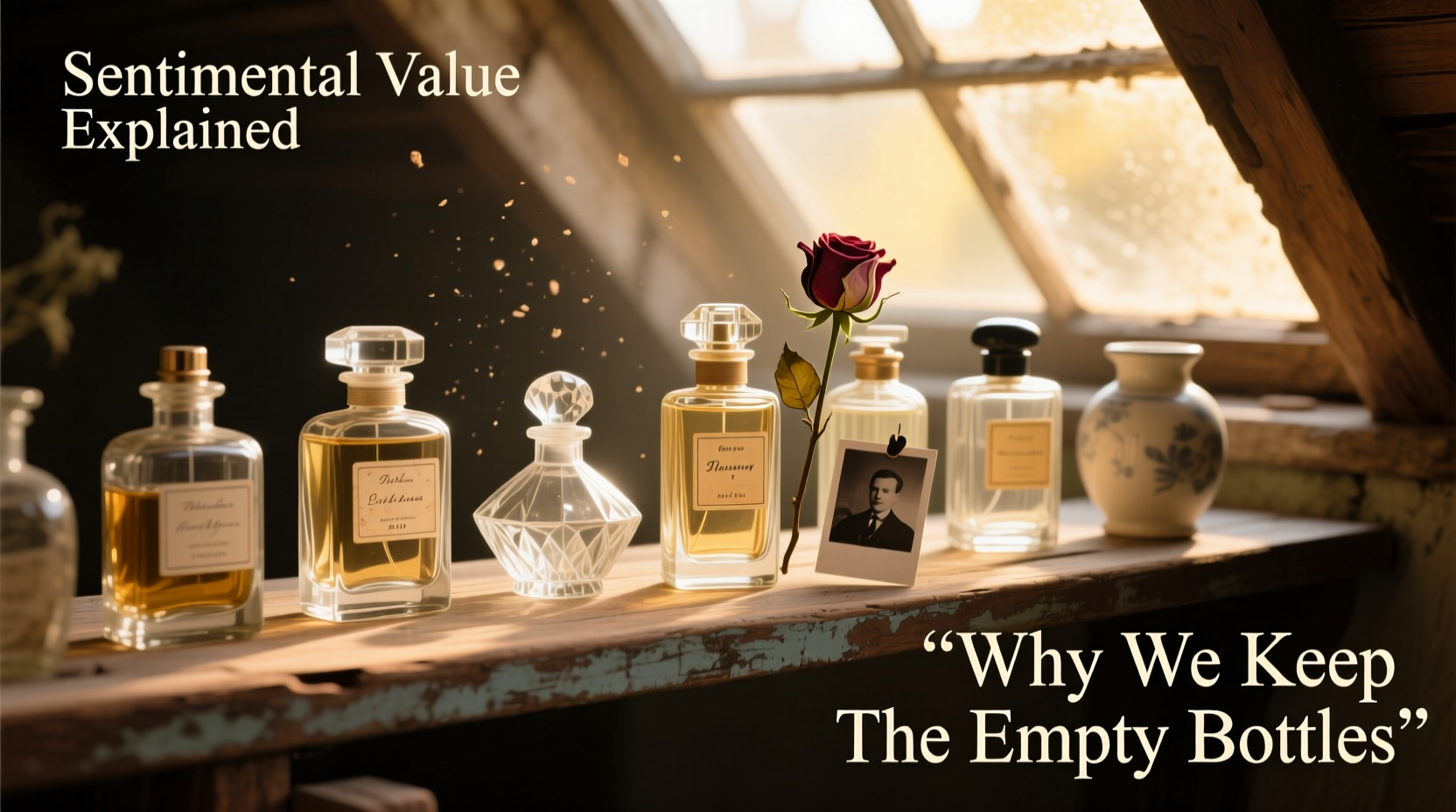
Scent is uniquely tied to memory. Unlike other senses, olfaction bypasses the thalamus and travels directly to the limbic system—the brain’s center for emotion and long-term memory. This neurological shortcut explains why a whiff of vanilla might summon a grandmother’s kitchen or why a citrusy cologne could instantly recall a summer romance.
When a beloved fragrance runs out, the emotional connection doesn’t fade. The empty bottle becomes a physical placeholder for those memories. It serves as a tactile reminder of experiences that were fleeting but meaningful. For many, discarding the container feels like erasing a chapter of their life story.
“Smell is the sense most closely linked to autobiographical memory. A scent container isn’t just glass—it’s a vessel of time.” — Dr. Lena Moretti, Cognitive Psychologist specializing in olfactory memory
This powerful link between smell and memory transforms even the simplest perfume bottle into a relic of personal history. Whether it was worn during a wedding, a period of self-discovery, or while grieving a loss, the bottle holds symbolic weight far beyond its original function.
Symbolism and Identity in Perfume Bottles
Perfume choices often reflect identity. People select fragrances based on mood, personality, occasion, or even aspiration. Wearing a bold, spicy scent might represent confidence; a soft floral may evoke nostalgia or gentleness. Over time, a particular fragrance becomes associated with a version of the self.
When that phase of life ends—whether due to aging, changing tastes, or major life transitions—the empty bottle becomes a marker of who they once were. Collecting these bottles is akin to curating a timeline of personal evolution. Each one represents a season of identity, preserved not in photographs or journals, but in glass and spray caps.
The Ritual of Preservation: Why Keep the Empty?
It’s easy to question the logic of saving empty containers. Yet for collectors, the act is intentional and meaningful. The ritual begins the moment the last spritz is used. Rather than tossing the bottle, many clean it gently, remove labels carefully, and store it with care. This process itself is meditative—a final gesture of respect for what the bottle represented.
Preservation also stems from scarcity. Some perfumes are discontinued, reformulated, or only available in limited editions. Once gone, they cannot be replaced. An empty bottle may be the only remaining piece of that unique scent experience. In such cases, the container becomes a rare artifact, much like a vintage book or photograph.
Mini Case Study: Maria’s Collection of Lost Scents
Maria, a 54-year-old teacher from Lisbon, began collecting empty bottles after her mother passed away. Her mother had worn *Chanel No. 5* religiously since the 1960s. When she died, Maria inherited a nearly full bottle—but she didn’t want to use it. Instead, she waited until it was empty and added it to a growing display on her dresser. “I didn’t want to run out,” she says. “So I sprayed it once a month, just a puff, to make it last. When it was finally gone, keeping the bottle felt like keeping her close.”
Today, Maria’s collection includes over thirty bottles, each tied to a person or milestone. One belonged to her daughter’s first date perfume. Another held a gift from her late husband. “They’re not trash,” she insists. “They’re proof that beautiful things existed.”
Design, Craftsmanship, and Aesthetic Appeal
Beyond sentiment, perfume bottles are works of art. Designers collaborate with glassmakers, engravers, and artists to create visually striking containers. From Lalique’s crystal flacons to Tom Ford’s minimalist black rectangles, these bottles are crafted to captivate.
For some collectors, aesthetics are the primary motivation. They admire the curves, colors, and craftsmanship. Displayed on vanity trays or shelves, the bottles become decorative elements—elegant objets d’art that elevate a room’s ambiance.
| Brand | Notable Design Feature | Collector Appeal |
|---|---|---|
| Lalique | Hand-crafted crystal with intricate etching | High – often displayed as art |
| Guerlain | Bee-shaped stoppers and ornate fonts | High – nostalgic and luxurious |
| Jo Malone | Sleek, minimalist boxes and clear glass | Moderate – popular for modern displays |
| Comme des Garçons | Avant-garde shapes and unconventional materials | High – sought after by design enthusiasts |
The visual appeal complements the emotional significance. A beautifully designed bottle enhances the memory it carries, making the act of preservation both practical and poetic.
Practical Tips for Preserving Your Own Collection
If you’re considering starting or organizing your own collection of empty perfume bottles, intentionality matters. Proper care ensures longevity and maintains sentimental value.
Step-by-Step Guide to Curating Your Perfume Bottle Collection
- Decide on a Theme: Will your collection focus on memories, brands, designs, or a timeline of your life?
- Clean Gently: Remove excess liquid and rinse with warm water. Avoid soaking if labels are glued on.
- Dry Thoroughly: Place bottles upside down on a lint-free towel for 24–48 hours.
- Label Thoughtfully: Use small tags or a journal to note the fragrance name, date used, and associated memory.
- Display with Care: Keep bottles away from direct sunlight to prevent fading and degradation of materials.
- Rotate Occasionally: Change display arrangements seasonally to keep the collection feeling alive and meaningful.
Checklist: Building a Meaningful Collection
- ✓ Choose bottles that hold emotional significance
- ✓ Clean and dry each bottle before storage
- ✓ Protect from heat, humidity, and UV light
- ✓ Document stories or dates linked to each fragrance
- ✓ Group by theme (e.g., love, travel, milestones)
- ✓ Handle delicate bottles with care to avoid chipping
Common Misconceptions About Perfume Bottle Collecting
Some dismiss the practice as hoarding or vanity. But collecting empty bottles is not about accumulation—it’s about curation. Unlike mass hoarding, most collectors are selective, keeping only bottles that carry meaning.
Another myth is that only luxury brands are worth saving. In reality, drugstore perfumes can be just as emotionally significant. A teenager’s first body spray, a gift from a friend, or a scent worn during recovery from illness—all can carry profound value regardless of price.
Additionally, collectors aren’t necessarily trying to resell. While some vintage bottles have market value, most are kept for personal reasons. The worth lies in memory, not money.
FAQ: Common Questions About Perfume Bottle Collecting
Is it safe to keep empty perfume bottles at home?
Yes, as long as they are thoroughly cleaned and stored in a dry, cool place. Residual alcohol can evaporate over time, but ensure no liquid remains to prevent mold or leaks.
Can I recycle perfume bottles instead of keeping them?
Absolutely. Recycling is environmentally responsible. However, if a bottle holds emotional value, consider keeping one special piece while recycling others. Balance sentiment with sustainability.
How do I know if a perfume bottle is valuable?
Rarity, brand, condition, and design determine value. Limited editions from houses like Lalique or vintage Christian Dior often appreciate. But sentimental value is personal and cannot be measured monetarily.
Conclusion: Holding On to What Matters
People collect empty perfume bottles because they understand that closure doesn’t mean forgetting. These silent vessels carry invisible histories—love, loss, joy, transformation. They are not clutter, but quiet witnesses to lives fully lived.
In a world that moves quickly and encourages letting go, preserving a perfume bottle is an act of defiance against impermanence. It says: this moment mattered. This person mattered. I mattered.




 浙公网安备
33010002000092号
浙公网安备
33010002000092号 浙B2-20120091-4
Comments
No comments yet. Why don't you start the discussion?