
Nostalgia doesn’t strike randomly. It arrives with the scent of pine resin, the crackle of a fireplace, or the soft hum of a decades-old transformer—and often, it arrives in color. Not just any color: the precise, slightly imperfect hue of a string of lights that once outlined Grandma’s porch, the cool cobalt glow of a 1980s plastic icicle strand, or the buttery warmth of vintage incandescent bulbs. These aren’t arbitrary preferences. They’re emotional anchors—coded into memory through repetition, context, and biology. Understanding why certain Christmas light colors resonate so deeply reveals how sensory experience, generational identity, and even material technology shape our most cherished feelings of home and belonging.
The Neuroscience of Light, Memory, and Emotional Encoding
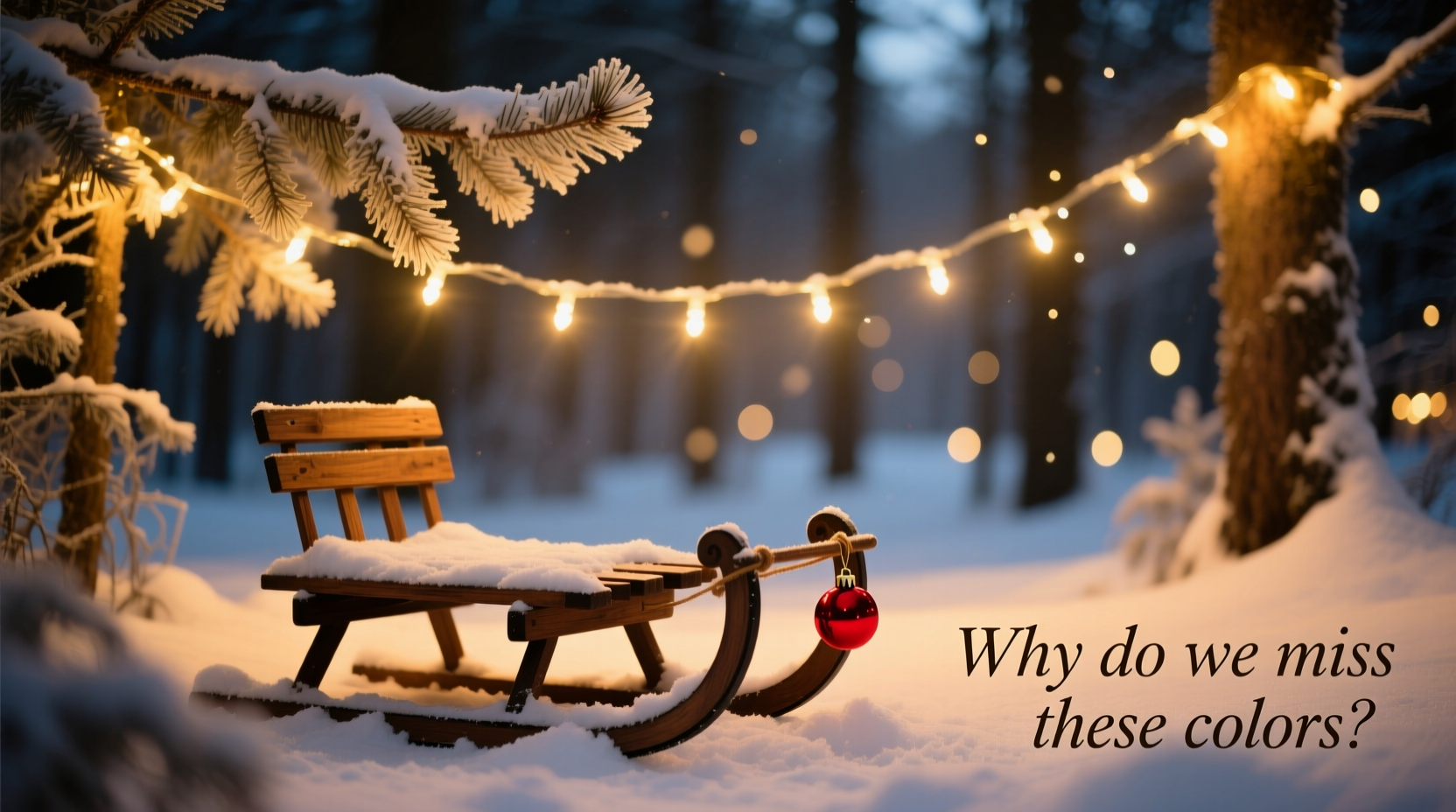
Human memory isn’t stored like files on a hard drive. It’s reconstructed—each time we recall an event, the brain reassembles fragments across neural networks tied to sensory input, emotion, and context. Visual stimuli, especially those occurring during emotionally salient periods (like childhood holidays), form particularly strong associative links. Christmas lights operate at the intersection of three potent neurological triggers: brightness contrast, chromatic stability, and rhythmic repetition.
Research from the University of California, Berkeley’s Memory & Cognition Lab shows that high-contrast visual stimuli experienced during emotionally positive events—especially between ages 5 and 12—are encoded more robustly in the hippocampus and amygdala. The stark contrast between dark winter evenings and illuminated decorations creates ideal conditions for memory imprinting. But color matters critically: warm white (2200–2700K) and amber tones activate the brain’s ventral tegmental area—the same region involved in reward processing—more consistently than cooler, bluer light in low-light festive contexts. This isn’t just preference; it’s neurochemical reinforcement.
Moreover, color constancy—the brain’s ability to perceive an object’s color as stable despite changing lighting—works differently during holiday seasons. Because indoor lighting is typically dim and yellow-tinted (incandescent or candlelight), the brain calibrates its “white point” accordingly. A string of warm white LEDs appears richer, more golden, and therefore more “authentic” against that backdrop—reinforcing the association with safety, warmth, and familial presence.
Generational Light Palettes: How Technology Shaped Emotional Associations
Christmas light colors didn’t evolve by aesthetic choice alone. They were dictated by available technology—and each era left a distinct chromatic signature imprinted on the collective memory of those who grew up beneath it.
| Era | Primary Light Technology | Dominant Color Temperature & Characteristics | Associated Nostalgic Triggers |
|---|---|---|---|
| 1940s–1960s | Incandescent C7/C9 bulbs | 2200–2400K; deep amber, slight orange cast; flicker due to AC frequency | Warmth, fragility (bulbs burned out frequently), ritual of replacing them one by one |
| 1970s–1980s | Plastic-coated mini-lights (often GE or NOMA) | Red: saturated crimson (cadmium-based pigment); Blue: electric cobalt (cobalt aluminate); Green: lime-yellow green | Vibrant artificiality, tactile plastic texture, audible “buzz” of transformers, neighborhood uniformity |
| 1990s–early 2000s | First-generation LEDs (low-output, single-color) | Harsh, narrow-spectrum red (630nm), green (525nm), blue (470nm); no warm white option | Novelty, “futuristic” feel, battery-operated tree lights, early digital controllers |
| 2010s–present | High-CRI, tunable-white and RGBW LEDs | Adjustable from 1800K (candlelight) to 6500K (daylight); precise pastels and saturated primaries | Control, customization, sometimes *over*-choice leading to diminished emotional resonance |
This progression explains why someone born in 1965 may feel a visceral pang hearing the buzz of a 1970s transformer paired with cobalt-blue lights—but find modern “vintage warm white” LEDs emotionally flat. Their nostalgia isn’t for “warm white” in the abstract; it’s for the exact spectral output, thermal bloom, and micro-flicker of a 25-watt incandescent bulb powered by 1970s-era voltage regulation. As Dr. Lena Torres, environmental psychologist and author of *Chromatic Memory*, observes:
“The color we call ‘nostalgic’ isn’t a wavelength—it’s a waveform. It includes the subtle dimming before burnout, the heat radiating off the socket, the way dust accumulated on the red lens over three Decembers. Remove one layer, and the memory loses fidelity.” — Dr. Lena Torres, Environmental Psychologist
The Cultural Weight of Red, Blue, and Warm White
While technology sets the palette, culture assigns meaning—and that meaning becomes emotionally charged through repetition across generations.
Red holds the strongest cross-generational resonance—not just because of Santa or apples, but because of its dominance in mid-century mass-market lighting. In the 1950s, red was the cheapest and most reliable color for early plastic-coated bulbs: cadmium sulfide pigments were stable, inexpensive, and highly visible against snow and evergreen. Entire neighborhoods coordinated red-and-green displays—not as symbolism, but as practicality. For baby boomers and Gen X, red lights evoke not theology, but the shared civic ritual of decorating Main Street, the sound of aluminum ladders on pavement, and the taste of peppermint candy while hanging strands.
Blue, by contrast, carries a more complex emotional valence. Its popularity surged in the 1970s alongside the “cool” aesthetic of space-age design and the rise of blue-toned television lighting (think Star Trek or The Brady Bunch). Psychologically, blue light suppresses melatonin—but paradoxically, in the controlled, brief exposure of holiday decor, it created a sense of calm, quiet magic. For many, blue lights signal “late-night quiet,” “snow falling outside the window,” or “the hush before Christmas morning.” That association remains potent, even as blue-rich LED lighting is now discouraged before bedtime.
Warm white has become the dominant nostalgic anchor for Millennials and younger Gen Z. Unlike earlier eras where warm white was the default (due to incandescent limitations), today’s warm white is a deliberate choice—a rejection of clinical brightness. It signals intentionality: “I chose this feeling.” Its resurgence correlates with the rise of hygge, cottagecore, and slow-living movements—where light quality is curated for psychological comfort, not just visibility.
A Mini Case Study: The Cobalt Blue Revival in Portland, Oregon
In 2021, the Hawthorne Bridge in Portland began a grassroots campaign: “Light the Bridge Blue.” Residents were invited to hang only cobalt-blue lights—no red, no green, no white—along the pedestrian railings. Within three years, over 12,000 households participated, transforming the bridge into a 3,000-foot ribbon of intense, saturated blue.
Organizer Maya Chen, then 34, explained the motivation: “My dad had blue lights on our house every year from 1982 to 1998. Not because he loved blue—he hated decorating. But our neighbor Mr. O’Leary had them, and my dad said, ‘If it’s good enough for O’Leary, it’s good enough for us.’ When I moved back to Portland after college, I realized how many people remembered that blue. It wasn’t about religion or tradition. It was about consistency, community, and the specific way that blue looked against wet pavement and fog.”
Social media posts flooded in: photos of childhood bedrooms lit solely by blue strings, videos of cassette tapes playing John Denver’s “Rocky Mountain High” beside blue-lit trees, testimonials about how that blue signaled “home was safe, even when everything else felt uncertain.” The campaign succeeded not because blue is inherently meaningful—but because, for one generation in one city, it became the unspoken visual dialect of belonging.
Practical Guide: Recreating Authentic Nostalgic Light Without the Hazards
Modern nostalgia shouldn’t mean reverting to fire hazards or energy waste. Here’s how to ethically and effectively recapture chromatic memory:
- Identify your core memory cue: Was it the flicker? The heat? The specific red saturation? The transformer hum? Pinpoint one dominant sensory element—not the whole package.
- Select modern equivalents with intention: For flicker: choose “filament-style” LEDs with built-in flicker simulation (not random, but 120Hz sine-wave mimicry). For warmth: use 2200K bulbs with high R9 rendering. For cobalt blue: seek LEDs with peak output at 465nm, not generic “cool blue.”
- Layer, don’t replicate: Pair modern warm-white LEDs with vintage-style glass bulbs (LED retrofits) for texture contrast. Add a small, quiet transformer-powered strand for authentic hum—placed away from sleeping areas.
- Anchor with non-light cues: Nostalgia is multisensory. Play period-appropriate music at low volume. Use scented candles with notes of beeswax or cedar. Serve drinks in glasses that match your memory (e.g., 1970s orange sherry glasses).
- Respect physiological limits: Avoid blue-dominant lighting in bedrooms after 8 p.m. Use timers and dimmers. Prioritize circadian health—even in service of nostalgia.
Frequently Asked Questions
Why do some people feel nostalgic for multicolored lights, while others only connect with single-color strands?
Multicolor nostalgia usually ties to communal experiences—school pageants, downtown parades, or neighborhood competitions—where variety signaled celebration and abundance. Single-color nostalgia tends to stem from intimate, repeated domestic rituals: a parent’s precise red outline around the bay window, or a grandparent’s all-blue porch. The distinction reflects whether memory formed in public spectacle or private sanctuary.
Can nostalgia for Christmas lights be “learned” later in life—or is it always rooted in childhood?
It can absolutely be learned, though it requires deeper contextual anchoring. Adults who adopt traditions later—such as immigrants embracing U.S. customs, or converts to Christianity—often develop powerful nostalgia through intentional repetition combined with emotional significance (e.g., first Christmas as a married couple, first holiday after loss). Neuroimaging studies confirm that emotionally charged repetition in adulthood activates the same hippocampal pathways as childhood encoding—just with stronger prefrontal involvement.
Do smart lights undermine nostalgic value, or can they enhance it?
They undermine it when used for novelty (rainbow cycles, music sync) but enhance it when used for precision. A smart system that reliably delivers the exact 2250K, 98 CRI, 0.5% flicker profile of 1968 GE bulbs—on command, year after year—is arguably *more* nostalgic than unreliable vintage gear. Control enables fidelity. The key is using technology to serve memory—not distract from it.
Conclusion: Light as Living Archive
Christmas light colors are far more than decoration. They are living archives—chromatic fingerprints of time, technology, and tenderness. When someone pauses before a string of cobalt-blue lights and feels their throat tighten, they’re not reacting to pigment. They’re touching a synaptic pathway laid down decades ago: the weight of a child’s hand in theirs while untangling wires, the smell of pine needles and hot plastic, the quiet pride of a job done together. That resonance isn’t sentimental indulgence—it’s evidence of how deeply humans embed meaning in the sensory fabric of ordinary moments.
You don’t need vintage bulbs or analog transformers to honor that. You need attention—to what color truly calms you, which hue makes your shoulders drop, which light pattern feels like inhaling for the first time all season. Start there. Choose one strand—not for Instagram, not for trend, but for the quiet certainty it brings. Then share what you discover. Tell us: Which color stops your breath? What memory rises with it? Your story adds another thread to the collective light—warm, enduring, and unmistakably human.




 浙公网安备
33010002000092号
浙公网安备
33010002000092号 浙B2-20120091-4
Comments
No comments yet. Why don't you start the discussion?