
Humanity’s urge to explore is as old as our species. From early migrations across continents to modern missions into deep space, exploration has shaped civilizations, expanded knowledge, and redefined what it means to be human. But what drives this relentless curiosity? The answer lies at the intersection of evolutionary biology, neuroscience, psychology, and historical context. Understanding why people explore isn’t just about cataloging expeditions—it’s about uncovering the deep-seated impulses that propel us beyond the known.
The Evolutionary Roots of Exploration
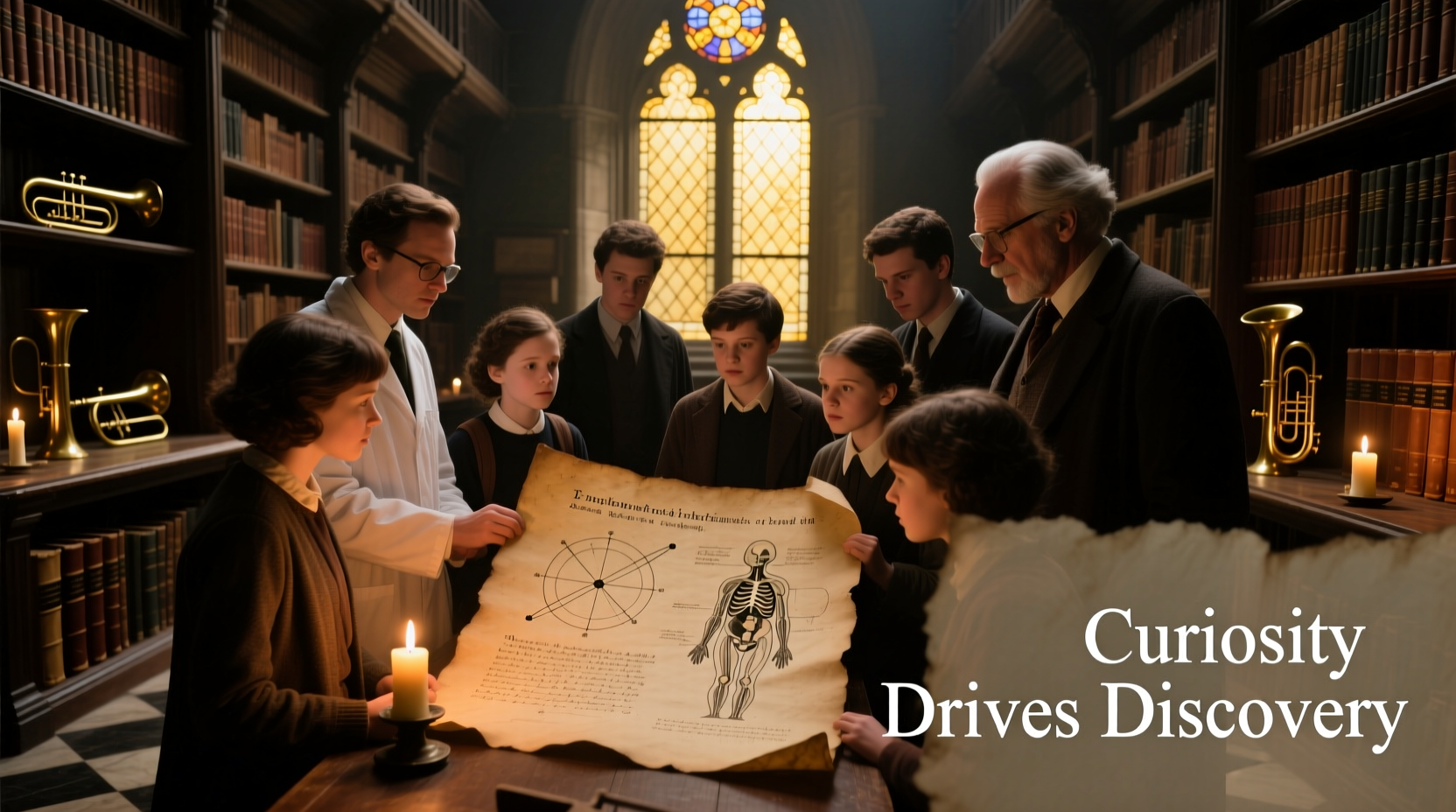
At its core, exploration is a survival mechanism. Early humans who ventured beyond familiar territories had access to new food sources, safer shelters, and opportunities for mating with genetically diverse groups. This behavior conferred significant evolutionary advantages. Populations that migrated out of Africa around 70,000 years ago were not simply wandering aimlessly—they were responding to environmental pressures, resource scarcity, and innate cognitive traits favoring novelty-seeking.
Genetic studies have identified variations in the DRD4 gene, particularly the 7R allele, associated with higher levels of novelty-seeking behavior. Individuals with this variant are more likely to take risks, travel frequently, and engage in exploratory activities. While not deterministic, this genetic predisposition suggests that some people are biologically wired to seek out new experiences.
The Brain on Exploration: Neuroscience of Curiosity
Modern neuroscience reveals that exploration activates key reward centers in the brain. When we encounter something novel or solve an unfamiliar problem, dopamine—a neurotransmitter linked to motivation and pleasure—is released. This creates a positive feedback loop: discovery feels good, so we’re motivated to seek more.
Research conducted at the University of California, Berkeley, demonstrated that participants showed increased activity in the substantia nigra/ventral tegmental area (SN/VTA) when anticipating answers to trivia questions they were curious about. This same region lights up during physical exploration, suggesting that intellectual and spatial exploration share neural circuitry.
Moreover, exploration enhances neuroplasticity—the brain’s ability to form new connections. Navigating unknown environments forces the hippocampus, responsible for memory and spatial orientation, to adapt and grow. London taxi drivers, famously required to memorize thousands of streets (\"The Knowledge\"), have been found to possess larger posterior hippocampi than average—proof that sustained mental exploration physically reshapes the brain.
“Curiosity is not just a personality trait—it’s a biological imperative. Our brains evolved to reward exploration because information was once as vital as food.” — Dr. Sophie Lin, Cognitive Neuroscientist, Stanford University
A Historical Timeline of Human Exploration
Exploration has defined pivotal moments in human history. Below is a timeline highlighting key milestones driven by scientific inquiry, economic incentive, and cultural ambition:
| Year | Event | Motivation |
|---|---|---|
| c. 60,000 BCE | Human migration out of Africa | Survival, climate change |
| 1492 CE | Columbus reaches the Americas | Trade routes, empire expansion |
| 1768–1779 | James Cook’s Pacific voyages | Scientific observation, cartography |
| 1911 | Amundsen reaches the South Pole | National pride, geographic conquest |
| 1969 | Apollo 11 moon landing | Technological competition, Cold War |
| 2021 | Perseverance rover lands on Mars | Search for life, interplanetary future |
Each era reframed exploration according to its values—from territorial dominance to scientific discovery. Yet the underlying drive remains consistent: the need to understand where we are, how we got here, and what lies beyond.
Psychological and Social Drivers Behind Modern Exploration
In today’s world, where most landmasses are mapped and digital connectivity spans the globe, physical exploration might seem obsolete. Yet people continue to climb Everest, dive into ocean trenches, and sign up for Mars simulation programs. Why?
Psychologists point to intrinsic motivation—doing something for its inherent satisfaction rather than external reward. Explorers often describe a sense of purpose, transcendence, or personal transformation derived from pushing limits. Additionally, social recognition plays a role. Achievements in extreme environments confer status, inspire others, and contribute to legacy-building.
There’s also a collective dimension. Societies invest in exploration not only for practical gains—like GPS technology born from space programs—but to foster unity and aspiration. The Hubble Space Telescope didn’t just advance astronomy; it gave humanity a shared vision of cosmic beauty, reinforcing a sense of wonder and interconnectedness.
Mini Case Study: The Mars Analog Research Station
In Utah’s desert, a group of scientists live in a simulated Martian habitat run by the Mars Society. For two-week rotations, crew members conduct experiments, maintain equipment, and adhere to strict communication delays mimicking Earth-Mars lag. One participant, geobiologist Dr. Lena Torres, noted that while the mission tested technical skills, it primarily revealed emotional resilience. “Being isolated, relying on teammates, solving problems without immediate help—it changes how you see yourself,” she said. “It’s not about escaping Earth, but understanding what it means to be human in an alien environment.”
This example illustrates that modern exploration serves both scientific preparation and psychological insight. Even without leaving Earth, the act of simulating exploration yields valuable data about human adaptability.
How to Cultivate a Spirit of Exploration (Actionable Checklist)
You don’t need a spaceship or a jungle expedition to embrace exploration. Here’s a practical checklist to integrate exploratory thinking into daily life:
- Seek novelty regularly: Visit a new neighborhood, try an unfamiliar cuisine, or attend a lecture outside your field.
- Ask “why” more often: Challenge assumptions about routine practices or widely accepted ideas.
- Keep a curiosity journal: Record questions that arise during the day and research one per week.
- Engage with diverse perspectives: Read books or listen to podcasts from cultures or disciplines different from your own.
- Take alternative routes: Whether walking or problem-solving, avoid autopilot mode.
- Limit passive consumption: Replace one hour of scrolling with active learning or hands-on experimentation.
Frequently Asked Questions
Is exploration still relevant in the age of Google Earth and virtual reality?
Absolutely. While technology allows us to see distant places instantly, firsthand experience engages multiple senses and triggers deeper cognitive processing. Moreover, many frontiers—such as microbial ecosystems, quantum physics, or consciousness—remain largely unexplored and require direct investigation.
Can too much exploration be harmful?
Yes, if unchecked by ethics or sustainability. Historically, exploration has sometimes led to exploitation, colonization, and environmental damage. Responsible exploration today emphasizes minimal impact, collaboration with local communities, and long-term stewardship.
Are children naturally more exploratory than adults?
Research shows that young children exhibit peak curiosity, constantly testing hypotheses through play. However, societal structures—standardized education, fear of failure—can suppress this tendency over time. Adults can reclaim exploratory behavior through intentional practice and mindset shifts.
Conclusion: Reclaim Your Inner Explorer
Exploration is not reserved for astronauts, anthropologists, or adventurers. It is a fundamental human trait rooted in biology, refined by history, and essential for progress. Whether navigating a foreign city, questioning a long-held belief, or studying the stars, every act of inquiry extends the boundaries of understanding.
The science and history of exploration remind us that discovery begins with a single step into the unknown. You don’t need permission or perfect conditions—just willingness to look beyond the horizon.




 浙公网安备
33010002000092号
浙公网安备
33010002000092号 浙B2-20120091-4
Comments
No comments yet. Why don't you start the discussion?