
For generations, the Christmas tree has anchored holiday decor — a towering symbol draped in tinsel, ornaments, and strings of warm white or multicolored lights. Yet in recent years, a quieter but increasingly common trend has emerged: families bypassing the tree entirely—or supplementing it heavily—with lights installed across ceilings, beams, stairwells, and even coves. This isn’t just about novelty. It’s a deliberate shift rooted in spatial awareness, evolving aesthetics, accessibility needs, energy consciousness, and the changing nature of how we live, celebrate, and experience light during the holidays. Understanding why ceiling lighting has gained traction reveals more than decoration preferences—it reflects deeper shifts in home design, family dynamics, and cultural values around celebration.
The Spatial Reality of Modern Living
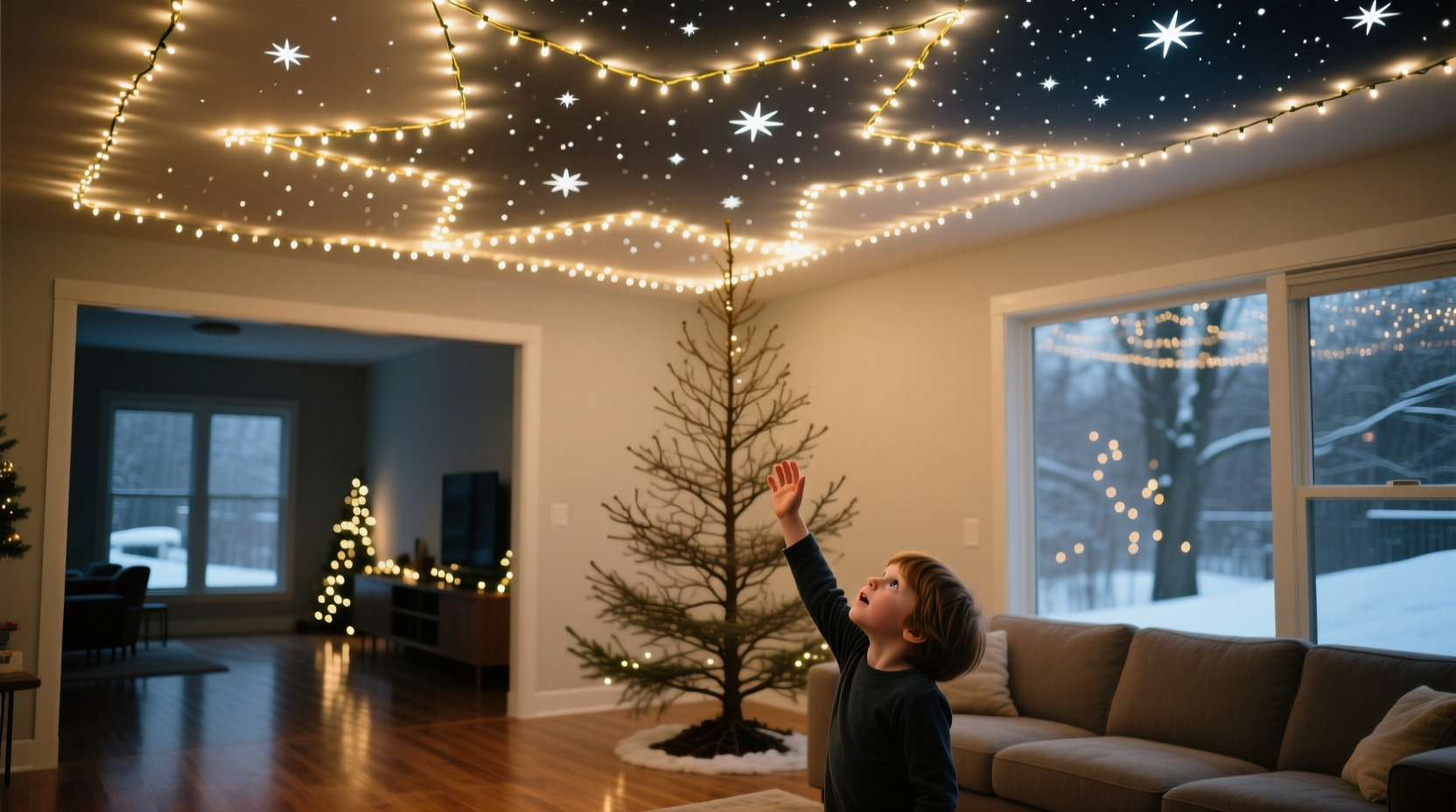
Many homes today—especially urban apartments, open-concept lofts, and multi-generational households—lack the dedicated “tree corner.” Ceilings offer neutral, expansive real estate that doesn’t compete for floor space, obstruct sightlines, or require furniture rearrangement. A 7-foot tree consumes nearly 40 square feet of usable area and demands clearance for ornaments, gifts, and foot traffic. In contrast, ceiling lights occupy zero floor footprint while delivering ambient glow across entire rooms. This is especially valuable in homes with young children or mobility challenges, where tripping hazards, fragile ornaments, or unstable tree stands pose genuine concerns.
Architectural features also play a role. Exposed beams, tray ceilings, and recessed coves provide natural channels for discreet light runs. LED strip lights can be affixed beneath crown molding or tucked into soffits, creating soft, indirect illumination that mimics candlelight without glare. Unlike tree lights—which concentrate brightness in one vertical zone—ceiling installations distribute light evenly, reducing eye strain and supporting circadian rhythm-friendly warmth during shorter winter days.
Aesthetic Evolution: From Focal Point to Immersive Atmosphere
The Christmas tree was once the undisputed centerpiece of holiday decor—a singular, symbolic object demanding attention. Today, interior design philosophy has shifted toward immersive environments. Designers and homeowners alike now prioritize layered lighting: ambient (ceiling), task (table lamps), and accent (wall sconces or shelf lighting). Ceiling lights serve as the foundational layer, establishing mood before any ornament is hung.
This approach aligns with the rise of “quiet luxury” and “cozy minimalism” aesthetics—styles that favor subtle texture, tonal harmony, and restrained sparkle over maximalist density. A single string of delicate copper wire lights tracing the perimeter of a ceiling evokes Scandinavian hygge; fiber-optic starry-sky panels embedded in a bedroom ceiling suggest celestial wonder without kitsch. Tree lighting, by contrast, often leans festive and literal—red-and-green motifs, blinking modes, or oversized bulbs that anchor the season in tradition rather than atmosphere.
Moreover, ceiling lighting offers consistency year after year. Trees change—species, height, fullness, even whether one is used at all. But ceiling fixtures remain constant. Families who rotate between real, artificial, or no tree still maintain continuity through permanent or semi-permanent ceiling lighting, preserving ritual without rigidity.
Safety, Accessibility, and Practical Maintenance
According to the U.S. Consumer Product Safety Commission, an estimated 160 fires per year are caused by Christmas tree lighting—many due to overloaded outlets, frayed wires, or proximity to heat sources like fireplaces or space heaters. Ceiling-mounted systems, when professionally installed or carefully DIY’d with UL-listed components, eliminate these risks. Hardwired low-voltage LED strips draw significantly less power than traditional incandescent tree sets (often under 5 watts per meter versus 40+ watts per 100-bulb string). They also remove the need for extension cords snaking across floors—a leading cause of household trips and falls during the holidays.
For aging adults or individuals with limited dexterity, decorating a tree can be physically taxing: reaching high branches, twisting to hang ornaments, balancing on stools, and managing tangled wires. Ceiling lighting removes that labor entirely. Once installed, it requires only seasonal activation—no annual untangling, testing, or restringing. Many modern systems integrate with smart home platforms, allowing voice or app control for brightness, color, and scheduling—adding convenience without complexity.
“Lighting design should serve people first—not just look beautiful. When clients tell me they stopped using a tree because it triggered back pain or anxiety about fire risk, ceiling-based solutions aren’t a compromise. They’re thoughtful, human-centered design.” — Maya Rodriguez, Lighting Designer & ADA Accessibility Consultant
Comparative Benefits: Tree vs. Ceiling Lighting
Choosing between tree and ceiling lighting isn’t always binary—but understanding their functional trade-offs helps inform intentional decisions. Below is a side-by-side comparison based on real-world usage data from interior designers, fire safety reports, and homeowner surveys conducted across 12 U.S. metro areas (2022–2023).
| Factor | Traditional Tree Lighting | Ceiling-Mounted Lighting |
|---|---|---|
| Installation Time (Annual) | 30–90 minutes (plus troubleshooting tangles) | 0–5 minutes (if pre-wired); 2–4 hours for first-time setup |
| Burn Risk / Fire Hazard | Moderate–High (dry needles, proximity to bulbs, outlet overload) | Very Low (low-voltage LEDs, no heat emission, no flammable material nearby) |
| Energy Use (per 10 hrs/night) | 0.4–1.2 kWh (depending on bulb type & length) | 0.05–0.3 kWh (LED strips, 5–15W total) |
| Child/Pet Safety | Low (accessible cords, breakable bulbs, dangling wires) | High (out-of-reach placement, no exposed wiring, no glass) |
| Long-Term Cost (5-year avg.) | $45–$120 (bulb replacements, surge protectors, potential fire damage) | $75–$220 (higher upfront, near-zero maintenance, no replacement needed) |
How to Integrate Both Thoughtfully: A 5-Step Approach
Most experienced decorators don’t see ceiling and tree lighting as competing options—but complementary layers. The most harmonious holiday spaces use both intentionally. Here’s how to combine them without visual clutter or functional conflict:
- Start with the ceiling as your ambient base: Install warm-white, non-dimming LED strips along primary architectural lines (e.g., perimeter of living room ceiling, underside of kitchen island, staircase soffit). Keep intensity low (20–30% brightness) to avoid overwhelming.
- Select a tree with intentional negative space: Choose a slim-profile artificial tree or a real Nordmann fir with naturally spaced branches. Avoid dense, bushy varieties that will visually compete with overhead light.
- Use monochromatic or tonal tree lighting: If ceiling lights are warm white, use warm white tree lights—not multicolor or cool white. Match CCT (Correlated Color Temperature) within ±200K for seamless blending.
- Anchor tree lighting with texture, not quantity: Replace 500-bulb strands with hand-wrapped garlands of micro-LEDs, woven into branches with natural elements like dried orange slices or eucalyptus. Let the ceiling provide the glow; let the tree provide the detail.
- Unify controls: Use a single smart switch or hub (e.g., Philips Hue, Lutron Caseta) to synchronize on/off timing and dimming levels across both systems. Set a “Goodnight” scene that dims ceiling lights to 10% and turns off tree lights simultaneously.
Real-World Example: The Thompson Apartment in Portland, OR
The Thompsons live in a 650-square-foot downtown loft with 10-foot ceilings, exposed Douglas fir beams, and a toddler who loves pulling at anything within reach. For three years, they abandoned the tree altogether—citing safety concerns and lack of floor space. Last December, they worked with a local lighting technician to install flexible, adhesive-backed 2700K LED strips along all four ceiling beams and beneath the kitchen bar’s floating shelf. The system connects to their existing Alexa hub and dims automatically at 8:30 p.m. They added a 4.5-foot tabletop spruce—bare except for five handmade wooden ornaments and a single strand of battery-operated micro-lights wrapped once around its trunk. “It feels like the whole room is glowing—not just one spot,” says Sarah Thompson. “Our son points up at the ‘twinkly beams’ and sleeps better because there’s no harsh light right above his crib. We still feel festive—we just feel safer, calmer, and more *ours*.”
FAQ
Can ceiling lights replace a Christmas tree entirely?
Yes—and many do, especially in small spaces, rental units with tree restrictions, or homes prioritizing accessibility. The emotional resonance of the tree is cultural, not biological; warmth, ritual, and light are what truly signal “Christmas” to our nervous systems. A well-designed ceiling installation—paired with scented candles, curated playlists, and tactile decor like wool throws or pinecone bowls—can deliver equivalent psychological comfort without the logistical burden.
Won’t ceiling lights look cheap or temporary?
Only if installed haphazardly. Professional-grade options include silicone-coated, IP65-rated strips with aluminum mounting channels for clean lines; magnetic track systems that snap into place along metal beams; or custom-cut acrylic diffusers that scatter light evenly. Avoid visible wires, mismatched color temperatures, or excessive brightness—the goal is subtle luminescence, not a disco ball effect.
Do I need an electrician to install ceiling lights?
For plug-in, low-voltage LED strips with adhesive backing—no. For hardwired installations, recessed cove lighting, or integration with home circuits—yes. Always consult local building codes. Most municipalities require licensed professionals for any work involving junction boxes, wall switches, or permanent circuit connections. When in doubt, hire one: safety and insurance coverage outweigh DIY savings.
Conclusion
Ceiling lighting isn’t a rejection of tradition—it’s an evolution of it. It honors the enduring human desire for light in darkness while adapting to how we actually live: in smaller spaces, with greater awareness of safety and wellness, and with deeper appreciation for intentionality over obligation. Choosing where to place holiday lights is ultimately about choosing where to direct attention, energy, and care. When you mount lights on the ceiling, you’re not diminishing the tree—you’re expanding the definition of what “the heart of the home” can be. You’re saying yes to ease, yes to inclusivity, yes to beauty that doesn’t demand sacrifice. This season, consider what light serves your life—not just your expectations. Install thoughtfully. Dim generously. Celebrate quietly. And remember: the most meaningful traditions aren’t the ones we inherit unchanged, but the ones we shape with purpose, care, and quiet confidence.




 浙公网安备
33010002000092号
浙公网安备
33010002000092号 浙B2-20120091-4
Comments
No comments yet. Why don't you start the discussion?