
Have you ever stepped outside on a sunny day, glanced up at the sky, and suddenly—achoo!—sneezed without warning? You're not alone. This curious reaction, known as the photic sneeze reflex (PSR), affects an estimated 18% to 35% of the population. While harmless, it’s both fascinating and mysterious. Why does bright light trigger a sneeze in some people but not others? And more importantly, is this phenomenon genetic? The answers lie at the intersection of neurology, genetics, and evolutionary biology.
What Is the Photic Sneeze Reflex?
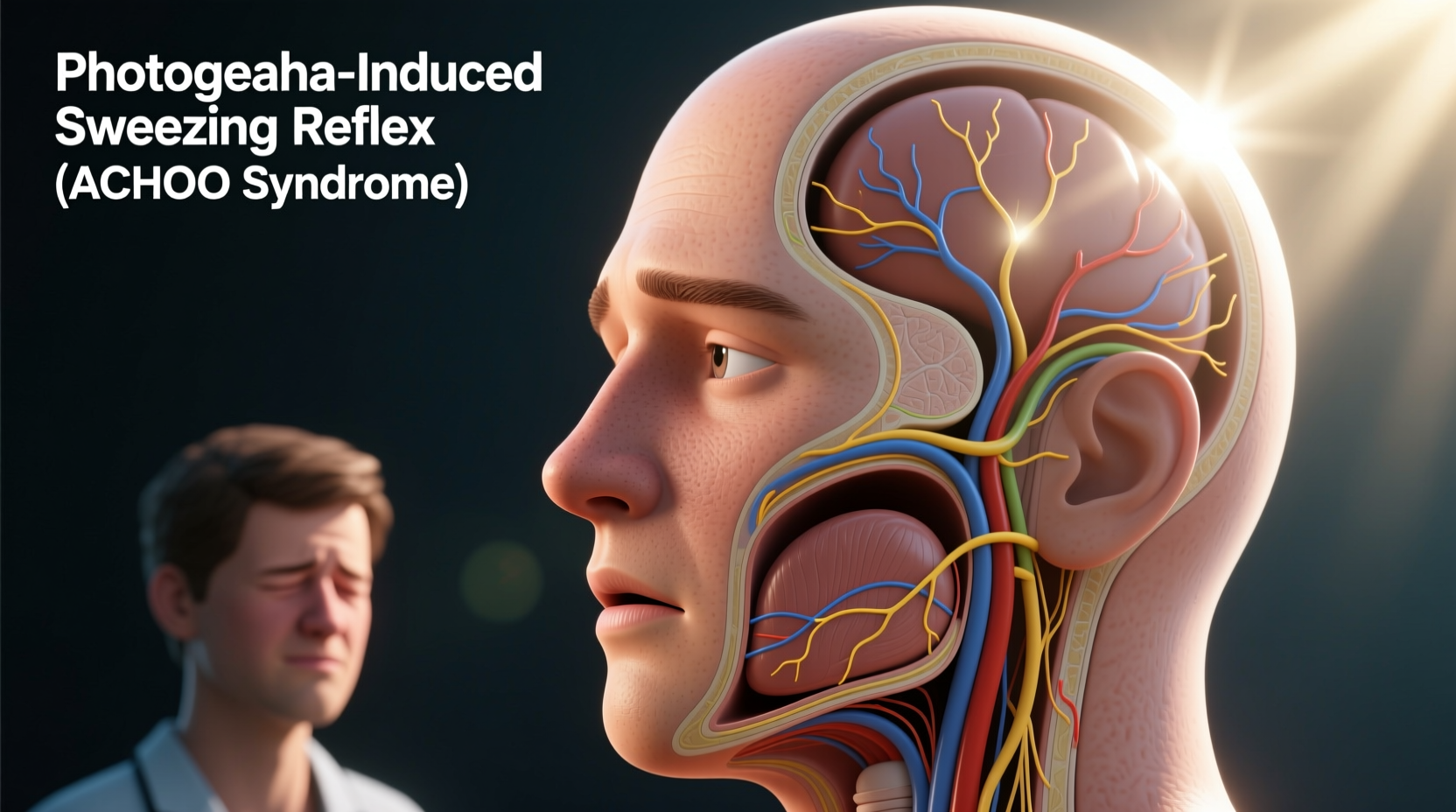
The photic sneeze reflex, also known as \"sun sneezing\" or Autosomal Dominant Compelling Helio-Ophthalmic Outburst (ACHOO) syndrome—a playful acronym—is a condition where exposure to bright light induces an involuntary sneeze. It typically occurs when someone moves from a dim environment into intense sunlight, such as stepping outside on a clear day or being flashed by headlights.
Unlike regular sneezes triggered by irritants like dust or allergens, photic sneezes are neurological in origin. They don’t involve nasal irritation at all. Instead, they result from a misfiring of signals in the brainstem involving the optic and trigeminal nerves.
How Does Bright Light Trigger a Sneeze?
To understand this reflex, we need to explore two key cranial nerves: the optic nerve (responsible for vision) and the trigeminal nerve (which controls facial sensation and motor functions, including sneezing).
When bright light enters the eyes, it stimulates the optic nerve. In individuals with the photic sneeze reflex, this signal appears to \"leak\" or cross over to the nearby trigeminal nerve. The brain misinterprets this stimulation as nasal irritation—even though the nose isn't involved—and initiates a sneeze to expel a non-existent threat.
This neural crosstalk is often referred to as \"cross-wiring\" or synaptic leakage. Think of it like two electrical wires running close together; if insulation is weak, current from one wire can jump to the other. Similarly, in photic sneezers, sensory input from the eyes inadvertently activates pathways meant for nasal stimuli.
“Photic sneezing is a perfect example of how closely interconnected our sensory systems are. A stimulus meant for one pathway can sometimes hijack another.” — Dr. Lena Patel, Neurologist at Boston Brain Institute
Is the Photic Sneeze Reflex Genetic?
Yes, strong evidence suggests that the photic sneeze reflex is hereditary. Research indicates it follows an autosomal dominant inheritance pattern, meaning only one copy of the gene variant from either parent is sufficient to express the trait.
A 2010 study published in *PLoS Genetics* identified a single nucleotide polymorphism (SNP)—a small genetic variation—near the *ZEB2* gene that was significantly associated with photic sneezing. While this SNP doesn’t fully explain every case, it provides compelling evidence of a genetic basis.
If one parent has the reflex, each child has a 50% chance of inheriting it. Families often report multiple members who experience sun sneezing, reinforcing its genetic roots. However, expression can vary—some carriers may sneeze once when exposed to light, while others may have multiple consecutive sneezes.
Understanding the Genetics Behind ACHOO Syndrome
The exact mechanism remains under investigation, but scientists believe the genetic variant may influence how neurons develop or communicate in early life. The proximity of the optic and trigeminal nerves in the brainstem makes them susceptible to shared regulatory genes. A mutation affecting neural insulation or signal modulation could increase the likelihood of cross-talk.
Interestingly, the same gene region linked to photic sneezing (*ZEB2*) plays a role in Mowat-Wilson syndrome, a rare developmental disorder. This connection underscores the importance of neural development in sensory processing, though photic sneezing itself is benign and unrelated to disease.
Real-World Implications and Risks
While generally harmless, the photic sneeze reflex can pose real-world challenges. For example:
- Pilots may experience sudden sneezing during takeoff or landing when facing the sun.
- Drivers exiting tunnels into bright daylight might sneeze mid-maneuver.
- Surgical patients under bright operating lights could sneeze unexpectedly during procedures.
In military aviation, photic sneezing has been recognized as a potential operational hazard. A pilot experiencing repeated sneezes during critical flight phases could momentarily lose control or focus. As a result, some air forces screen for PSR during medical evaluations.
Mini Case Study: Air Force Pilot Grounded Temporarily
In 2017, a U.S. Air Force trainee reported consistent sneezing episodes during morning flights when ascending toward the eastern sun. During one training mission, a series of uncontrollable sneezes occurred just after liftoff, causing a brief deviation from course. After evaluation, he was diagnosed with a strong photic sneeze reflex. He was temporarily grounded until prescribed tinted visor adjustments and advised breathing techniques to suppress sneezes. With accommodations, he resumed training successfully.
This case highlights that while PSR is not dangerous per se, situational awareness and preventive strategies are crucial in high-stakes environments.
Do’s and Don’ts for Managing Photic Sneezing
| Do’s | Don’ts |
|---|---|
| Wear UV-protective sunglasses when moving outdoors | Stare directly at the sun to “get used to” the light |
| Use gradual transitions (e.g., pause in shaded areas before full sun exposure) | Drive through tunnels without preparing for post-exit brightness |
| Practice breath control to suppress sneeze urges | Ignore repeated sneezing in sensitive situations like surgery or flying |
| Inform healthcare providers if undergoing eye or facial surgery | Assume everyone experiences sun sneezing—it’s not universal |
Can You Prevent or Suppress a Light-Induced Sneeze?
There is no cure for the photic sneeze reflex because it’s not a disorder—it’s a variation in normal neurological function. However, several practical techniques can help manage or reduce its impact.
Step-by-Step Guide to Minimize Photic Sneezing
- Anticipate Exposure: Be aware of situations where sudden bright light is likely (e.g., leaving a building, driving out of a tunnel).
- Shield Your Eyes Gradually: Use your hand, visor, or hat brim to partially block light before fully adjusting.
- Wear Polarized Sunglasses: Choose lenses with 100% UV protection and anti-glare coating for optimal transition support.
- Engage in Nasal Pressure: Some people find that pressing the bridge of the nose or upper lip (philtrum) can interrupt the sneeze reflex.
- Breathe Deeply: Inhaling slowly through the nose and exhaling through the mouth may calm the nervous system and delay or prevent the sneeze.
- Consult Specialists if High-Risk: Pilots, surgeons, or drivers with frequent episodes should discuss management strategies with a neurologist or occupational health provider.
FAQ: Common Questions About Light-Induced Sneezing
Can photic sneezing be harmful?
Generally, no. It’s a benign reflex. However, in high-risk settings like driving, flying, or surgery, uncontrolled sneezing could lead to accidents or complications. Awareness and preparation are key to minimizing risks.
Why do I sneeze multiple times when I see bright light?
Some individuals experience a cascade effect—the initial sneeze triggers further irritation in the nasal passages or nervous system, leading to additional sneezes. This is similar to how some people sneeze several times during allergies, even without external triggers compounding.
Can you develop photic sneezing later in life?
Most people report noticing the reflex in childhood or adolescence. True onset in adulthood is rare. However, increased awareness or changes in light sensitivity (due to aging, eye surgery, or medication) might make someone more conscious of a previously mild or unnoticed reflex.
Checklist: Are You a Photic Sneezer?
Answer these questions to determine if you likely have the photic sneeze reflex:
- Do you frequently sneeze when stepping into sunlight from indoors?
- Does flashing light (like camera flashes or car headlights) trigger sneezing?
- Do family members also sneeze in bright light?
- Does the sneeze occur without nasal congestion or allergies?
- Is the sneeze immediate (within seconds) after light exposure?
If you answered yes to most of these, you’re likely among the millions with ACHOO syndrome.
Conclusion: Embracing a Quirky Genetic Trait
The photic sneeze reflex is more than just a funny bodily quirk—it’s a window into the complexity of human neurology and genetics. While science continues to unravel the precise mechanisms behind why bright light causes some people to sneeze, one thing is clear: it’s a genetically influenced, relatively common, and usually harmless phenomenon.
Whether you're a lifelong sun sneezer or just learning about this reflex for the first time, understanding its origins empowers you to manage it effectively. From wearing sunglasses to preparing for transitions between light environments, small adjustments can make a meaningful difference—especially in critical moments.




 浙公网安备
33010002000092号
浙公网安备
33010002000092号 浙B2-20120091-4
Comments
No comments yet. Why don't you start the discussion?